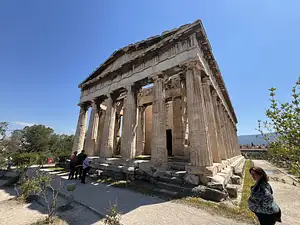
Everybody tours the Acropolis and the Parthenon, and everybody should. But as a result, wonderful tours like this one can be overlooked. The Agora is a neighborhood beside the Parthenon. It's where Socrates walked, where the Apostle Paul preached, and more. It has its own gorgeous little temple, and a larger building constructed in the 1950s as a replica of what use to be here. Sophia gives a great tour: personal, informative, articulate, passionate, full of details. We did not really know what we were signing up for with the Ancient Agora tour, but we ended up enjoyed both Sophia and the tour enormously.

Ancient Agora Tour with Plaka Neighborhood
Find the human story in Athens’ ruins


The Finer Details
Athens can look like a puzzle at first, with broken columns, layered stones, and fragments that seem to whisper from different centuries. The Ancient Agora brings that puzzle into focus as the heart of daily life in the antique city. With an archaeological scholar, read the landscape through its visual clues and begin to rebuild the world that once stood here.
The Agora spans more than 2,000 years, so interpretation matters. Your Expert helps separate the noise, drawing attention to the Stoa, Hephasteion, and Odeion of Agrippa. What did these buildings do for the people who crossed this space to discuss, trade, gather, and listen?
The walk also opens onto the economic life of ancient Greece. As Athens grew, systems of trade and commerce became more complex, shaping the city’s social and political rhythms. Inside the museum of the Stoa, excavated finds give texture to that story, turning objects into evidence of ordinary choices, habits, and ambitions.
From this point, the route may shift according to the day, the group, and the Expert’s reading of the site. Kerameikos offers a powerful lens on burial practice and how ancient Athenians approached death. In Plaka, structures such as the library built for Emperor Hadrian help trace the city after Roman conquest in the first century BCE. How does a Greek city change when a new empire begins writing itself into stone?
The experience closes among the leafy streets of Plaka, with ancient Athens feeling less distant and far more legible. Instead of leaving with a list of ruins, come away with a clearer sense of how normal people lived across classical and post-classical periods. Politics, ritual, commerce, and neighborhood life start to connect, and the city’s fragments begin to speak in full sentences.
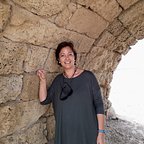


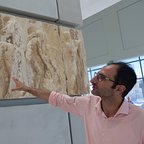









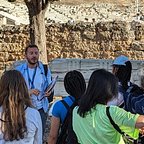





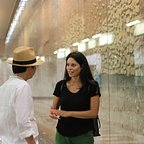








Where You’ll Go
From iconic landmarks to tucked-away local favorites, these are the places you’ll explore and experience firsthand with your Expert.
-
Monastiraki NeighborhoodA crossroads of ruins, street markets, and everyday life.
-
Plaka NeighborhoodHistoric streets, local shops, and everyday Athenian rhythm.
-
AgoraAncient Greek public space for politics, commerce, and social gatherings with ruins.
-
Kerameikos
-
Roman Agora
What’s Included As Standard
Here’s a look at what your tour covers, plus anything you’ll want to consider arranging separately, so you can plan with confidence.
Included
-
English-speaking expert guideTours led in English, offering you unbroken understanding throughout.
-
Intentionally sized groupsA smaller group means more time for conversations and questions.
-
Tickets and entrance feesAll entry tickets included (unless clearly stated otherwise).
-
HeadsetsHeadsets are included on tours that need them, so every word can be heard.
Not Included
-
GratuitiesWe encourage tipping as a way to thank your guide after your experience.
-
Food and drinkRefreshments are only included during a tour when clearly noted.
-
Transportation to and from the meeting pointUnless noted, pre- and post-tour transport isn’t included - this service can be added by request.
-
Hotel pickup or drop-offUnless noted, travel to or from accommodation isn’t included - this service can be added by request.
Where You'll Explore
Make the Most of Your Tour
Some helpful advice for getting the most from your experience, from practical prep to small on-the-day tips.
Dos:
- Wear comfortable footwear
- Check the weather and dress appropriately
- Bring a bottle of water (no glass)
- Feel free to ask your Expert anything
Don'ts:
- Bring firearms or weapons
- Bring sharp objects (e.g. knives, swiss army knives, switchblades, hiking sticks)
- Dress inappropriately to enter religious sites or sacred monuments
Any questions? You can always
contact us.
Frequently Asked Questions
We meet in the Monastiraki area and the tour usually finishes in Plaka (however, this could vary per guide). Your confirmation email will have the exact meeting point details along with a map.
Our tours happen rain or shine. Our guides are great at adapting their route during changes of weather. Please bring an umbrella.
The Ancient Greek Agora is wheelchair-friendly. Please contact us to discuss in more detail your mobility concerns so that we can best advise.
For families traveling with children under 13, we recommend booking our Acropolis and Agora Tour for Kids, which has been especially designed with younger learners in mind and is led by a family-friendly guide.
Book with confidence — see Context's flexible cancellation policy here.
Don’t just take our word for it
Sophia had great breadth and depth of the history of the Agora and the surrounding area. She made the history come alive. We had an interest in Socrates and Plato and she shared new information with us. She managed to our pace and time. She helped us finding a taxi to our ship. All in all it was a fun and exciting morning.
Our Ancient Agora tour with Sofia was fantastic. She is an excellent guide who went beyond our expectations, conducting an educational, entertaining, and personalized tour. She is very experienced, with a vast knowledge of Ancient Greece in all aspects. We had wonderful conversations which described and compared modern and Ancient civilizations. We have taken several Context Travel tours in different cities around the world and they never disappoint. This is no exception. Thank you Sofia for your dedication and effort in making our tour a wonderful experience.
Let Your Curiosity Shape Your Journey
Join passionate experts on intimate walking tours that reveal a city’s unique stories, spark conversations, and leave you seeing the world—and yourself—a little differently.
Structured, never scripted
Your interests guide your Expert, leading to stories and perspectives that matter to you.
Crafted for conversation
With ten or fewer guests, ask questions, engage with your Expert, and fully immerse yourself.
Experts, not guides
Explore with 1,200+ Experts—from historians and architects to archaeologists and chefs.


