Superb! Informative a dad knowledgeable with great sense of humor!

Signature Tower of London Tour
Enter a fortress of Crown Jewels, prisoners, and royal power
Step into the Tower with an expert who sheds light on conquering kings, executed queens, guarded jewels, and the history that lingers in every stone.
Tour Highlights
- Navigate with clarity Cut through centuries of history with an Expert who focuses your time on what matters most
- See the Crown Jewels up close Stand before the Crown Jewels to understand their symbolism, historical ceremony, & current security
- Decode power and politics Unpack how royalty, rebellion, and imprisonment shaped the Tower’s evolving role over the years
- Hear stories of famous figures Meet the monarchs, traitors, and prisoners whose lives echo through these walls
- Explore deeper significance Move past the crowds to grasp the deeper meaning behind each space you explore
- Skip logistics, not magic Tickets and pacing are handled. Your only job is to look, wonder, and ask.
Led by Experts, Shaped by You
Explore with an expert guide who responds to your questions, your interests, and your pace. Reveal layers of meaning most visitors miss—go from seeing to understanding.


%20-%202026-04-28T085208.440.png)


The Finer Details
Power leaves traces, and nowhere in London do they gather quite like the Tower. On the north bank of the Thames, this single complex has been a fortress, palace, prison, treasury, armory, and royal stage, sometimes all at once. Its walls hold the stories you already know: crowns, executions, traitors... But they hold far stranger ones too—stories of ravens, menageries, royal logistics, and the daily grind of running a kingdom.
Your Expert guides you through the sprawling complex with intention, so you're never trying to decode everything at once. Begin your Tower of London tour with the story of William the Conqueror, who founded the Tower after 1066 to lock down control of London. Why did this exact spot on the river matter so much? The answer connects the Tower to a much bigger royal map that stretches to Greenwich and Hampton Court, where palaces moved with the court's needs.
Then come the Crown Jewels (and yes, they're every bit as dazzling as promised). But their significance is clearer with the right setup. Guiding isn't allowed inside the display itself, so your Expert builds the picture of crowns, sceptres, orbs, and ceremonies beforehand so that when the moving walkway carries you past, you already know exactly what you're looking at. What you'll remember isn't just brilliance behind glass. It's what that brilliance was built to mean.
From there, the Tower's darker chapters take shape. At Traitors' Gate, the river once carried prisoners toward accusations they'd never survive. Whispered betrayals and one-way arrivals still hang over the space, and the human stakes feel immediate here, not like history at all.
At the White Tower, the story shifts again. Explore the Royal Armouries, including Henry VIII's own arsenal, and trace how armor and weapons served politics as much as war. This is also where the fortress reveals itself as something closer to a small city: workshops, ravens, the ghost of a former royal menagerie, ordinary life humming beneath extraordinary stakes.
By Tower Green, the walk becomes quieter. This small, unassuming space holds some of the Tower's most private endings and most public consequences. Leave knowing not just who mattered here, but why, and how their stories still echo through one of London's most iconic addresses.
Meet the Experts
























































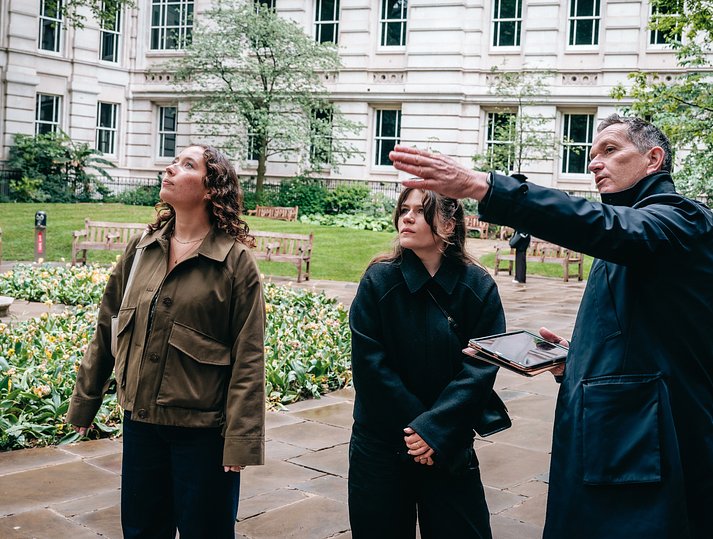%20-%202026-05-18T122730.868.png)
Where You’ll Go
From iconic landmarks to tucked-away local favorites, these are the places you’ll explore and experience firsthand with your Expert.
-
Tower of LondonHistoric fortress and former royal palace, home to the Crown Jewels and medieval towers.
What’s Included As Standard
Here’s a look at what your tour covers, plus anything you’ll want to consider arranging separately, so you can plan with confidence.
Included
-
English-speaking expert guideTours led in English, offering you unbroken understanding throughout.
-
Intentionally sized groupsA smaller group means more time for conversations and questions.
-
Tickets and entrance feesAll entry tickets included.
Not Included
-
GratuitiesTips aren’t included, but we encourage tipping as a way to thank your guide after your experience.
-
Food and drinkFood and drink are not included, but your expert can provide recommendations for after the tour.
-
Transportation to and from the meeting pointTransportation is not included. Pre- and/or post-transit can be added to some tours by request.
-
Hotel pickup or drop-offTravel to or from accommodation isn’t included; however, this service can be added by request.
Where You'll Explore
Make the Most of Your Tour
Some helpful advice for getting the most from your experience, from practical prep to small on-the-day tips.
Dos:
- Wear comfortable footwear
- Check the weather and dress appropriately
- Bring a bottle of water (no glass)
- Feel free to ask your Expert anything
Don'ts:
- Bring firearms or weapons
- Bring sharp objects (e.g. knives, swiss army knives, switchblades, hiking sticks)
- Dress inappropriately to enter religious sites or sacred monuments
Any questions? You can always
contact us.
Frequently Asked Questions
Mornings are generally less crowded, which enhances your overall experience. With fewer people, you get less waiting time and a more intimate setting to appreciate the historical significance of the Tower of London. And during warmer months, mornings are cooler and more comfortable for walking tours.
If you would like to visit before the tower opens to the public, we recommend our Exclusive Early Morning Tower of London Tour.
If you would like to visit before the tower opens to the public, we recommend our Exclusive Early Morning Tower of London Tour.
Interior access is not guaranteed.
During this Tower of London guided tour, you will likely see Beefeaters, also known as Yeoman Warders, performing their duties. While direct interaction with them is not a standard part of our tour, observing them in their traditional roles adds a unique and authentic aspect to the experience.
Our tours are designed to go ahead, rain or shine. English weather is known for its unpredictability, so we recommend coming prepared for all conditions. Please bring layers to adjust to changing temperatures and comfortable shoes suitable for walking.
Book with confidence — see Context's flexible cancellation policy here.
We understand that some of our valued guests may have mobility concerns, and we want to ensure you have a comfortable and enjoyable experience throughout your tour. If there are any accessibility concerns that your tour guide will need to be aware of, please let our team know at the time of booking.
Is this tour wheelchair-friendly?
There is a lift in the White Tower that assists with access to and from the basement, though only one wheelchair user is allowed in the basement at a time for safety reasons.
Ramps are available at the New Armouries café and near the Raven shop. Accessible restrooms are available at various locations within the Tower complex.
Are service dogs allowed?
Service dogs are permitted at the Tower. Please inform our team ahead of time so that we can coordinate with Tower offices.
See the Tower of London with Context
Get to know one of the historians leading this tour
Don’t just take our word for it
Karen gave us an excellent experience at the Tower. Loved hearing about the history. Highly recommend.
I am so happy we decided to book a tour of the Tower of London. Sarah connected the history of the tower to the buildings we toured while navigating around the crowds. She observed the Beefeaters and directed us in ways that avoided the big crowds and allowed us to have a more enjoyable visit. Her stories of the inhabitants and passion for history brought the tower alive.
Let Your Curiosity Shape Your Journey
Join passionate experts on intimate walking tours that reveal a city’s unique stories, spark conversations, and leave you seeing the world—and yourself—a little differently.
Structured, never scripted
Your interests guide your Expert, leading to stories and perspectives that matter to you.
Crafted for conversation
With 12 or fewer guests, ask questions, engage with your Expert, and fully immerse yourself.
Experts, not guides
Explore with 1,200+ Experts—from historians and architects to archaeologists and chefs.
Related experiences our customers also loved




%20-%202026-04-28T085747.841.png)
Tower of London Tour
The Tower of London has been a fortress, royal residence, prison, armory, treasury, mint, menagerie, and ceremonial stage. Those roles changed over almost a thousand years, often overlapping with one another. This Tower of London tour uses that complexity as the starting point. With a historian, the aim is not simply to move from the Crown Jewels to Traitors’ Gate to the White Tower. It is to understand why the same site could represent conquest in one century, royal authority in another, imprisonment in another, and national ceremony today. That broader framework makes the familiar stories—William the Conqueror, Anne Boleyn, Henry VIII, the ravens, the Yeoman Warders—feel less like isolated episodes and more like parts of the same political history.
William the Conqueror began building the Tower after 1066 as part of a larger effort to secure control over London. Its position mattered.
The fortress sat beside the Thames, close to the city but visually and militarily distinct from it. From there, the Norman monarchy could control movement along the river, project authority over London, and make the new regime physically impossible to ignore.
The White Tower became the most visible expression of that power. It was not simply defensive architecture. Its scale and stone construction communicated permanence in a city where most buildings looked very different.
Over time, the wider complex expanded around it.
Walls, gates, towers, royal apartments, workshops, religious spaces, and service buildings turned the Tower into something closer to a fortified royal district than a single castle.
That helps explain why so many different histories coexist here. The Tower did not keep changing purpose because one use replaced another. New functions accumulated around the older ones.
The Crown Jewels are not simply valuable objects. They are instruments of monarchy.
Crowns, sceptres, orbs, swords, and other objects in the collection are associated with coronation and the ceremonial transfer of royal authority. Their value therefore lies as much in what they represent as in the materials from which they are made.
The Tower has long served as a secure location for royal treasure and regalia, linking the collection to the fortress’s history as both a symbol and instrument of state power. That connection remains active today.
The Crown Jewels are still part of the British monarchy’s ceremonial life rather than a collection belonging only to the past.
Guiding is restricted inside the Jewel House itself, so the most useful preparation happens before you enter. Understanding what the objects do, how they relate to coronation, and why certain forms recur allows the short time in front of them to become more than a display of precious stones.
Choose this Signature Tower of London Tour if you want a focused introduction to the Tower itself, including the Crown Jewels, White Tower, royal prisoners, executions, armor, and the site's changing role across centuries. The experience lasts approximately 2.5 hours and is available in private and small-group formats.
If experiencing the Tower before normal public opening is the priority, the Exclusive Tower of London Tour: Early Access offers a much more limited-access format, including an early private look at the Crown Jewels.
Families with younger travelers may prefer the Tower of London Tour for Kids, which approaches royal history through questions, stories, ravens, armor, prisoners, and the Crown Jewels at a child-friendly level.
If you want to place the Tower within a broader day of London history, the London In a Day Tour combines it with Westminster Abbey and other major sites rather than concentrating on the fortress alone.
What does the Tower of London tour include?
The tour focuses on the Tower complex and typically includes the Crown Jewels, White Tower, Royal Armouries, Traitors’ Gate, Tower Green, and other spaces according to opening conditions and your Expert’s route.
Does the tour include the Crown Jewels?
Yes. The Crown Jewels are a central part of the tour. Your Expert prepares you beforehand because guiding is not permitted inside the display itself.
Is this a private Tower of London tour?
The experience is available both privately and in a small-group format.
How long is the Tower of London tour?
The Signature tour lasts approximately 2.5 hours.
Is the Tower of London worth visiting with a guide?
A guide is particularly useful because the site contains nearly a millennium of overlapping history. The same spaces can relate to the Norman Conquest, royal residence, imprisonment, execution, military history, ceremony, and the modern monarchy.
A historian can help those layers connect so they don't feel like separate stories.
Can you skip the line at the Tower of London?
No. The Tower does not offer a true skip-the-line option.
Context pre-purchases admission, but you may still need to wait for security checks or ticket scanning.
Will I see Beefeaters on the tour?
You will likely see Yeoman Warders, commonly known as Beefeaters, carrying out their duties around the Tower. Direct interaction with them is not a standard part of this experience, but depending on the guide, may be provided.
Why is the White Tower important?
The White Tower was begun after the Norman Conquest and served as both a defensive structure and a powerful statement of royal authority. It later housed armor, weapons, and other royal collections and remains one of the defining buildings within the complex.
Who was imprisoned at the Tower of London?
The Tower held many prominent prisoners across its history, including political rivals, nobles, religious figures, and members of the royal family. Some were executed within the complex or on nearby Tower Hill.
Were people really executed inside the Tower?
Yes, although executions inside the Tower were relatively rare and usually reserved for high-status prisoners. Anne Boleyn, Catherine Howard, and Lady Jane Grey are among the best-known figures executed within the complex.
What age is appropriate for a Tower of London tour?
The venue can work well for older children and teenagers, especially those interested in monarchy, armor, prisoners, or Tudor history. For younger children, Context’s dedicated Tower of London Tour for Kids is designed around a more age-appropriate way of exploring the same history.
What is the best time of day to visit the Tower of London?
Mornings are generally less crowded and can be more comfortable during warmer months. Travelers who want to visit before the normal public opening can consider Context’s Exclusive Tower of London Tour: Early Access.