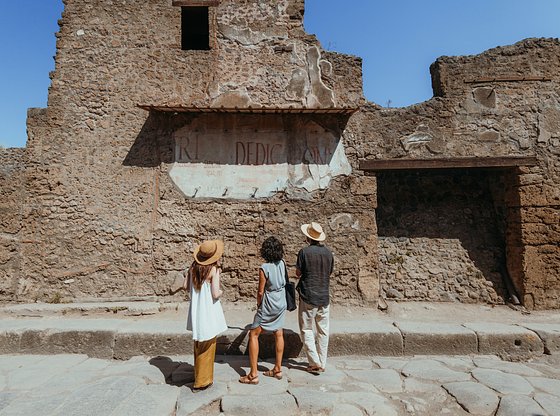
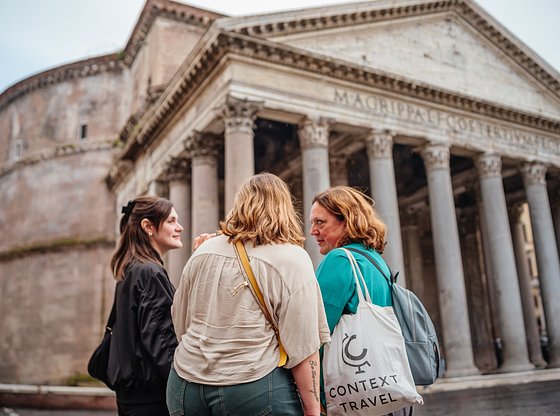
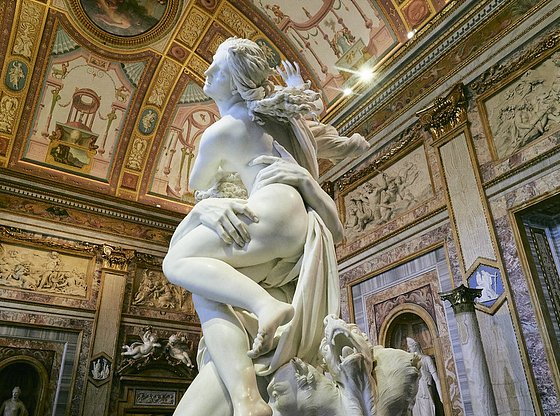
Don’t did an outstanding job educating us on the history of Roman emperors. He spent the time with us giving us all kinds of relevant and valuable information about architecture history and myth. We would highly recommend Dony for anyone who wants to spend an informative and fun day anywhere in Rome. We will do this again in the future!

Tivoli Day Trip from Rome: Villa D'Este & Gardens
Retreat to the estates that shaped elite Roman life for centuries
The Finer Details
Tivoli has been Rome's retreat for the rich and famous ever since thermal waters were discovered in the hills east of the city in the first century BC. Set atop a mountain overlooking the Roman countryside, the picturesque town of Tivoli is a mix of both modern and medieval. Today, two of Tivoli's major sites—the ancient villa of Emperor Hadrian and the Renaissance garden of Cardinal d'Este—provide the setting for one of Context's most evocative tours. This unique, full-day Tivoli tour takes us beyond the city center on a day trip from Rome to experience the history of the Apennine Mountains.
Route Details
We begin by taking an hour-long private car ride to Tivoli. As the car winds along the foothills of the Apennine Mountains, our guide, an art historian or archaeologist, will discuss the historical context of this area: the discovery of thermal springs and the construction of therapeutic baths in the first century B.C., as well as the exploitation of the travertine limestone veins that would eventually provide most of the travertine for the city. We will then arrive at Hadrian's Villa, the palace and retreat of Emperor Hadrian, constructed in the second century AD at the height of ancient Rome's powers.
The History of Hadrian
Hadrian's Villa is fundamental to understanding Roman antiquity, architecture, and the watershed reign of Hadrian. One could spend days here, but in the company of our guide we will dissect the site in about two hours, visiting some key parts in order to re-imagine what this 300-acre structure once looked like and—more importantly—how it affected the construction of villas for the next two thousand years.
The Gardens of the Villa d'Este
Our next stop is the 16th century mansion of the exiled Cardinal Ippolito d'Este, where we will be taken by our private car service after exiting Hadrian's Villa. After we have lunch in the center of Tivoli, we will descend into the gardens of Villa d'Este. After much restoration, it serves as one of the best preserved garden complexes of the Renaissance. With its numerous and magnificent fountain features, the Villa d'Este is famous in all of Italy for its lavish presentation of that most prestigious resource: water.
As we make our way through the garden rooms, we will make connections between d'Este and Hadrian's Villa. Some of these will be conceptual—the use of water as an architectural material, for example. Others are quite physical—much of the building material in the garden, for example, was pilfered from the ancient villa. We will conclude our day by taking a stroll through the wonderfully intact medieval core of Tivoli, and return to Rome.
Logistics
This Tivoli tour from Rome includes a car service that will pick you up at your accommodation. Please tell us your hotel or apartment address in the 'Additional Details' box when adding the tour to your shopping cart.
FAQ
What are skip-the-line tickets? For this tour, your tickets are pre-purchased which allows you to skip the ticket office line upon arrival at Tivoli. You may still have to wait in a security line or in a line to have your pre-purchased ticket scanned.
Is lunch included? There will be time for lunch but it is not included in the tour price.
Is this tour mobility friendly? Neither of the sites are suitable for people with mobility problems. There is a large amount of hilly terrain covered at both sites on this excursion. The entrance of Hadrian’s Villa from the ticket barrier is a steep walk and the site is overall extremely uneven with lots of steps. Villa d’Este is pretty much vertical and a half hour giro is very limited. We do not recomend this tour for people with mobility concerns.
Is this tour good for families kids? This walk is not a part of our official family program. That said, we may be able to arrange a visit with a family-friendly expert.
Is this tour good for families kids? This walk is not a part of our official family program. That said, we may be able to arrange a visit with a family-friendly expert.


Meet the Experts





























Where You’ll Go
From iconic landmarks to tucked-away local favorites, these are the places you’ll explore and experience firsthand with your Expert.
-
Villa d'Este
-
Hadrian's Villa
What’s Included As Standard
Here’s a look at what your tour covers, plus anything you’ll want to consider arranging separately, so you can plan with confidence.
Included
-
English-speaking expert guideTours led in English, offering you unbroken understanding throughout.
-
Intentionally sized groupsA smaller group means more time for conversations and questions.
-
Tickets and entrance feesAll entry tickets included (unless clearly stated otherwise).
-
HeadsetsHeadsets are included on tours that need them, so every word can be heard.
Not Included
-
GratuitiesTips aren’t included, but we encourage tipping as a way to thank your guide after your experience.
-
Food and drinkUnless booking a Food & Drink tour or tasting experience, refreshments are not included.
-
Transportation to and from the meeting pointUnless noted, pre- and post-tour transport isn’t included - this service can be added by request.
-
Hotel pickup or drop-offUnless noted, travel to or from accommodation isn’t included - this service can be added by request.
Make the Most of Your Tour
Some helpful advice for getting the most from your experience, from practical prep to small on-the-day tips.
Dos:
- Wear comfortable footwear
- Check the weather and dress appropriately
- Bring a bottle of water (no glass)
- Feel free to ask your Expert anything
Don'ts:
- Bring firearms or weapons
- Bring sharp objects (e.g. knives, swiss army knives, switchblades, hiking sticks)
- Dress inappropriately to enter religious sites or sacred monuments
Any questions? You can always
contact us.
Don’t just take our word for it
Liz was fantastic. We spent the full day with her and she kept us captivated the whole time. A real treat to go around villa hadriana and villa d'Este with her.
Dony was a terrific guide. Packed with information about a subject he clearly loves! I had a great time and I learned a lot.
Let Your Curiosity Shape Your Journey
Join passionate experts on intimate walking tours that reveal a city’s unique stories, spark conversations, and leave you seeing the world—and yourself—a little differently.
Structured, never scripted
Your interests guide your Expert, leading to stories and perspectives that matter to you.
Crafted for conversation
With 12 or fewer guests, ask questions, engage with your Expert, and fully immerse yourself.
Experts, not guides
Explore with 1,200+ Experts—from historians and architects to archaeologists and chefs.