Florence was exceptional!! Her knowledge and story-telling skills made the tour one of our favorites ever!! Truly she was incredible!!

Signature Louvre Tour: Mona Lisa & Iconic Works
Navigate the essential masterpieces with expert clarity
Meet the Mona Lisa, then meet the ideas behind her on this expert-led tour of the Louvre that turns must-see into must-understand.
Tour Highlights
- Fewer lines, more Louvre Enter with priority access and step into a former palace that still carries the imprint of monarchy.
- Mona Lisa, understood Move beyond the stereotypical selfie to grasp why one woman’s gaze still intrigues the world.
- Masterpieces in context Link works across centuries; connect masterpieces and meaning from gallery to gallery.
- History made human No more drowning in dates. Understand art and artifacts by eras and empires.
- Confidently navigate crowds Follow a clear path: save time and reduce stress with help through security and bottlenecks.
- From checklist to culture Turn iconic stops and photo-ops into stories you will retell for years to come.
Led by Experts, Shaped by You
Explore with an expert guide who responds to your questions, your interests, and your pace. Reveal layers of meaning most visitors miss—go from seeing to understanding.


The Finer Details
The Louvre is not just a museum. It is an idea about what a nation chooses to preserve. Inside these walls thousands of years of art and artifacts sit side by side, and, without a plan, it can feel like too much. Together, we cut through the scale and tell the story that ties it all together.
Each Context expert has their own preferred route to touch upon the most celebrated works the Louvre has to offer. We may begin with the Italian Renaissance and stand before Leonardo’s Mona Lisa. Why does this small portrait command such global attention, even in a crowded room? By placing her among contemporaries, we see not only a face, but a turning point in how artists imagined humanity.
From there, the journey widens to ancient history. Sculptures and artifacts ground us in the civilizations that shaped Western art, from Mesopotamia to Greece. These works are not isolated relics. They form the foundations that later painters and rulers studied, borrowed, and sometimes challenged.
We’ll shift the lens again, this time to French painting and sculpture. Royal patronage, revolution, and empire unfold across canvases and marble. What happens to art when regimes rise and fall? Here, we connect brushstrokes to politics and aesthetics to ambition.
Throughout the visit, your Expert keeps the route purposeful and the pace steady. Rather than wandering through endless corridors, you’ll move with intention, pausing where meaning deepens and stepping past what distracts. The result is clarity inside a space that can otherwise overwhelm.
By the time you return to the glass pyramid, the Louvre feels less like a maze and more like a map of masterpieces that no longer blur together. Rather, they connect to one another across centuries, and now, to you. This Louvre highlights tour is not about just seeing the Louvre — it grants understanding of why the museum matters, an understanding you’ll carry long after you’re home.
A Note on Your Tickets: To ensure you have the best possible experience, our team manually secures every Louvre entry slot. Because these tickets are in high demand, confirmation may take a little longer than usual. In the rare event your preferred time is unavailable, we’ll work closely with you to find a perfect alternative or provide a full refund.
A Note on Your Tickets: To ensure you have the best possible experience, our team manually secures every Louvre entry slot. Because these tickets are in high demand, confirmation may take a little longer than usual. In the rare event your preferred time is unavailable, we’ll work closely with you to find a perfect alternative or provide a full refund.
A thoughtfully designed itinerary for novices and seasoned art lovers alike
"Would have been utterly lost in the Louvre without this tour. Saw all the 'highlights' but also a lot of other things which I would never have been drawn to - largely as I have very little knowledge around art history. Excellent explanations of how to interpret the paintings."
Don't just see - learn to read and interpret art
"This was the first time that my husband and two [teens] had been exposed to art the way it should be. Pablo is very knowledgeable, no doubt. But he was particularly outstanding in how engaging and interactive he made the visit for all of us. You could not help but share the passion he has for art and history and for helping others understand how to see and interpret the pieces. We only had time to see a minimal sample of all the Louvre has to offer, of course, but the lessons we learned will serve us for life - and I am especially grateful that my [teens] have this gift from this trip. Forget the cheap souvenir shopping - this is the stuff no one can take away from you!"
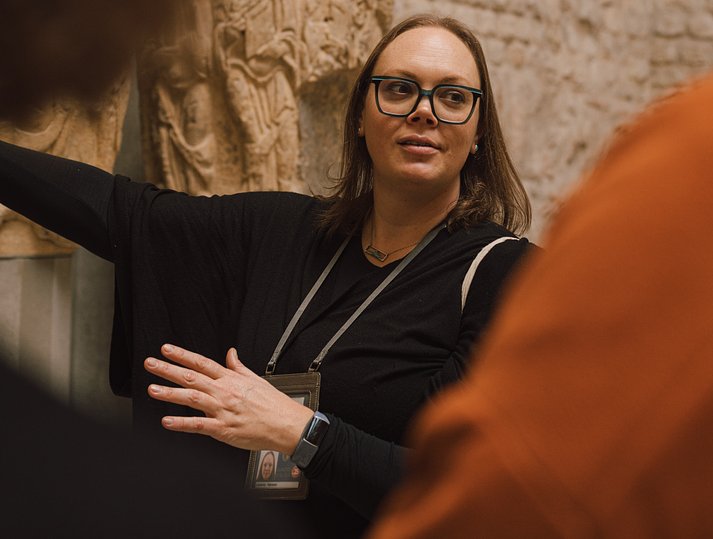
Meet the Experts































































%20-%202026-04-23T140946.304.png)
Where You’ll Go
From iconic landmarks to tucked-away local favorites, these are the places you’ll explore and experience firsthand with your Expert.
-
Louvre MuseumLargest museum in the world, spanning artworks from ancient civilizations to 19th-century Europe.
What’s Included As Standard
Here’s a look at what your tour covers, plus anything you’ll want to consider arranging separately, so you can plan with confidence.
Included
-
English-speaking expert guideTours led in English, offering you unbroken understanding throughout.
-
Intentionally sized groupsA smaller group means more time for conversations and questions.
-
Tickets and entrance feesAll entry tickets included.
Not Included
-
GratuitiesTips aren’t included, but we encourage tipping as a way to thank your guide after your experience.
-
Food and drinkFood and drink are not included, but your expert can provide recommendations for after the tour.
-
Transportation to and from the meeting pointTransportation is not included. Pre- and/or post-transit can be added to some tours by request.
-
Hotel pickup or drop-offTravel to or from accommodation isn’t included; however, this service can be added by request.
Where You'll Explore
Make the Most of Your Tour
Some helpful advice for getting the most from your experience, from practical prep to small on-the-day tips.
Dos:
- Wear comfortable footwear
- Check the weather and dress appropriately
- Bring a bottle of water (no glass)
- Feel free to ask your Expert anything
Don'ts:
- Bring firearms or weapons
- Bring sharp objects (e.g. knives, swiss army knives, switchblades, hiking sticks)
- Dress inappropriately to enter religious sites or sacred monuments
Any questions? You can always
contact us.
Frequently Asked Questions
Our Louvre museum tours are capped at 6 due to venue reservation restrictions. This also helps your tour experience in order to best navigate the museum and crowds. Should you have a larger group, we suggest splitting into multiple groups.
Book with confidence — see Context's flexible cancellation policy here.
Unfortunately, we will not be able to refund your Louvre tickets if you have Museum Passes.
Unfortunately, the Louvre has recently updated their policy regarding group visits. Guests who visit the museum as part of a guided group must remain with their guide at all times, which includes exiting the museum together. If you wish to visit the museum on your own after the tour, you will be required to purchase a separate individual ticket for re-entry.
We understand that some of our valued guests may have mobility concerns, and we want to ensure you have a comfortable and enjoyable experience throughout your Louvre guided tour. If there are any accessibility concerns that your tour guide will need to be aware of, please let our team know at the time of booking.
Tickets
People with disabilities may be entitled to free entry to the Louvre. Please contact us to discuss if you qualify.
People with disabilities may be entitled to free entry to the Louvre. Please contact us to discuss if you qualify.
Wheelchair accessibility
The Louvre is wheelchair accessible and you can request a temporary wheelchair loan from the information desk. There are elevators throughout the museum as well and you can print a wheelchair accessibility guide from the site.
Service Dogs
Service dogs are allowed if you have a medical certificate proving the need.
See the Louvre with Context
Get to know one of the art historians leading this tour
Don’t just take our word for it
An Unexpected Turn into an Extraordinary Paris Experience with Laurent! We were scheduled to take the Signature Louvre Tour: Mona Lisa & Iconic Works with Laurent, and we met him as planned that morning. After a brief walk to the Louvre, we discovered that the museum was closed due to a strike by its workers, with no indication of when it might reopen. Context Tours promptly contacted us with alternative tour options, including a full cancellation. We are so glad we chose to continue with Laurent instead! Kathy & Martin What followed was one of the most wonderful and unexpected experiences of our trip to Paris. Laurent turned a disappointing situation into an extraordinary impromptu tour, sharing some fascinating information about the Louvre before taking us on a journey through Paris that far exceeded our expectations. His knowledge was absolutely off the charts. He seemed to know EVERYTHING! From history and art to the stories behind the buildings and the people who shaped Paris, he had an incredible wealth of information. We learned so much, and he even refreshed our memories on subjects we thought we already knew well. But Laurent offered so much more than knowledge. He was jovial, engaging, funny, and absolutely full of life. Every corner we turned seemed to bring another fascinating story, historical detail, or entertaining anecdote. His enthusiasm was contagious, and his wonderful approach made the entire experience feel spontaneous, personal, and genuinely special. Although we missed seeing the Mona Lisa and the Louvre’s iconic works that morning, we gained something entirely unexpected: a memorable exploration of Paris with a guide whose knowledge, personality, and storytelling made the city come alive. A huge thank-you to Laurent and Context Tours for turning what could have been a frustrating situation into one of the highlights of our visit! We would enthusiastically recommend Laurent to anyone looking for a guide who combines extraordinary knowledge with warmth, humor, and a true love of Paris. Sometimes the unexpected turns out to be the best part of a trip, and this was certainly one of those times!
Marie was WONDERFUL and such an amazing guide!
Let Your Curiosity Shape Your Journey
Join passionate experts on intimate walking tours that reveal a city’s unique stories, spark conversations, and leave you seeing the world—and yourself—a little differently.
Structured, never scripted
Your interests guide your Expert, leading to stories and perspectives that matter to you.
Crafted for conversation
With 12 or fewer guests, ask questions, engage with your Expert, and fully immerse yourself.
Experts, not guides
Explore with 1,200+ Experts—from historians and architects to archaeologists and chefs.
Related experiences our customers also loved
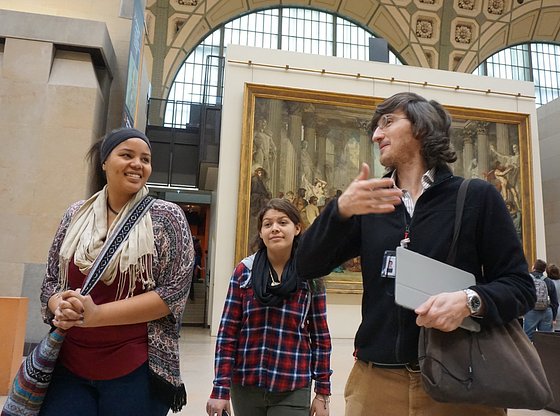


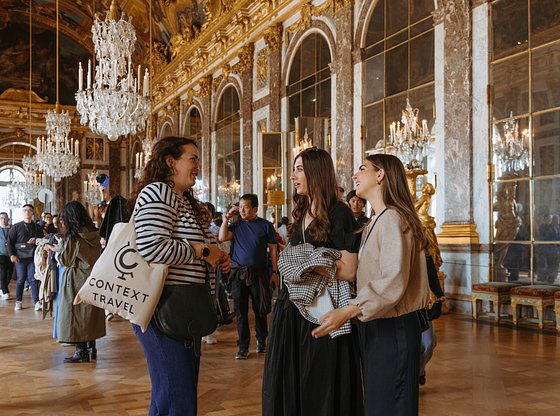


Louvre Highlights Tour
The Louvre contains hundreds of thousands of objects spanning civilizations, dynasties, religions, and artistic movements. The challenge is rarely finding something important to see. It is understanding why one object belongs beside another—and deciding where to focus. This Louvre highlights tour is built around those connections. Rather than attempting to cover the museum room by room, your art historian selects works that help explain larger shifts in art and history. An ancient sculpture can reveal ideas that Renaissance artists later revived. A royal commission can show how art communicated political authority. A painting familiar from textbooks can look different once you understand the conventions its artist was challenging. The route varies according to your Expert, museum conditions, and your interests. That flexibility matters in a museum as large as the Louvre: the goal is not to complete a prescribed checklist, but to leave with a framework for looking at the collection—and at art more broadly.
The Louvre was not designed as a modern museum from the beginning.
It developed from a medieval fortress into a royal palace before becoming a public museum during the French Revolution. Its buildings expanded repeatedly, while royal collections, archaeological discoveries, purchases, political upheaval, and changing ideas about what museums should preserve continually reshaped what was displayed inside.
That history helps explain why the collection feels so vast.
Ancient Mesopotamian objects, Greek and Roman sculpture, Italian Renaissance painting, French monumental canvases, royal apartments, and decorative arts can all appear within the same complex. They belong to very different histories, yet each reflects changing ideas about power, religion, beauty, patronage, and cultural inheritance.
A useful first visit therefore requires selection.
Trying to see “the Louvre” in its entirety usually produces more distance covered than understanding gained. A focused route gives individual works enough context to become memorable while helping you recognize relationships across periods.
Leonardo da Vinci’s Mona Lisa is one of the Louvre’s most recognizable works, but fame can make the painting harder to see.
Its relatively small scale can surprise visitors, especially amid the crowd that gathers around it. The more interesting questions begin once you look beyond its celebrity.
Leonardo’s handling of light, atmosphere, landscape, and facial expression contributed to a portrait that feels unusually alive. His use of sfumato softens transitions rather than defining every edge sharply, while the sitter’s pose and direct relationship with the viewer differed from many earlier portrait conventions.
Its modern fame developed much later and has its own history, shaped by reproduction, criticism, popular culture, and the painting’s theft from the Louvre in 1911.
Seeing the Mona Lisa alongside other Renaissance works therefore changes the question from “Why is everyone taking a photograph of this?” to “What was Leonardo doing differently—and how did this painting acquire the status it has today?”
That shift from recognition to interpretation is one of the central aims of the tour.
Knowing the name of an artwork and understanding how to look at it are different skills.
An art historian may draw your attention to composition, gesture, scale, material, symbolism, or the original setting for which a work was made. Those details provide clues before dates and names enter the conversation.
Context also matters beyond the object itself.
Who paid for the work? Who was supposed to see it? Was it made for a church, palace, tomb, civic space, or private home? What artistic convention did its creator follow—or deliberately break? How did later generations decide that this particular object belonged in a national museum?
Questions like these reduce the Louvre's dependence on prior art knowledge. They also provide a method you can continue to use after the tour, whether you are visiting another gallery in Paris or a completely different museum years later.
For travelers comparing Louvre experiences, this Signature tour is designed as the essential overview: a focused introduction to major works and ideas with enough flexibility to respond to your interests. Families with younger travelers may prefer the dedicated Louvre Tour for Kids, while returning visitors looking beyond the museum’s best-known works may be better suited to a more specialized itinerary.
What is a Louvre highlights tour?
A Louvre highlights tour focuses on a carefully selected group of significant works rather than attempting to cover the entire museum. The aim is to provide enough historical and artistic context to understand major parts of the collection without rushing through dozens of galleries.
Is a private Louvre tour worth it?
A private Louvre tour can be particularly useful if you want the discussion to reflect your interests or level of art-historical knowledge. It also allows your Expert to adjust the route according to museum conditions and spend longer with works that generate questions.
What are the must-see works at the Louvre?
Many first-time visitors prioritize works such as Leonardo da Vinci’s Mona Lisa, the Venus de Milo, and the Winged Victory of Samothrace. However, galleries and individual works can close or move, so no specific artwork should be treated as absolutely guaranteed on every visit.
For more information, check out our Complete Guide to Visiting the Louvre Museum in Paris.
For more information, check out our Complete Guide to Visiting the Louvre Museum in Paris.
How long should you spend at the Louvre?
There is no realistic amount of time in which to see the entire collection meaningfully. For a first visit, a focused two- to three-hour experience can provide a strong introduction without overwhelming you. This Signature Louvre Tour lasts approximately 2.5 hours.
What is the best way to visit the Louvre for the first time?
Choose a limited number of priorities rather than attempting to see everything. Understanding the museum’s layout in advance and grouping works into a coherent route can reduce unnecessary walking and make the collection easier to absorb.
Does this Louvre tour include the Mona Lisa?
The Mona Lisa is a central work on this tour and is included, subject to museum operations and gallery access.
Is this a guided Louvre Museum tour?
Yes. The experience is led by a Context Expert, typically with a background in art history or a related discipline, and includes timed museum admission.
Can I stay inside the Louvre after the tour?
Current Louvre rules require guests visiting as part of a guided group to exit with their guide. If you want to return independently afterward, you will need a separate individual admission ticket.
Is the Louvre suitable if I do not know much about art?
Yes. No prior knowledge is necessary. A strong introductory tour should make visual evidence and historical context understandable without assuming familiarity with artistic terminology or chronology.
What is the difference between a Louvre highlights tour and trying to see the museum independently?
An independent visit gives you complete freedom but requires you to choose your own route and interpret the collection yourself. A highlights tour provides selection and context: why certain works matter, how they relate to one another, and what to look for when standing in front of them.