Aaron was a fantastic guide. His tour was clearly not a canned presentation, but built on our existing knowledge and on our interests. His discussion of Kings Cross Chapel was especially interesting and helped us understand iconography we saw elsewhere - we started seeing portcullises (portculli?) all over the place in London the next day! We would have missed 80% of the cool stuff of Cambridge without his guidance. Well worth it!

Cambridge Day Trip from London
Explore college courts, chapel, and ideas that shaped the world
Explore Cambridge with an Expert and transforms centuries of scholarship, innovation, and tradition into a living story.
Tour Highlights
- Cambridge through expert eyes Discover the stories, traditions, and ideas that shaped the university and city.
- Connect past and present See how a medieval institution remains a global center of learning and innovation.
- Beyond the famous landmarks Uncover hidden details, rivalries, and traditions woven into daily university life.
- Centuries of achievements Encounter the thinkers and discoveries that changed the world.
Led by Experts, Shaped by You
Explore with an expert guide who responds to your questions, your interests, and your pace. Reveal layers of meaning most visitors miss—go from seeing to understanding.


The Finer Details
Located just an hour East of London by train, Cambridge sits beautiful along the river Cam. From the storied rivalry with Oxford to the vibrancy of its research and literature, Cambridge has something for everyone. Don't miss this opportunity to immerse yourself in the charm and culture of this unforgettable city. Join this tour to discover the prestige of its world-famous university, the grandeur of its historic colleges, the beauty of the tree-lined Backs and River Cam, and the energy of its students crisscrossing campus on bikes.
An exploration of the university and its colleges may take us in myriad directions from the main thoroughfare, King's Parade, depending on the interests of the group and the proclivities of our guide, but will often include Emmanuel College, where John Harvard of the university fame studied and Pembroke College, the third oldest and one of the largest colleges. Both of these institutions are further distinguished by the 17th-century addition of chapels designed by Christopher Wren.
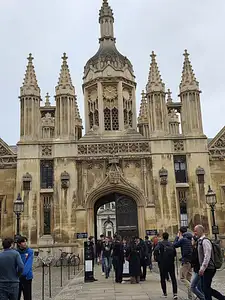
We might also include Queens College, with its beautiful medieval Old Court. The Court consists of the chapel, library, and dining hall and is home to both an unusual 'sun and moon dial' and William Etheridge's 'Mathematical Bridge', a great feat of 18th-century engineering. Finally, we may stop by King's College and Chapel, founded in 1441, and the icon of the city of Cambridge; a masterpiece of English architecture, with its fan-vaulted ceiling and Rubens' altarpiece.
A stroll down Trinity Street will take in Trinity College, which was founded by Henry VIII in 1546, and St. John's College, with its School of Pythagoras and its neo-Gothic Bridge of Sighs—two iconic emblems of Cambridge.
Meet the Experts


Where You’ll Go
From iconic landmarks to tucked-away local favorites, these are the places you’ll explore and experience firsthand with your Expert.
-
King's College and Chapel
What’s Included As Standard
Here’s a look at what your tour covers, plus anything you’ll want to consider arranging separately, so you can plan with confidence.
Included
-
English-speaking expert guideTours led in English, offering you unbroken understanding throughout.
-
Intentionally sized groupsA smaller group means more time for conversations and questions.
-
Tickets and entrance feesAll entry tickets included (unless clearly stated otherwise).
-
HeadsetsHeadsets are included on tours that need them, so every word can be heard.
Not Included
-
GratuitiesTips aren’t included, but we encourage tipping as a way to thank your guide after your experience.
-
Food and drinkUnless booking a Food & Drink tour or tasting experience, refreshments are not included.
-
Transportation to and from the meeting pointUnless noted, pre- and post-tour transport isn’t included - this service can be added by request.
-
Hotel pickup or drop-offUnless noted, travel to or from accommodation isn’t included - this service can be added by request.
Where You'll Explore
Make the Most of Your Tour
Some helpful advice for getting the most from your experience, from practical prep to small on-the-day tips.
Dos:
- Wear comfortable footwear
- Check the weather and dress appropriately
- Bring a bottle of water (no glass)
- Feel free to ask your Expert anything
Don'ts:
- Bring firearms or weapons
- Bring sharp objects (e.g. knives, swiss army knives, switchblades, hiking sticks)
- Dress inappropriately to enter religious sites or sacred monuments
Any questions? You can always
contact us.
Frequently Asked Questions
You will meet your guide in Cambridge at the train station; however, if you are booking a private tour and are staying in Cambridge, we can arrange for a different meeting point. Trains leave from both London Liverpool Street Station and Kings Cross Station and run pretty frequently. The journey ranges between 1 hour to 1.5 hours, depending on the train. Tickets can be bought online ahead of time or at the station. Online tickets and schedules are available at: http://www.nationalrail.co.uk/
You will go inside colleges and other sites. We will purchase tickets at the time of the visit. Colleges are sporadically closed throughout the summer with very short notice. Our experts will do their best to grant alternative visits on these occasions.
Yes! We have some excellent family-friendly guides who can appeal to the learning styles of children. Feel free to provide us with information about your children such as favorite school subjects, and hobbies. This way we can match you with the best possible guide.
We cover about 2.5 miles during the walk. There are plenty of opportunities to sit down and rest, but please let us know if you have any mobility concerns.
Don’t just take our word for it
Be ready for a lot of walking.Our guide georgiana was very knowledgeable and took us from kings college to queens college to trinity college.We did go in the library built by christopher wren, absolutely beautiful and saw some original manuscripts going back to the seventeen hundreds and georgianna.Knew all about them.It was a wonderful trip.It's a lot of walking
Private tour allowed us to tailor the experience to our wishes. Mary was extremely knowledgeable and personable. An amazing day
Let Your Curiosity Shape Your Journey
Join passionate experts on intimate walking tours that reveal a city’s unique stories, spark conversations, and leave you seeing the world—and yourself—a little differently.
Structured, never scripted
Your interests guide your Expert, leading to stories and perspectives that matter to you.
Crafted for conversation
With 12 or fewer guests, ask questions, engage with your Expert, and fully immerse yourself.
Experts, not guides
Explore with 1,200+ Experts—from historians and architects to archaeologists and chefs.


.png)