Stephanie was exceptional! Very informative easy to understand, and a pleasure to spend time with. I would book another tour with her specifically.

Notre-Dame and Gothic Paris Tour
Grasp the logic of Gothic Paris from nave to street
From pointed arches to soaring cathedrals, follow Paris’s remarkable evolution through stone, story, and centuries of ambition.
Tour Highlights
- Trace Notre-Dame’s rebirth Stand before a restored icon to understand it through fire, loss, and renewal.
- Decode Gothic design With your Expert, learn how arches, light, and symbols shaped both faith and power.
- See recovered kings up close Encounter façade statues face to face: once lost, now revealed in Musée de Cluny.
- Navigate with ease Move confidently through crowds and busy squares of this UNESCO World Heritage site.
- Put Paris in perspective Link the medieval cathedral, museum, and Left Bank into one clear narrative.
- Turn headlines into memories Transform the global news you followed into your own personal and lasting encounter.
Led by Experts, Shaped by You
Explore with an expert guide who responds to your questions, your interests, and your pace. Reveal layers of meaning most visitors miss—go from seeing to understanding.


The Finer Details
Gothic architecture wasn’t born fully formed. It rose, stone by stone, from the streets of medieval Paris. In the 12th and 13th centuries, this city became a playground for experimentation with height, light, and structural daring. What challenges were these builders trying to solve? And how did Paris become the stage for an architectural revolution?
Our journey begins in the medieval city that shaped Gothic innovation. At the Musée de Cluny, we encounter fragments of churches, stained glass, sculpture, and liturgical objects that bring the world of Gothic Paris to life. A room devoted to the recovered kings from Notre Dame’s original façade invites especially close looking: toppled during the Revolution, buried, and rediscovered centuries later, they reveal how architecture can be venerated, misread, and reclaimed over time.
On days when Cluny is closed, we turn instead to the Conciergerie, the former royal palace that later became a Revolutionary prison. Beneath its soaring Gothic halls, trace how the same architectural language served shifting powers, from Capetian monarchy to the machinery of the Terror. In both settings, Gothic architecture emerges not as isolated beauty, but as the framework for Paris’s political, spiritual, and social life.
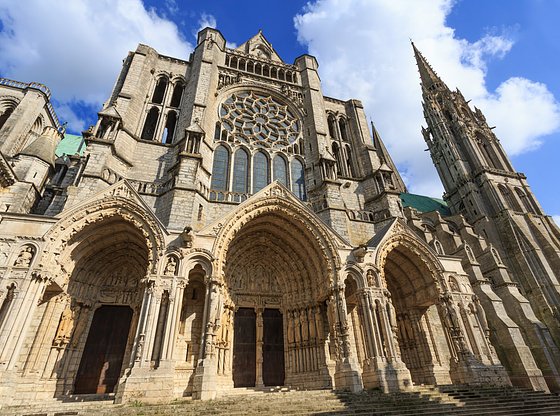
From here, we cross Île de la Cité towards the masterpiece at the heart of Paris’s Gothic story: Notre Dame. Its sculpted portals, pointed arches, and flying buttresses reveal the logic of a new style obsessed with verticality and illumination. Here, engineering and theology converge: walls dissolve into stained glass, weight shifts outward, and architecture becomes a vessel for light, belief, and human ambition.
Standing before the cathedral, we explore how Notre Dame transformed medieval architectural ideas into one of the world’s most enduring monuments. The 2019 fire and the ongoing restoration add a modern chapter to this long story of resilience, but they are only one moment in a much older narrative of creation, destruction, and renewal.
Our tour concludes here, where, after discovering the cathedral’s history, symbolism, and architectural innovations with your expert guide, you will have the opportunity to explore the cathedral’s interior independently, with a deeper understanding of the ideas, craftsmanship, and stories that shaped this remarkable Gothic masterpiece.
Throughout this Gothic Tour of Paris, we move with intention, linking Left Bank and Île de la Cité into a coherent arc rather than a checklist of monuments. By the end, Notre-Dame is no longer an isolated icon or a headline frozen in 2019. It’s part of a living Gothic city. A city where structure, symbolism, and story still rise together in stone and light.
Our tour concludes here, where, after discovering the cathedral’s history, symbolism, and architectural innovations with your expert guide, you will have the opportunity to explore the cathedral’s interior independently, with a deeper understanding of the ideas, craftsmanship, and stories that shaped this remarkable Gothic masterpiece.
Throughout this Gothic Tour of Paris, we move with intention, linking Left Bank and Île de la Cité into a coherent arc rather than a checklist of monuments. By the end, Notre-Dame is no longer an isolated icon or a headline frozen in 2019. It’s part of a living Gothic city. A city where structure, symbolism, and story still rise together in stone and light.
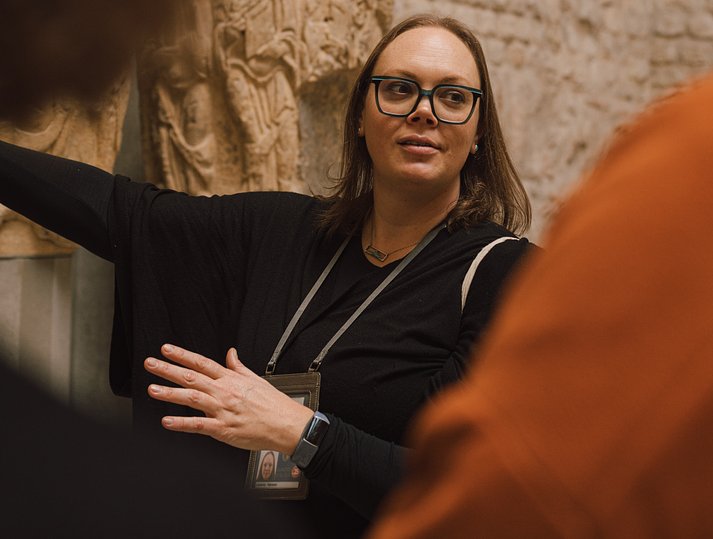
Meet the Experts










































%20-%202026-04-23T140946.304.png)
Where You’ll Go
From iconic landmarks to tucked-away local favorites, these are the places you’ll explore and experience firsthand with your Expert.
-
Notre-Dame Cathedral (exterior only)Parisian Gothic cathedral renowned for architecture, sculptures, and stained glass.
-
ConciergerieHistoric medieval royal palace on the Île de la Cité.
-
Musée de ClunyMedieval art museum housed within a 15th-century mansion and 1st-century Roman baths.
-
Church of Saint-SéverinHistoric church known as a masterpiece of flamboyant Gothic architecture.
What’s Included As Standard
Here’s a look at what your tour covers, plus anything you’ll want to consider arranging separately, so you can plan with confidence.
Included
-
English-speaking expert guideTours led in English, offering you unbroken understanding throughout.
-
Intentionally sized groupsA smaller group means more time for conversations and questions.
-
Tickets and entrance feesAll entry tickets included (unless clearly stated otherwise).
-
HeadsetsHeadsets are included on tours that need them, so every word can be heard.
Not Included
-
GratuitiesTips aren’t included, but we encourage tipping as a way to thank your guide after your experience.
-
Food and drinkUnless booking a Food & Drink tour or tasting experience, refreshments are not included.
-
Transportation to and from the meeting pointUnless noted, pre- and post-tour transport isn’t included - this service can be added by request.
-
Hotel pickup or drop-offUnless noted, travel to or from accommodation isn’t included - this service can be added by request.
Where You'll Explore
Make the Most of Your Tour
Some helpful advice for getting the most from your experience, from practical prep to small on-the-day tips.
Dos:
- Wear comfortable footwear
- Check the weather and dress appropriately
- Bring a bottle of water (no glass)
- Feel free to ask your Expert anything
Don'ts:
- Bring firearms or weapons
- Bring sharp objects (e.g. knives, swiss army knives, switchblades, hiking sticks)
- Dress inappropriately to enter religious sites or sacred monuments
Any questions? You can always
contact us.
Frequently Asked Questions
Due to the current strict guiding restrictions at Notre-Dame, this tour does not include an interior visit to the cathedral. The tour will conclude outside Notre-Dame, where your expert guide will share the history and significance of the cathedral before providing you with all the information you need to explore the interior at your own pace afterward.
The majority of tours will visit the Cluny Museum. As the museum is closed on Mondays, visitors on this day will instead visit the interior of the Conciergerie. Additionally, should the Cluny Museum experience other closures or last minute disruptions, Context will offer the Conciergerie as a replacement venue.
Please leave us a note when reserving your tour and our team will verify if this is possible!
The tour begins on the Left Bank. Your confirmation email will have the exact meeting point details along with a map. The tour will conclude outside Notre-Dame, where you will have the opportunity to explore the interior on your own after the tour.
Yes, we pre-purchase tickets to the secondary venue, either the Conciergerie or the Musée de Cluny.
Unfortunately, the Museum Pass cannot be used for this tour. Tickets are mandatory and cannot be canceled or modified.
Yes! We have some excellent family-friendly guides who can appeal to the learning styles of children. We have a separate Notre Dame and Gothic Paris for Kids tour just for families with children 12 and under. When booking, please provide us with information about your children, such as their favorite school subjects and hobbies. This way we can match you with the best possible guide.
Book with confidence — see Context's flexible cancellation policy here.
We understand that some of our valued guests may have mobility concerns, and we want to ensure you have a comfortable and enjoyable experience throughout your tour. If there are any accessibility concerns that your tour guide will need to be aware of, please let our team know at the time of booking.
Is this tour wheelchair-friendly?
Is this tour wheelchair-friendly?
While the Conciergerie is not accessible for wheelchair users, the rest of the tour is wheelchair friendly. We would recommend booking a private tour and adding a car service.
Don’t just take our word for it
The guide asked me about the places I have visited on prior trips to Paris. Since I have seen many of the popular sites, it was decided that we would tour the prisons and justice buildings close to Notre Dame Cathedral. It was a treat to see where Marie Antoinette sent her last few months.
Laurent was a n excellent guide! Knowledgeable and incredibly enjoyable individual. We enjoyed our tour very much.
Let Your Curiosity Shape Your Journey
Join passionate experts on intimate walking tours that reveal a city’s unique stories, spark conversations, and leave you seeing the world—and yourself—a little differently.
Structured, never scripted
Your interests guide your Expert, leading to stories and perspectives that matter to you.
Crafted for conversation
With 12 or fewer guests, ask questions, engage with your Expert, and fully immerse yourself.
Experts, not guides
Explore with 1,200+ Experts—from historians and architects to archaeologists and chefs.
Related experiences our customers also loved



Notre Dame Tour Paris
Notre Dame is easier to understand when you see it as part of the city that created it. This Notre Dame tour in Paris traces the rise of Gothic architecture through the Left Bank, Île de la Cité, and the cathedral itself, connecting architectural innovation with medieval religion, monarchy, craftsmanship, and urban life. Rather than treating Notre Dame as an isolated masterpiece, the tour asks a larger question: why did this new architectural language emerge in and around Paris in the twelfth and thirteenth centuries? Pointed arches, ribbed vaults, flying buttresses, sculpture, and stained glass were not simply stylistic choices. Together, they allowed medieval builders to create taller, brighter interiors while turning churches into expressions of theology, political authority, and civic ambition. That context makes Notre Dame more legible. You begin to see not just a famous façade, but a building shaped by centuries of experimentation, destruction, adaptation, and renewal.
Gothic architecture changed how medieval churches could use height, weight, and light.
Earlier stone churches depended heavily on thick walls to support their roofs. Gothic builders developed structural systems that redirected loads more efficiently, allowing walls to become taller and more open.
Pointed arches helped distribute weight differently from rounded Romanesque arches. Ribbed vaults organized the ceiling into a structural framework. Flying buttresses carried forces outward from the upper walls, allowing larger windows to replace more masonry.
The result was both practical and symbolic.
More stained glass meant more colored light inside the church. Height directed the eye upward. Sculpted portals turned the exterior into a visual account of Christian belief for a population that encountered religious ideas through image, ritual, preaching, and architecture.
Notre Dame did not invent all of these techniques, but it became one of their most influential expressions.
Its importance lies partly in how engineering and theology reinforce one another: structural innovation creates the physical conditions for an architecture built around light.
Notre Dame belongs to a wider architectural and political landscape.
The Musée de Cluny preserves sculpture, stained glass, liturgical objects, and fragments that help reconstruct the visual world of medieval Paris. Among its most important Notre-Dame-related objects are the heads of kings from the cathedral’s Gallery of Kings, removed during the French Revolution and rediscovered centuries later.
Their story is revealing.
Revolutionaries mistakenly associated the biblical kings on Notre-Dame’s façade with the French monarchy and destroyed them. Their later recovery shows how monuments can be reinterpreted as political circumstances change.
On days when the Cluny Museum is unavailable, the Conciergerie provides a different lens. Its surviving Gothic halls belonged to the medieval royal palace on the Île de la Cité before the building later became famous as a Revolutionary prison.
Together, these sites show that Gothic architecture was never purely religious.
It developed within a city where monarchy, church, law, commerce, pilgrimage, and public life overlapped. Understanding that environment makes Notre Dame less like an architectural exception and more like the most famous surviving expression of a much larger medieval Paris.
The fire of April 2019 became part of Notre Dame’s history almost immediately, but it was not the first time the cathedral had been altered, damaged, or reimagined.
Over more than eight centuries, Notre Dame has been modified by changing religious practice, political upheaval, restoration campaigns, and shifting ideas about what should be preserved.
The nineteenth-century restoration led by Eugène Viollet-le-Duc, for example, did not simply repair the medieval building. It also shaped the version of Notre Dame that generations of modern visitors came to know, including the spire destroyed in the 2019 fire.
The recent restoration therefore raised an old conservation question in a new form: what does it mean to restore a historic building whose own history includes repeated change?
Notre Dame reopened in December 2024 after an extraordinary restoration effort involving architects, conservators, engineers, craftspeople, and specialists in historic materials. Some restoration and work around the cathedral complex has continued beyond the reopening.
For visitors today, the restored cathedral offers an unusual opportunity to consider medieval architecture alongside the modern decisions required to preserve it.
What does a Notre-Dame tour include?
This tour explores Gothic Paris through sites connected to Notre Dame and medieval architecture, including the Left Bank, Île de la Cité, and either the Musée de Cluny or Conciergerie depending on opening conditions. The cathedral itself forms the culmination of the experience.
Why is Notre-Dame considered Gothic architecture?
Notre Dame uses defining Gothic features including pointed arches, ribbed vaults, flying buttresses, large stained-glass windows, and sculpted portals. These structural innovations allowed medieval builders to create greater height and more light while also communicating religious ideas through architecture.
How old is Notre-Dame Cathedral?
Construction began in the twelfth century and continued over several generations. The cathedral therefore reflects multiple phases of medieval design rather than a single moment of construction.
What happened to Notre-Dame in the 2019 fire?
The fire severely damaged the roof and destroyed the nineteenth-century spire, while much of the stone structure and many significant artworks survived. A major international restoration effort followed, and the cathedral reopened in December 2024.
Is Notre-Dame fully restored?
The cathedral reopened in December 2024, but restoration and work associated with the wider site have continued beyond that date. Current access conditions can change as projects progress.
What is the Musée de Cluny’s connection to Notre-Dame?
The Musée de Cluny holds important medieval objects connected to Notre Dame, including heads from the cathedral’s Gallery of Kings that were removed during the French Revolution and rediscovered in the twentieth century.
Why were the kings on Notre-Dame destroyed?
During the French Revolution, figures in the cathedral’s Gallery of Kings were mistaken for representations of French monarchs and targeted as symbols of royal power. They actually represented biblical kings.
Is Notre Dame free to enter?
Yes. Entry to the cathedral itself is free, although visitors pass through security and access procedures can change. Context’s How to Visit Notre Dame guide has the latest practical planning information.
How is this different from simply visiting Notre Dame independently?
An independent visit, like our Notre-Dame Audio Guide, lets you experience the cathedral itself, while this tour places Notre Dame within the development of Gothic Paris. By connecting it with medieval sculpture, royal architecture, religious history, and other Gothic sites, the experience explains why the cathedral looks the way it does and why those architectural choices mattered.