Secure your spot on an upcoming Small Group Tour. See what's still available.
Marrakech Cooking Class

Marrakech Cooking Class: Tagine and Zaalouk

Learn how spices, time, and tradition shape Moroccan dishes

The Finer Details
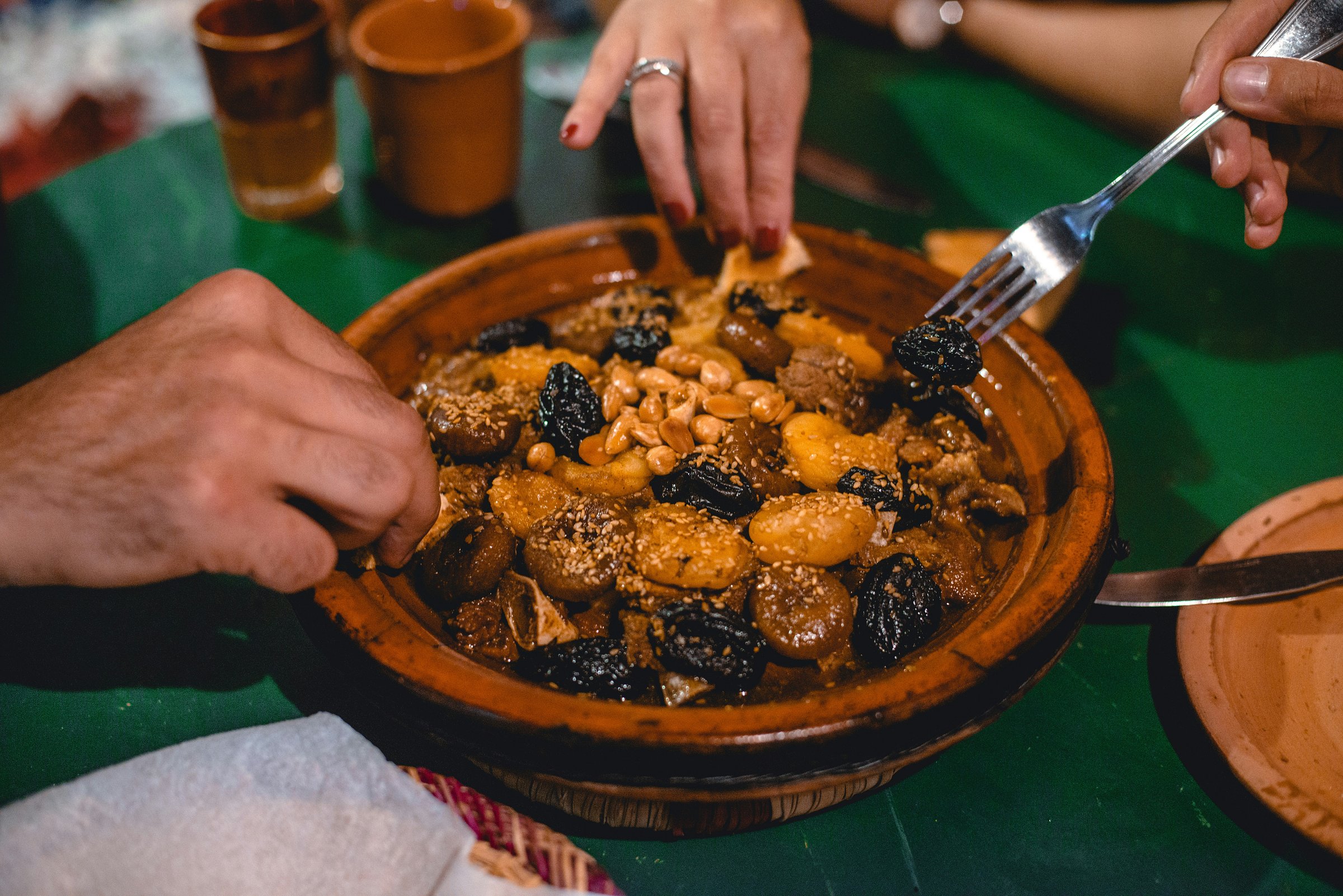
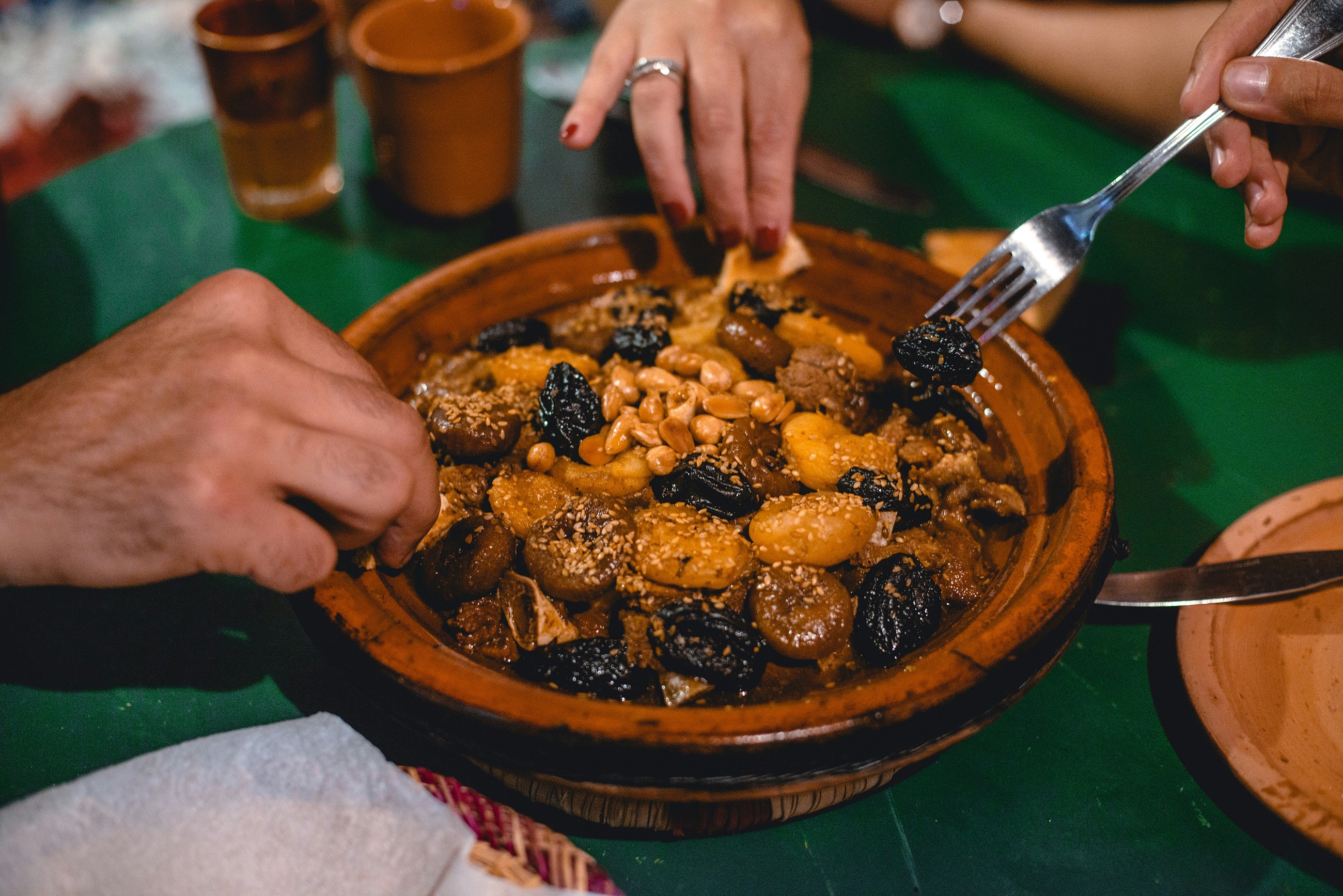
Explore the unique flavors of Marrakech with a hands-on cooking experience where you will learn how to cook in a tagine, the Moroccan traditional clay pot with its peculiar shape, and how ingredients slowly meld together. This unique method creates the deep, aromatic flavors that are the heart of Moroccan cuisine. 

Guided by a local chef, you will craft iconic dishes like tagine and zaalouk, and learn unique stories of tradition, family, and flavor.

Route Details

Step into the heart of Marrakech’s culinary world, where each dish reflects the soul of Moroccan culture. At La Maison Arabe, you’ll be greeted with a traditional Moroccan tea. 

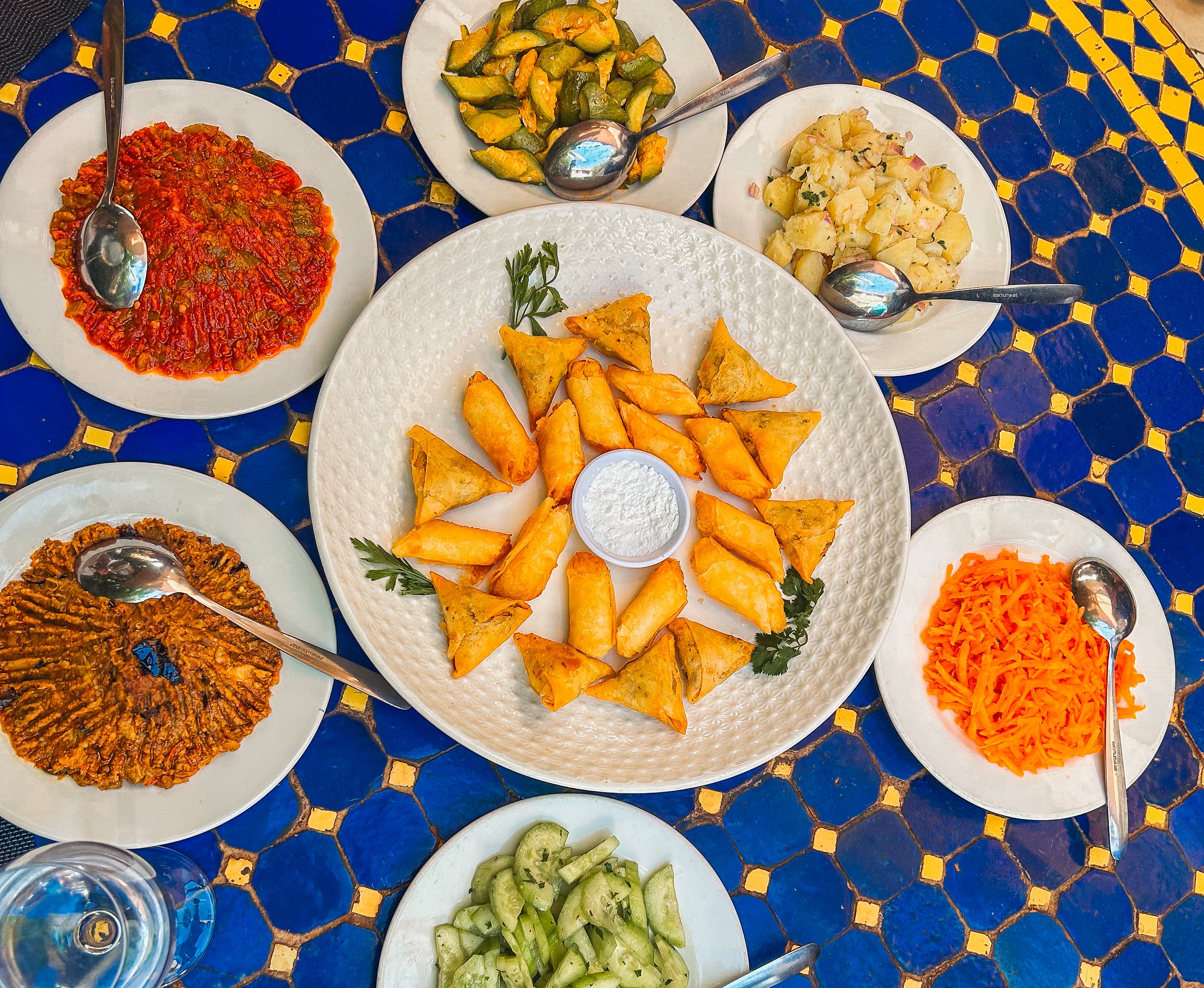
Under the guidance of a skilled local chef, you’ll then begin by preparing traditional starters, each bite infused with the essence of Morocco. As you move on to the main course, you’ll learn the art of crafting a savory tagine, paired with zaalouk, the traditional smoky eggplant dip. These dishes, passed down through generations, hold the stories of Moroccan kitchens and families.

After the cooking is done, sit down to enjoy the meal you’ve just created. In the warmth of Moroccan hospitality, share the joy of your meal with fellow travelers, exchanging stories and savoring every bite. Throughout the experience, your chef will share their personal connection to these recipes, passed down from grandmother to mother to daughter, adding a deeper layer to each dish.

More than just a cooking class, this experience offers a chance to explore the traditions, flavors, and heartfelt stories of Morocco. It’s about learning, connecting, and creating lasting memories.

Sites Visited

  •  La Maison Arabe – In their professional kitchen, the magic of Moroccan cooking happens.

Accessibility

We understand that some of our valued guests may have mobility concerns, and we want to ensure you have a comfortable and enjoyable experience throughout your tour. If there are any accessibility concerns that your tour guide will need to be aware of, please let our team know at the time of booking.

Wheelchair accessibility
Unfortunately, the location where the cooking class takes place has stairs to go up and down so it’s not suitable for wheelchair users.

Frequently Asked Questions

How will we get around during the tour? For your comfort and safety, all our tours in Morocco include private, air-conditioned transportation. Your vehicle and driver are at your complete disposal for the entire duration of the tour, providing a seamless way to move between sites or take a quick break from the heat.

Does the tour include hotel pickup? Yes. We provide door-to-door service with private transfers to and from your accommodation. To ensure a smooth start to your experience, please provide your complete hotel or riad address at the time of booking.

Can I take this tour if I have mobility issues? Unfortunately, the location where the cooking class takes place has stairs to go up and down so it’s not suitable for wheelchair 
users.

Can I take this tour if I have dietary restrictions? Yes, this tour is suitable for vegans and vegetarians. Please note the food is not suitable for celiac guests due to cross-contamination.

Can we bring children to this experience? Yes, children are welcome, especially if they enjoy trying new foods and are excited to participate in the kitchen. This hands-on experience can be a wonderful opportunity for curious young cooks to engage with Moroccan food and culture.

Should we wear or avoid wearing anything in particular during our trip to Morocco? While there is no strict, enforced dress code, visitors should dress modestly out of respect for local culture. It is recommended to cover shoulders, arms and knees, and avoid revealing clothing.

Cancellation Policy

Book with confidence — see Context's flexible cancellation policy here
Where You’ll Go

From iconic landmarks to tucked-away local favorites, these are the places you’ll explore and experience firsthand with your Expert.

  • La maison Arabe
What’s Included As Standard
Here’s a look at what your tour covers, plus anything you’ll want to consider arranging separately, so you can plan with confidence.
Included
  • English-speaking expert guide
    Tours led in English, offering you unbroken understanding throughout.
  • Intentionally sized groups
    A smaller group means more time for conversations and questions.
  • Tickets and entrance fees
    All entry tickets included (unless clearly stated otherwise).
  • Headsets
    Headsets are included on tours that need them, so every word can be heard.
Not Included
  • Gratuities
    Tips aren’t included, but we encourage tipping as a way to thank your guide after your experience.
  • Food and drink
    Unless booking a Food & Drink tour or tasting experience, refreshments are not included.
  • Transportation to and from the meeting point
    Unless noted, pre- and post-tour transport isn’t included - this service can be added by request.
  • Hotel pickup or drop-off
    Unless noted, travel to or from accommodation isn’t included - this service can be added by request.

Make the Most of Your Tour

Some helpful advice for getting the most from your experience, from practical prep to small on-the-day tips.

Dos:
  • Wear comfortable footwear
  • Check the weather and dress appropriately
  • Bring a bottle of water (no glass)
  • Feel free to ask your Expert anything
Don'ts:
  • Bring firearms or weapons
  • Bring sharp objects (e.g. knives, swiss army knives, switchblades, hiking sticks)
  • Dress inappropriately to enter religious sites or sacred monuments
Any questions? You can always contact us.

Don’t just take our word for it

0 Reviews

Let Your Curiosity Shape Your Journey

Join passionate experts on intimate walking tours that reveal a city’s unique stories, spark conversations, and leave you seeing the world—and yourself—a little differently.

Structured, never scripted

Your interests guide your Expert, leading to stories and perspectives that matter to you.

Crafted for conversation

With 12 or fewer guests, ask questions, engage with your Expert, and fully immerse yourself.

Experts, not guides

Explore with 1,200+ Experts—from historians and architects to archaeologists and chefs.

Marrakech Cooking Class

Moroccan cooking is easier to understand once you stop thinking of a tagine as simply a dish. The same word describes the distinctive clay cooking vessel and the food prepared inside it. Its shape, low heat, and slow cooking method allow ingredients to soften together while concentrating spices, aromatics, and cooking juices. On this Marrakech cooking class, a local chef guides you through that process hands-on, using dishes such as tagine and zaalouk to introduce techniques that recur throughout Moroccan home cooking. The aim is not only to reproduce one recipe. It is to understand why ingredients are added in a particular order, how spices support rather than overpower a dish, and why slow cooking plays such an important role in Moroccan flavor.

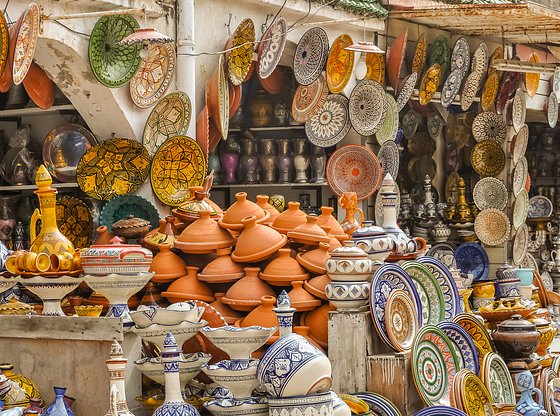
A traditional tagine consists of a shallow base topped by a tall conical lid. As food cooks, steam rises, condenses, and returns to the dish, helping ingredients cook gently with relatively little added liquid. That makes technique especially important.

Vegetables need to be arranged so they cook evenly. Meat may require a different position and timing. Spices, preserved ingredients, herbs, and aromatics are layered so their flavors develop gradually rather than being added only at the end.

The method also explains why Moroccan tagines can vary so widely.

Chicken with preserved lemon, lamb with dried fruit, vegetable tagines, and countless regional variations all use the same basic vessel but depend on different balances of sweetness, acidity, spice, and texture.

Learning the method gives you something more useful than memorizing one restaurant dish: a framework you can adapt when you cook Moroccan food again at home.
Moroccan food is often described as heavily spiced, but that does not necessarily mean hot. Spices such as cumin, ginger, turmeric, cinnamon, paprika, pepper, and saffron may be used to build warmth, fragrance, color, and depth rather than simply heat.

The interesting part is how they are combined. A spice that might seem sweet in another cuisine can appear in a savory meat dish. Acidity from preserved lemon can balance richness. Fresh herbs can brighten a preparation that has cooked slowly for hours.

Even zaalouk, a cooked eggplant and tomato preparation, shows how a relatively small group of ingredients can change through heat, seasoning, and reduction.

The class gives you the opportunity to experience those decisions while cooking, rather than encountering the finished flavor only after it reaches the table.
The most useful cooking classes change how you approach the cuisine after the experience ends. Here, you learn techniques you can recognize elsewhere during your trip: how a tagine cooks, how Moroccan spice combinations are constructed, why certain ingredients appear together, and how cooks judge texture and seasoning as a dish develops.

You also sit down to eat what you have prepared, turning the meal into a final chance to discuss what changed during cooking and why. 

The experience takes place at La Maison Arabe, whose professional cooking space provides the setting for the three-hour class. 

For travelers who want to go beyond eating Moroccan food and understand how it is actually made, this is the most hands-on culinary experience in Context’s Marrakech portfolio.

Is a tagine the pot or the food?

Both. A tagine is the traditional clay cooking vessel with a shallow base and conical lid, and the name is also used for the slow-cooked dishes prepared inside it.

Is this a hands-on Moroccan cooking class?

Yes. You prepare the dishes under the guidance of a local chef rather than only watching a demonstration. 

What will I learn to cook?

The current class focuses on traditional Moroccan preparations including tagine and zaalouk, along with accompanying starters. 

Do we eat what we cook?

Yes. After preparing the dishes, you sit down to enjoy the meal you have made. 

What is zaalouk?

Zaalouk is a Moroccan preparation typically made with cooked eggplant and tomato, seasoned with herbs and spices.

It is often served as a salad or side dish and is a useful example of how Moroccan cooking builds flavor through reduction, seasoning, and texture.

Is Moroccan food always spicy?

Moroccan cooking makes extensive use of spices, but it is not necessarily hot. Many spices are used for warmth, aroma, color, and complexity rather than chile heat.

Can I recreate the dishes at home?

The techniques taught in the class are intended to be useful beyond the experience itself.

Even if you do not have an identical traditional tagine at home, understanding spice balance, ingredient layering, slow cooking, and texture gives you a stronger foundation for cooking Moroccan dishes independently.

What is La Maison Arabe?

La Maison Arabe is the Marrakech venue where the cooking class takes place, using a dedicated professional kitchen for the experience.