Fabrizio was an excellent guide with a wealth of knowledge about Pompeii. It was a wonderful experience and we highly recommend the tour.
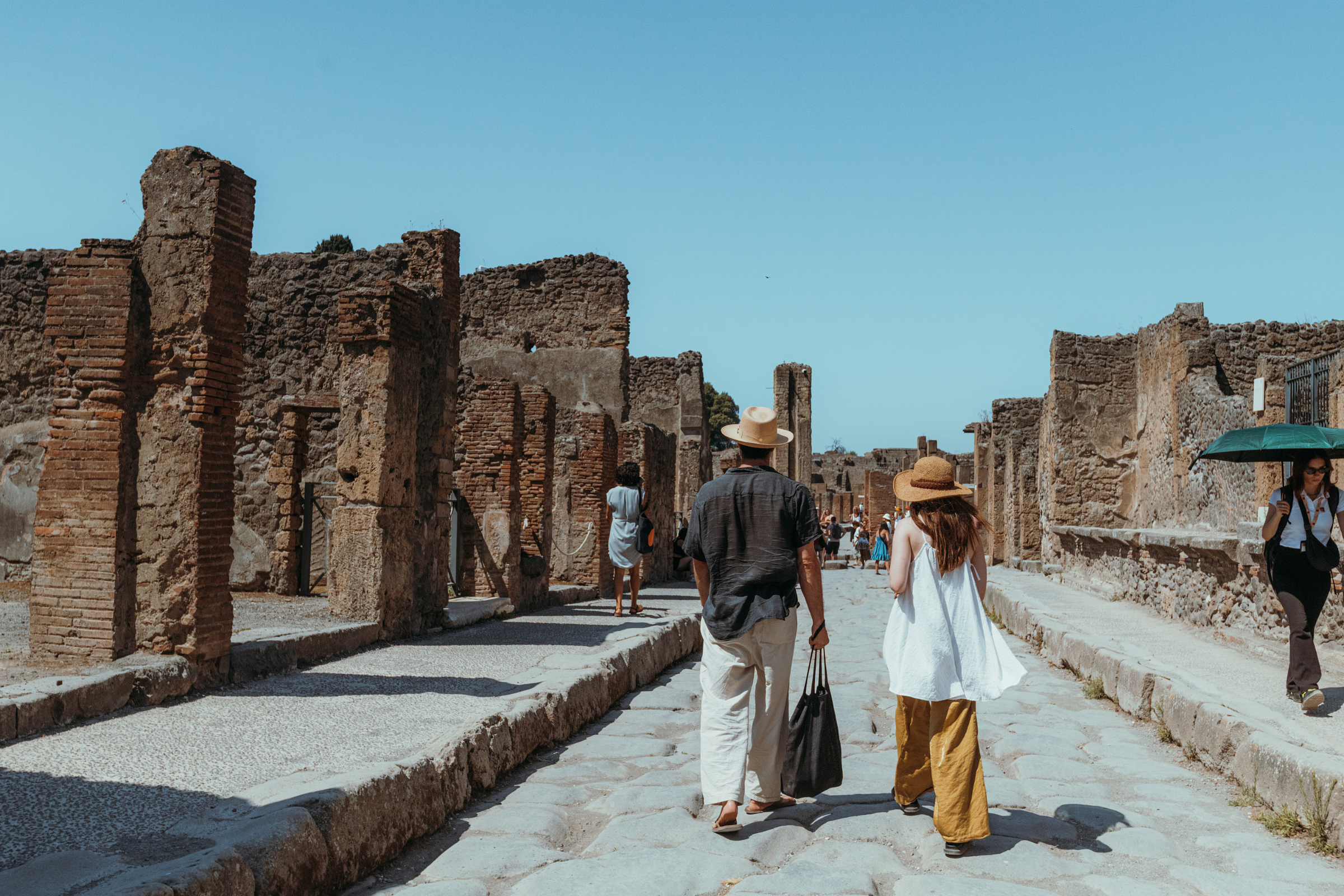
Signature Pompeii Half-Day Trip from Naples
Uncover Roman life and the eruption that froze the city in time
The Finer Details
Step into the ancient Roman city of Pompeii for an immersive 3-hour journey with your own private guide. As you traverse this well-preserved site, once bustling with life and then buried in an instant by Vesuvius, you'll gain a deep understanding of Roman politics, society, and daily life.
Your experience begins with a comfortable private car transport from Naples, setting the stage for an exclusive exploration. Once you arrive and rendezvous with your guide, delve into the history of Pompeii – starting from its early days inhabited by the Oscans, through the Samnites, to the pivotal Roman era. Your expert guide, a trained archaeologist or classical historian, will provide an insightful perspective that’s tailored to your group’s interests.
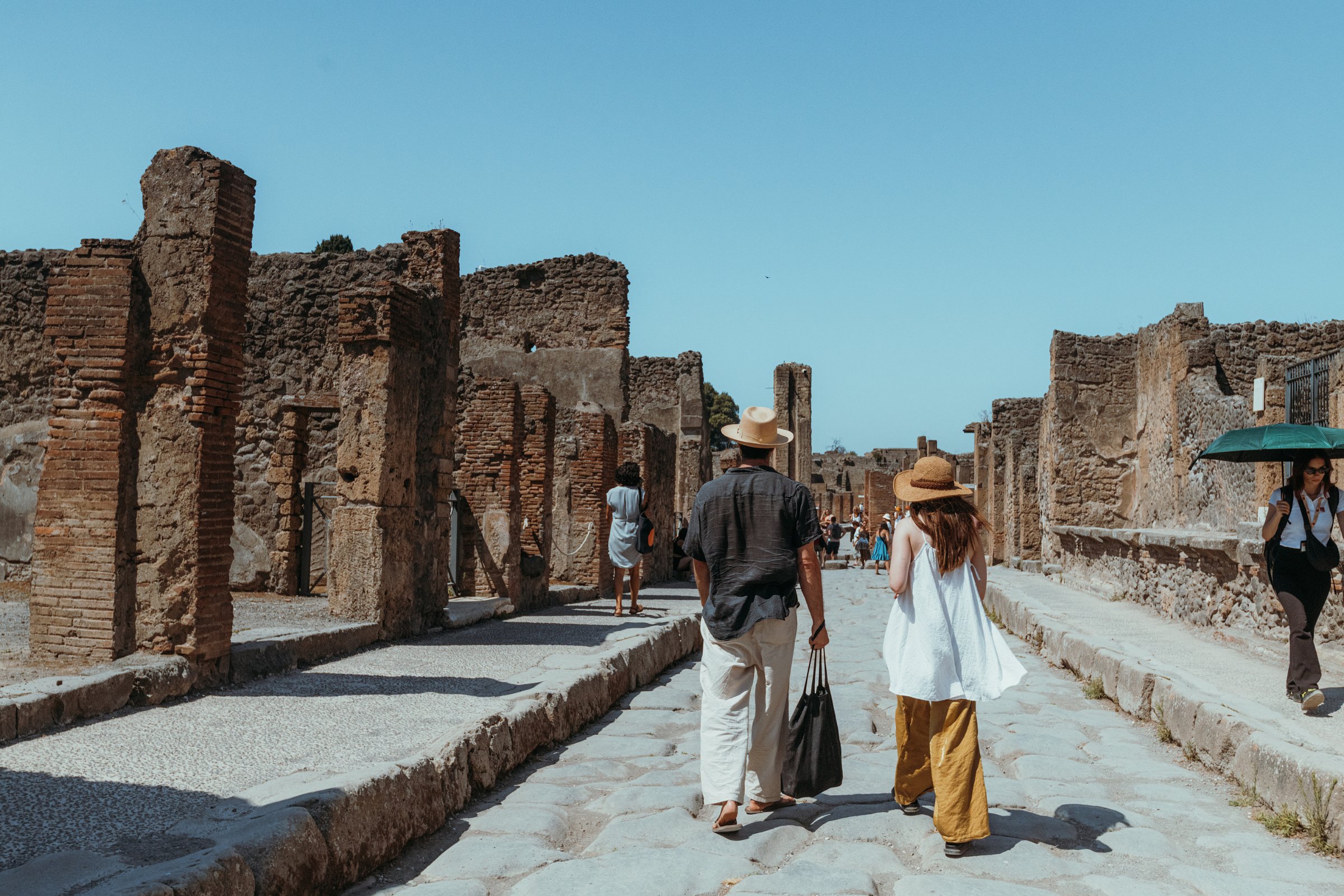
Wander ancient Roman roads and peek into what once were temples, shops, public baths, and amphitheaters. Each step brings stories to life – about everyday citizens, their children's education, and the role of enslaved persons in constructing the city. You’ll have the opportunity to marvel at the stunning frescoes of the Villa of the Mysteries and feel the poignant impact as you stand before the remains of those who tried to flee the tragic eruption. Your guide will spotlight the intricate construction and decoration of private homes, adding layers to your understanding.
Conclude your Pompeii half-day tour from Naples with a profound sense of connection to the everyday lives of the Romans and a comprehensive grasp of Pompeii's history and its abrupt end. You'll walk away not just with knowledge but with an emotional connection to this once-prosperous town, as you have unraveled its past layer by layer.
Choose this tour if...
- You seek an intimate exploration of Pompeii's rich history guided by a knowledgeable archaeologist or historian, ensuring a deeply educational and personal conversation.
- You value convenience and comfort with private car transport from Naples, allowing you to immerse yourself in the experience without the hassle of navigating logistics.
- You're interested in gaining a unique perspective on daily life, society, and politics, brought to life through expert storytelling and insightful analysis.
- You desire a comprehensive understanding of Pompeii's historical significance, peeling back layers of the past to reveal insights into a once-thriving city lost to time.
Sites Visited
Rediscovered after being buried for nearly 1,700 years under Mount Vesuvius's ash, the Pompeii Archaeological Site offers a unique snapshot of ancient Roman life. Preserved under volcanic debris, its streets, buildings, and everyday landmarks provide a remarkable, frozen-in-time view of the day of the catastrophic eruption.
Are you interested in touring the Naples Archaeological Museum as well? View our available itineraries here.
Logistics
Tickets
- Tour cost includes skip-the-line access tickets to the Archaeological Site.
- Our skip-the-line tickets will get us to a special lane where our group will have to stand in line due to security and crowd control measures.
Transport
- For your convenience, this Pompeii tour from Naples cost includes a round-trip private car service.
- A driver will pick you up from your Naples accommodation around 30 minutes before the tour's start time.
- You must provide our team with your address when you place your order.
- Your Context Expert will meet you at a designated location near the entrance to the site at your tour's start time. You'll find all the necessary details conveniently provided in your confirmation email.
- If you prefer to make your own way to Pompeii, you have the flexibility to do so.
- You can either drive there and park in the venue’s lot or use the Circumvesuviana, the local train network.
- In this case, you must let our team know when placing your order. We will then cancel the car service from your order and refund you accordingly.
- Pickup from locations outside of Naples, such as Amalfi, Positano, Sorrento, or the Port of Naples is often available. Please let our team know when booking, and we’ll confirm availability and make the necessary arrangements.
- Are you interested in touring Pompeii as a day trip from Rome? View our available itineraries here.
Availability
- We recommend booking the tour in the morning, especially in warmer months, as the site lacks shaded areas for rest. Starting early ensures a more comfortable visit.
- During the high season, we offer the tour at 3:00 pm to help you avoid cruise ship crowds, as they generally return to their boats in the early afternoon.
- This tour is unavailable on the first Sunday of the month – when Archeological Site admission is free – due to surging crowds.
- To ensure that each guest enjoys a personalized experience, our tour is limited to a maximum of 7 guests. This limitation is in place due to site and car service constraints.
Resources
- For more information on planning your tour, take a read through our Context Stories.
- If you are looking to learn more about Naples prior to a visit, check out our audio guides and online learning experiences here.
Accessibility
- The site has created a 3.5-km route from Piazza Anfiteatro to the Sanctuary of Venus, making it more accessible to guests – including those with mobility challenges and parents with strollers. This initiative is part of the ongoing Great Pompeii Project, but some areas may remain challenging to navigate.
- Feel free to chat with our team if you have questions or concerns prior to booking.
Frequently Asked Questions
For more information about Context Tours, please visit our FAQs.
Why does the walking tour last for only three hours? Given Pompeii's size, shouldn't it take longer to explore?
Over the years, we’ve found that extended exposure to the heat can be challenging for clients, especially children and older individuals. Rest assured that our tour covers the major sites and provides clients with a comprehensive overview of the site's history.
Are there dining options inside Pompeii?
Yes, there are cafes and snack bars within the site where you can purchase refreshments.
What should I wear to visit Pompeii?
Comfortable walking shoes and lightweight, weather-appropriate clothing are recommended. Sunscreen and a hat are advisable during the summer months.
Can I be picked up from a location outside of Naples?
Yes, in most cases, we can arrange pickups from locations such Amalfi, Positano, Sorrento, and the Port of Naples. Please let our team know when booking, and we’ll confirm availability and make the necessary arrangements.
Can I be picked up from a location outside of Naples?
Yes, in most cases, we can arrange pickups from locations such Amalfi, Positano, Sorrento, and the Port of Naples. Please let our team know when booking, and we’ll confirm availability and make the necessary arrangements.
Cancellation Policy
Book with confidence — see Context's flexible cancellation policy here.
.png)
.png)
.png)
.png)
Meet the Experts














Where You’ll Go
From iconic landmarks to tucked-away local favorites, these are the places you’ll explore and experience firsthand with your Expert.
-
Pompeii Archaeological SiteRoman city preserved by Mount Vesuvius in 79 AD, with streets, homes, and frescoes.
What’s Included As Standard
Here’s a look at what your tour covers, plus anything you’ll want to consider arranging separately, so you can plan with confidence.
Included
-
English-speaking expert guideTours led in English, offering you unbroken understanding throughout.
-
Intentionally sized groupsA smaller group means more time for conversations and questions.
-
Tickets and entrance feesAll entry tickets included (unless clearly stated otherwise).
-
HeadsetsHeadsets are included on tours that need them, so every word can be heard.
Not Included
-
GratuitiesTips aren’t included, but we encourage tipping as a way to thank your guide after your experience.
-
Food and drinkUnless booking a Food & Drink tour or tasting experience, refreshments are not included.
-
Transportation to and from the meeting pointUnless noted, pre- and post-tour transport isn’t included - this service can be added by request.
-
Hotel pickup or drop-offUnless noted, travel to or from accommodation isn’t included - this service can be added by request.
Make the Most of Your Tour
Some helpful advice for getting the most from your experience, from practical prep to small on-the-day tips.
Dos:
- Wear comfortable footwear
- Check the weather and dress appropriately
- Bring a bottle of water (no glass)
- Feel free to ask your Expert anything
Don'ts:
- Bring firearms or weapons
- Bring sharp objects (e.g. knives, swiss army knives, switchblades, hiking sticks)
- Dress inappropriately to enter religious sites or sacred monuments
Any questions? You can always
contact us.
Don’t just take our word for it
Our guide was fantastic!
Awesome Guide! Kept the whole family engaged even in the very high heat!
Let Your Curiosity Shape Your Journey
Join passionate experts on intimate walking tours that reveal a city’s unique stories, spark conversations, and leave you seeing the world—and yourself—a little differently.
Structured, never scripted
Your interests guide your Expert, leading to stories and perspectives that matter to you.
Crafted for conversation
With 12 or fewer guests, ask questions, engage with your Expert, and fully immerse yourself.
Experts, not guides
Explore with 1,200+ Experts—from historians and architects to archaeologists and chefs.
Related experiences our customers also loved
.png)



Pompeii Tour from Naples
Pompeii is famous because it was destroyed. It is important because of everything that survived. On this Pompeii tour from Naples, an archaeologist or classical historian uses streets, houses, shops, baths, temples, frescoes, and public spaces to reconstruct how an ordinary Roman city actually functioned before the eruption of Mount Vesuvius in 79 CE. Private round-trip car service from Naples is included, allowing the experience to focus on the archaeological site rather than the logistics of reaching it. Once inside, the conversation moves beyond the disaster itself to questions of status, politics, religion, education, slavery, commerce, and domestic life. That is the real value of Pompeii. Ancient Rome is often encountered through emperors, monumental architecture, and famous texts. Pompeii preserves evidence of people buying food, decorating homes, running businesses, worshipping gods, campaigning for office, and moving through the streets of a working town.
Pompeii gives archaeologists something unusually difficult to recover from the ancient world: context.
A temple tells us something about religion. A house tells us something about family, wealth, and domestic life. A shop, bakery, bath complex, street fountain, political inscription, or wall painting reveals a different part of the same society.
At Pompeii, many of those pieces survive together. That allows historians to ask more specific questions. Who lived in the grand houses and who worked inside them? Where did people eat? How visible was political campaigning? What did wealth look like inside a private home? How were enslaved people integrated into the economic and domestic life of the city?
Even decoration becomes evidence. The frescoes and architectural details preserved in Pompeii’s houses can reveal the aspirations of their owners: the myths they wanted visitors to recognize, the sophistication they hoped to project, and the social position they claimed for themselves.
A guided visit therefore becomes less about identifying ruins and more about reconstructing relationships between people, buildings, and public life.
The eruption of Vesuvius was catastrophic for the people living around the volcano, but the material it deposited also sealed much of Pompeii away from centuries of later rebuilding.
Layers of volcanic material covered streets, buildings, objects, paintings, and human remains. That preservation is why visitors can still move through recognizable urban spaces rather than encountering only foundations.
It also explains some of Pompeii’s most emotionally powerful archaeological evidence. Voids left in hardened volcanic deposits by decomposed bodies were later filled with plaster by archaeologists, creating casts that preserve the final positions of some victims. They are not fossilized bodies; they are archaeological reconstructions formed from spaces left behind in the volcanic material.
It also explains some of Pompeii’s most emotionally powerful archaeological evidence. Voids left in hardened volcanic deposits by decomposed bodies were later filled with plaster by archaeologists, creating casts that preserve the final positions of some victims. They are not fossilized bodies; they are archaeological reconstructions formed from spaces left behind in the volcanic material.
The result is an unusually direct encounter with both sides of Pompeii’s story.
The city allows us to study Roman life in remarkable detail, while never separating that evidence entirely from the disaster that preserved it.
Choose this Pompeii Tour from Naples if Pompeii itself is your priority and you want a focused visit with an archaeologist or classical historian, with private round-trip transportation already arranged. The experience concentrates on the archaeological evidence within Pompeii rather than trying to combine several major destinations in one day.
If you want to compare two Roman cities affected by the same eruption, the Pompeii and Herculaneum Day Trip from Naples gives you a much broader archaeological day. Herculaneum was preserved under different volcanic conditions, making the two sites especially valuable when seen together.
If you have limited time in the region and want archaeology and landscape in a single excursion, the Pompeii and Amalfi Coast Day Trip from Naples combines the ancient site with the coast.
Is Pompeii worth visiting from Naples?
Yes. Naples is one of the most practical bases for visiting Pompeii, and the archaeological site provides a very different perspective on Roman history from the monuments and museums of Naples itself.
This experience also includes private round-trip car service from Naples, removing the need to coordinate local trains or transfers independently.
Is this Pompeii tour led by an archaeologist?
The tour is led, in most cases, by a trained archaeologist or classical historian, allowing the visit to focus on interpreting archaeological evidence rather than simply identifying the major landmarks.
Is transportation from Naples included?
Yes.
The tour includes round-trip private car service from your Naples accommodation. The driver takes you to Pompeii, where your Context Expert meets you near the archaeological site entrance.
What is the difference between Pompeii and Herculaneum?
Both cities were affected by the eruption of Vesuvius in 79 CE, but they were buried and preserved under different conditions.
Pompeii is much larger and provides an exceptional sense of the scale and organization of a Roman city. Herculaneum is smaller but preserves some buildings and organic materials differently, making it especially valuable for understanding domestic life.
Travelers particularly interested in archaeology can visit both on Context’s Pompeii and Herculaneum Day Trip from Naples.
Are the plaster casts in Pompeii actual bodies?
No.
The casts were created from cavities left in hardened volcanic deposits after human remains decomposed. Archaeologists filled those voids with plaster, preserving the shape and position of some of the people who died during the eruption.
Why is Pompeii so important to archaeologists?
Pompeii preserves an unusually broad range of evidence within the context of a single Roman city.
Homes, businesses, religious buildings, streets, public spaces, inscriptions, paintings, and everyday objects can be studied together, allowing archaeologists to reconstruct aspects of social and economic life that are much harder to understand from monumental ruins alone.
Can I visit Pompeii and the Naples Archaeological Museum on the same trip?
Yes, and the two are particularly complementary.
Many important objects recovered from Pompeii and other Vesuvian sites are housed in Naples, while the archaeological site allows you to see the architectural and urban contexts from which such objects came.
Context offers separate Naples archaeology itineraries for travelers who want to extend their understanding beyond Pompeii.