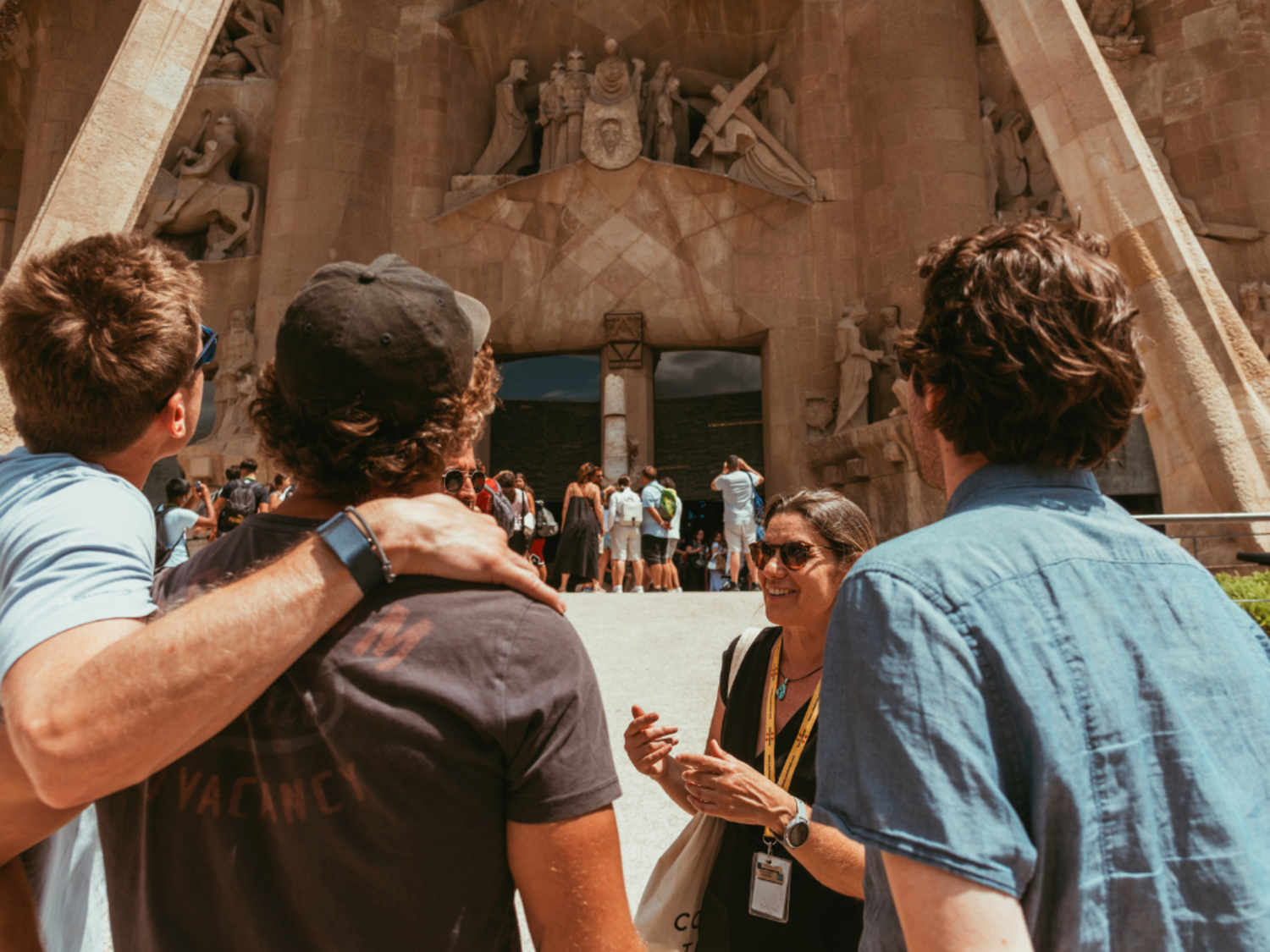
In 2026, Barcelona will pause to look skyward—not at something new, but at a vision the city has spent more than a century bringing to life.
One hundred years after the death of Antoni Gaudí, cranes are still suspended above the skyline he reshaped, sunlight still filters through stone forests he imagined, and locals are still debating what exactly Gaudí means to Barcelona. Visionary genius? Religious mystic? Architect of Catalan identity? Patron saint of curves and broken tile?
The answer, depending on where you stand in the city, changes.
What’s certain is this: 2026 will be one of the most significant years in Barcelona’s cultural calendar in decades. The 100-year anniversary of Gaudí’s death arrives alongside a milestone many thought they would never see—the long-awaited completion of the central Tower of Jesus Christ at Sagrada Família.
Add in exhibitions, concerts, citywide programming, and the scheduled visit of Pope Leo XIV, and Barcelona becomes a stage for a conversation about art, faith, identity, tourism, and the unfinished nature of cities themselves.
If you’re planning to visit Barcelona during the Gaudí centenary year, this is the moment to understand the architect beyond the postcards.
This Year's Significance
Gaudí died on June 10, 1926, after being struck by a tram while walking to church. Poorly dressed and carrying no identification, he was initially mistaken for a beggar and taken to a public hospital. By the time friends recognized him, his injuries were too severe to recover from.
Barcelona mourned him in enormous numbers. Tens of thousands lined the streets during his funeral procession from the city center to the crypt of the Sagrada Família, where he remains buried today.
One hundred years later, the city is preparing for a commemoration that stretches far beyond memorial plaques and museum exhibitions.
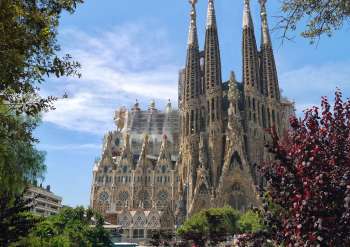
The major headline is the continued completion of the Sagrada Família, particularly the inauguration and blessing of the Tower of Jesus Christ, which is the tallest structure in the basilica. After the structure was completed this past February, it became the tallest church tower in the world. Rising more than 560 feet above Barcelona, the tower dramatically changes the city’s silhouette. After decades of construction delays caused by war, funding shortages, political upheaval, and the pandemic, the project has entered its final symbolic phase.
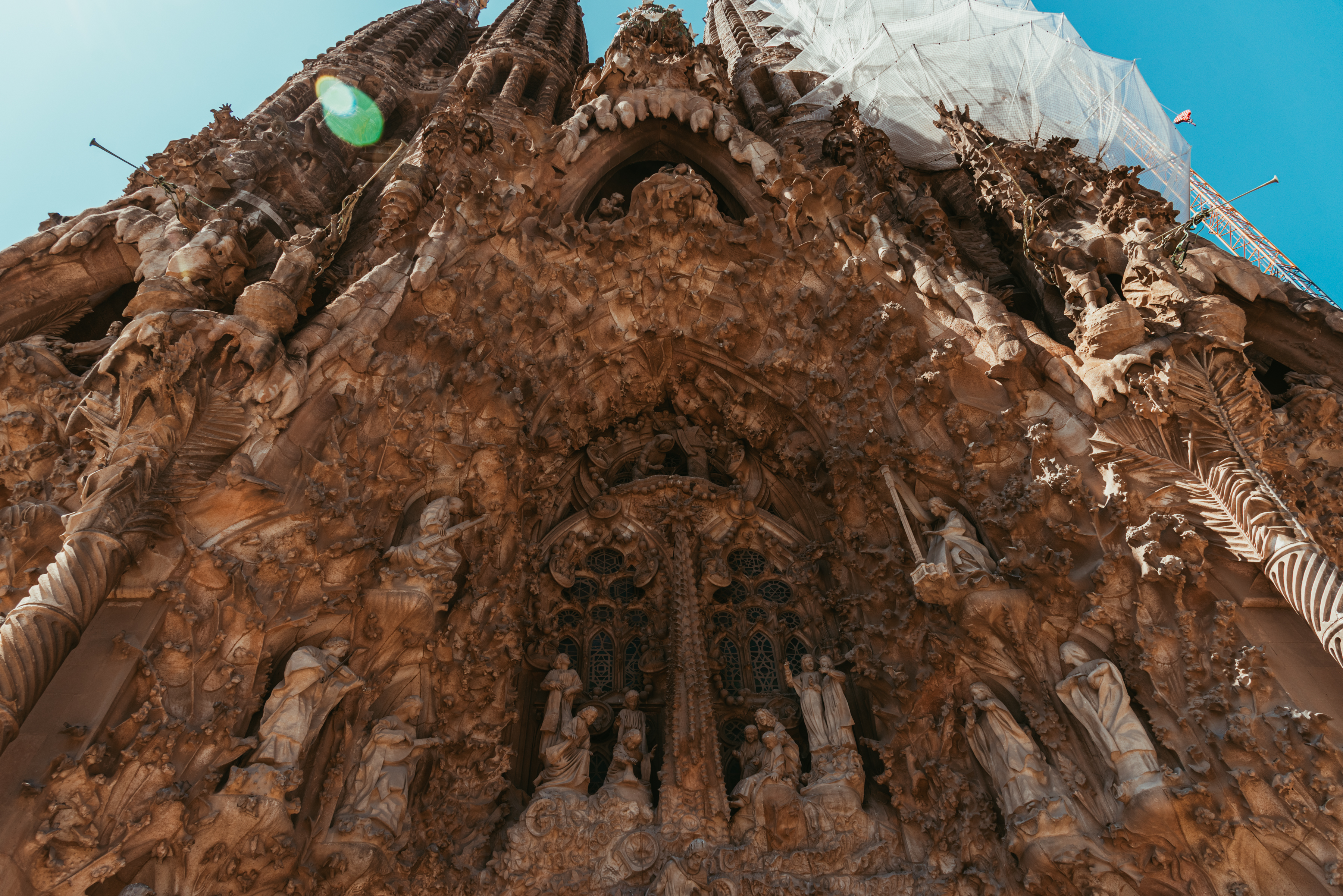
The Vatican has also recognized the anniversary’s significance. Pope Leo XIV is scheduled to visit Barcelona on June 9–10, 2026, during an apostolic trip across Spain. The centerpiece of the visit will be a ceremony at the Sagrada Família marking the centenary of Gaudí’s death and the blessing of the Tower of Jesus Christ.
For Barcelona, this matters on multiple levels. Gaudí has long occupied an unusual position here: universally recognized, heavily commercialized, deeply beloved, and occasionally controversial. Often, he is many of these all at once. Some locals see the overwhelming focus on Gaudí tourism as flattening Barcelona into an aesthetic brand. Others view the anniversary as an opportunity to reclaim the architect as part of Catalan history rather than global Instagram culture.
Both perspectives will shape the city throughout the year.
The Man Behind the Mosaic
Gaudí was born in 1852, likely in Reus or nearby Riudoms in Catalonia, into a family of coppersmiths. (That detail matters more than you might think.) He grew up watching metal being bent into curves, shaped through heat and pressure into forms that were both decorative and functional. You can feel that influence everywhere in his architecture. Nothing sits rigidly still. Iron railings twist like vines. Chimneys resemble helmets or mushrooms. Stretches of stones seem to ripple.
As a child, Gaudí suffered from rheumatism and spent long stretches away from school, often observing nature closely during solitary walks in the countryside. Because of this, trees, honeycombs, bones, shells, and caves weren’t just decorative references for him later in life; they were structural principles.
By the time he arrived in Barcelona to study architecture, the city itself was transforming. Medieval walls were coming down. Industry was booming. Catalonia was experiencing a cultural revival known as the Renaixença, which reasserted Catalan language, literature, and identity after centuries of suppression. Wealthy industrialists wanted buildings that expressed modernity and regional pride simultaneously.
Gaudí proved perfect for the moment.
Early in his career, his work carried traces of Gothic revivalism and Orientalist influence. Then his forms became stranger, more personal and daring. He developed an architectural language that often feels impossible until you stand inside it and realize every bizarre curve has a structural logic behind it.
Gaudí rarely used traditional blueprints in the way other architects did. Instead, he worked with hanging chain models, weighted strings, geometry, and experimentation. Many of the arches and vaults in the Sagrada Família were essentially discovered through gravity.
Toward the end of his life, Gaudí became increasingly ascetic and deeply religious. He poured nearly all his energy into the Sagrada Família, abandoning most other projects. The architect who once designed lavish homes for Barcelona’s elite eventually lived almost like a monk inside his unfinished basilica.
Why does this matter? The Sagrada Família is not simply a masterpiece of architecture. It is also an intensely personal spiritual project.
The Sagrada Família (Finally) Nearing Completion
Construction began in 1882. Gaudí took over a year later. When he died in 1926, less than a quarter of the basilica was complete.
Then came disaster. During the Spanish Civil War, anarchists burned parts of Gaudí’s workshop, destroying drawings, models, and plans. Much of what architects know today comes from reconstructed fragments and surviving studies.
For decades, progress moved painfully slowly. Funding depended largely on private donations and ticket sales. The sheer complexity of the design also made construction extraordinarily difficult. Some structural solutions simply couldn’t be executed with earlier engineering technology.
That changed in the late 20th and early 21st centuries. Digital modeling accelerated the process dramatically. New towers rose and previously dark interiors filled with light. Visitors who had seen the basilica decades earlier returned to find a radically transformed structure.
Today, the Sagrada Família feels suspended between eras. You can still see traces of the unfinished project Gaudí left behind, while other sections look almost futuristic.
The completion of the Tower of Jesus Christ represents the symbolic culmination of that process. Topped by a massive illuminated cross, the tower now dominates Barcelona’s skyline without exceeding the height of Montjuïc hill—a deliberate choice by Gaudí, who believed no human creation should surpass God’s natural work.
And yes, the question people always ask: when will the entire basilica officially be finished?
The answer depends on who you ask. Structurally, the venue is nearly complete, though decorative elements and surrounding works may continue for years. In a strange way, that feels appropriate. The Sagrada Família has become part cathedral, part living organism, part collective obsession.
Where to Experience Gaudí in Barcelona
The mistake many visitors make is treating Gaudí like a checklist.
See the basilica. Take the Park Güell photo. Maybe glance at Casa Batlló. Done.
The better approach is to understand how each building reveals a different side of his thinking.
Sagrada Família
We recommend visiting in the morning if possible, but not for the reason you might think.
Of course, getting in early before the major crowds is a benefit. But the real magic happens when the sun pours through stained glass in shifting gradients of blue, amber, and red.
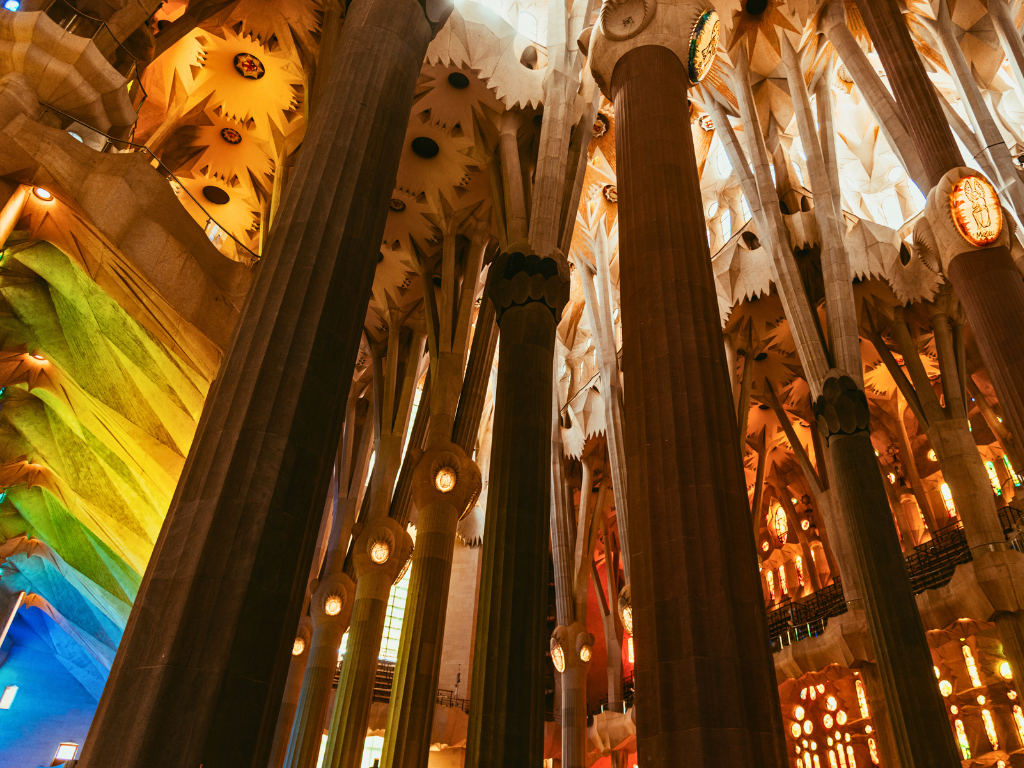
The interior often surprises first-time visitors because it feels calmer than expected. While the exterior is dense with symbolism and detail, inside the space opens upward like a forest canopy. The light is the major player here, although there are stunning motifs and symbols throughout that are not to be missed.
Spend time outside the famous Nativity façade too. Gaudí oversaw this portion personally, and its naturalistic carvings carry a warmth and intricacy distinct from later additions.
What to notice:
- Columns inspired by branching trees
- Hyperboloid skylights
- Mathematical geometry hidden beneath organic forms
- The contrast between façades built across different eras
Park Güell
is often reduced to colorful mosaics and panoramic selfies, but this misses the point entirely.
Originally conceived as an upscale residential development for Barcelona’s bourgeoisie, the project failed commercially. Only a handful of homes were completed. What remains today is essentially Gaudí experimenting with landscape architecture on a massive scale.
The famous serpentine bench curves ergonomically around the terrace. Viaducts emerge from the hillside almost like natural rock formations and columns lean at improbable angles. Somehow, they still feel perfectly stable.
Go beyond the Monumental Zone if you can and walk the quieter paths. The relationship between architecture and topography becomes clearer there.
Park Güell is Gaudí trying to dissolve the line between built environment and landscape.
Casa Batlló
Simply one of our favorites. The façade shimmers like scales and balconies resemble masks or bones, depending on your mood. Inside, light wells shift from deep cobalt to pale blue as they descend, carefully calibrated so illumination distributes evenly through the building.
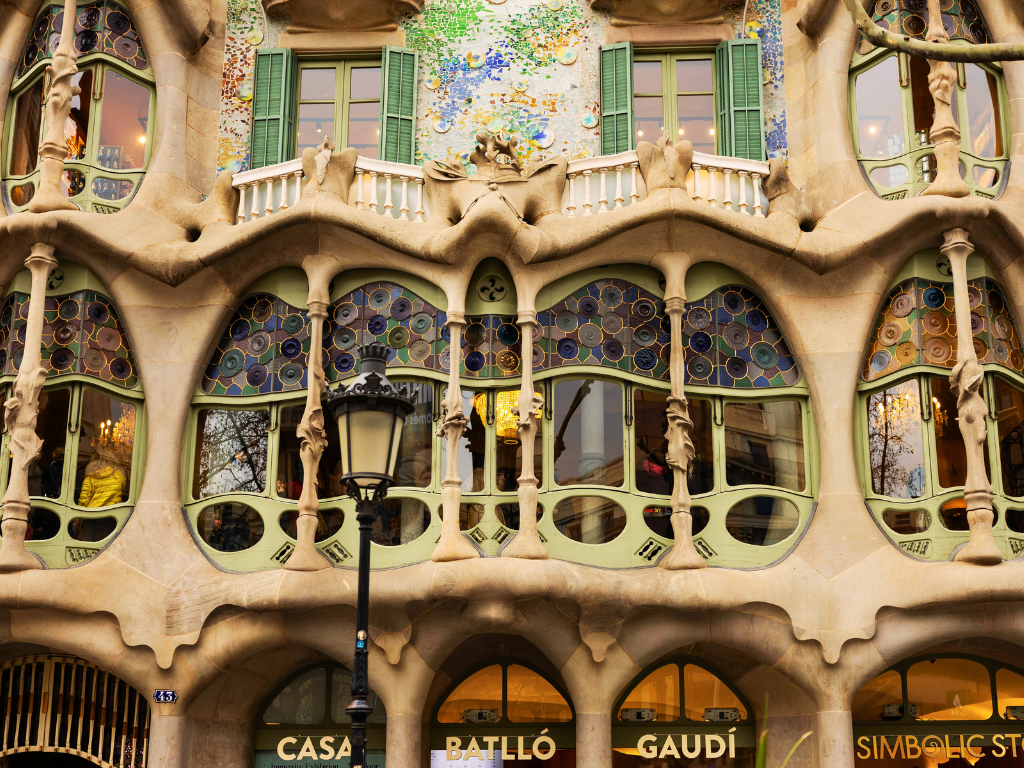
There’s remarkably little straight geometry anywhere, which makes exploring this building so intriguing. And the rooftop, with its dragon-like spine, often sparks conversations about Catalonia’s patron saint, Saint George. Some interpret the roof as the dragon’s back and the tower cross as the saint’s sword.
Whether intentional or not, the symbolism fits Gaudí’s love of layered meaning.
Visit late in the day if possible, when the façade catches warmer light along Passeig de Gràcia.
Casa Milà
Locals nicknamed it La Pedrera, or “the stone quarry”. The rooftop alone is worth visiting for its surreal chimney structures, which look like silent stone guardians surveying the city. Inside, the attic reveals Gaudí’s extraordinary use of catenary arches, creating a skeletal look that resembles the inside of a whale.
Casa Milà also captures something important about Barcelona itself: the tension between bourgeois refinement and radical experimentation. Wealthy patrons funded buildings that many contemporaries initially mocked. Now those same structures define the city globally.
Palau Güell
Often overshadowed by Gaudí’s later masterpieces, Palau Güell offers insight into his earlier evolution.
Located near La Rambla, the mansion was built for industrialist Eusebi Güell, Gaudí’s greatest patron. The interiors here feel darker, more Gothic, and more theatrical than his later work. But the rooftop chimneys hint at what was coming.
This is a great stop if you're interested in understanding how Gaudí moved from historic influence toward his own unmistakable architectural language.
Casa Vicens
This is one of Gaudí’s earliest major commissions, and it bursts with color and Moorish influence.
Ceramic tiles patterned with marigolds cover the façade and decorative detail dominates. Compared to the Sagrada Família, it almost feels playful. Here, we see a younger architect experimenting freely before spirituality and monumental ambition reshaped his work.
Beyond the Big Names: Gaudí Across Catalonia
If you have extra time, Gaudí’s world extends beyond central Barcelona.
Colònia Güell
The crypt here is one of the most fascinating places connected to Gaudí’s architectural development. Many structural ideas later used in the Sagrada Família were first tested in this workers’ colony outside Barcelona.
It also reveals Gaudí within the context of industrial Catalonia and social reform movements.
Torre Bellesguard
Less crowded and deeply atmospheric, Bellesguard combines medieval inspiration with Gaudí’s evolving modernism. The site itself is connected to Catalan royal history, adding another layer to the architect’s ongoing dialogue with regional identity.
How Barcelona Will Celebrate the Gaudí Centenary
Expect the city to feel unusually animated throughout 2026.
Museums, cultural institutions, and churches are planning exhibitions, concerts, lectures, restoration projects, and public programming tied to Gaudí’s legacy. Some events will focus on architecture and engineering. Others explore Catalan modernisme, religion, urban identity, or conservation.
Neighborhoods around major Gaudí sites will likely see expanded pedestrian zones and increased security during peak events.
The largest concentration of activity will surround June 10, the centenary of Gaudí’s death.
This period coincides with:
- Religious ceremonies at the Sagrada Família
- International media coverage
- Vatican-related events
- Special nighttime illuminations and concerts
- Increased tourism demand across Barcelona
Hotels will book quickly during this period, especially in Eixample and Gràcia.
The Pope’s Visit
Pope Leo XIV’s planned stop in Barcelona on June 9 and 10 carries particular symbolic weight because the Sagrada Família occupies an unusual position within global Catholicism.
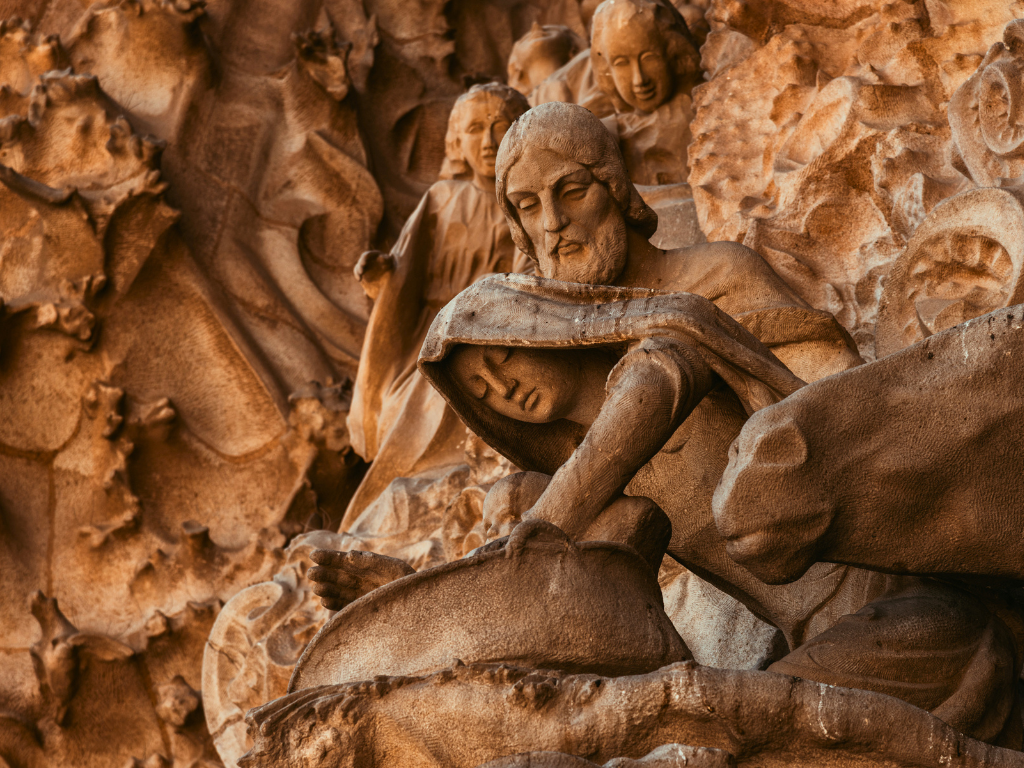
It is both deeply sacred and heavily touristed. As a functioning basilica visited by millions who may or may not identify as religious and an architectural icon that also remains a consecrated church, the Sagrada Familia bridges cultural and religious interests, serving an incredibly diverse group of visitors.
The Pope’s blessing of the Tower of Jesus Christ reinforces Gaudí’s long-discussed spiritual legacy. In recent decades, there have even been efforts within parts of the Catholic Church to advance Gaudí’s sainthood cause due to his devotional life and dedication to the basilica.
Whether or not visitors approach the event religiously, the ceremony will almost certainly become one of the defining visual moments of Barcelona in 2026.
Expect intense crowds, longer wait times, and limited availability around the Sagrada Família during those days.
If you want to witness the events and atmosphere, plan early and stay nearby. If you prefer quieter exploration, consider visiting Gaudí sites before or after the papal events.
When to Visit Barcelona During the Anniversary Year
Each season offers a different experience of Gaudí’s city.
Spring (April–June)
Probably the sweet spot.
The weather is mild, terraces fill with locals eager to enjoy the city before peak travel season, and the city feels energized before summer heat arrives. June will be the emotional center of the centenary celebrations, especially surrounding the Pope’s visit and anniversary events.
Book accommodations far in advance if traveling then.
Summer (July–August)
Barcelona becomes crowded and humid, especially around the Sagrada Família and Park Güell.
Still, long evenings and outdoor cultural programming create a lively atmosphere. If you visit in summer, prioritize early-morning architecture visits and slower afternoons in neighborhoods beyond the popular tourist sites.
Fall (September–October)
Arguably the most rewarding balance.
The Mediterranean remains warm, crowds ease slightly, and the city regains a more local rhythm after August holidays. (Gaudí’s buildings also photograph beautifully in autumn light.)
Winter (November–February)
Cooler, quieter, and surprisingly atmospheric.
Without peak-season congestion, you can spend more reflective time inside major sites. The low winter sunlight inside the Sagrada Família often feels especially dramatic.
Practical Tips for Visiting During the Centenary
Reserve tickets early!
Especially for:
- Sagrada Família
- Casa Batlló
- Casa Milà
- Park Güell
Timed entry slots will likely sell out faster than usual throughout 2026.
Stay in the right neighborhood
For Gaudí-focused trips, consider:
- Eixample for architecture access
- Gràcia for a more local atmosphere near Park Güell
- El Born for museums, food, and walkability
Visit sites at different times of day
Morning light and evening light radically change Gaudí’s buildings.
Pair architecture with context
Gaudí’s work becomes more meaningful when understood alongside:
- Catalan history
- Industrial wealth
- Catholic symbolism
- Urban expansion in 19th-century Barcelona
- The Catalan modernisme movement
You'll see Barcelona differently once those layers click into place.
Why Gaudí is Still Contemporary
What makes Gaudí endure isn’t simply originality. Many architects were original.
It’s that his work still feels emotionally disarming in an era dominated by efficiency and sameness. His buildings resist quick consumption. Instead, they reward slowness and curiosity.
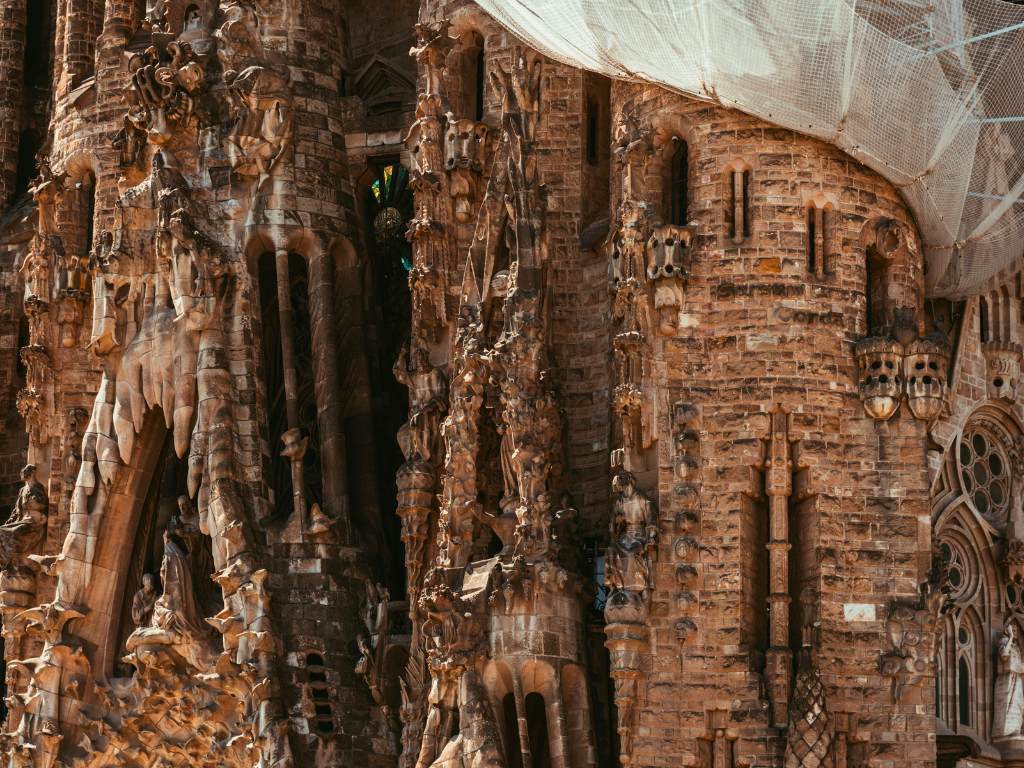
In a century shaped increasingly by algorithms, prefabrication, and optimized urban life, Gaudí’s architecture feels defiantly human.
Barcelona will celebrate more than the architect’s death this year. It will celebrate the strange fact that his imagination still shapes how millions of people experience the city every year.
A hundred years later, the skyline is still catching up to him.
Visit Barcelona with Context Travel
Barcelona can absolutely be enjoyed at street level with long lunches in Gràcia, late walks through the Gothic Quarter, and visits to vermouth bars that spill into narrow lanes, but Gaudí’s Barcelona becomes far more compelling once someone helps connect the dots between today's city and the Barcelona that the architect dreamed of.
Why did Catalan identity matter so deeply to his work? How did industrial wealth shape modernisme? Why does the Sagrada Família feel emotionally different from nearly every other major church in Europe? What was Barcelona becoming when these buildings first appeared?
These are the kinds of questions that change a visit from sightseeing into understanding.
Exploring Gaudí’s work with an expert adds scale and context to buildings many people know only through photographs. Details that initially seem decorative begin revealing structural experimentation, political symbolism, religious meaning, and references to the natural world hidden in plain sight. The city itself starts to feel more legible.
During the Gaudí centenary year, that perspective matters even more. Barcelona will be crowded, energized, emotional, and at times overwhelming. Having an expert guide the experience helps cut through the noise and focus on what makes these places meaningful in the first place.
Whether you want to stand beneath the vaults of the Sagrada Família, trace the evolution of modernisme along Passeig de Gràcia, or understand how Gaudí’s architecture still shapes Catalan identity today, exploring the city with Context Travel offers a way to experience Barcelona with greater depth, clarity, and connection.