Author: Rheanna Quam
My great-grandfather left Norway in the late 1800s as one of the thousands who set out for the United States in search of better land and a better living. Like so many Norwegian emigrants of that era, he boarded a ship and never looked back, and for more than a century his side of the family grew up thousands of miles from the rural valleys and fjords he'd left behind.
This June, my family and I made the trip he never could, spending almost two weeks exploring the country of his birth. None of us had been to Norway before. I've done a fair amount of traveling in my life, but for the rest of my family this was new territory in every sense. We came to Norway to see the country our family came from, and along the way, we found a journey that was bigger and more varied than we expected—full of cities, countryside, and surprises along the way.
If you're considering a trip to Norway, especially one with any thread of heritage or ancestry behind it, here's what I learned about Oslo, Bergen, and the journey in between.
Oslo, Warming Up to Its Own Story
Oslo, it turns out, is not what most people picture when they think of Norway—and that's exactly what makes it worth a proper introduction.
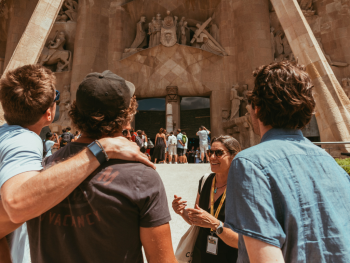
To get oriented, we booked Context Travel's Sites and Insights: An Expert-Led Oslo Welcome Tour. It was the right call for a group like ours: multi-generational, with very little prior knowledge of the city yet eager to understand not just what we were looking at, but why it mattered. Our guide Patrick walked us through Oslo's waterfront district, past the Opera House, and up toward Akershus Fortress, weaving in the city's transformation from a modest trading post called Christiania into the design-forward Nordic capital it is today.
One stop stuck with all of us: the rooftop of the Oslo Public Library, which gives you a sweeping view over the city and the harbor. Below us, we spotted locals swimming in the fjord. The water was still cold this early in the season, but that didn't stop anyone. People moved between saunas perched along the water's edge and dips in the fjord itself, a rhythm that's apparently a year-round ritual for Oslo residents regardless of season. A scattering of islands sat on the horizon, the same islands locals retreat to all summer long.
That afternoon, we visited Vigeland Park, Oslo's open-air sculpture park designed by Gustav Vigeland. The statues are striking—some of them earned a genuine laugh and a lot of very enthusiastic photo poses from our group—but they're also more thoughtful than they first appear, depicting the full arc of human life from infancy to old age. If you want to unpack the symbolism rather than just walk past it, Context's Oslo in a Day Tour combines the Sites and Insights Welcome Tour with Vigeland Park in the afternoon.
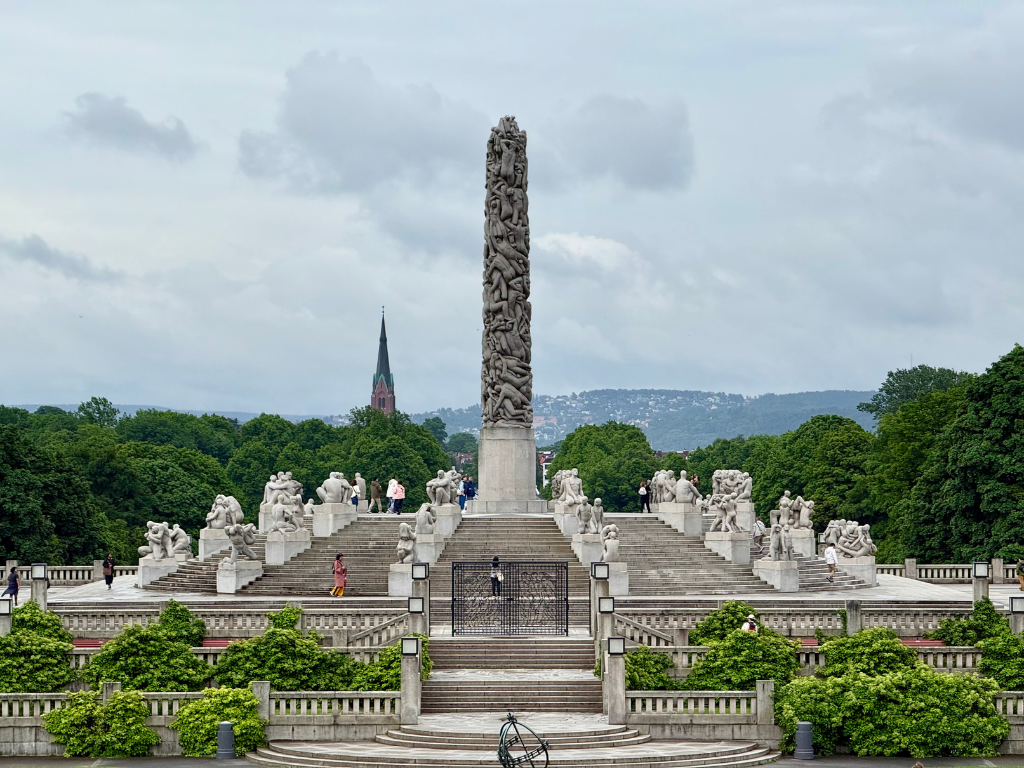
Following two days in the capital, we walked away from Oslo with a real sense of the city's layers: Viking roots, centuries as a trading capital, and its current identity as a design and culture capital that still doesn't take itself too seriously.
Into Rural Norway: Farms, Ski Country, and Rolling Mountains
After Oslo, we left the city behind and drove out to Noresund, a popular ski area a couple of hours northwest, to meet family.
This is the part of the trip that's hard to put into words, and also the part I'd encourage anyone with Norwegian heritage to prioritize if they can. We said hello to cousins we'd never met—distant by blood, but immediately close in the way that family tends to be once you're sitting across a table from each other. Conversation moved back and forth between broken English and broken Norwegian, with a lot of laughing, pointing, and pulling out old photos to fill in the gaps.
They put together a picnic that doubled as a crash course in Norwegian food traditions: flatbread, rømmegrøt (a rich sour cream porridge that's a staple of traditional Norwegian cooking), cured meats, kransekake, and waffles.
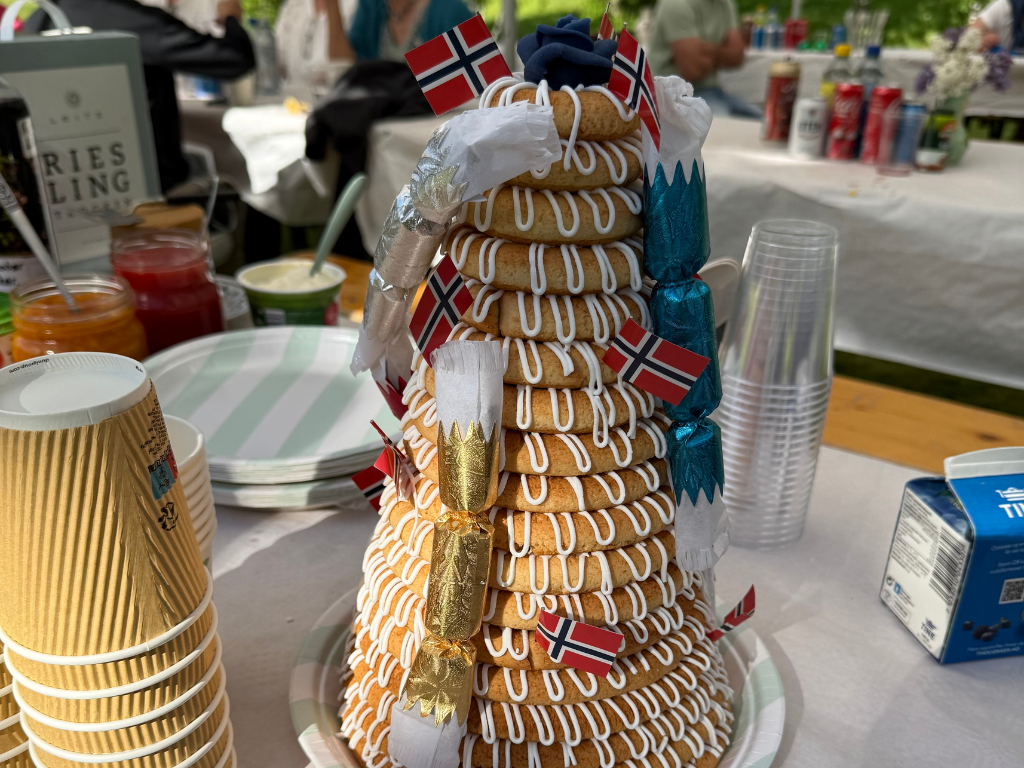
We also got to spend time visiting the farms our family had left generations ago. There's something genuinely moving about standing in a landscape your ancestors knew intimately, understanding they left it not because they wanted to, but because they had to, and knowing they almost certainly never imagined their descendants would come back to see it. It was without question one of the best days of the entire trip.
Bergen: Hanseatic History and UNESCO World Heritage Site
After some time in the fjords of western Norway, we made our way to Bergen, Norway's old Hanseatic city on the western coast.
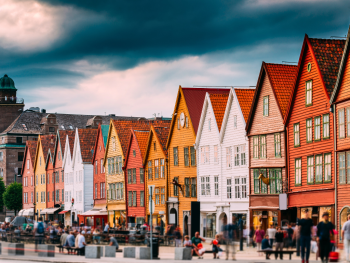
Bergen feels different from Oslo almost immediately. For roughly 400 years, Bergen was a key outpost of the Hanseatic League—the powerful network of merchant guilds that controlled trade across the North Sea and Baltic. That history is still visible today in Bryggen, the city's old wharf district. We spent a lot of time just walking up and down it, taking in the rows of colorful wooden buildings and the harbor full of boats. Bryggen is a UNESCO World Heritage Site, and it's easy to see why: it's one of the few places left in Northern Europe where you can walk through the physical remains of a medieval trading port.
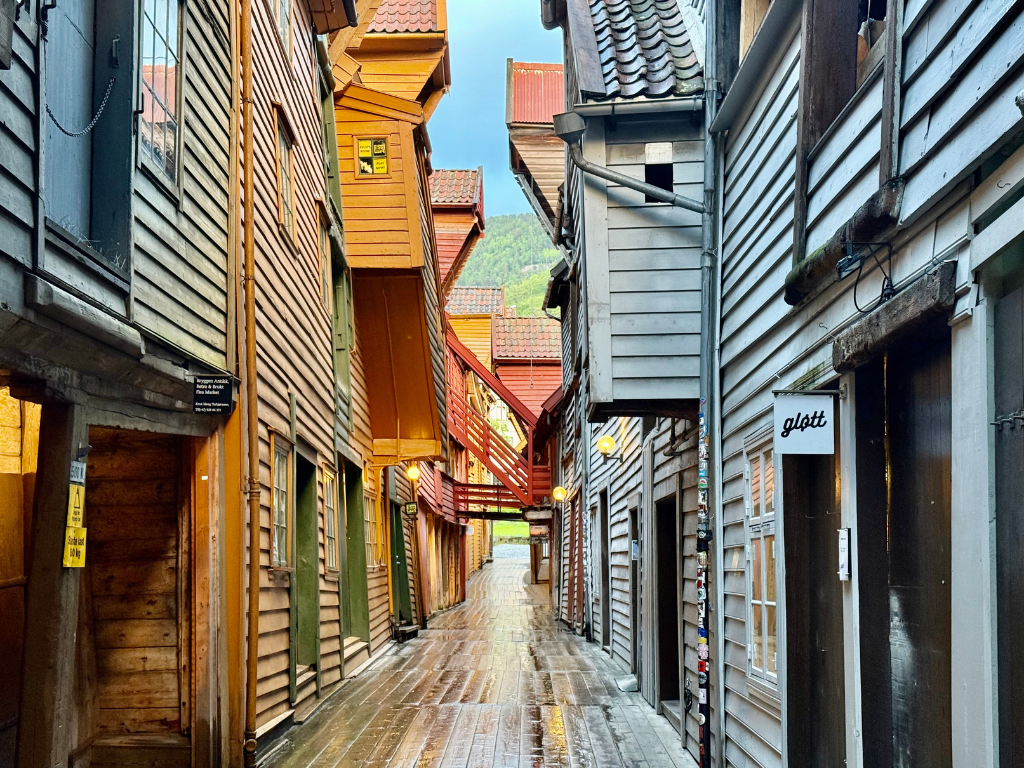
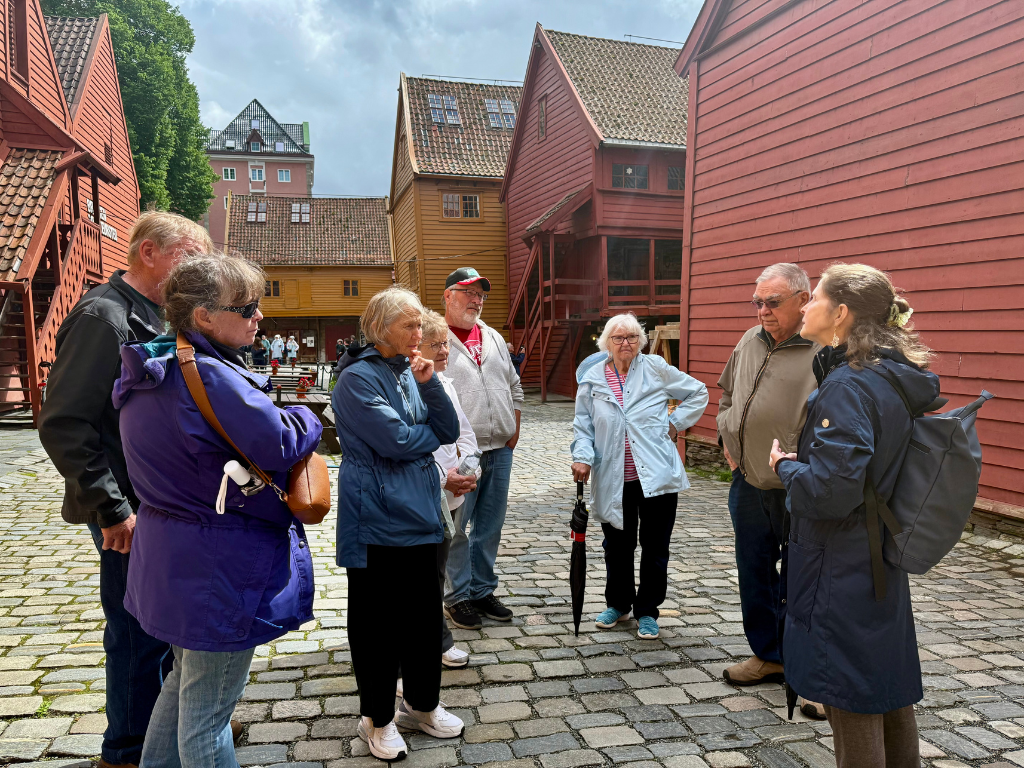
Because several of our relatives had served in World War II, we had a strong pull toward Bergen's wartime history specifically. We built time into our visit for Context’s Bergen WWII Tour which focuses on the city's role in the war. The city's location made it strategically important to occupying German forces and it's coastline became a key link in the Shetland Bus, the clandestine network of small fishing boats that ferried agents, weapons, and refugees between German-occupied Norway and the Shetland Islands throughout the war.
Our guide also told us about one of the wilder stories of Bergen's wartime history: in April 1944, a Dutch cargo ship called the Voorbode, loaded with over a hundred tons of explosives, detonated in Bergen's harbor. The blast killed dozens of people, destroyed buildings across the city center, and (in the detail that's stuck with everyone in my family since) launched the ship's anchor clear across the harbor and up the mountainside, where it landed more than 400 meters above sea level. It's the kind of detail that sounds invented until you’re shown the image of the anchor where it still sits today. For those interested in WWII history, Bergen rewards the extra time.
The Journey Back: Riding the Bergen Railway
For the return trip to Oslo, we took the train—the Bergen Railway, or Bergensbanen, one of the great rail journeys in the world and the literal and figurative link between the two major Norwegian cities.
We didn't add on the Flåm Railway detour this time (more on that below if you're planning your own trip), but the main line alone was more than worth the roughly seven hours it took. The Bergen Railway covers about 471 kilometers between Oslo and Bergen, Norway's two largest cities, and holds the distinction of being Northern Europe's highest railway line.
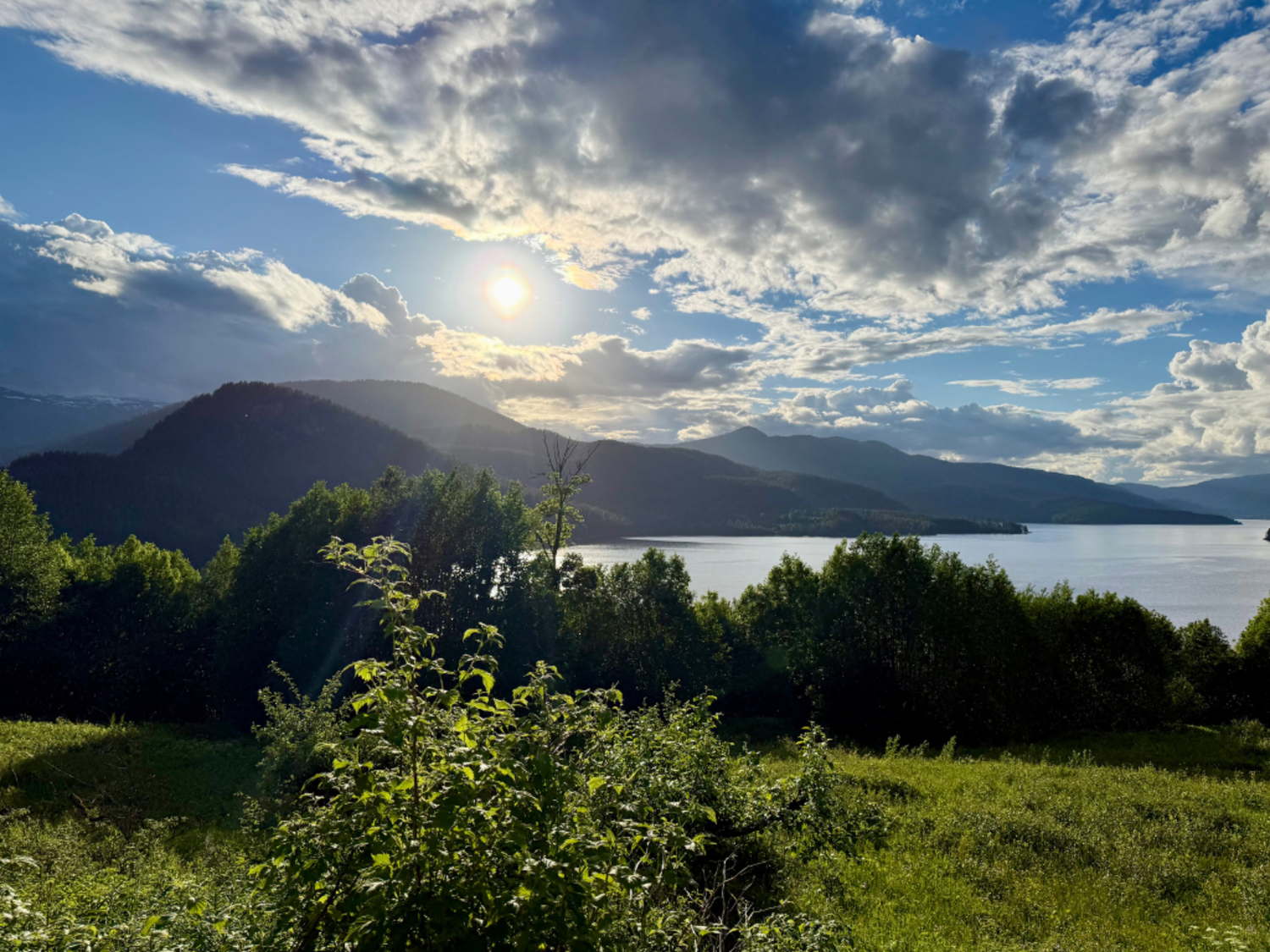
We were traveling in early June, and the timing gave us a journey of real contrasts. As the train climbed toward the high mountain plateau we were still surrounded by snow and frozen lakes, even that late in spring. The line crosses Hardangervidda, Northern Europe's largest mountain plateau and home to the continent's largest wild reindeer population, and in early June it still looked like winter there. Then, as the train began its descent on the other side, the landscape transformed entirely: green mountains, fjords catching the light, and small homesteads dotting the valleys all the way down. It's hard to overstate how dramatic the shift in landscape is over the course of the journey.
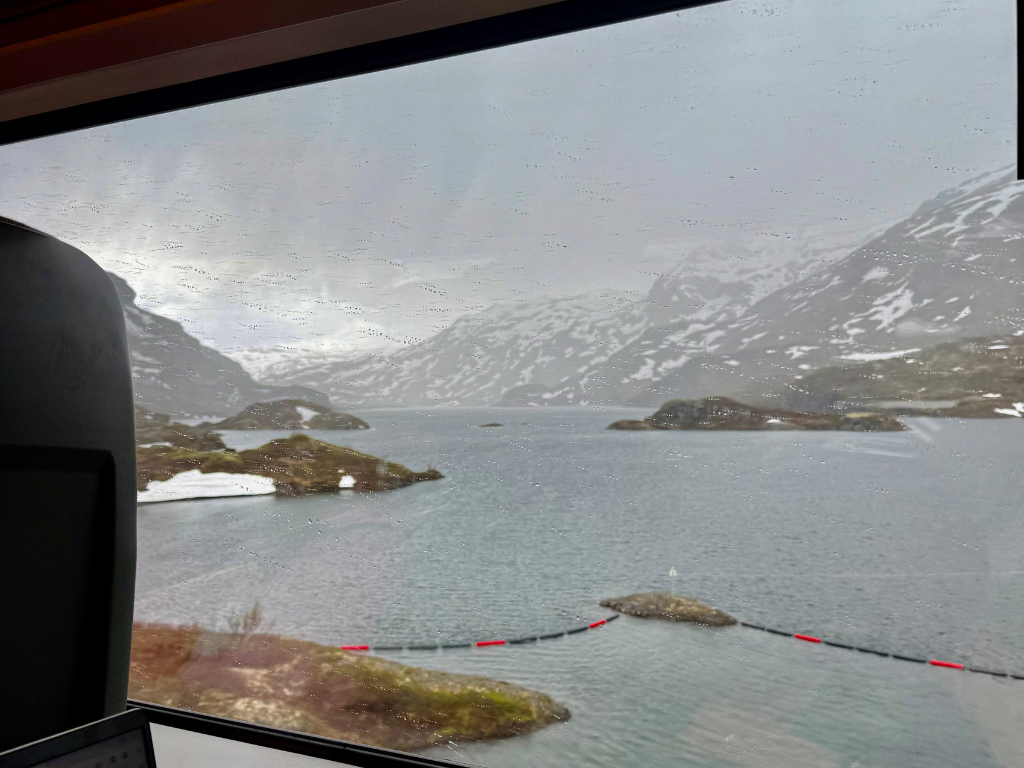
The train itself is comfortable, with a cafe car that kept us fed for the better part of the day (a meaningful comfort on a seven-hour ride). Seating is assigned, the windows are large and unobstructed, and there's enough legroom to actually relax into the trip rather than count down the hours. If you want the best views, sit on the left side of the train heading from Oslo to catch the Hardangervidda plateau, or the right side for the fjord-side stretches. Either way, book ahead since the route is popular and seats can sell out in peak summer months.
A Quick Note on the Flåm Railway
If you're researching this trip, you'll see a lot of content around "Norway in a Nutshell," a popular packaged route that combines the Bergen Railway with a side trip on the Flåm Railway and a fjord cruise. It's worth understanding the difference before you plan your own itinerary.
The Bergen Railway is the main line running directly between Oslo and Bergen. The Flåm Railway is a separate, much shorter branch line that splits off at Myrdal Station and drops steeply down to the village of Flåm on the Aurlandsfjord; this roughly hour-long ride is considered one of the world's best train journeys in its own right. Many travelers do both, breaking up the Oslo–Bergen trip with an overnight in Flåm and a fjord cruise before continuing on. We chose to skip it this time, prioritizing time with family over an extra scenic stop, but if fjord scenery up close is a priority for your trip, it's worth building in.
Planning Your Own Norway Trip
A few takeaways from our trip if you're mapping out something similar:
Give the cities real time, not just a layover. Oslo and Bergen are different enough from each other, historically and culturally, that rushing either one shortchanges the trip. A guided introduction in each city, especially if you don't have deep prior knowledge of Norwegian history, pays off quickly.
If you have Norwegian ancestry, do the outreach before you go. Tracking down distant relatives takes some legwork (church records, regional genealogy groups, and old family letters are all good starting points), but a single afternoon with family can end up being the most memorable part of the entire trip.
Take the train, even if you're tight on time. Flying between Oslo and Bergen is faster, but it skips entirely over Hardangervidda and the fjord country that defines so much of Norway's geography and history. The train is part of the experience, not just transportation.
Build in time for the harder histories, too. Norway's WWII history, in particular, is layered and often personal for American and Norwegian families alike. It's worth seeking out a knowledgeable guide rather than piecing it together from plaques.
We packed a lot into twelve days, but Norway made it clear there was plenty more we hadn't gotten to. Oslo and Bergen are just the starting point: a quietly confident capital on one end, a historic port town layered with centuries of trade and wartime history on the other. In between lies open, dramatic country, and one of the more memorable train rides any of us have taken anywhere. The cities, the landscape, and the journey between them are jaw-dropping on their own, and the deeper we went, the clearer it became that Norway's history runs far deeper than its Viking reputation suggests.
We're already talking about when we'll go back to see everything we missed.