Karen was excellent. As is typical of Context, Karin was a true expert in the subject of our tour. However, she instantly read the crowd and adjusted to our level of knowledge and interest. On top of that, she had a good sense of humor and perfect English. Our entire group thought she did a great job and we would highly recommend her to others.
Kyoto Garden Tour: Landscapes and Meaning
Understand Japanese gardens as expressions of spiritual ideas
The Finer Details
Garden and landscape design is an art form that has helped define the aesthetics of Japan for centuries. By knowingly shaping their gardens, both emperors and nobles have recreated miniature landscapes with a level of precision and idealization that has made garden design a staple of Japanese culture. With its high ratio of well-preserved temples, Kyoto has always been the perfect environment for seeing a wide variety of garden styles. During our three-hour walking tour, we will focus on garden design during the Muromachi period, which saw a flourishing of Japanese culture, including the creation of Zen Buddhism.
Tour Itinerary
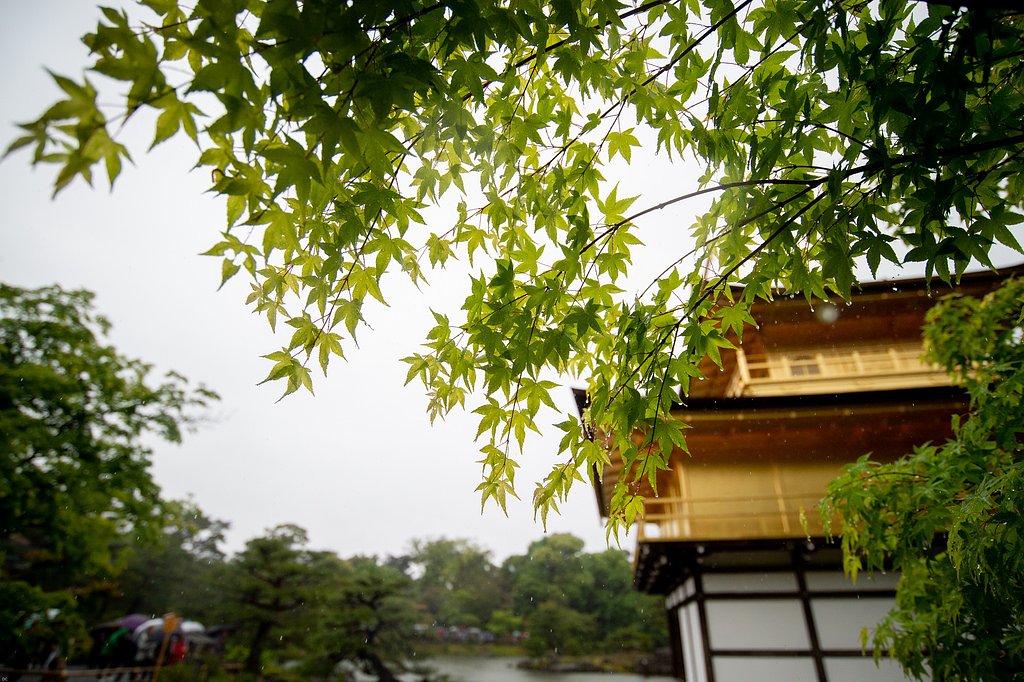
We begin this walk at the dazzling Kinkaku-ji (the Golden Pavilion). This Zen Buddhist temple was, in fact, first used as a private villa by Shogun Ashikaga Yoshimitsu, who purchased the land and transformed it into his home in the 14th century. The lush gardens allow us to delve into villa garden design during the Muromachi period, which ran from approximately 1337 to 1573. Aside from dissecting the various natural elements used to create the gardens, we'll also discuss how these spaces were used for contemplation and entertainment, and how these uses changed as the space transformed from a private villa to a Buddhist temple.
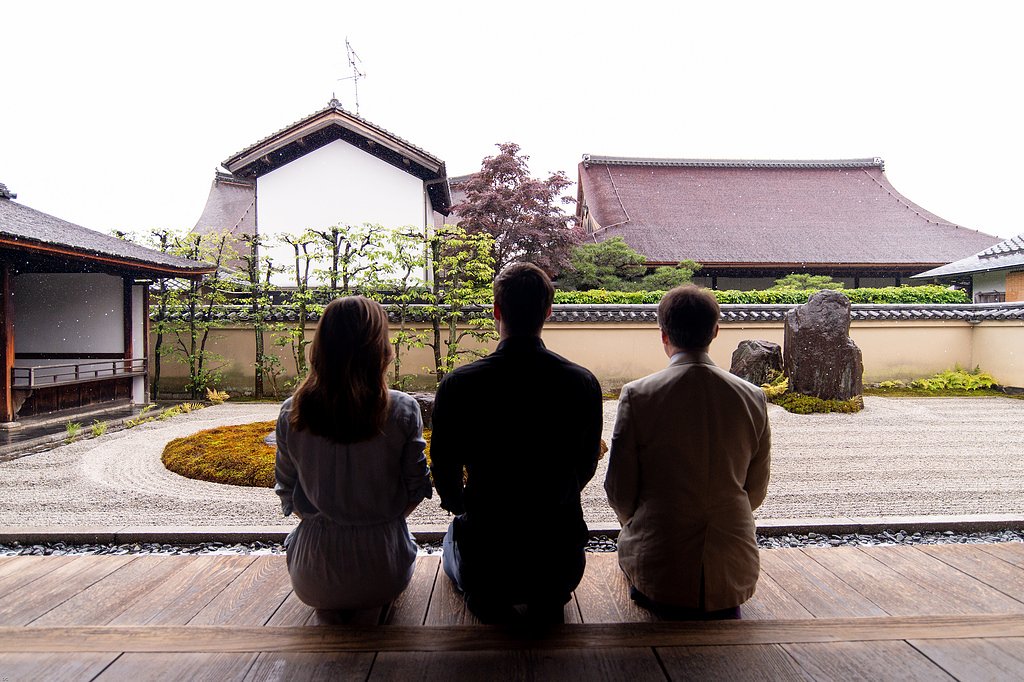
Moving on, we'll hop on the bus to two important Kyoto attractions and excellent examples of Zen rock gardens. The Karesansui Garden at Ryoan-ji is a prime example of dry Zen gardens, giving great contrast to the water used at Kinkaku-ji. The stylized landscape created from gravel and rocks represents an alternative garden type from the Muromachi Period and exemplifies the type of design one finds at Zen Buddhist temples.
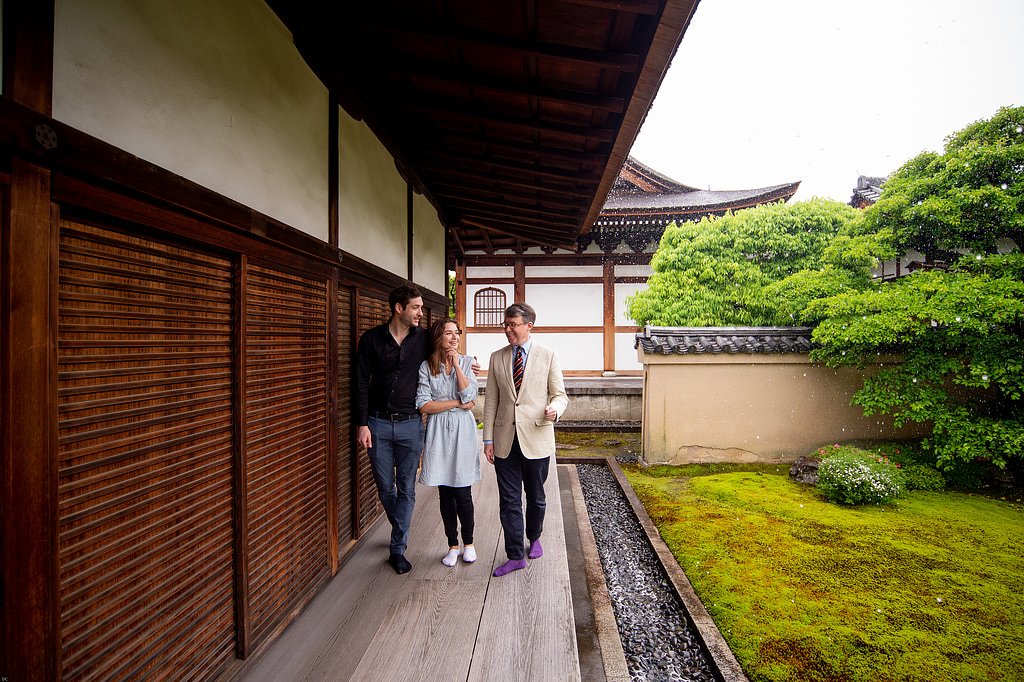
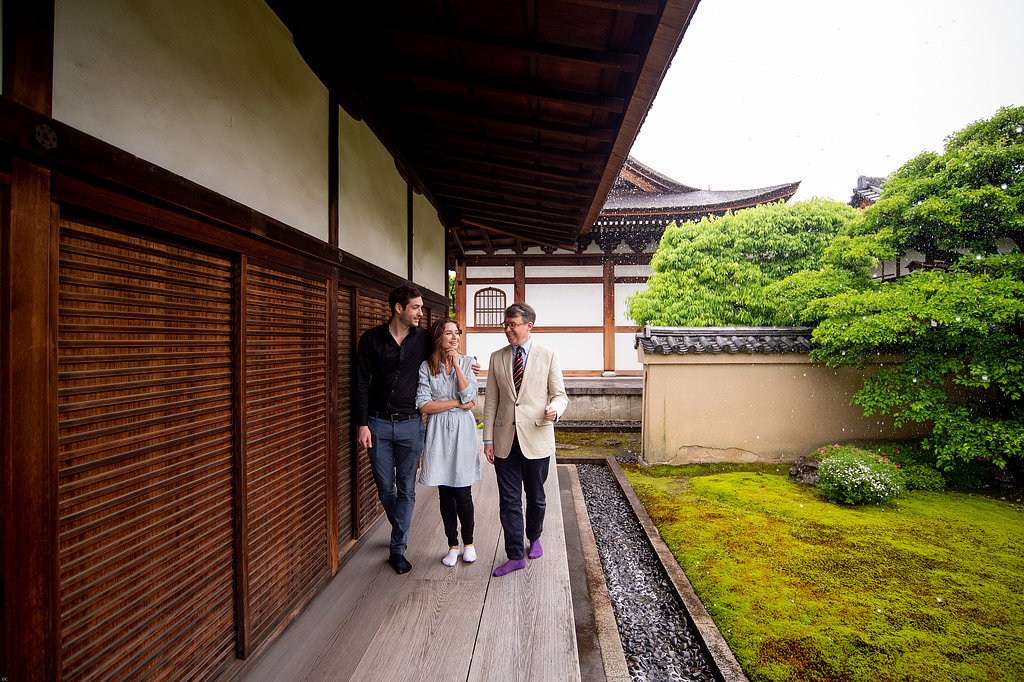
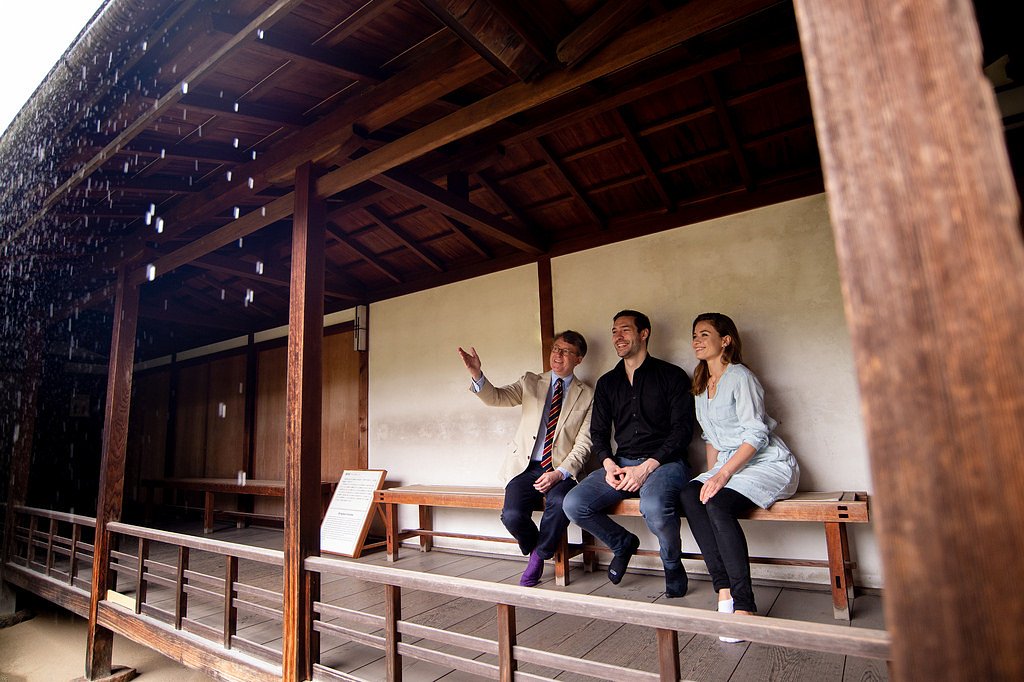
Ninna-ji, our final Kyoto garden destination, gives us the means to compare earlier landscape design against the later Muromachi period. The covered walkways of the Goten, former residence of the head priest, were modeled on an Imperial style and feature painted sliding doors that mirror the surrounding landscape. Ninna-ji contains both dry gardens and gardens with water features, tying together the principles we've discussed during our walk and serving as a suitable stop to end our walk.
Take Aways
At the end of this tour, we will come away with a deeper understanding of how Japanese gardens and landscapes reflect a wider philosophy and culture.
Meet the Experts














Where You’ll Go
From iconic landmarks to tucked-away local favorites, these are the places you’ll explore and experience firsthand with your Expert.
-
Golden Pavilion
-
Ryoan-ji
-
Ninna-ji
What’s Included As Standard
Here’s a look at what your tour covers, plus anything you’ll want to consider arranging separately, so you can plan with confidence.
Included
-
English-speaking expert guideTours led in English, offering you unbroken understanding throughout.
-
Intentionally sized groupsA smaller group means more time for conversations and questions.
-
Tickets and entrance feesAll entry tickets included (unless clearly stated otherwise).
-
HeadsetsHeadsets are included on tours that need them, so every word can be heard.
Not Included
-
Food and drinkUnless booking a Food & Drink tour or tasting experience, refreshments are not included.
-
Transportation to and from the meeting pointUnless noted, pre- and post-tour transport isn’t included - this service can be added by request.
-
GratuitiesTips aren’t included, but we encourage tipping as a way to thank your guide after your experience.
-
Hotel pickup or drop-offUnless noted, travel to or from accommodation isn’t included - this service can be added by request.
Where You'll Explore
Make the Most of Your Tour
Some helpful advice for getting the most from your experience, from practical prep to small on-the-day tips.
Dos:
- Wear comfortable footwear
- Check the weather and dress appropriately
- Bring a bottle of water (no glass)
- Feel free to ask your Expert anything
Don'ts:
- Bring firearms or weapons
- Bring sharp objects (e.g. knives, swiss army knives, switchblades, hiking sticks)
- Dress inappropriately to enter religious sites or sacred monuments
Any questions? You can always
contact us.
Frequently Asked Questions
Book with confidence — see Context's flexible cancellation policy here.
There may be nominal site entrance costs or other fees, like bus fare, that are not included in the price of the tour. It is a good idea to have some cash on hand for these.
Some parts of the tour are not accessible to wheelchair users: Ryoan-ji stone garden is not accessible at all and only a small part of the Golden Pavilion gardens are wheelchair accessible.
Yes. Context clients generally tip anywhere from 10-25% of the purchase price of a personal service such as this, depending on the quality of the experience and their tipping habits.
Don’t just take our word for it
Eco was very kind, patient with my kids, and full of knowledge. It was a wonderful and very interesting tour.
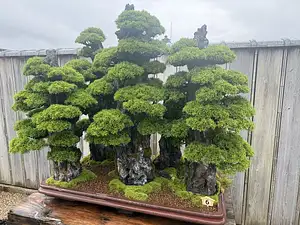
John was a great guide and took us to some amazing less-known spots, including a mind-blowing bonsai garden in Daitoku-ji.
Book a Tour
Let Your Curiosity Shape Your Journey
Join passionate experts on intimate walking tours that reveal a city’s unique stories, spark conversations, and leave you seeing the world—and yourself—a little differently.
Structured, never scripted
Your interests guide your Expert, leading to stories and perspectives that matter to you.
Crafted for conversation
With 12 or fewer guests, ask questions, engage with your Expert, and fully immerse yourself.
Experts, not guides
Explore with 1,200+ Experts—from historians and architects to archaeologists and chefs.
You May Also Be Interested In…
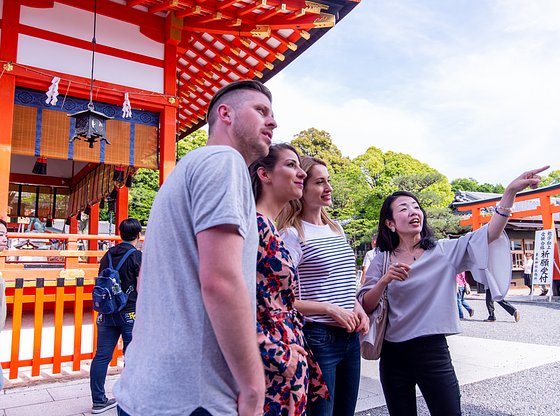

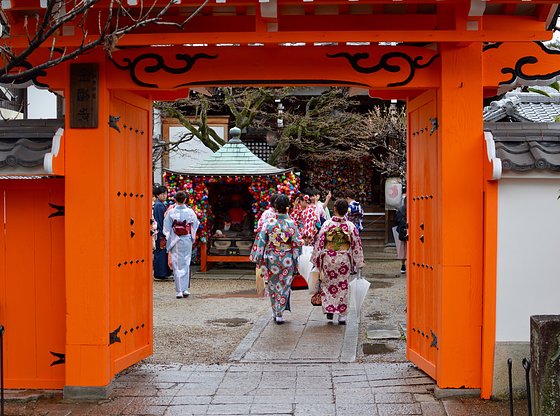
Learn to Read a Japanese Garden
Japanese gardens are carefully shaped environments, even when they appear entirely natural.
On this private Kyoto garden tour, you explore three temple landscapes that use water, stone, architecture, and mountain views in strikingly different ways. A Context Expert helps you move beyond visual appreciation to understand how each garden directs attention and expresses ideas about nature, spirituality, and human intention.
By comparing Kinkaku-ji, Ryoan-ji, and Ninna-ji, you gain a practical framework for interpreting the many gardens you encounter throughout Kyoto.
Explore Three Distinct Kyoto Gardens
Kyoto contains hundreds of temple gardens, but no single design represents the tradition as a whole.
This tour brings three contrasting landscapes into one conversation:
- Kinkaku-ji surrounds a gilded former villa with water and composed scenery.
- Ryoan-ji reduces the landscape to stone, gravel, space, and uncertainty.
- Ninna-ji combines dry gardens, water, painted interiors, and an Imperial residential setting.
Seeing them together reveals how garden design changed according to period, patronage, religious purpose, and architectural setting.
Begin at Kinkaku-ji, the Golden Pavilion
Kinkaku-ji is one of Kyoto’s most recognizable landmarks, but its significance extends beyond its gilded exterior.
The site was developed in the 14th century as a villa for shogun Ashikaga Yoshimitsu before becoming a Zen Buddhist temple. Its pond garden frames the pavilion through water, islands, trees, and borrowed views, creating a landscape designed both for contemplation and elite display.
Your Expert explains how political authority, religious patronage, and aesthetic ideals came together in this carefully staged environment.
Go Beyond the Golden Pavilion
Many visitors experience Kinkaku-ji primarily as a famous photograph.
This tour uses the pavilion as the beginning of a larger discussion. You consider how its reflection, approach, sightlines, and surrounding landscape influence the way the building is perceived. The garden is not simply placed around the architecture; it determines how the architecture is revealed.
Understanding that relationship offers a more meaningful way to approach other temples and gardens throughout Japan.
Understand the Dry Garden at Ryoan-ji
Ryoan-ji is best known for its karesansui, or dry landscape garden.
Fifteen stones sit within raked gravel, yet the full arrangement cannot be seen from any single seated position. The garden offers no fixed explanation, inviting viewers to consider absence, perspective, balance, and interpretation.
Your Expert introduces the garden’s historical and religious context without reducing it to a single symbolic answer. The discussion clarifies how deliberate abstraction can encourage contemplation while leaving space for uncertainty.
Compare Water and Stone
The contrast between Kinkaku-ji and Ryoan-ji provides one of the tour’s clearest insights.
At the Golden Pavilion, water reflects architecture and extends the surrounding scenery. At Ryoan-ji, stone and gravel suggest a landscape while withholding recognizable natural forms.
Both gardens reshape nature, but they do so through different visual languages. Comparing them helps separate general ideas about “Zen gardens” from the particular history, design, and purpose of each site.
Discover Ninna-ji’s Imperial Landscape
Ninna-ji introduces another relationship among garden, architecture, and authority.
Founded in the ninth century, the temple developed close ties to Japan’s Imperial family. Within the Goten, or former priestly residence, covered corridors connect rooms whose painted sliding doors respond to the landscapes outside.
Dry gardens, water features, architecture, and mountain views gather the tour’s themes in one quieter setting. The relationship between interior and exterior shows how a garden can be experienced not only by walking through it, but also by viewing it from carefully positioned rooms and passageways.
Understand Borrowed Scenery
Many Japanese gardens incorporate elements beyond their physical boundaries.
This technique, often called shakkei or borrowed scenery, uses distant mountains, forests, or architecture as part of the composed view. The garden therefore extends visually into the wider landscape without attempting to control every element within it.
Your Expert helps you recognize where this principle appears and how it connects temple grounds to Kyoto’s surrounding geography.
See How Gardens Direct Attention
A Japanese garden does not communicate only through the objects it contains.
Paths control movement. Verandas establish viewpoints. Walls conceal and reveal. Water creates reflection, while gravel emphasizes texture and empty space. Even the angle from which a visitor approaches a garden may be intentional.
Throughout the tour, your Expert identifies these design decisions so you can understand how the landscape shapes your experience rather than simply serving as a background.
Explore Zen Without Simplifying It
The phrase “Zen garden” is often used broadly, but not every Japanese garden is Zen and not every Zen temple uses the same design language.
This tour introduces Zen Buddhism through particular places rather than relying on vague ideas about tranquility or minimalism. Your Expert explains where religious practice, historical patronage, and later interpretation intersect—and where popular assumptions can be misleading.
No previous knowledge of Buddhism or landscape design is required.
A Private Kyoto Garden Tour
This is a private experience shaped around your party.
Your Expert can adapt the conversation according to your interests, whether you are especially curious about Zen Buddhism, architecture, horticulture, political history, artistic composition, or Japanese aesthetics.
The private format also leaves room to pause, look carefully, and ask questions that would be difficult to explore on a standard sightseeing circuit.
Led by an Expert in Kyoto’s Cultural Landscape
The tour is led by a scholar or specialist with knowledge of Japanese history, religion, architecture, art, or landscape design.
Rather than presenting each garden as an isolated attraction, your Expert connects the three sites across time and theme. By the end, you have a clearer vocabulary for discussing Japanese gardens and a sharper eye for the intentions held within each view.
Frequently Asked Questions
What will I learn on this Kyoto garden tour?
You will learn how Japanese gardens use elements such as water, stone, gravel, architecture, pathways, and borrowed scenery. The tour compares three distinct temple settings so you can recognize how design changes according to historical period, patronage, and religious purpose.
Which gardens are included?
The planned route includes the gardens of Kinkaku-ji, Ryoan-ji, and Ninna-ji. Together, they provide contrasting examples of pond design, dry landscape composition, Imperial architecture, and the relationship between interiors and outdoor views.
Does the tour visit the Golden Pavilion?
Yes. Kinkaku-ji, commonly called the Golden Pavilion, is the first principal site. The visit considers both the famous building and the larger garden designed to frame it.
Is Ryoan-ji’s rock garden included?
Yes. The tour visits Ryoan-ji’s renowned dry landscape garden and examines its composition, historical context, relationship with Zen Buddhism, and resistance to any single interpretation.
Is Ninna-ji included?
Yes. Ninna-ji provides the final comparison, bringing together dry gardens, water features, painted rooms, covered walkways, and an Imperial-style residential setting.
Is this only a Zen garden tour?
No. Zen Buddhism is an important theme, especially at Kinkaku-ji and Ryoan-ji, but the tour covers a broader history of Japanese landscape design. Ninna-ji adds Imperial and residential perspectives that complicate the idea of a single “Zen garden” tradition.
Do I need prior knowledge of Japanese gardens?
No. The tour introduces the relevant terms and principles through the gardens themselves. It is appropriate both for first-time visitors and travelers with an established interest in Japanese design.
Is this tour suitable for someone mainly interested in architecture?
Yes. The experience examines how gardens relate to villas, temple halls, covered corridors, painted screens, and carefully positioned viewing spaces. Architecture and landscape are treated as parts of one composition.
How long is the tour?
The tour lasts approximately three hours.
Is the entire tour on foot?
No. The temples are not all directly adjacent, so the route includes walking and local transportation.
When is the best time to take a Kyoto garden tour?
Kyoto’s gardens change throughout the year. Spring brings blossoms and fresh growth, summer offers dense greenery, autumn introduces colorful foliage, and winter makes structure, stone, and composition especially visible. The tour’s comparative design focus makes it worthwhile in every season.
Can I visit these gardens independently?
Yes, but the historical and conceptual relationships among the three sites can be difficult to recognize without interpretation. A Context Expert helps you compare them, distinguish different garden traditions, and understand how design choices affect what you see and how you move.
What makes this different from a general Kyoto temple tour?
A general temple tour may concentrate on religious history or major monuments. This experience focuses specifically on landscape design, using three temple gardens to explore how nature, architecture, spirituality, and power are expressed visually.