Fantastic. Blaise is a repertoire of knowledge.
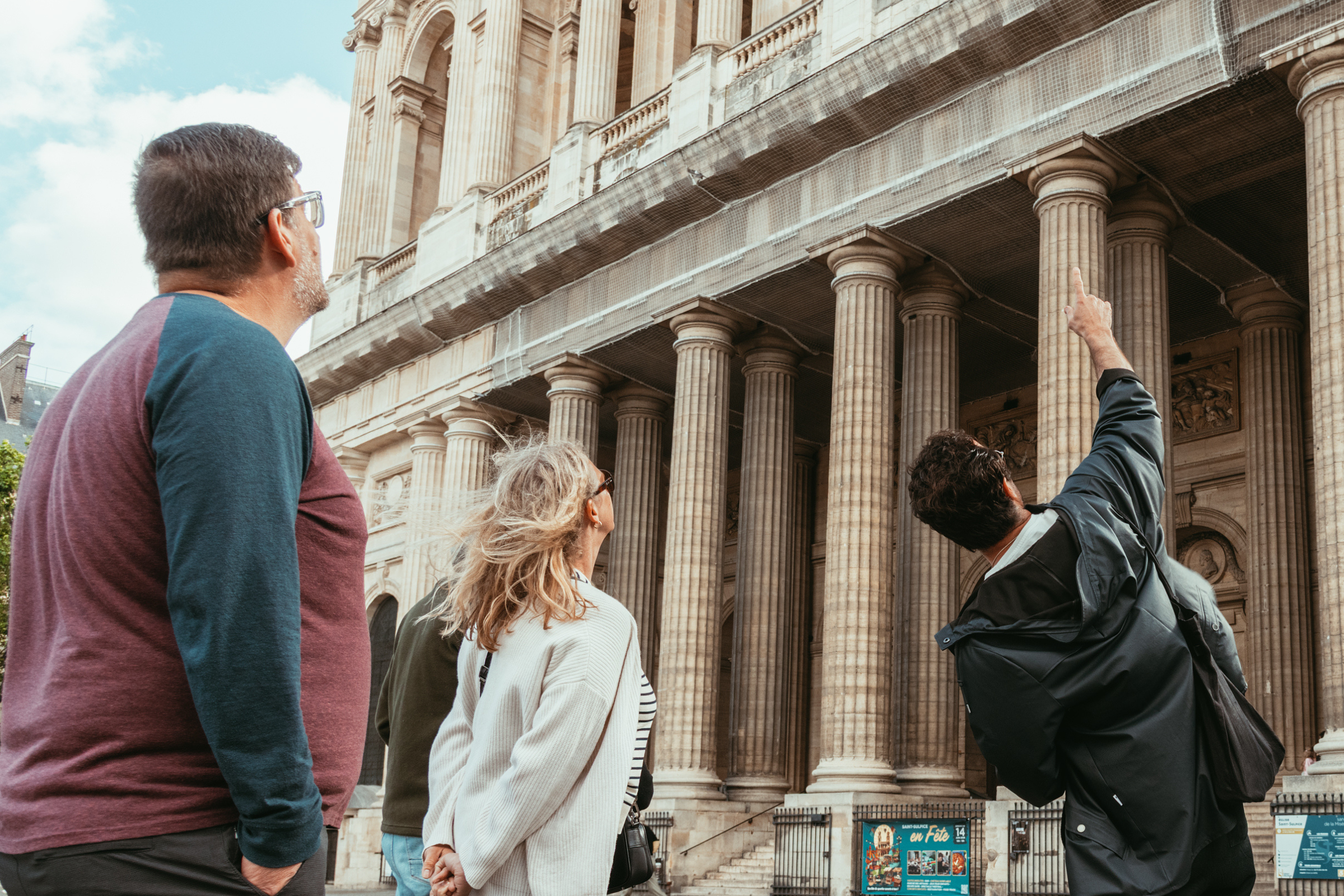
Paris WWII History Tour: Occupation & Resistance
Examine Paris under occupation through resistance & daily life
Occupied Paris was not silent. Trace courage, compromise, and resistance in the streets where ordinary lives met extraordinary choices.
Tour Highlights
- Explore life under occupation Understand how daily life, fear, and adaptation shaped Paris in ways unlike other occupied cities.
- Reality of resistance stories Follow true accounts of clandestine networks and everyday people who pushed back quietly.
- Arrests and deportations Stand where policies became personal, and where absence still weighs heavily today.
- Liberation beyond headlines Explore how Paris freed itself through coordination, risk, and internal resistance.
- Humanity in moral gray zones Examine collaboration, survival, and courage without simple heroes or villains.
Led by Experts, Shaped by You
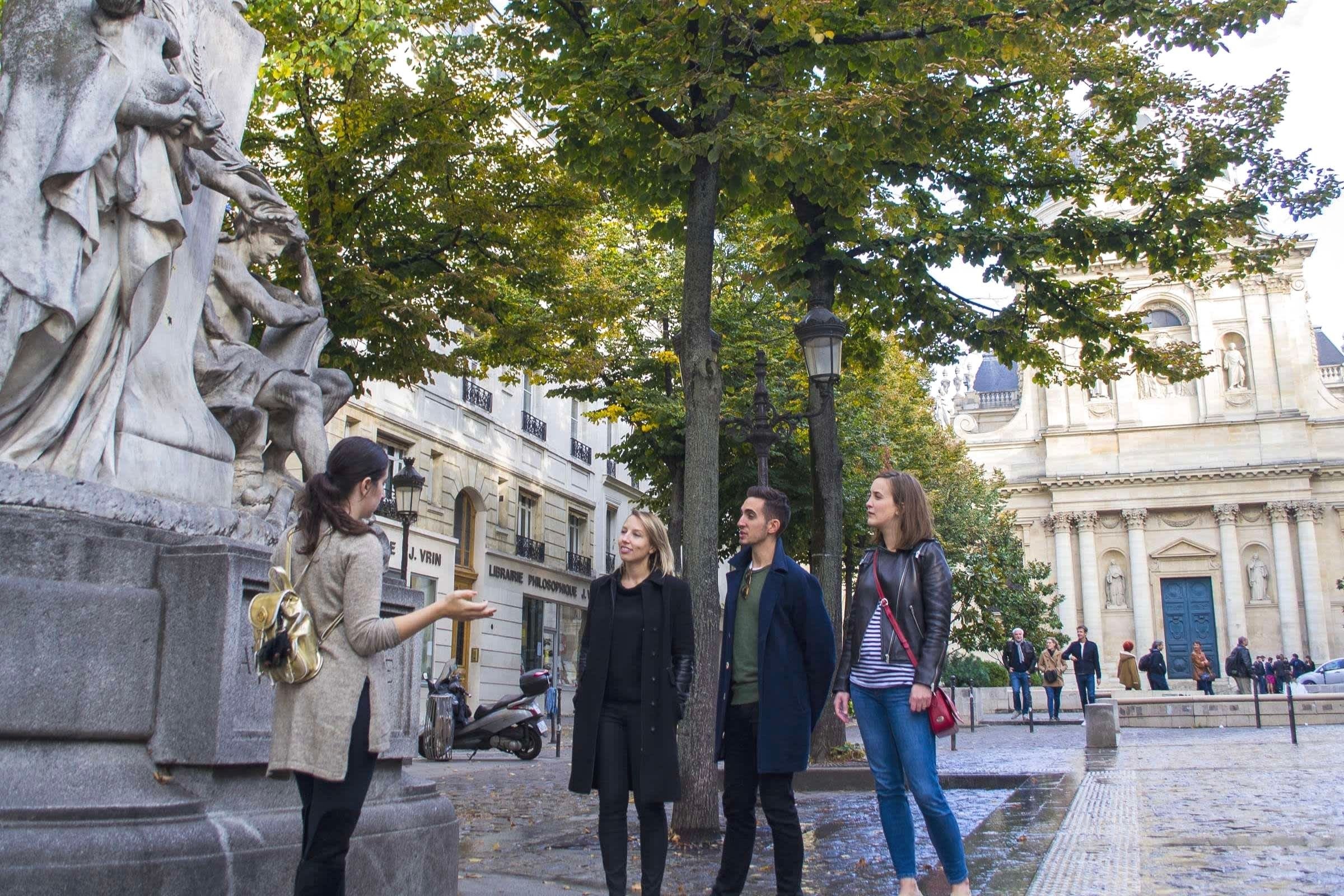
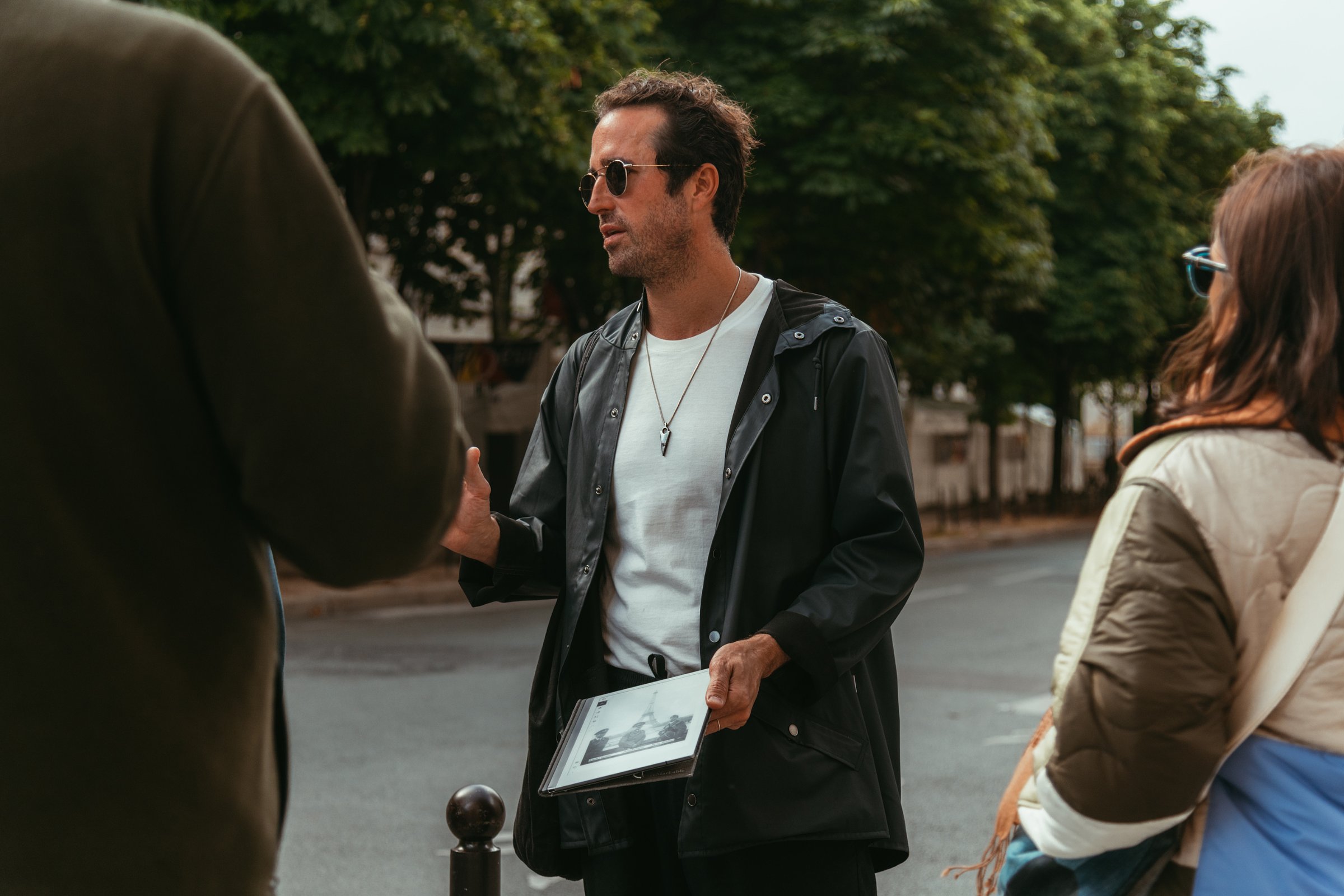
Explore with an expert guide who responds to your questions, your interests, and your pace. Reveal layers of meaning most visitors miss—go from seeing to understanding.
The Finer Details
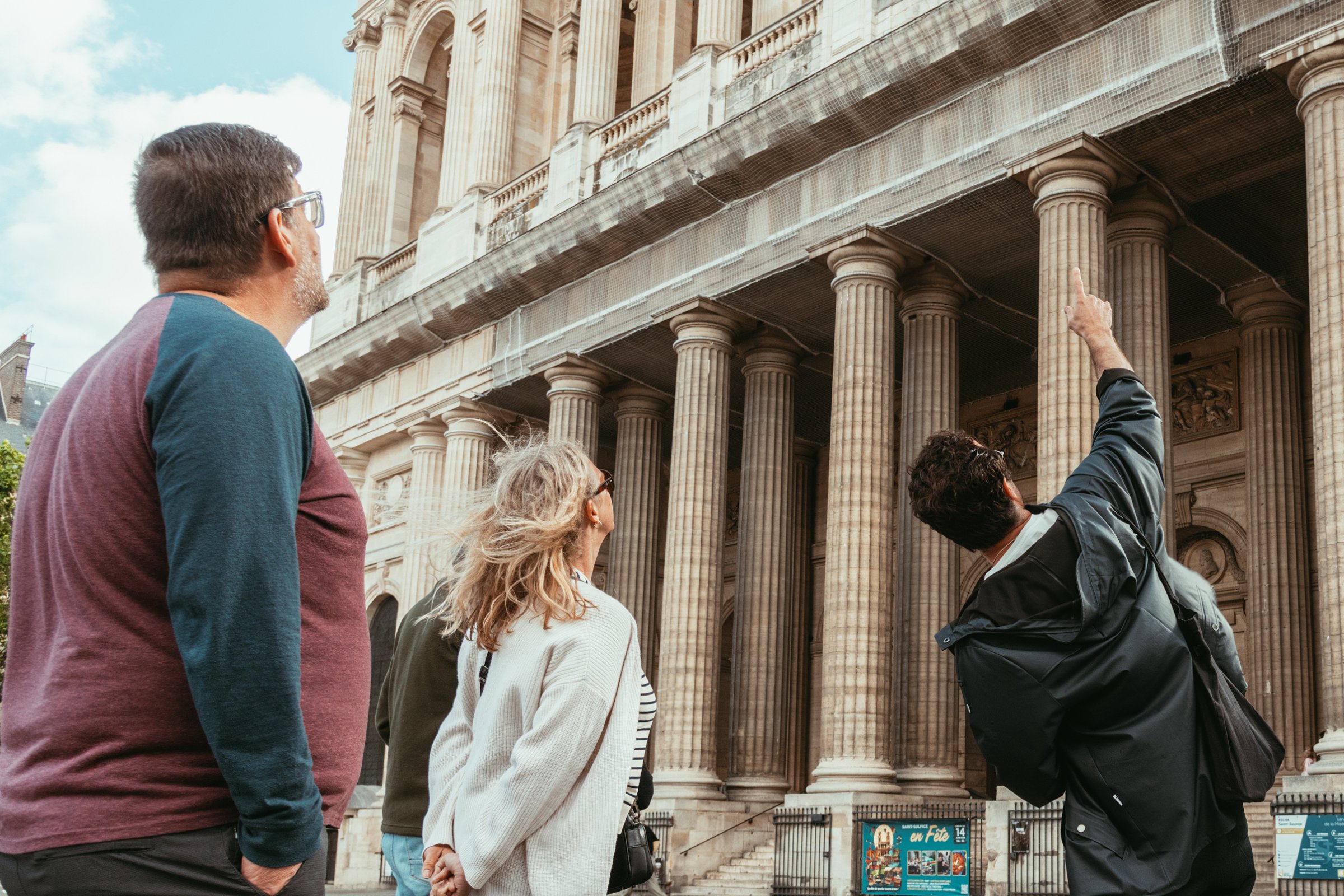
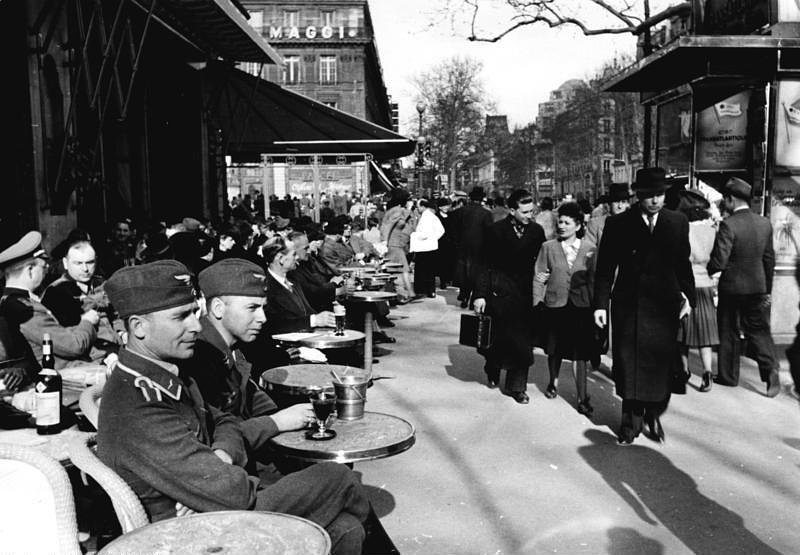
Occupation did not happen in one single moment. Rather, a series of events forcefully reshaped Parisian life. This expert-led Paris WWII tour explores how Nazi control settled into the city, how Parisians adapted, and how fear and the need to maintain routine often existed side by side.
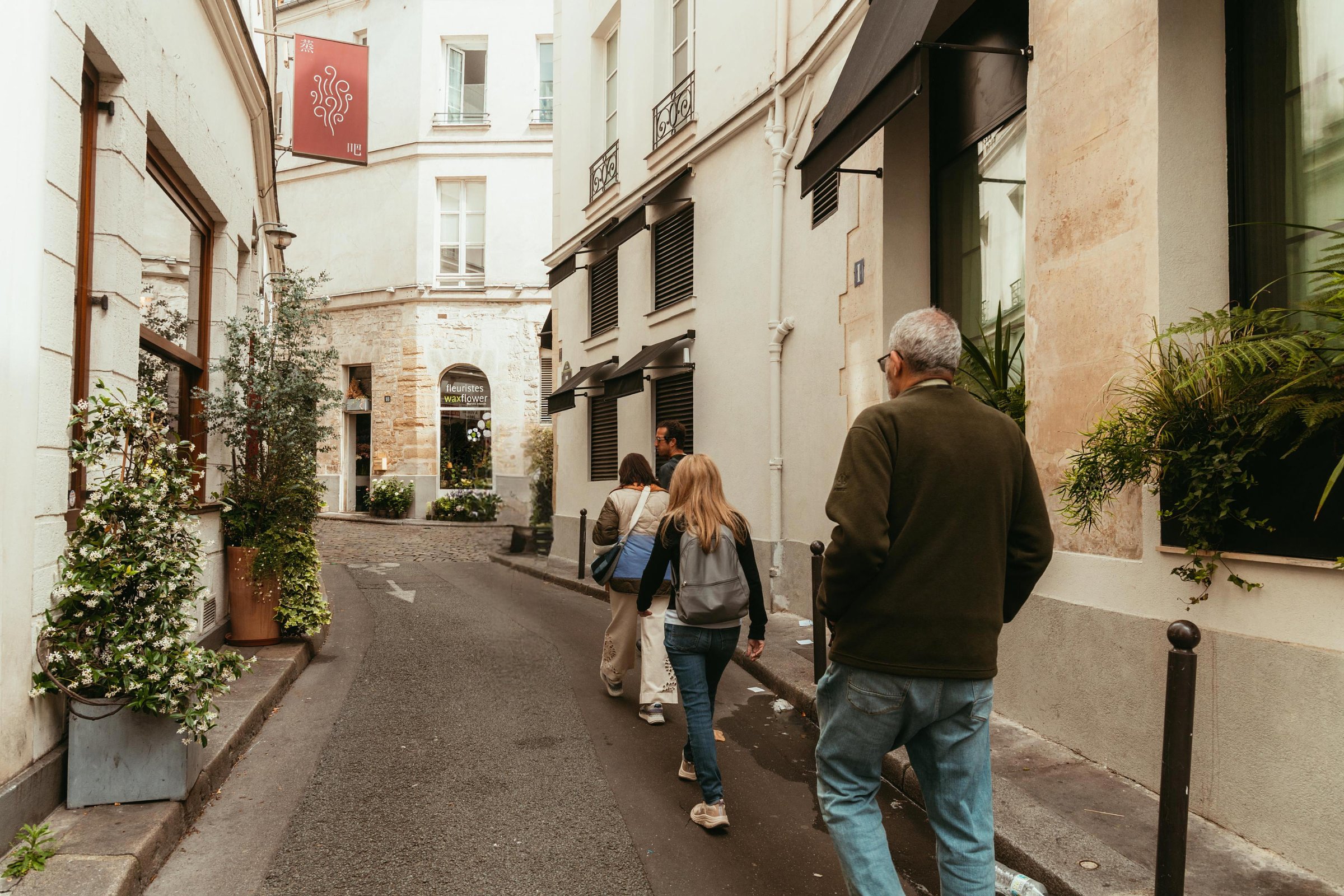
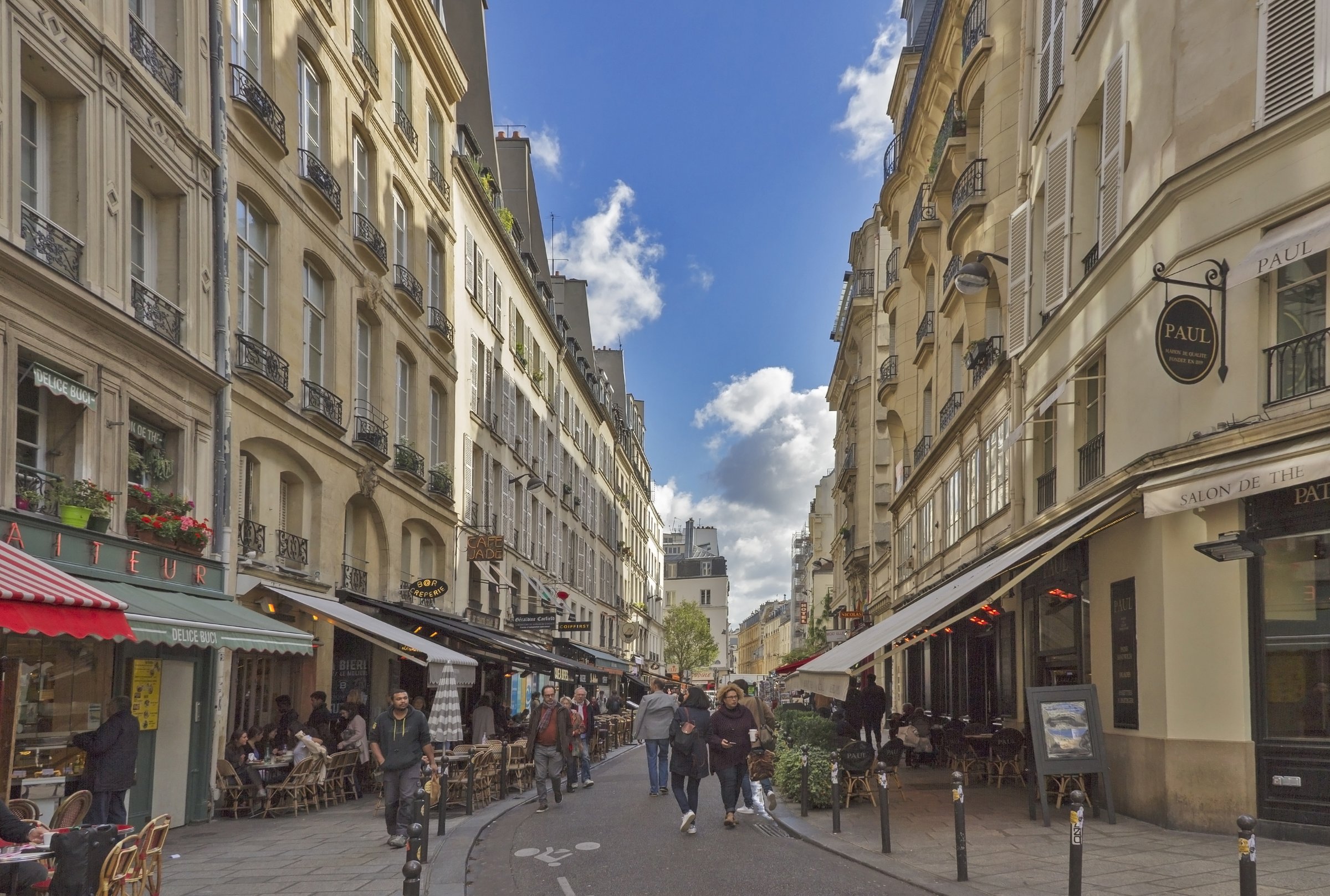
With a WWII Expert, focus on what made Paris distinct under occupation politically, socially, and psychologically. Walk the streets of the Left Bank together to examine how authority and oppression operated day to day, from policing to propaganda. Discuss how food shortages, surveillance, and curfews altered ordinary lives and routines. How did communities decide what was safe, what was necessary, or what may be worth risking?
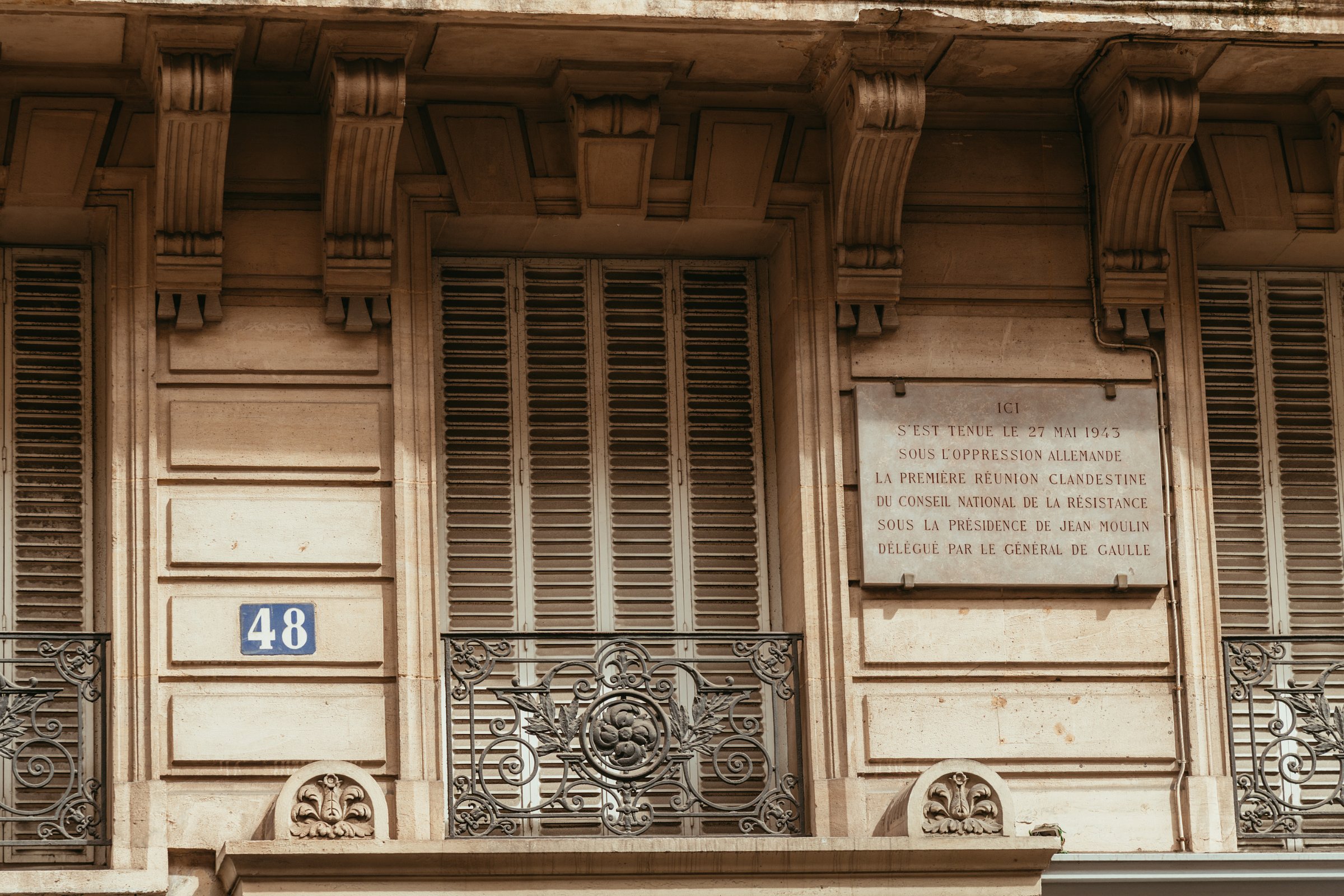
As you move across bridges, attention turns to the Resistance not as a single movement, but as a fragile, fractured network. Learn how couriers, printers, and organizers worked quietly, often without knowing who else was involved, to strive for freedom again. But what did resistance actually look like on just another Tuesday morning in the streets of Paris?
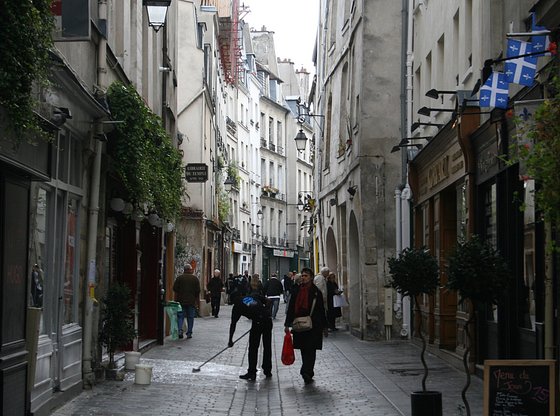
In the Marais, confront the realities of persecution and absence as stories of Jewish families and targeted communities ground politics and policy in lived experience. The streets of today still reveal how quickly neighbors could vanish, and how memories may be all that linger in place.
Your Expert continues the narrative and builds toward the Liberation, born largely from within the embattled and entrenched city itself. Explore how timing, local knowledge, and quiet communication mattered more than grand speeches. Paris did not simply wait to be freed, it acted.
Throughout, the focus of the tour remains human. Moral compromise, bravery, fear, and hope coexist in every story. The result is a deeper understanding of what your family, or countless others, may have faced when history pressed in from all sides.
Everyone from history buffs to history dabblers will learn something new
“Marie was a fabulous guide. She gave me a real look at WWII from the French perspective, which was so interesting. My husband is a real military/war buff and he learned new things from Marie. Highly recommend Marie and this tour. Money well spent.”
Discover one of Paris’ hidden sides
“Our guide, Sean, led us on an insightful walking tour that we really enjoyed. We read a lot of WWII history, but were unfamiliar with the details of what happened in Paris during the war years—and we learned a lot on this tour. It offered a new way to see and understand Paris. We enjoyed it!”
Meet the Experts













Where You’ll Go
From iconic landmarks to tucked-away local favorites, these are the places you’ll explore and experience firsthand with your Expert.
-
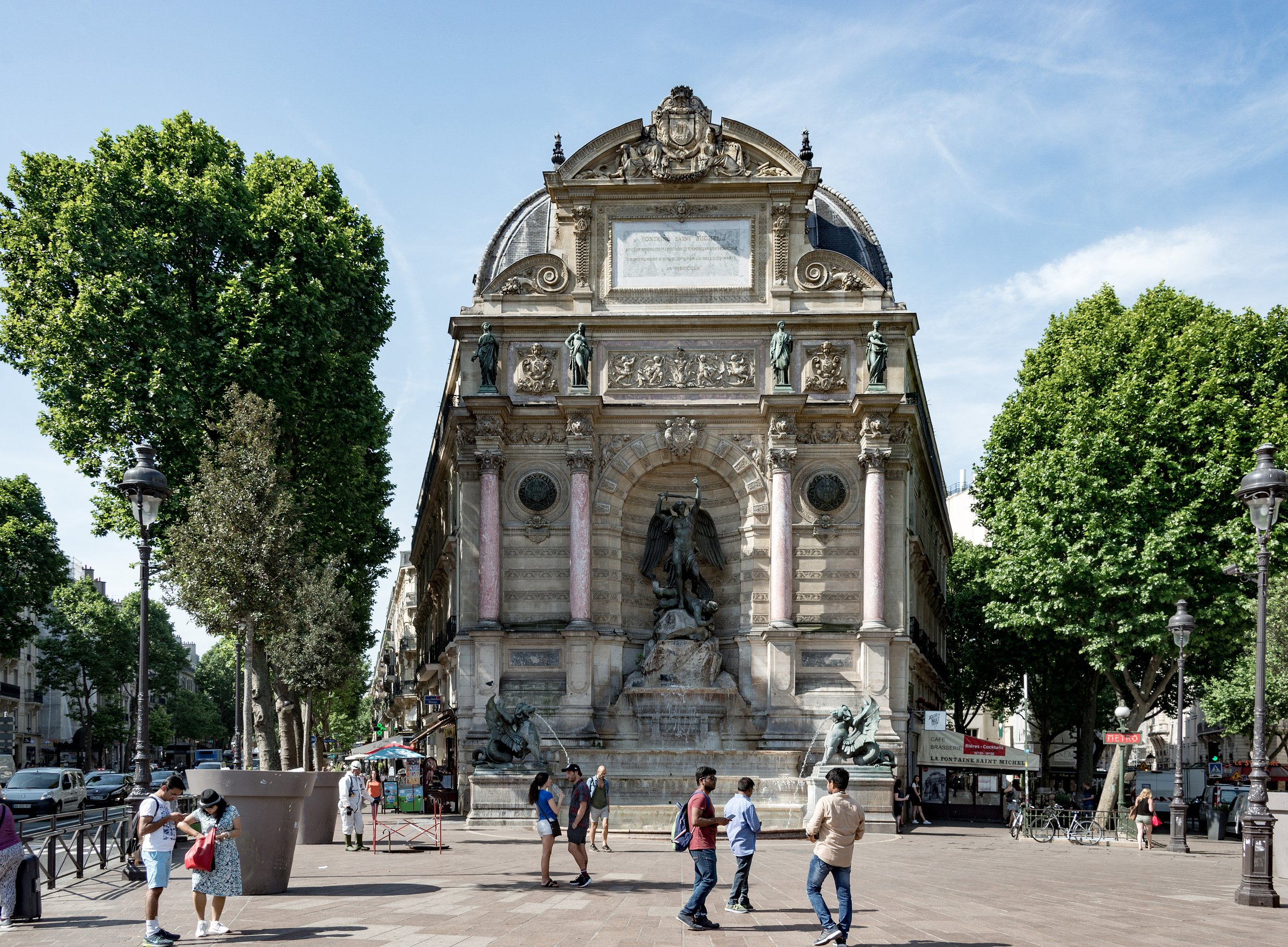
Place Saint-MichelLively square centred on a fountain, gateway to the Latin Quarter’s streets.
-
Luxembourg GardensFormal gardens around the historic Luxembourg Palace.
-
Île de la CitéHistoric island in the Seine, home to Notre-Dame and medieval Paris landmarks.
-
Latin QuarterParis neighborhood known for historic streets, universities, and cultural life.
-
MaraisHistoric Paris district with medieval streets, museums, and cultural landmarks.
-
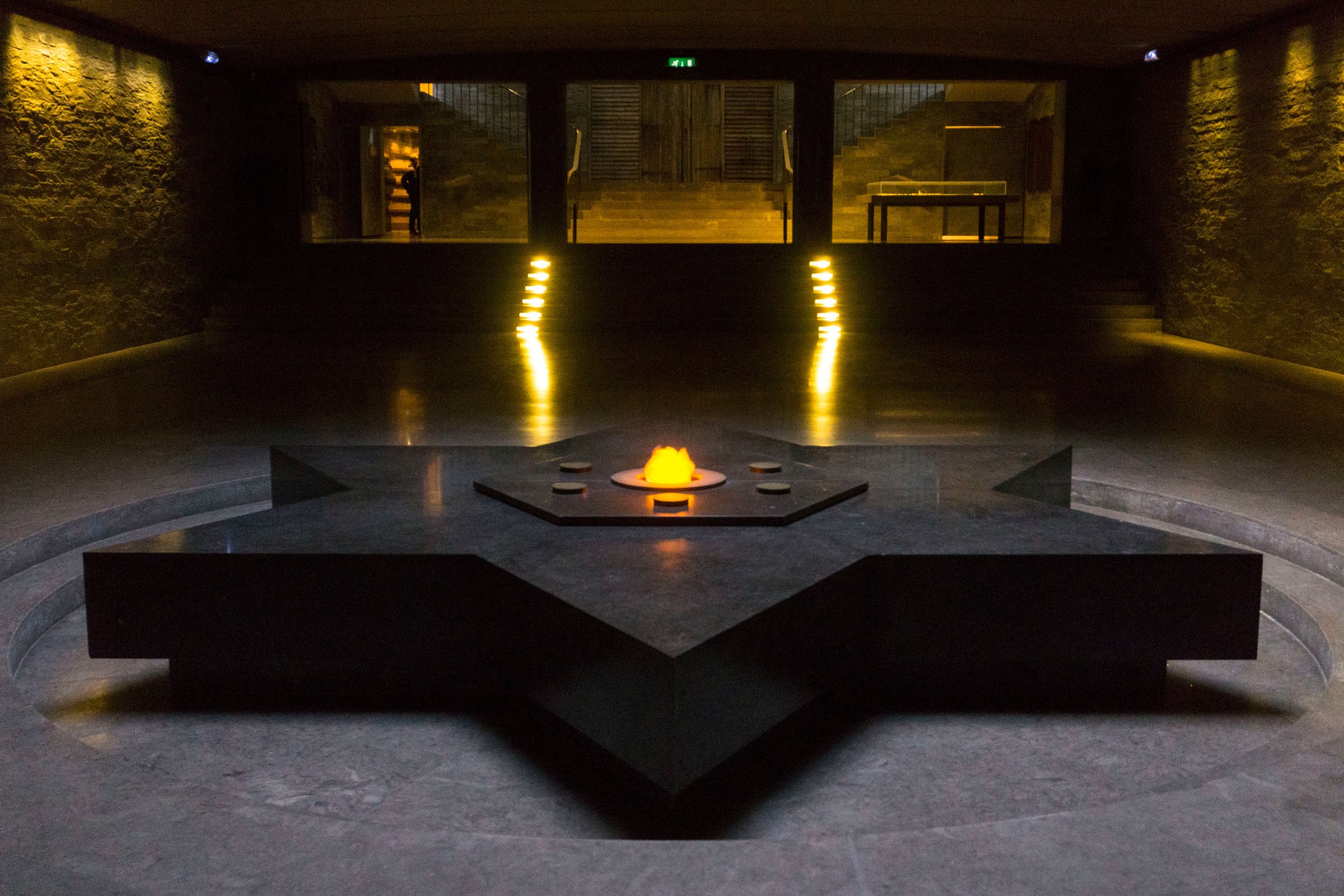
Mémorial des martyrs de la DéportationMemorial honouring those deported during WWII, in a stark riverside setting.
-
Memorial of the ShoahMuseum and memorial documenting Jewish history, the Holocaust, and remembrance.
What’s Included As Standard
Here’s a look at what your tour covers, plus anything you’ll want to consider arranging separately, so you can plan with confidence.
Included
-
English-speaking expert guideTours led in English, offering you unbroken understanding throughout.
-
Intentionally sized groupsA smaller group means more time for conversations and questions.
Not Included
-
GratuitiesTips aren’t included, but we encourage tipping as a way to thank your guide after your experience.
-
Food and drinkFood and drink are not included, but your expert can provide recommendations for after the tour.
-
Transportation to and from the meeting pointTransportation is not included. Pre- and/or post-transit can be added to some tours by request.
-
Hotel pickup or drop-offTravel to or from accommodation isn’t included; however, this service can be added by request.
Where You'll Explore
Make the Most of Your Tour
Some helpful advice for getting the most from your experience, from practical prep to small on-the-day tips.
Dos:
- Wear comfortable footwear
- Check the weather and dress appropriately
- Bring a bottle of water (no glass)
- Feel free to ask your Expert anything
Don'ts:
- Bring firearms or weapons
- Bring sharp objects (e.g. knives, swiss army knives, switchblades, hiking sticks)
- Dress inappropriately to enter religious sites or sacred monuments
Any questions? You can always
contact us.
Frequently Asked Questions
Book with confidence — see Context's flexible cancellation policy here.
We cover mature topics on this tour. It is not designed as a family tour, though we welcome inquisitive minds of all ages. Please contact us to discuss further if you're concerned about age-appropriate content. Context small-group tours do have an age minimum of 13.
We run this tour every day of the week, except for a few holidays when downtown Paris is very congested. Please be aware that the Shoah Memorial is not open on Saturdays and therefore Saturday tours will visit other points of interest.
We understand that some of our valued guests may have mobility concerns, and we want to ensure you have a comfortable and enjoyable experience throughout your tour. If there are any accessibility concerns that your tour guide will need to be aware of, please let our team know at the time of booking.
Don’t just take our word for it
Achille's passion for history was infectious and his deep knowledge of Paris as a 4th generation Parisian made the tour more personal. Would definitely do it again!
Abbie had outstanding knowledge and very personable. Wonderful tour
Let Your Curiosity Shape Your Journey
Join passionate experts on intimate walking tours that reveal a city’s unique stories, spark conversations, and leave you seeing the world—and yourself—a little differently.
Structured, never scripted
Your interests guide your Expert, leading to stories and perspectives that matter to you.
Crafted for conversation
With 12 or fewer guests, ask questions, engage with your Expert, and fully immerse yourself.
Experts, not guides
Explore with 1,200+ Experts—from historians and architects to archaeologists and chefs.
Related experiences our customers also loved



Paris WWII History Tour
Paris under Nazi occupation was shaped as much by daily choices as by headline events. This Paris WWII tour looks beyond a simple story of occupiers and resisters to examine how ordinary life changed under surveillance, rationing, propaganda, curfews, persecution, and political pressure. The occupation forced people into decisions that were often less clear-cut than later histories suggest. Some resisted. Some collaborated. Many adapted, endured, or made choices that changed according to circumstance. Understanding Paris during World War II means holding those realities together. It also means looking critically at the stories the city chose to tell afterward. Memorials, plaques, street names, and preserved sites reveal not only what happened between 1940 and 1944, but how France has remembered those years since.
German forces entered Paris in June 1940 and remained until the liberation of the city in August 1944.
Occupation altered everyday life quickly. Food, fuel, and other essentials were rationed. Curfews and military regulations restricted movement. German propaganda occupied public space. Hotels, offices, and institutions were requisitioned. French police and government agencies participated in implementing occupation policies.
For Jewish residents, the consequences were far more severe. Anti-Jewish laws, registration requirements, arrests, property seizures, and deportations progressively isolated Jewish families from the life of the city. French authorities, including the Vichy government and Paris police, played an active role in this persecution.
That history is especially important in neighborhoods such as the Marais, where Jewish life had deep roots long before the war.
Walking through Paris today, the occupation can be difficult to see. The buildings remained. Cafés reopened. Streets resumed their routines.
The historical challenge is understanding what happened behind façades that often look much as they did before the war.
The phrase “the French Resistance” can suggest a single coordinated organization.
Reality was much more fragmented. Gaullists, communists, intelligence networks, clandestine printers, couriers, students, workers, foreign residents, and other groups resisted occupation for different reasons and often operated independently of one another.
Many people involved in resistance work knew very little about the wider networks to which they belonged. Secrecy was essential because arrest could expose not only one individual but everyone connected to them.
Resistance could mean gathering intelligence, distributing illegal newspapers, hiding persecuted people, forging documents, sabotaging infrastructure, transmitting information, or eventually taking up arms.
It could also begin with choices that looked remarkably ordinary.
That complexity is central to Context’s deeper guide, Beyond the Placards: The Real Story of Resistance in Nazi-Occupied Paris, which examines how postwar memory often emphasized the dramatic final days of liberation while obscuring the fragmented and sometimes uncomfortable history that came before.
The article also makes an important distinction: there was no single unified “French Resistance.” Competing political groups and individual acts of defiance became part of a much cleaner national story after the war than the historical record allows.
The liberation of Paris in August 1944 quickly became one of the defining stories of modern French identity.
That memory emphasized courage, unity, and national resistance. Those things were real. They were also incomplete.
Postwar France had to confront collaboration, Vichy participation in persecution, the deportation of Jewish residents, political divisions within resistance movements, and the many people who had simply tried to survive. Public memory did not absorb all of those histories at the same speed.
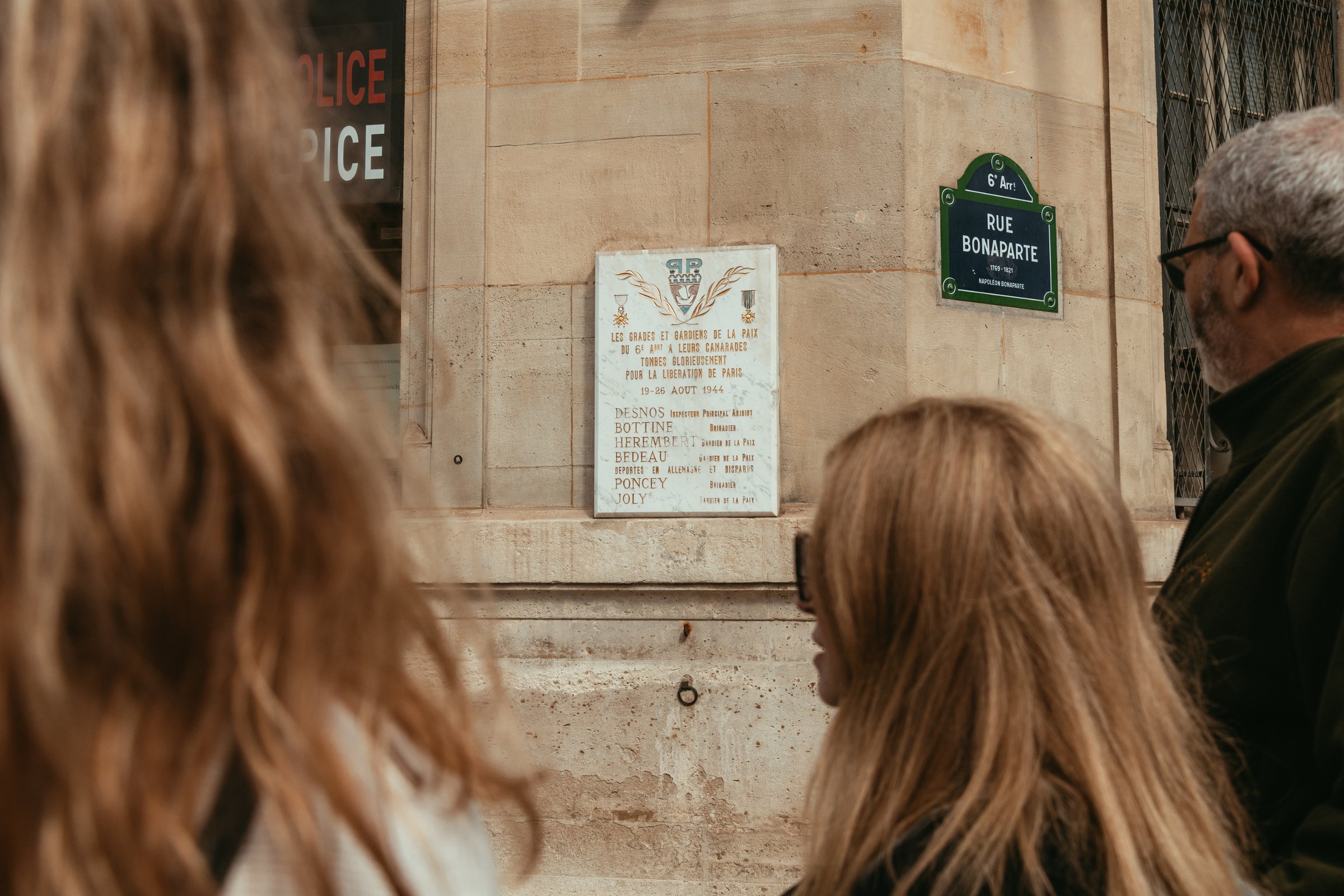
Plaques around Paris often commemorate individual acts of resistance or deaths during the liberation. They are valuable historical evidence, but they can also encourage visitors to see the occupation primarily through its most heroic final chapter.
The Mémorial de la Shoah and Mémorial des Martyrs de la Déportation introduce other perspectives, placing persecution, deportation, absence, and remembrance alongside stories of resistance.
That tension between what happened and what was later remembered is one of the most revealing ways to understand occupied Paris.
A WWII walking tour can therefore do something a chronological account cannot: place the official memory of the city beside the streets where more complicated choices were actually made.
What happened in Paris during World War II?
German forces occupied Paris from June 1940 until August 1944. During that period, the city experienced military control, rationing, curfews, censorship, propaganda, persecution, deportations, collaboration, and resistance.
Was Paris heavily damaged during World War II?
Paris avoided the level of physical destruction experienced by many other European cities, which means much of the landscape of occupation still survives. That can make the history unusually difficult to recognize because many sites continue to function as ordinary streets, hotels, offices, and neighborhoods.
What was the French Resistance?
The French Resistance was not a single organization. It consisted of numerous groups and individuals who opposed German occupation and the Vichy regime through activities including intelligence gathering, clandestine publishing, document forgery, sabotage, hiding persecuted people, and armed resistance.
Was everyone in Paris either a collaborator or a member of the Resistance?
No. Most experiences do not fit neatly into those categories. People made different choices according to politics, fear, family, survival, opportunity, and changing circumstances.
That complexity is one of the central themes of this tour.
What happened to Jewish people in occupied Paris?
Jewish residents faced escalating persecution under German occupation and Vichy policies, including registration, discrimination, arrests, property seizures, and deportation. French institutions and police participated in implementing many of those measures.
What was the role of the Marais during World War II?
The Marais had a significant Jewish population before the war, making it an important area for understanding persecution, deportation, survival, and the absence left by families who were taken away.
How was Paris liberated?
Paris was liberated in August 1944 following an uprising within the city, strikes, resistance activity, and the arrival of Allied and Free French forces.
The liberation was not simply an external military event. Local resistance groups played an important role in the final days of occupation.
Is this a military history tour?
Not primarily.
Military events provide necessary context, but the tour focuses more closely on occupation, resistance, collaboration, persecution, daily life, and the choices made by people living in Paris between 1940 and 1944.
Does the tour visit WWII memorials in Paris?
The route includes places connected to occupation and resistance and may include the Mémorial des Martyrs de la Déportation and the Mémorial de la Shoah, depending on the day and operating conditions. The Shoah Memorial is closed on Saturdays.
Is this tour appropriate for children?
The tour covers mature subjects including persecution, deportation, collaboration, and wartime violence. It is not designed specifically as a family tour, although Context welcomes inquisitive travelers of different ages. Small-group departures have a minimum age of 13.
Where can I learn more about the French Resistance before visiting Paris?
Context’s Nazi Occupation of Paris: A Pre-Trip Guide offers a deeper introduction to life in the city under German occupation, including resistance, collaboration, persecution, and the political pressures that shaped Paris between 1940 and 1944.
It’s a useful way to build historical context before taking the walking tour, so the sites, memorials, and neighborhoods you encounter in Paris have a stronger framework from the start.