Paris fell faster than anyone expected. Four years later it rose in a single dramatic week. Between those two moments lies a far more layered story — one of quiet endurance, difficult personal choices, and competing versions of what resistance really meant. The placards we pass today often highlight the final days of heroism. The fuller picture invites us to look deeper.
Invasion
The Battle of France began on May 10 and lasted barely one month. Fueled by methamphetamines and an ingenious maneuver through the Ardennes Forest, the German blitzkrieg all but destroyed the French Army and drove the British Expeditionary Force into the sea.
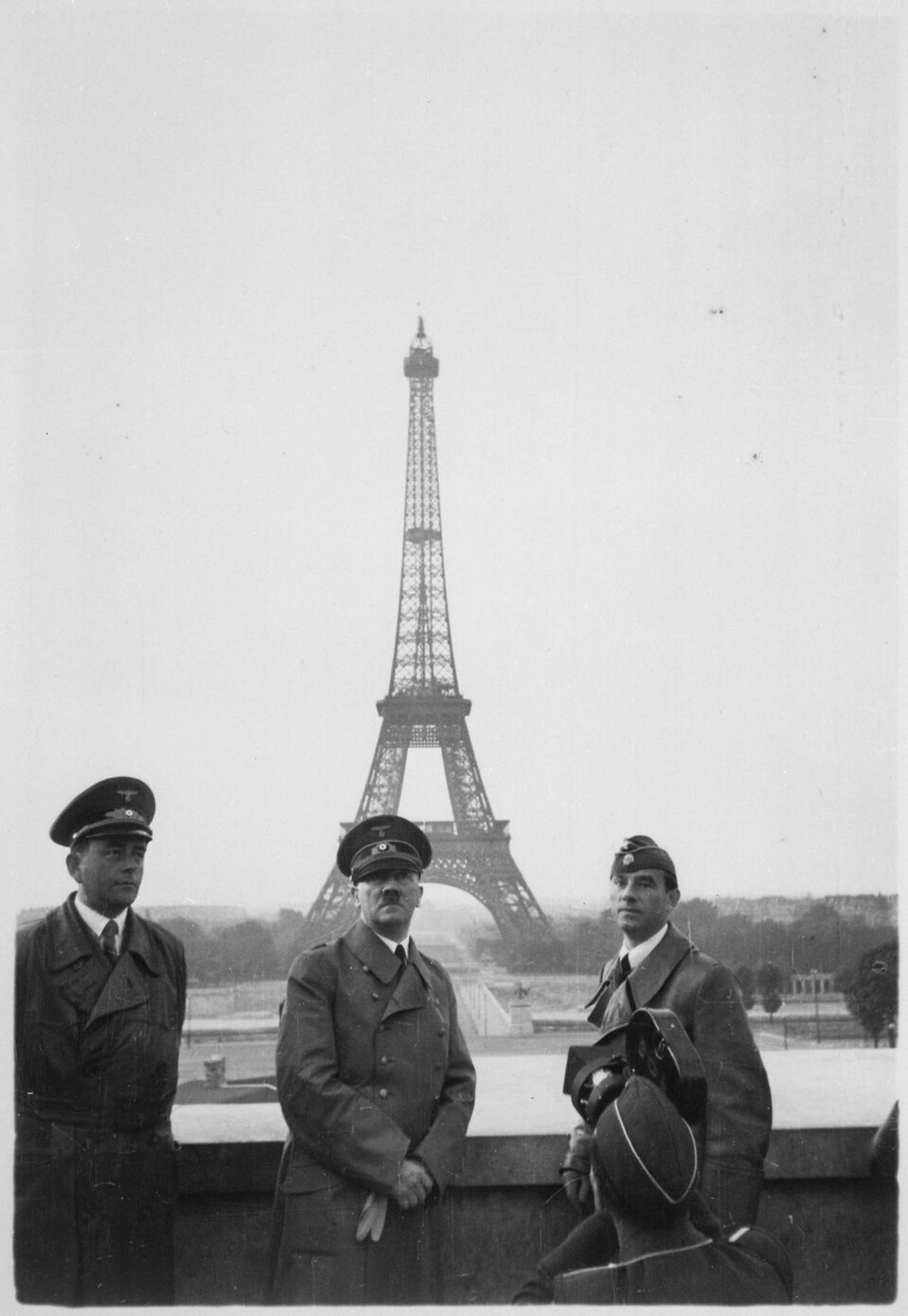
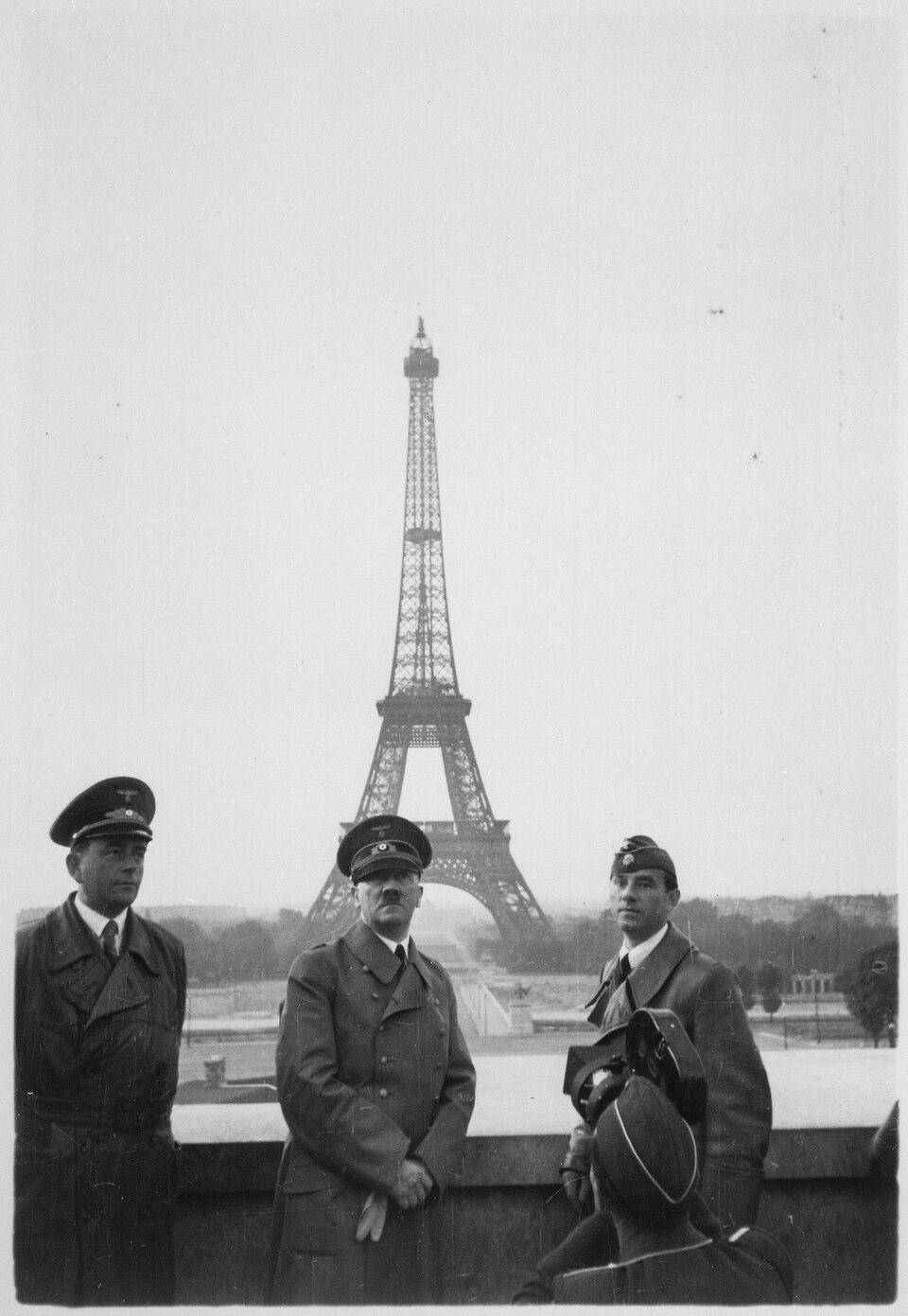
In just four weeks of fighting, approximately eighty thousand French soldiers were killed and 1.8 million surrendered or were taken prisoner; over 100,000 civilians died during the great exodus (l’Exode de 1940). On June 23, Hitler visited Paris for the first and only time in his life and commented, “When Berlin is finished, Paris will be just a shadow, so why destroy it?”
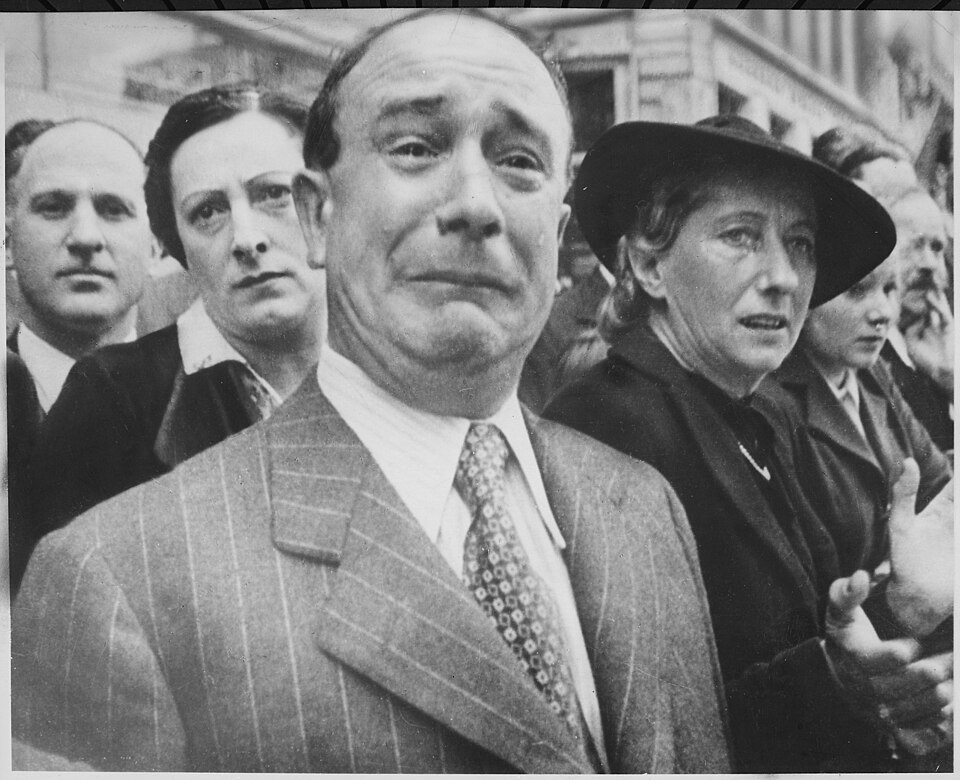
Nobody in the world had anticipated such a rapid French collapse, least of all Stalin, who’d signed a non-aggression pact with Hitler so that they could split Poland down the middle. The speed of the conquest was a first in military history. At the Hotel Lutetia (which was immediately requisitioned by the Abwehr, Germany’s counterintelligence services) Marcel Weber, a maître d’, recalled: “before we even had time to realize they were there, the hotel had been requisitioned. We didn’t hear the sound of boots. It was more like a silent movie. It had happened. They were there. One of them immediately asked what there was to eat.”
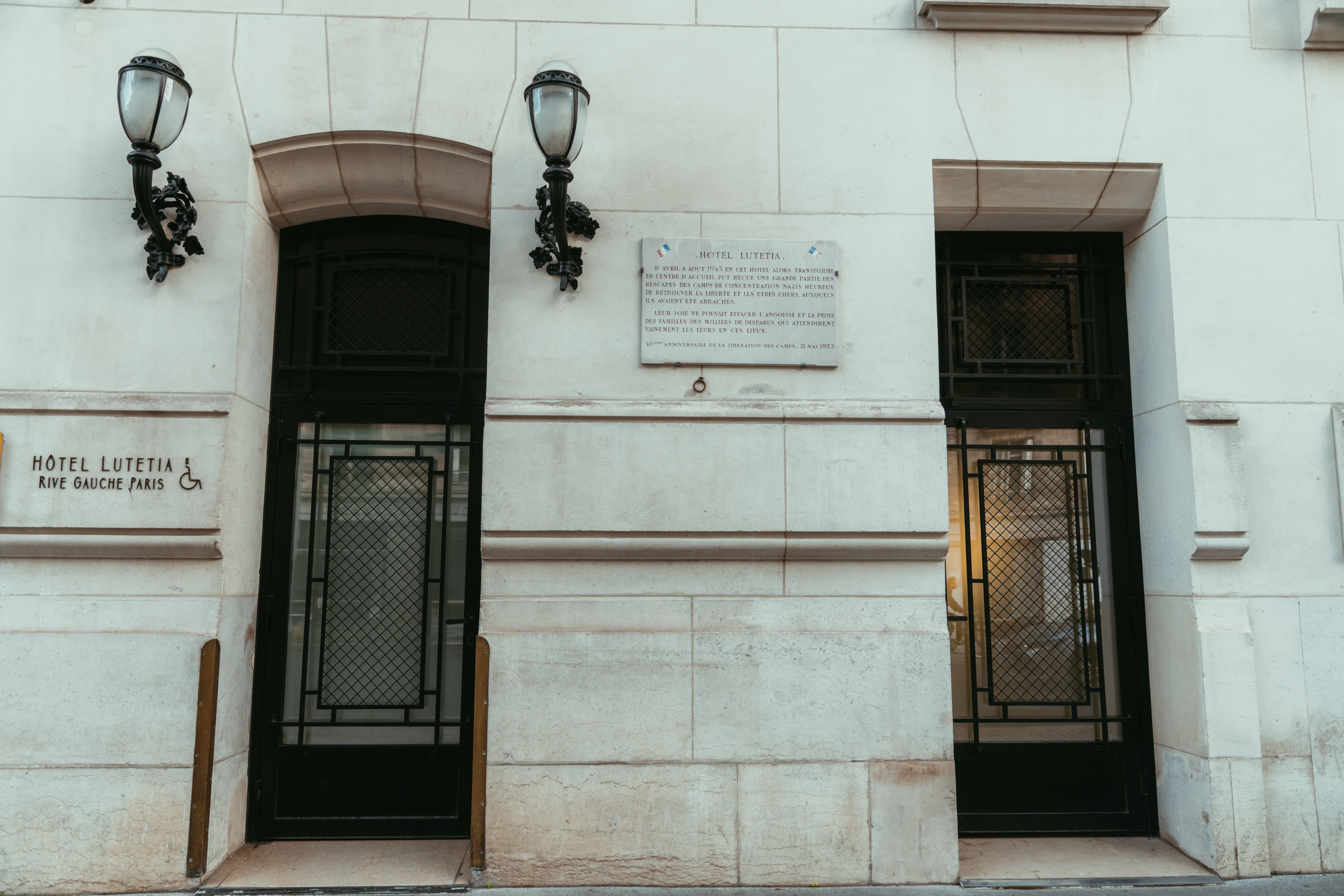
If you look at the placard in front of the Hotel Lutetia, however, you won’t find any mention of the fact that for four years and two months of occupation, the German military elite called this place home. This is because in April 1945, the Hotel Lutetia was transformed into a transit center for close to twenty thousand survivors of Nazi concentration camps. Like most historical placards in Paris, the one at the Hotel Lutetia is better understood as a palimpsest: not so much a rewriting as an overwriting, the imposition of a more positive narrative line upon one of the darkest chapters in French history.
In total, eleven million people died during the Nazi genocide — six million Jewish people and five million Gentiles. In France alone, the Nazis and the Vichy French government deported approximately 160,000 people, including 76,000 Jewish people (a majority of whom were foreign). Of this group, only 2,500 survived compared to almost 60% of the 84,000 non-Jewish deportees.
From the historian Ronald Rossbottom’s book When Paris Went Dark, “there exists no record of even a single French policeman having refused to participate in his assignment,” but this is not a story that was told after the war. On June 18, 1940, Charles de Gaulle gave his first speech via the BBC while he was exiled in London. In it, he referred specifically to the idea of the “French resistance,” primarily as a rhetorical device: “Whatever happens, the flame of the French resistance must not be extinguished and will not be extinguished.” (Placards of this speech can be found throughout Paris, none more prominently than across from the police prefecture, to the left of Notre Dame).
Resistance
Given the complex nature of resistance throughout France — at minimum, a clear distinction must be made between communist, Gaullist, and non-denominational resistance forces (le maquis) — it is worth considering what “French Resistance” actually means. In brief, anybody who resisted the Nazis in any way during the occupation can be deemed a resistance member — but with a lowercase “r,” because a singular “French Resistance” simply did not exist.
As an author and historian who often leads Context Travel’s Paris WWII History Tour, I’ve noticed that travelers frequently wonder why the city’s placards rarely unpack the complexity of resistance groups or highlight acts of defiance before those final dramatic days of 1944. The reality, despite the post-war Gaullist narrative, was that Paris remained remarkably quiet until the very end — occasional bomb attacks and assassinations notwithstanding, as Cambridge historian Alan Mitchell has noted. This doesn’t erase the countless individual acts of courage. In the end, resistance so often came down to personal choices made under pressure. When we look at both resistance and collaboration, we see the human condition at work — shaped by fear, survival, and the exercise of power. That’s why reading the language on those placards with a critical eye matters: history is never a single story. It is first written by those in power, reshaped by the victors, and too often left incomplete for everyone else.
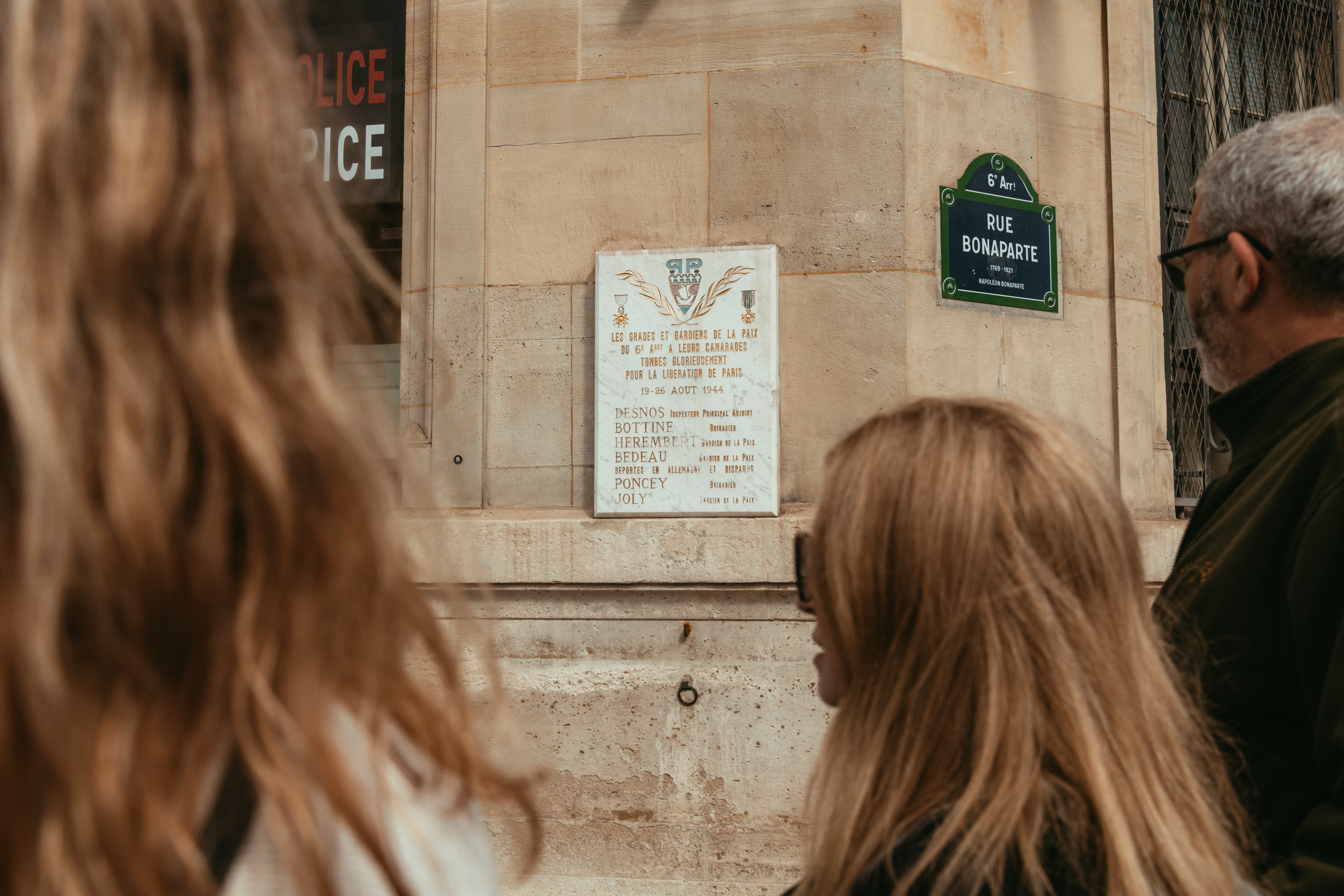
The communists and the Gaullists were the most effective resistance groups throughout the war, but they didn’t employ the same tactics to achieve their aims. After Hitler invaded the Soviet Union in June 1941 (Operation Barbarossa), communists in France were given the green light to attack Germans wherever they found them. The communist strategy from 1941–1944 was to spill German blood, thus forcing the Germans to reconsider the security situation in France and divert troops from the east. The Gaullists, on the other hand, were horrified by German reprisal killings (and with good reason, as over 30,000 civilians were executed as a means of collective punishment). They believed it far more prudent to train a secret army than sacrifice so many lives in exchange for individual assassinations.
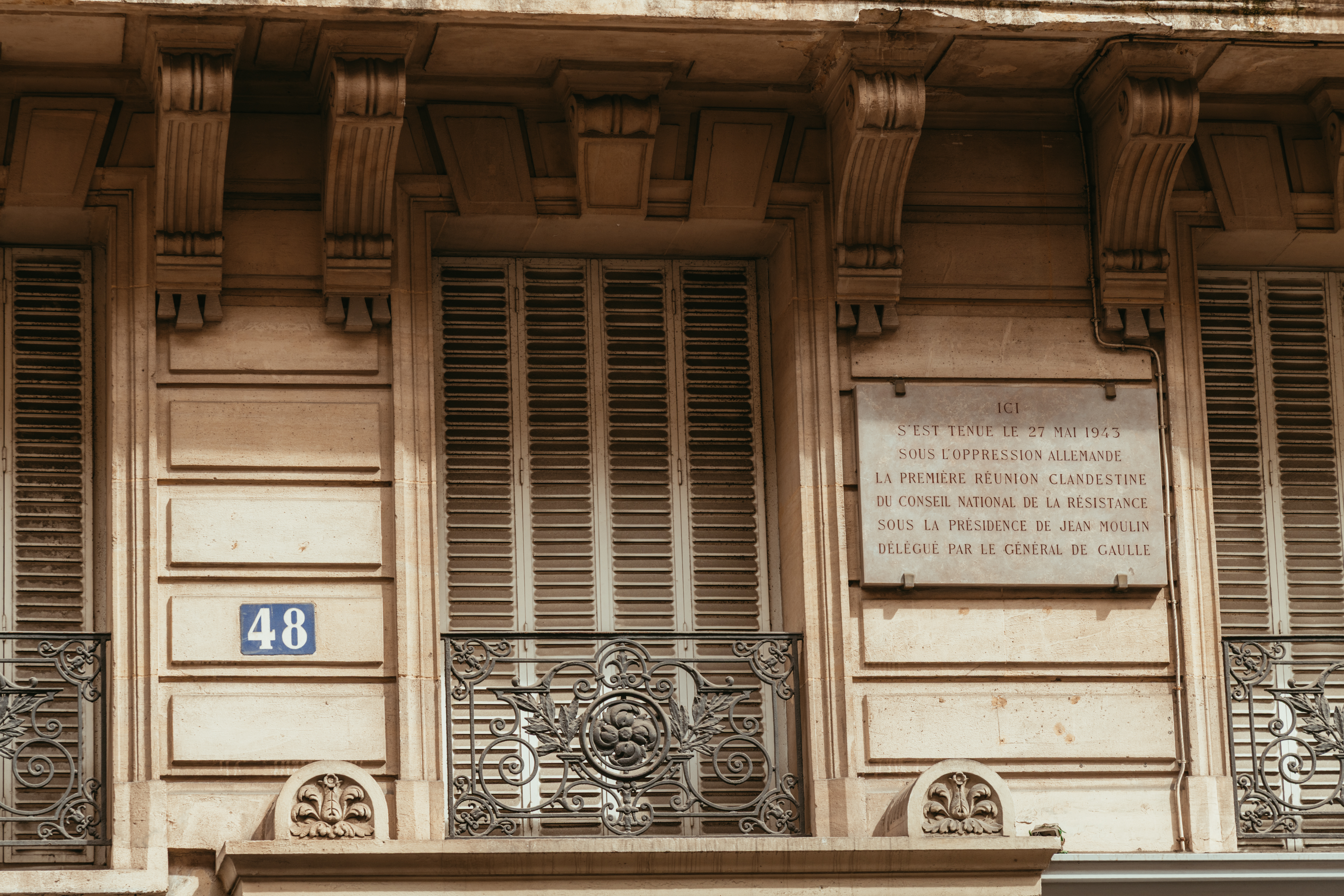
The first official attempt to unify various resistance groups took place on May 27, 1943 at 48 Rue du Four in Paris when Jean Moulin was tasked with establishing the National Council of the Resistance (CNR). Betrayed during a second meeting in Lyon and killed just two months later, however, Charles de Gaulle’s best chance at bringing about a national resistance movement was dead.
Following the Tehran Conference in late November 1943, it was clear that domestic resistance could not in and of itself lead to the liberation of France, and there are few better books detailing the complexity of the ideas surrounding “French Resistance” than Julian Jackson’s France: The Dark Years and Is Paris Burning? by Larry Collins and Dominique Lapierre.
By August 15, 1944, the prefect of police Amédée Bussière, a man who had helped prepare the July 1942 roundup of 13,152 Jewish people (mostly foreigners) in Paris’ Velodrome d’Hiver, was awaiting news on Allied advances and what might come of the national strike of the French police. After the Allied breakout in Normandy in late July, much of the German Army was already repositioning eastwards, but after the Nazis destroyed the Warsaw Ghetto Uprising and the city along with it, many feared Paris would be next, and Charles de Gaulle insisted that the city be saved.
Liberation
When the French police went on strike on August 15, the communists saw their chance to take Paris themselves and called for a city-wide uprising on August 18 with two famous words harking back to the French Revolution: AUX BARRICADES (to the barricades)! The German defender of Paris, Dietrich von Choltitz, was known as a smasher of cities. Many Gaullists feared that a premature uprising before the Allies could assist would spell the end of Paris. That same day, one of Charles de Gaulle’s most trusted operatives on the ground, Jacques Chaban-Delmas, sent an alarming report to the Allies about the situation:
PARIS SITUATION EXTREMELY TOUCHY. STRIKES OF POLICE, RAILROADS, POSTS AND DEVELOPING TENDENCIES TO GENERAL STRIKE. ALL CONDITIONS NECESSARY FOR AN INSURRECTION HAVE BEEN REALIZED. […] NECESSARY YOU INTERVENE WITH ALLIES TO DEMAND RAPID OCCUPATION PARIS. OFFICIALLY WARN POPULATION IN SHARPEST MOST PRECISE TERMS POSSIBLE VIA BBC TO AVOID NEW WARSAW.
In the early morning hours of August 19, 1944, hundreds of French policemen dressed in civilian clothing descended upon the Prefecture of Police on Île de la Cité. The historian Charles Glass writes in Americans in Paris about this moment: “The Paris Police, who in accord with Vichy policy had collaborated with German authority for four years, suddenly declared a strike and barricaded themselves in the Prefecture of Police. That was the cue for thousands of Parisians to set up makeshift roadblocks, snipe at German troops and attack German positions.”
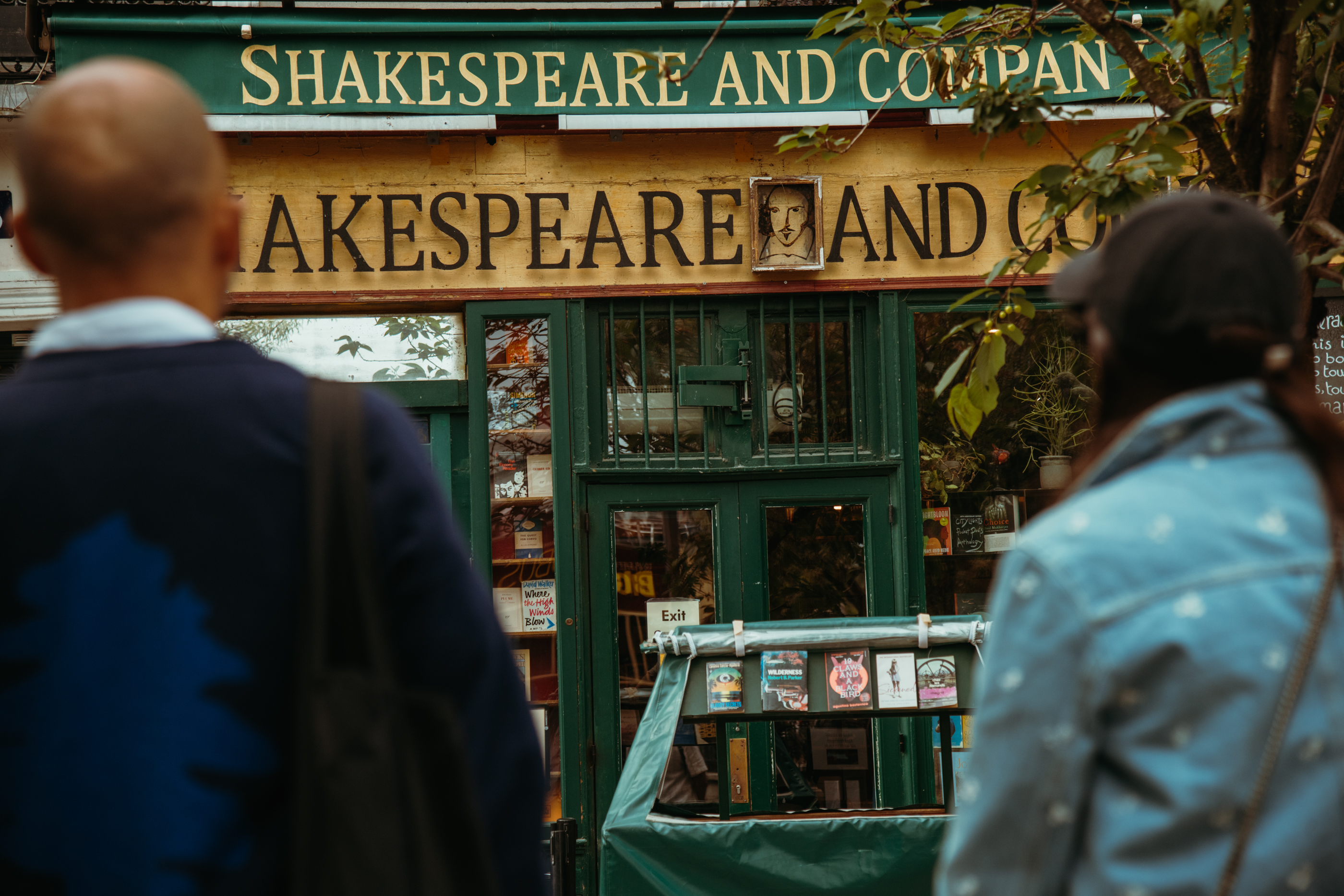
Sylvia Beach, the famed owner of the original Shakespeare & Company bookshop, recounted those final hectic days: “In the mornings, towards 11 o’clock, the Nazis sallied forth from the Luxembourg with their tanks and went down the Boulevard Saint Michel, shooting here and there. Rather disagreeable for those of us who were lined up at the bakery for the bread hour.”
Fighting was heaviest in the labyrinthine streets of the Latin Quarter where small bands of resistance members armed with small arms and improvised explosives sought to attack German patrols and soldiers wherever they could. So united was the city in rising up simultaneously that despite the various resistance groups’ differing aims, von Choltitz was convinced that “the Resistance” was being directed by a central authority.
In his post-war memoir, in a historic example of selective and self-serving memory, von Choltitz detailed the moment he refused to give the orders to destroy Paris after receiving Hitler’s infamous “rubble field” order wherein “Paris is to be transformed into a pile of rubble. The commanding general must defend the city to the last man, and should die, if necessary, under the ruins.” Von Choltitz described how absurd the situation had become, and when fellow commander Hans Speidel realized that von Choltitz had no intention of carrying out Hitler’s orders, he famously replied (according to von Choltitz’s memory of their phone conversation) “Ah! General, how fortunate we are that you are in Paris!”
By the time the Allies rolled in with the might of the U.S. 4th Infantry Division and the famed French 2nd Armored Division led by General Philippe Leclerc, 1,000 members of the Parisian resistance had been killed and 1,500 wounded, in addition to 582 civilians killed and over 2,000 wounded according to Paris’ Liberation Museum. By comparison, 3,200 Germans had been killed and 12,800 taken prisoner.
In Charles de Gaulle’s August 25, 1944 speech, Paris’ wartime mythology was immortalized. The city was “liberated by itself, liberated by its people with the help of the French armies, with the support and the help of all France, of the France that fights, of the only France, of the real France, of the eternal France!” And so the idea of a singular “French Resistance” was born — a dubious but ingenious (and necessary) tool to unify the nation lest it succumb to four years of shameful collaboration and a potential civil war between communists, Gaullists, and fascists.
In summary, the “French Resistance” is an umbrella term used to refer to anyone who resisted the Nazis throughout the four years and two months of occupation. With the past firmly cemented beneath placards detailing the heroism during the last week of the occupation (August 19–25, 1944), for decades the French nation ignored hard questions of four years of civilian and police collaboration, and it wasn’t until 1995, fifty-one years later, that a French president (Jacques Chirac) acknowledged for the first time the extent of French complicity and collaboration during the war.
Author Bio
Samuél Lopez-Barrantes is a novelist, musician, and independent publisher who has lived in Paris since 2010. In his second novel, The Requisitions (Kingdom Anywhere, 2024), a present-day narrator recounts the story of Viktor, a disillusioned academic forced into the Łódź Ghetto, Elsa, a captive Gestapo secretary, and her estranged fiancé, Carl, a troubled policeman being pushed towards unspeakable cruelty.
With deep historical research and pacing akin to Anthony Doerr’s All the Light We Cannot See and Laurent Binet’s HHhH, The Requisitions is a historical metafiction about history, memory, and how to remain human during inhumane times. Read more about The Requisitions here.