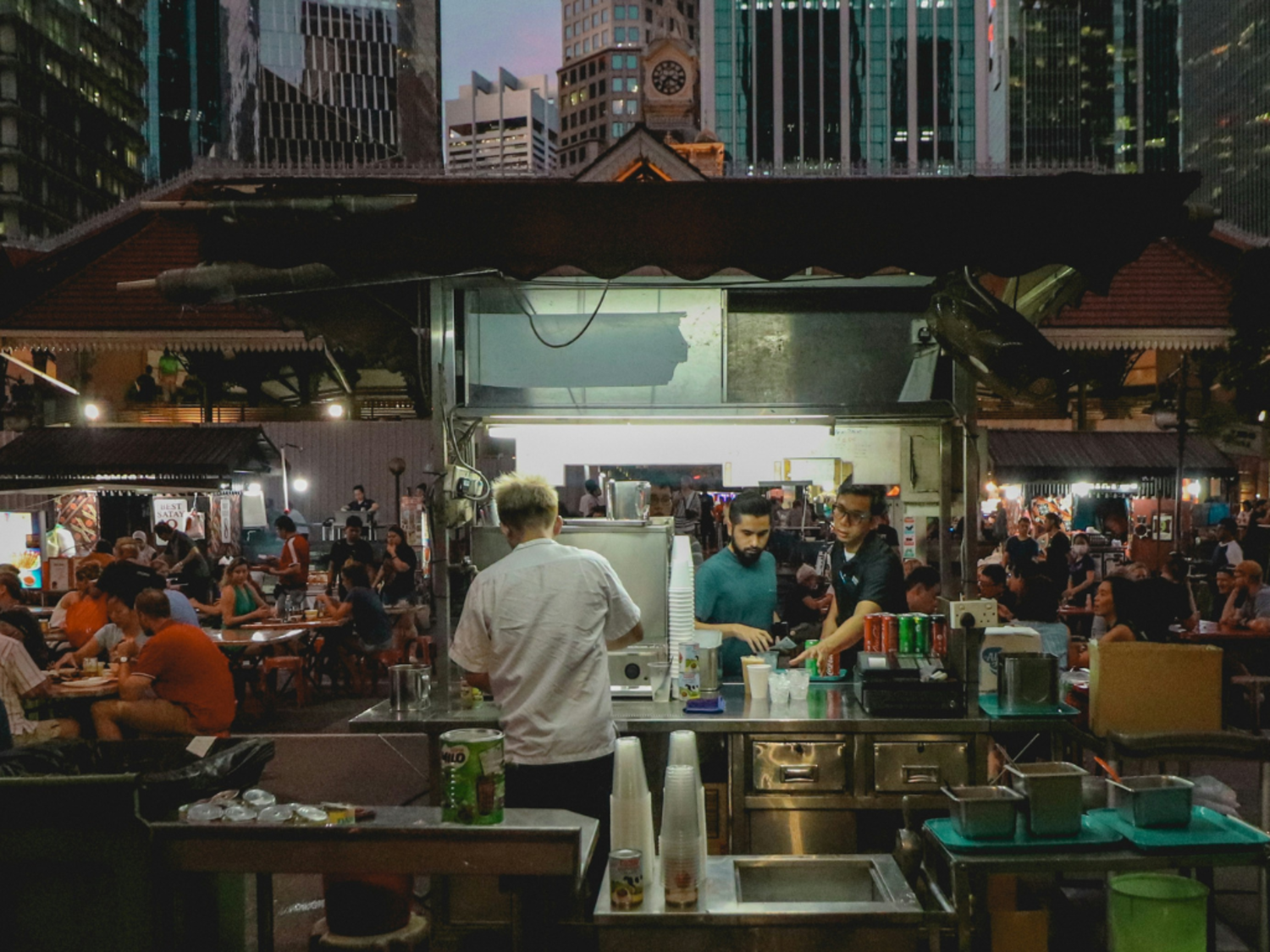
A hawker centre can be one of the best places to eat in Singapore. It can also be one of the most confusing if you have never been to one before. There may be dozens of stalls, a crowd looking for tables, dishes you don't recognize, and an ordering system that nobody stops to explain. Locals move through it all with ease.
The good news is that you don't need to know very much before your first visit. A few customs will help you feel more comfortable, and the rest is part of the pleasure of figuring it out.
Here is what to know before you go.
What is a hawker centre?
Hawker centres are communal dining spaces filled with independently operated food stalls. They grew out of Singapore’s street-hawker tradition and remain part of everyday life in the city.
You might go for breakfast, lunch, dinner, coffee, or something small between meals. Some stalls specialize in a single dish and have prepared it for generations. That specialization is part of the appeal; instead of one kitchen trying to do everything, you can build a meal by ordering from several different cooks.
Singapore’s hawker culture is also recognized by UNESCO as part of the country’s intangible cultural heritage.
First, find a table
At busy hawker centres, finding a seat before ordering can save you a lot of maneuvering with a full tray. You may notice packets of tissues, umbrellas, name cards, or other small belongings left on an empty table. They have probably not been forgotten.
This is known locally as “chope,” a Singlish (an English-based creole language) word meaning "to reserve a place." The practice is common enough that Singapore’s tourism materials include the term in introductions to local language and culture.
If someone has choped a table, leave it for them and look for another.
If the centre is crowded, sharing a larger table with strangers is normal. No need to wait for a completely empty one.
How do you know which stall to choose?
Queues can be useful clues, but do not assume the longest line is automatically the right choice. Start by looking at what each stall specializes in. Many hawkers make only a handful of dishes. Some have become known for one.
You might see:
- Hainanese chicken rice
- laksa
- char kway teow
- nasi lemak
- satay
- bak kut teh
- roti prata
- fishball noodles
- wonton mee
- oyster omelette
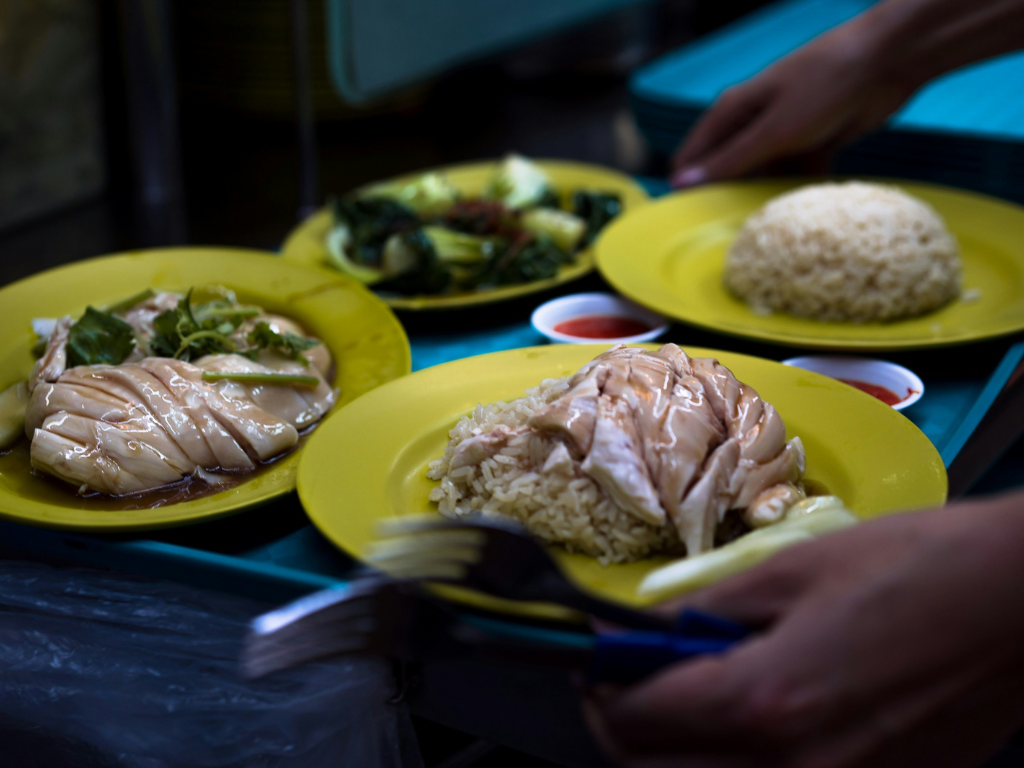
Choose one or two things that genuinely interest you. It's also worth looking around at what other diners are eating. If a dish keeps appearing on neighboring tables, you've probably found something worth asking about.
How does ordering work?
In most cases, you simply queue at the stall you want and order directly from the hawker. Menus often have photos and English names, particularly at well-known centres, although smaller stalls can require a little more improvisation.
Some dishes offer choices that may not be obvious at first. Ingredients vary in type of noodle, with or without soup, spice level, portion size, or added ingredients. If you are unsure, ask! You don't need to know the correct terminology before approaching the counter.
One useful habit is to remember your table number when the tables are numbered. Some stalls will bring the food to you rather than handing it over immediately.
Do Singapore hawker centres take credit cards?
Singapore has moved quickly toward cashless payment, but many hawkers use local QR payment systems that may not work with a foreign bank account. Some stalls still prefer cash. Having a modest amount of Singapore dollars with you is useful, particularly if you plan to eat at older or smaller hawker centres.
What should you drink?
A drink stall can be its own education in culture, tradition, and flavor. Coffee is kopi and tea is teh, but those words are only the beginning. How you order determines whether your drink comes with condensed milk, evaporated milk, sugar, or no milk at all.
For example, kopi-o is coffee without milk, while kopi-c uses evaporated milk instead of condensed milk.
Cold sugarcane juice, barley water, lime juice, and fresh fruit drinks are also common.
Can you order from more than one stall?
Absolutely. It is often the best way to eat! One person can hold the table while someone else picks up noodles, another orders satay, and someone returns with drinks. If you're traveling with other people, sharing lets you try more without wasting.
Many hawker dishes also make more sense in conversation with one another. Singaporean food reflects generations of exchange among Chinese, Malay, Indian, Peranakan, and other communities. You can encounter those histories within the space of a single meal. Context’s Singapore Food Tour explores that relationship between migration, history, and what ends up on the plate.
Do you need to return your tray?
Yes.
Diners are required to clear their tables and return used trays and crockery to the designated collection point. Singapore’s National Environment Agency began enforcing tray return at hawker centres in 2021, and the practice is now well established.
Look for the tray-return station when you are finished. Some centres separate halal and non-halal crockery, so pay attention to the signs. This is one of the few pieces of hawker-centre etiquette that is not simply a matter of custom.
Should you tip?
Tipping is not a standard part of a hawker-centre meal. Simply pay the amount requested at the stall. There is no expectation that you add a percentage afterward.
Which hawker centre should you visit first?
The answer depends on where you are staying and what you want to eat. Well-known options include Maxwell Food Centre (visited on our Singapore Food Tour), Chinatown Complex Food Centre, Old Airport Road Food Centre, and Lau Pa Sat. There are many others, and a neighborhood hawker centre can be just as interesting as one that appears in every guidebook.
Rather than trying to identify the single “best” hawker centre in Singapore, think about what you want from the experience.
Do you want a convenient introduction? A particular dish? Somewhere close to another place you are already visiting? A centre where people in the surrounding neighborhood actually eat every week?
Those are usually more useful questions.
A hawker centre is more than a cheap place to eat
Singapore is famous for its food, but hawker centres are interesting because they make that food part of public life.
People with very different routines eat at the same tables. Recipes carried to Singapore through migration have become part of a shared national food culture. A stall might preserve a family business while serving workers grabbing lunch twenty feet away.
Understanding a little of that history changes the experience.
If you would rather have someone help make sense of your first visit, Context’s Singapore Food Tour: Hawker Centre Culture explores Chinatown and Tanjong Pagar with a culinary Expert, using food to examine how migration helped shape Singapore.
Going alone? The main rule is simple: choose something that looks good, find a seat, and give yourself time to notice how people around you do things. By your second hawker-centre meal, you will already know much more than you did at your first.