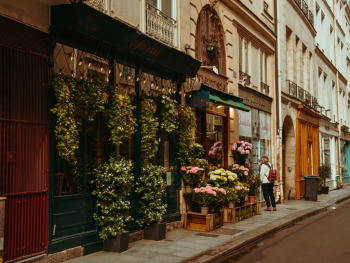
Every autumn in Mexico City, marigolds spill from market stalls while intricate paper decorations appear above the streets. Can you smell the unmistakable scent of pan de muerto drifting from neighborhood bakeries?
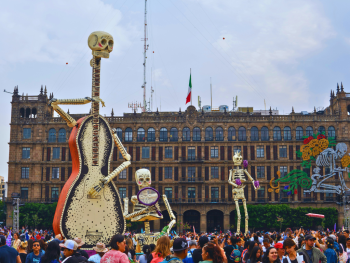
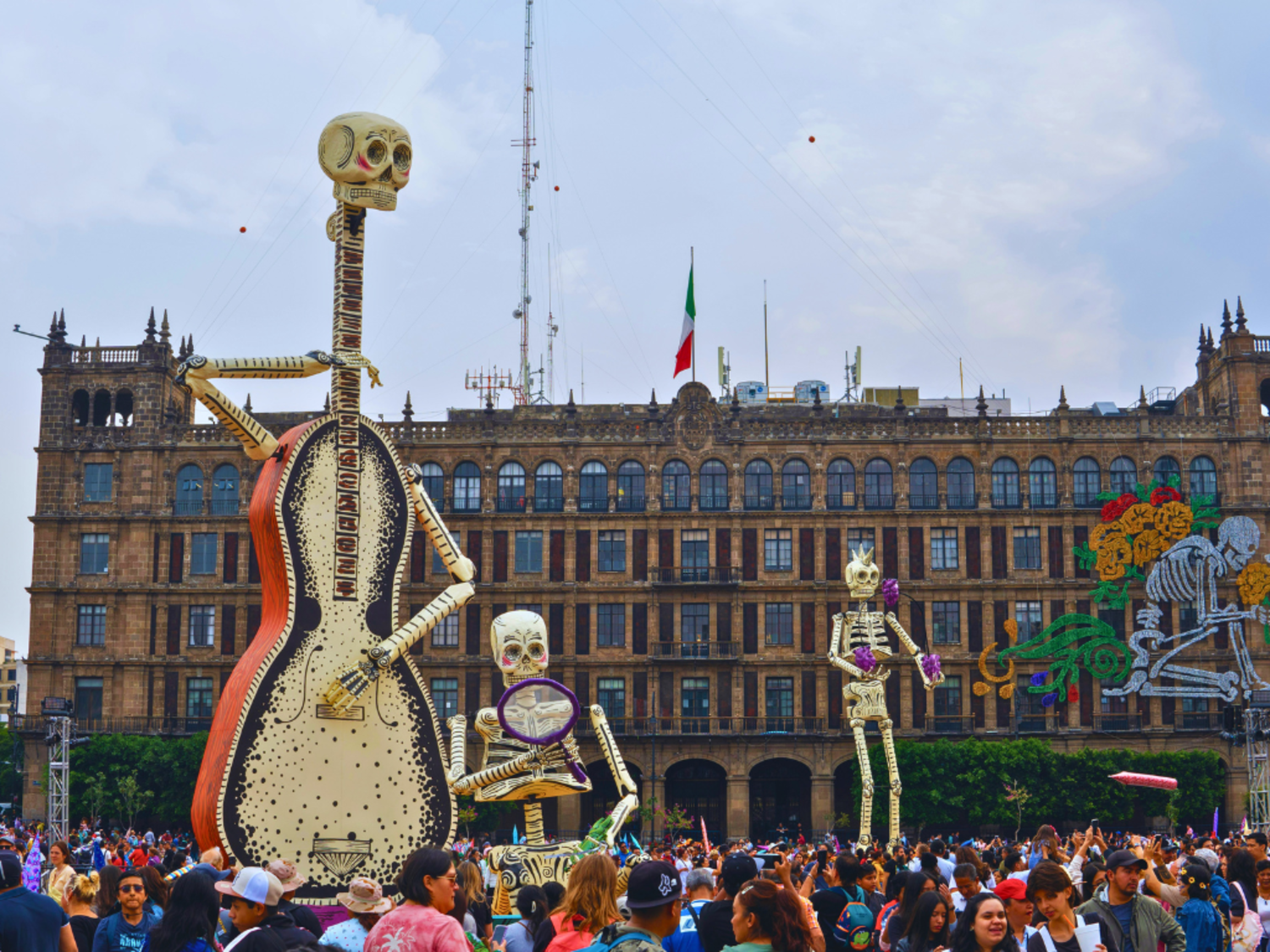
In the Zócalo, preparations begin for celebrations that will draw thousands into the historic heart of the capital. But beyond the elaborate costumes and colorful processions lies something far more personal.
Día de Muertos, or Day of the Dead, is built around a beautiful idea: that those we've lost are never entirely gone, and that for a few days each year, the distance between the living and the dead becomes a little smaller.
It's a time for families to gather, prepare favorite dishes, tell familiar stories, and welcome loved ones home. The departed are remembered not only for the lives they lived, but for the place they continue to occupy in the lives of others.
And while Día de Muertos is celebrated throughout Mexico, the capital offers a particularly fascinating perspective. Here, centuries-old traditions unfold alongside contemporary art, enormous public spectacles, and deeply personal family rituals.
If you're visiting Mexico City for Día de Muertos, here's how you can experience the celebrations, understand their history, and appreciate the remarkable culture behind them.
What is Día de Muertos, and why is it celebrated?
To understand Día de Muertos, it helps to begin with the way different cultures have understood death.
For many Indigenous communities in Mesoamerica, death was not simply an ending. It was part of a larger cycle of existence, shaped by complex beliefs about the natural world, the afterlife, and the relationship between generations.
When Spanish colonizers arrived in the 16th century, they introduced Catholic traditions surrounding All Saints' Day and All Souls' Day, observed on November 1 and 2. Over time, European religious observances and existing Indigenous practices influenced one another, contributing to the many regional expressions of Día de Muertos celebrated today.
In some communities, remembrance centers on family altars and quiet visits to the cemetery. Elsewhere, music, elaborate costumes, public art, and community festivities are equally important.
In 2008, UNESCO inscribed Dia de Muertos on its Representative List of the Intangible Cultural Heritage of Humanity, recognizing its importance to Mexico's cultural identity and the communities that preserve it.
When is Día de Muertos in Mexico City?
Día de Muertos is traditionally observed on November 1 and 2, although preparations and celebrations often begin in late October.
- October 31: Families in some communities prepare to welcome the souls of the departed, while Mexico City's public festivities are often in full swing.
- November 1 — Día de Todos los Santos: Traditionally associated with remembering deceased children, sometimes called angelitos, or little angels.
- November 2 — Día de los Fieles Difuntos: A day especially associated with remembering deceased adults, visiting cemeteries, and honoring loved ones through offerings and prayer.
Local customs vary, and some communities observe additional days dedicated to particular groups of the departed.
For the fullest experience in Mexico City, consider visiting between October 29 and November 2. You'll encounter the city's major public celebrations while also having opportunities to explore neighborhood traditions, seasonal markets, and cultural institutions.
Understanding the ofrenda
Perhaps the most meaningful symbol of Día de Muertos is the ofrenda, an altar created to honor departed loved ones.
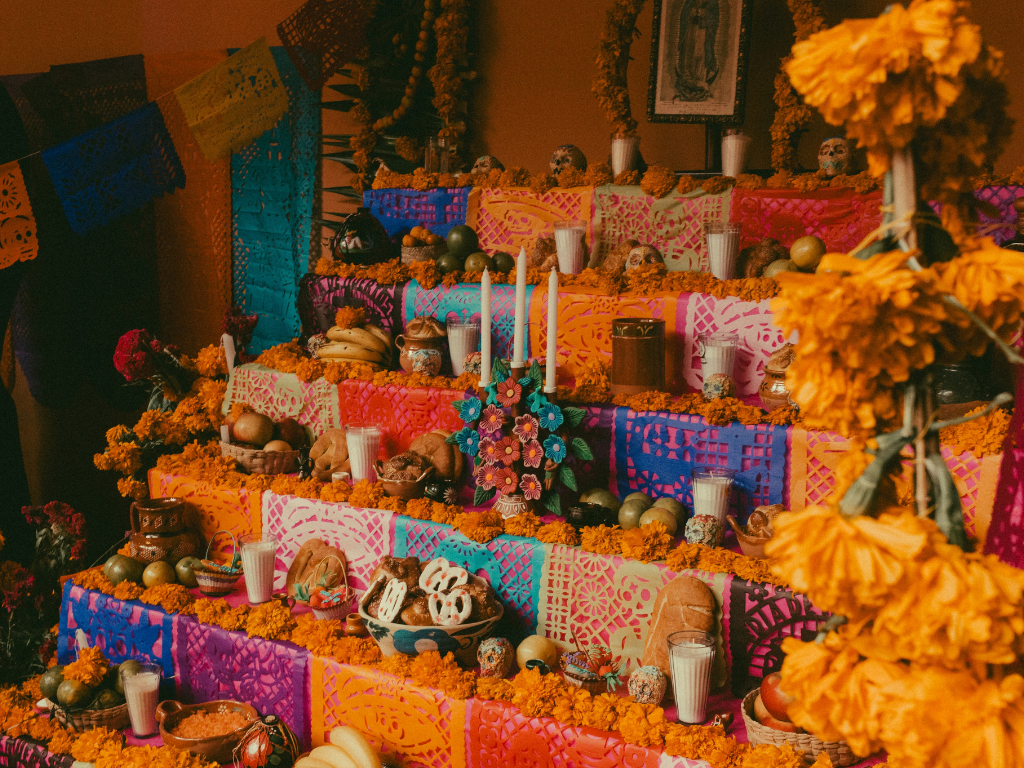
You'll find them in family homes, museums, restaurants, universities, and public squares. Some are modest arrangements with a photograph and a few candles. Others rise several tiers high, surrounded by flowers, handmade decorations, and lovingly prepared food.
Below are common elements you'll see on many ofrendas, and the meaning behind each.
Marigolds guide the way
Few sights are more closely associated with Día de Muertos than the brilliant orange cempasúchil, the Mexican marigold.
According to tradition, the flowers' vivid color and distinctive fragrance help guide returning souls toward their families. Their petals are often arranged in pathways leading toward an altar, creating a symbolic route between the worlds of the living and the dead.
Visit Mexico City's flower markets in the days before November 1 and you'll find enormous bundles of marigolds being carried away for homes, businesses, and public displays.
Food, water, and favorite things
An ofrenda is not meant to be an austere memorial. It's an invitation to someone dearly missed.
Families place photographs alongside the favorite foods, drinks, and personal possessions of the departed. A cup of coffee might sit beside a plate of mole. A beloved relative's favorite sweets might appear alongside fruit, bread, or a cherished object.
Water is commonly offered to refresh souls after their journey, while candles provide light and guidance.
These details transform the altar from a collection of symbolic objects into something deeply unique. Look closely and you'll encounter stories of real people, their personalities, and the relationships they left behind.
Papel picado and sugar skulls
Delicate sheets of papel picado, or perforated paper, hang above many altars. Their intricate designs move with the breeze. Sugar skulls, known as calaveras de azúcar, add another distinctive element that reflects Mexico's long tradition of depicting death through artistry and symbolism.
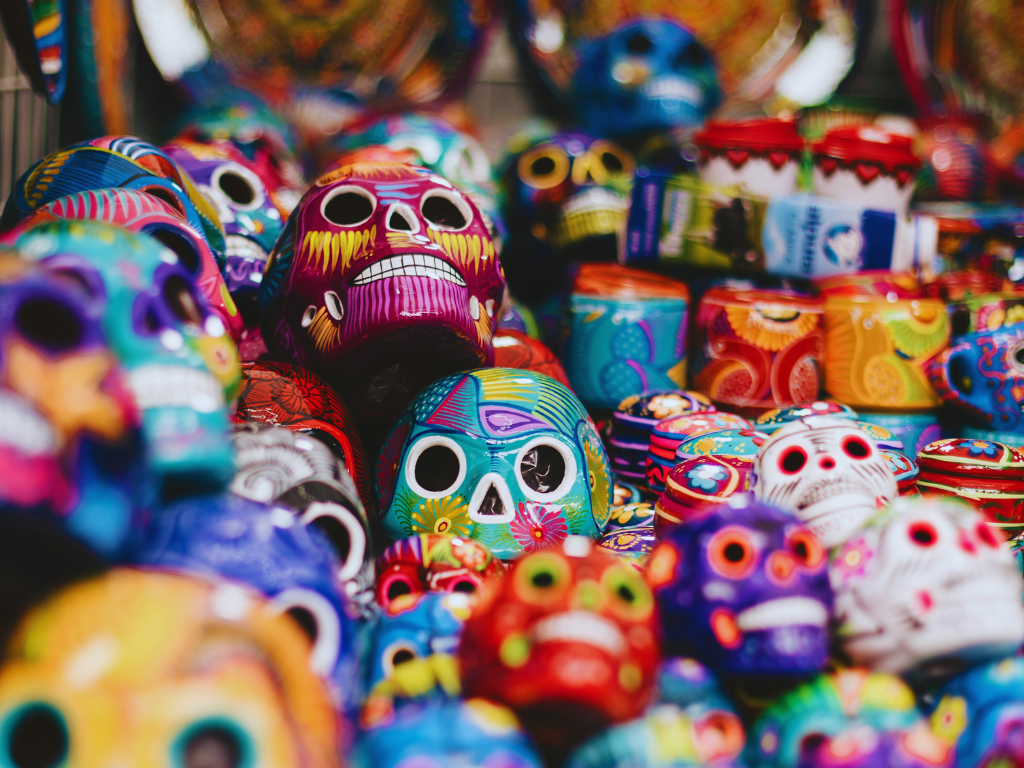
Together, these objects illustrate something fundamental about Día de Muertos: remembrance doesn't have to be solemn to be sincere.
Where to experience Día de Muertos in Mexico City
From monumental installations in the historic center to intimate community traditions on the city's outskirts, Mexico City offers many ways to experience Día de Muertos. Each reveals a different side of the celebration.
1. The Zócalo: Mexico City's grandest ofrenda
If there's one place where the scale of Mexico City's celebrations becomes immediately apparent, it's the Zócalo.
The capital's vast central square, bordered by the Metropolitan Cathedral and the National Palace, becomes home to a monumental public ofrenda. Each year brings a different artistic interpretation of remembrance, often incorporating enormous sculptural figures, traditional motifs, and references to Mexico's cultural heritage.
It's an extraordinary setting. Just beyond the decorations lie the remains of the ancient Mexica capital, Tenochtitlan, while the surrounding buildings reveal centuries of Spanish colonial and modern Mexican history.
When to visit: The 2026 monumental ofrenda is scheduled for October 29 through November 2. Visit during daylight to appreciate the artistic details, or return after dark to see the illuminated installations.
2. San Andrés Mixquic
On the southeastern outskirts of Mexico City, the community of San Andrés Mixquic is known for one of the capital's most moving Día de Muertos observances.
Here, the celebration remains closely connected to local families and the cemetery surrounding the historic church of San Andrés Apóstol.
In the days leading up to November 2, families clean and decorate graves. The culmination comes during La Alumbrada, when countless candles illuminate the cemetery as families gather to remember their loved ones.
It's a striking sight that calls for particular sensitivity. This is not a staged performance for visitors; it is a meaningful religious and family observance in an active community.
When to visit: Celebrations typically take place from October 31 through November 2, with La Alumbrada on the evening of November 2. Expect significant crowds, allow ample travel time, and ask permission before photographing anyone or their family altar.
3. Coyoacán
Coyoacán feels like a different world from the bustle of central Mexico City. Its leafy plazas, colorful facades, and historic churches provide a particularly atmospheric setting during Día de Muertos.
Seasonal decorations appear around the neighborhood, while local businesses and community groups may create their own ofrendas.
Spend an afternoon wandering around Jardín Centenario and Plaza Hidalgo, stopping for a coffee or something sweet from a neighborhood bakery. Along the way, you'll find an area shaped by generations of artists, intellectuals, and political figures.
Coyoacán was home to Frida Kahlo, whose paintings frequently explored identity and the relationship between the body and the natural world. Although her art shouldn't be reduced to Día de Muertos symbolism, the neighborhood offers a fascinating opportunity to explore how Mexican artists have engaged with questions of life and death.
For a deeper understanding of its artistic history, consider Context's expert-led Mexico City tours, including experiences focused on Frida Kahlo and Coyoacán.
4. Xochimilco
South of the city center, Xochimilco's surviving canals and chinampas, or traditional agricultural islands, offer a different perspective on Mexico City's Indigenous heritage.
During the Día de Muertos season, some local operators organize evening experiences aboard trajineras, the colorful flat-bottomed boats for which Xochimilco is famous. Visitors may encounter seasonal storytelling, traditional music, or ofrendas arranged along the canals and chinampas.
Xochimilco is especially interesting because its landscape preserves traces of the agricultural world that once supported Tenochtitlan. The relationship between the water and community provides valuable context for understanding the continuity of traditions in the Valley of Mexico.
Choose experiences operated in partnership with local communities, and check the specific program before booking. Not every nighttime boat excursion is a traditional Día de Muertos observance.
5. UNAM's Megaofrenda
Día de Muertos is continually reinterpreted by younger generations, and few events capture that creative spirit quite like the annual Megaofrenda organized by the National Autonomous University of Mexico (UNAM).
Students collaborate on elaborate altars and artistic installations, often exploring a central theme. Here, you can see how a centuries-old celebration remains culturally relevant, with new generations contributing their own perspectives on history, identity, and remembrance.
What to expect at the Día de Muertos parade in Mexico City
Giant skeletons, elaborate floats, towering puppets, music, thousands of spectators... Mexico City's annual Día de Muertos parade is one of the season's most recognizable spectacles.
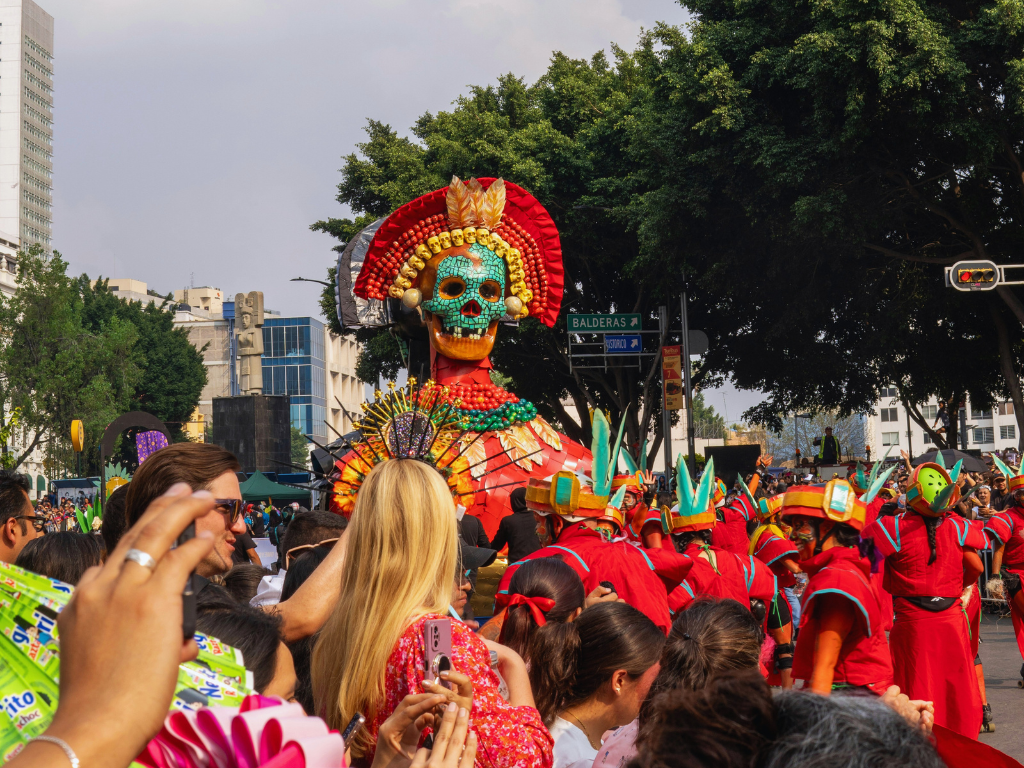
The parade is spectacular, but it represents just one expression of Día de Muertos. To understand the celebration more fully, pair it with visits to community ofrendas, cultural institutions, and neighborhoods where family traditions remain central.
2026 Día de Muertos parade details
- Date: Saturday, October 31, 2026
- Start time: 2:00 p.m.
- Route: From the Diana Cazadora roundabout along Paseo de la Reforma toward the Zócalo
- Cost: Free to watch from public viewing areas
The parade attracts substantial crowds, particularly near major intersections and the historic center. Arriving early and choosing a viewing spot away from the busiest sections can make the experience more enjoyable.
For the latest route information, access restrictions, and event updates, consult the official Mexico City Día de Muertos program before setting out.
More Día de Muertos events in Mexico City in 2026
Beyond the main parade, the capital's 2026 program includes several other major public celebrations worth building into your itinerary.
- October 24 — Día de Muertos Night Ride: An evening cycling event along major city avenues, with costumes and public activities.
- October 25 — Mega Procesión de las Catrinas: An elaborate procession along Paseo de la Reforma celebrating one of Mexico's most recognizable artistic figures.
- October 29–November 2 — Zócalo Monumental Ofrenda: A large-scale public installation in the historic center.
- October 29–November 4 — Chapultepec Día de Muertos Festival: A program of artistic installations and seasonal activities in Chapultepec Park.
- October 31–November 2 — UNAM Megaofrenda: Student-created installations at Universum, Ciudad Universitaria.
Schedules and event arrangements can change, so check official announcements closer to your visit.
Who is La Catrina?
You'll see her everywhere during Día de Muertos: an elegantly dressed skeleton, often wearing an extravagant hat, with flowers framing her painted skull. This is La Catrina, one of Mexico's most recognizable cultural figures.
Although she's closely associated with Día de Muertos today, her story begins with social satire.
Mexican printmaker José Guadalupe Posada created the skeletal figure known as La Calavera Garbancera around the turn of the 20th century, using humor to criticize social pretensions and the tendency to imitate European fashions.
Decades later, Diego Rivera famously included the figure in his mural Dream of a Sunday Afternoon in Alameda Central, giving her the elegant appearance that helped establish the modern image of La Catrina. Beneath elaborate clothes and social distinctions, Posada's skeletal figure offers a distinctly democratic observation: death comes for everyone.
Today, La Catrina is both a popular symbol of Día de Muertos and a reminder of Mexico's long artistic tradition of approaching mortality with wit and irreverence.
What to eat during Día de Muertos
Few Mexican celebrations can be separated from food, and Día de Muertos is no exception.
The dishes placed on an ofrenda carry personal significance, often recalling meals shared with departed relatives. Meanwhile, bakeries, markets, and restaurants across the capital embrace the season with traditional specialties.
Pan de muerto: the bread of the dead
Light, fragrant, and often coated in sugar, pan de muerto is the essential taste of the season.
Its familiar rounded shape is traditionally decorated with strips of dough that resemble bones, although styles vary across Mexico. In the capital, you'll find classic versions flavored with orange blossom or citrus, alongside contemporary variations filled with cream, chocolate, or other sweet ingredients.
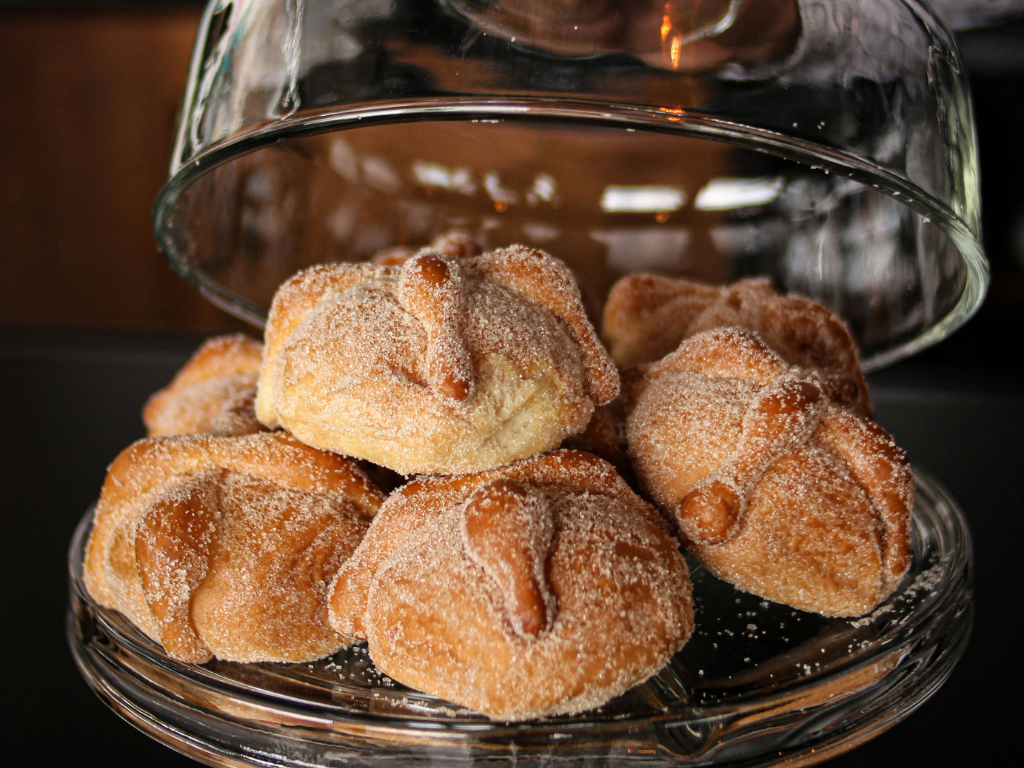
Try one fresh from a neighborhood bakery, or panadería. It's a simple pleasure, and one of the best ways to experience the season as locals do.
Calabaza en tacha and other seasonal sweets
Another traditional treat is calabaza en tacha, pumpkin slowly cooked in a sweet syrup, often made with piloncillo and cinnamon.
Sugar skulls and other sweets are also closely associated with the holiday. Some are designed as decorative offerings, while others are made to be eaten.
And because family recipes are central to Día de Muertos, you'll encounter a much wider variety of food on ofrendas, from tamales and mole to dishes that reflect a particular family's regional origins.
Visit a market to understand the ingredients
For a closer look at the culinary traditions behind the celebration, visit one of Mexico City's working markets.
The Mercado de Jamaica is especially well known for its flower trade. In the lead-up to Día de Muertos, marigolds and other seasonal flowers become an important part of the market's activity.
It's an excellent place to appreciate the work that goes into preparing for the holiday, while exploring the connections between food, agriculture, commerce, and everyday Mexican life.
Context's Mexico City food and market tours offer another way to approach these traditions, pairing local tastings with the history of the ingredients and communities that shape the capital's cuisine.
Discover the Mexico City beyond the celebration
Día de Muertos offers a remarkable introduction to Mexico City, but perhaps its greatest gift is the curiosity it inspires.
Why do marigolds hold such significance? How did Indigenous beliefs and Catholic traditions become intertwined? Why does a satirical skeleton from the early 20th century remain such a powerful cultural symbol today?
The answers lead far beyond any single festival. They take you into the city's markets, museums, public murals, ancient foundations, and neighborhoods, where the relationship between history and contemporary life is never far from view.
Exploring with a local historian, archaeologist, or cultural expert can help bring these connections into focus, offering a deeper understanding of the traditions that shape Mexico City throughout the year.
Because while Día de Muertos is a time to remember those who have gone before us, it also reveals something important about the people and communities who continue to honor them.
And that's what makes this celebration so extraordinary: it's as much about the lives being lived today as the lives being remembered.