Helen was wonderful:) We learned a lot about Florence and her expertise in the arts was amazing!!
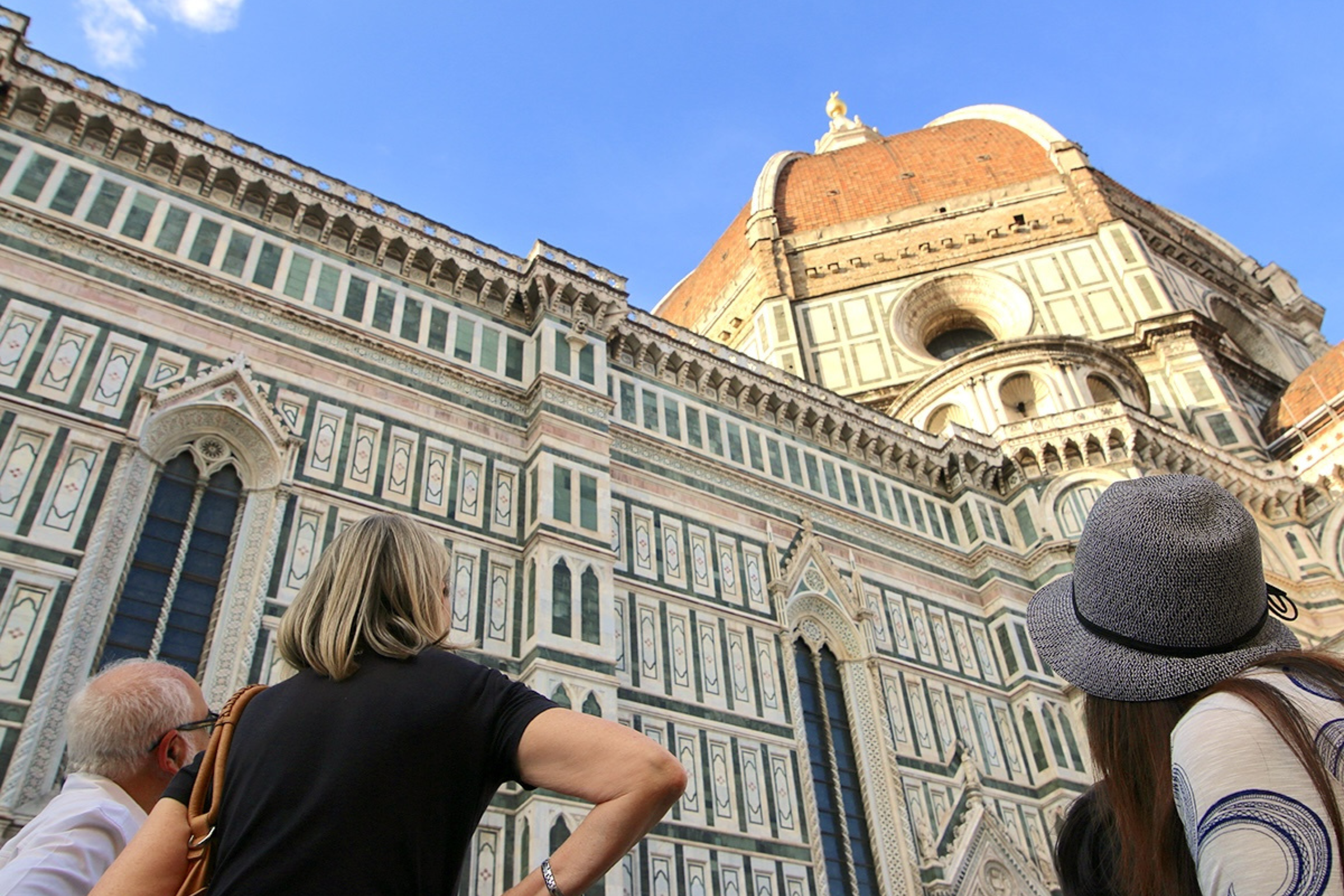
Florence Highlights Tour: Duomo, Accademia & David
Get a closer look at Florence’s icons and the ideas behind them
Get to know the history, scandal, and innovation behind the great names of Florence in this comprehensive exploration of the city.
Tour Highlights
- A perfectly balanced tour Go deeper than a quick intro, with room to discuss, discover, and connect the dots.
- Beyond the postcard Turn Florence’s famous views into stories of art, ambition, exile, and power.
- Turn names into narrative Connect the artists, writers, and landmarks you’ve heard of into a narrative you can follow.
- Shaped by your own curiosity Your Expert will adjust the walk to your interests, from art to history or Dante to Medici intrigue.
- Keep discovering Florence Leave with Expert tips for what to revisit, explore, and notice on your own.
- David takes center stage With the Accademia entry arranged, you can focus on the art, not the ticket logistics.
Led by Experts, Shaped by You
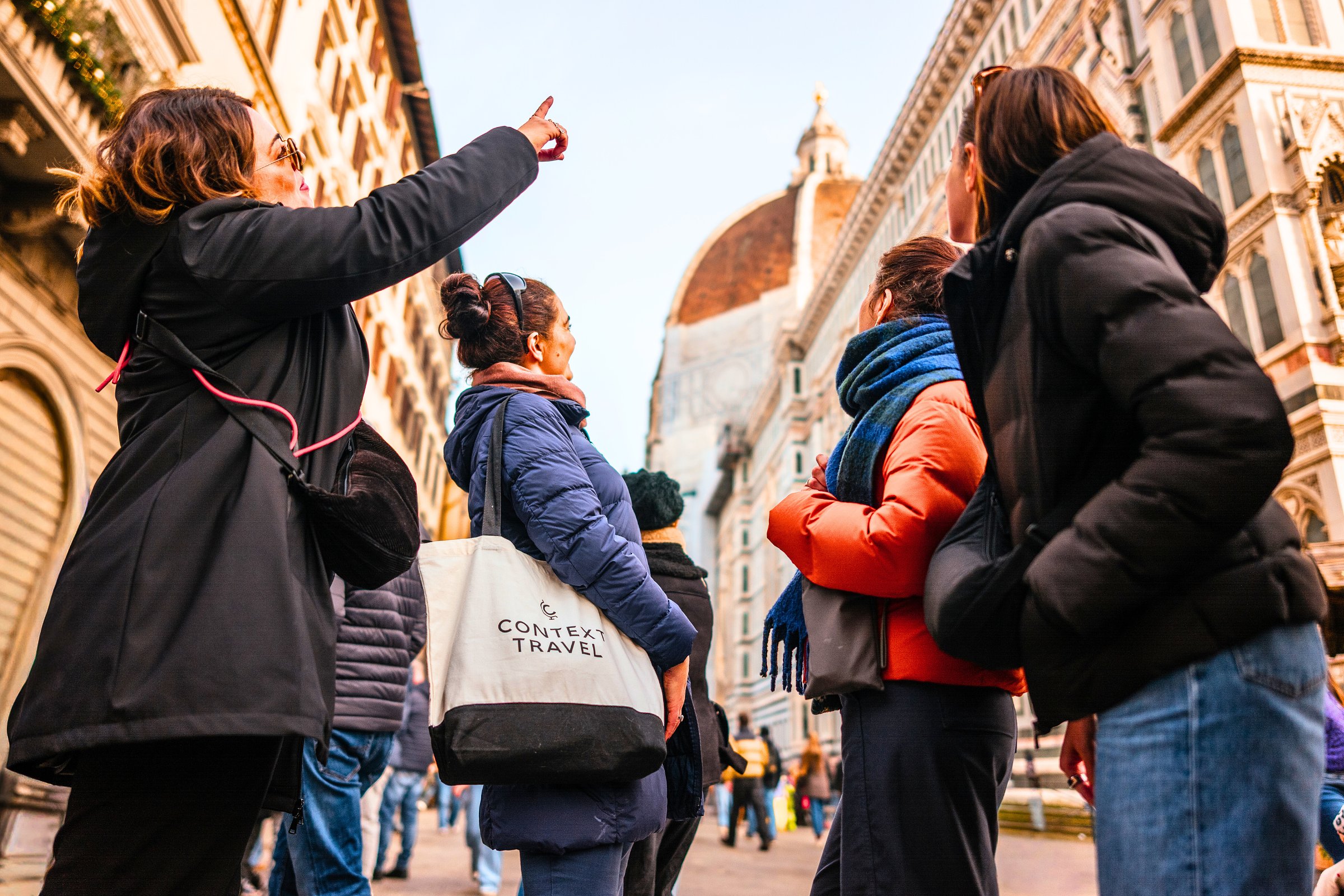
Explore with an expert guide who responds to your questions, your interests, and your pace. Reveal layers of meaning most visitors miss—go from seeing to understanding.
The Finer Details
Florence is filled with names you already know, but the real reward is seeing how those names speak to one another. This half-day walk takes the city’s essential landmarks and gives them shape, linking Michelangelo, Brunelleschi, Dante, and the Medici into one connected story. It is designed for travelers who want to see the famous places, but also understand the deeper context that makes those places worth remembering.
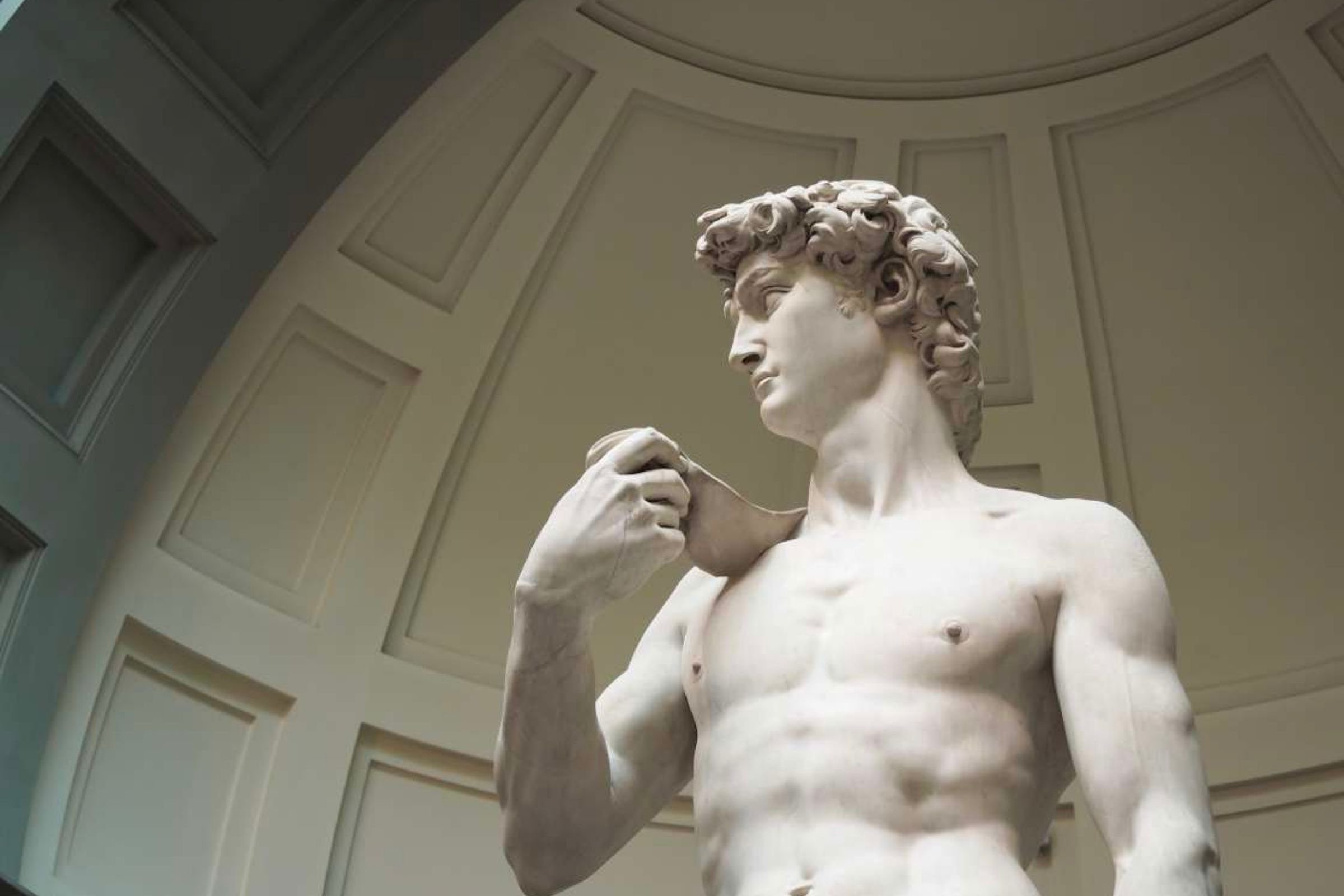
Wander first through Florence’s streets toward Piazza San Marco and the Accademia Gallery, home to Michelangelo’s David. With the gallery visit smoothly folded into the route, you can focus on the visit itself. Your Context Expert guides your gaze beyond the statue’s beauty, revealing how its anatomy and psychological tension changed Renaissance sculpture and the course of art history.
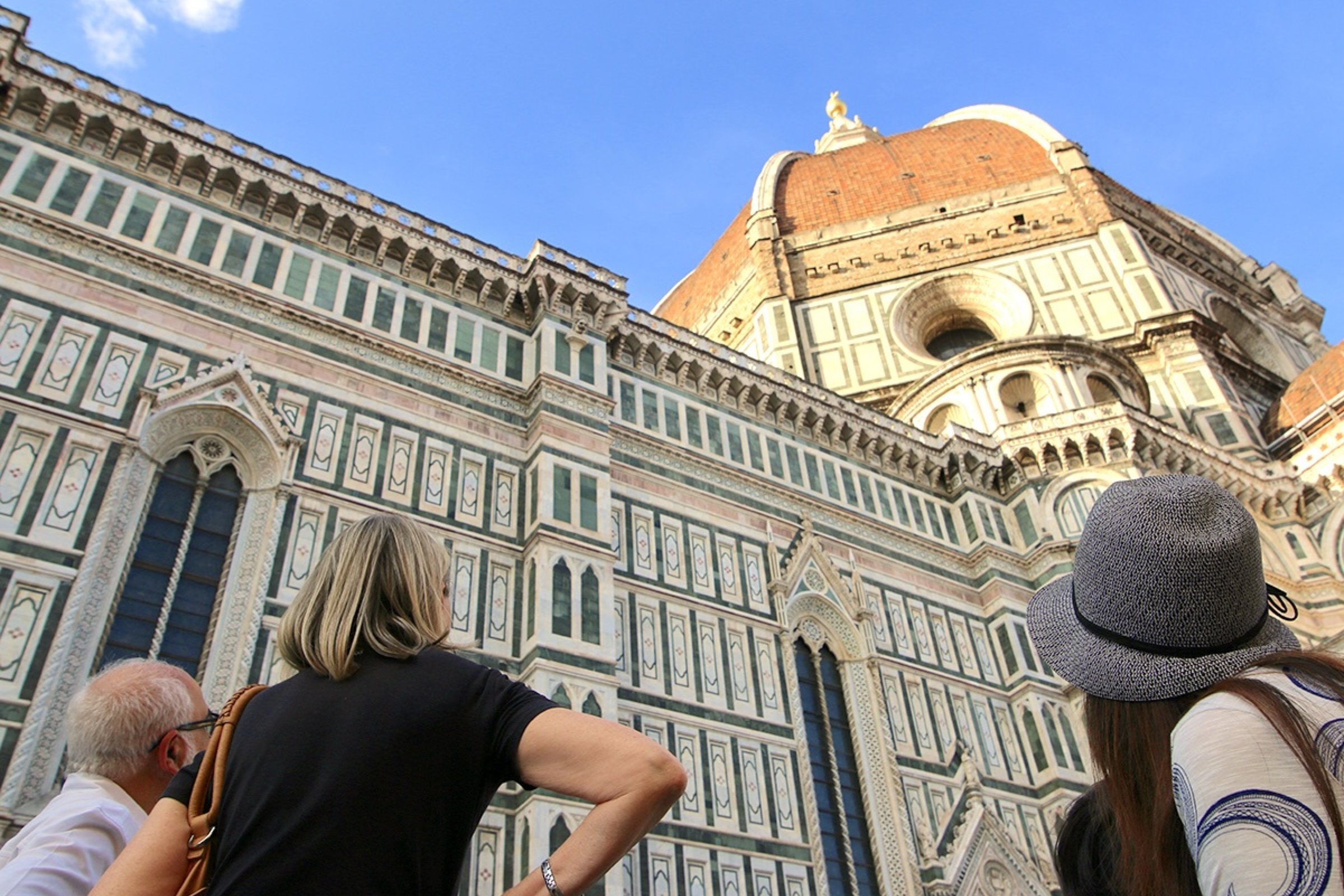
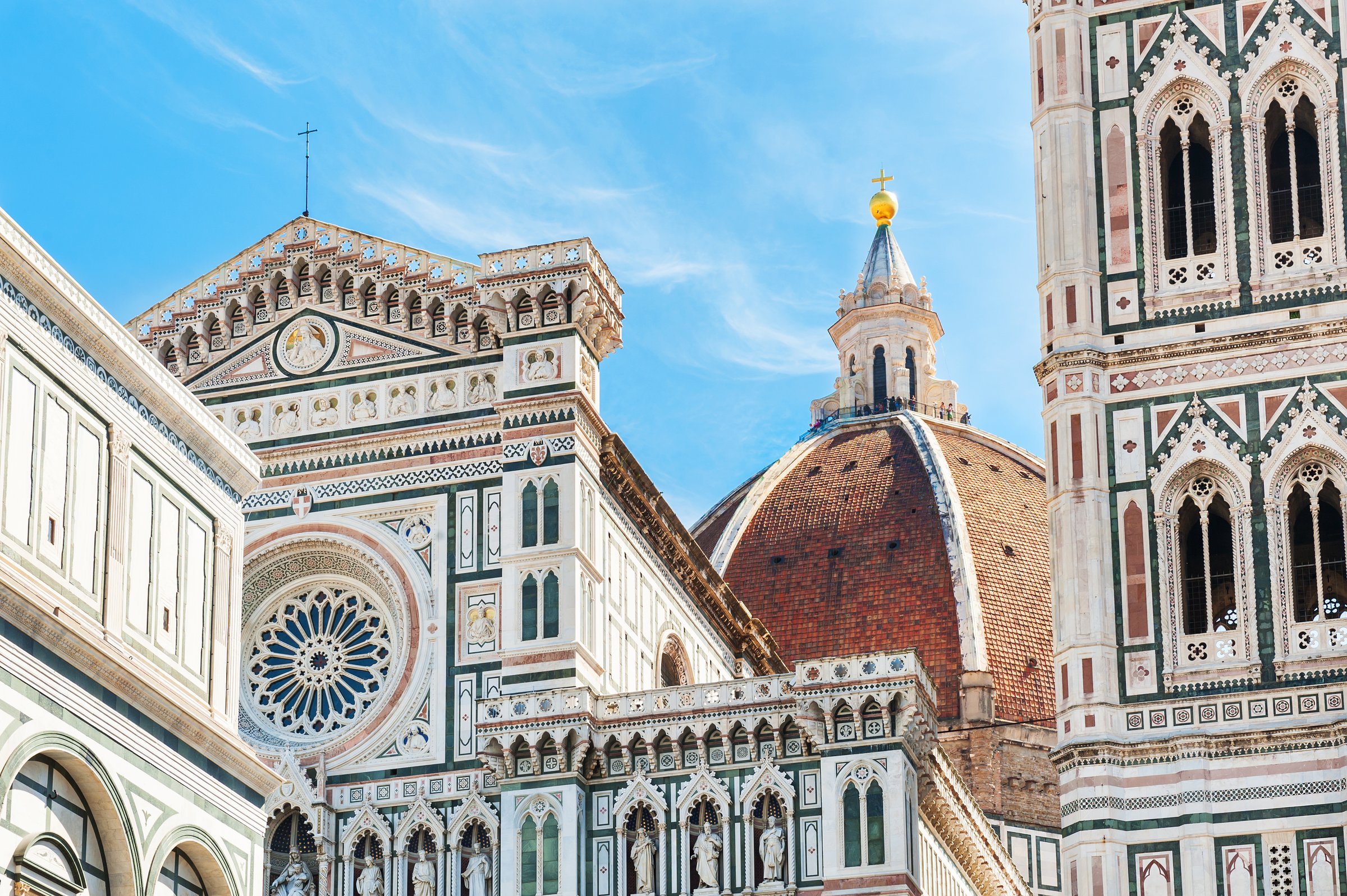
From there, the route turns toward the Duomo, viewed from the outside, where Brunelleschi’s dome turns architecture into an astonishing act of mathematics, faith, and ambition. At the nearby Baptistry, Dante enters the picture, and you’ll begin to see how the streets he walked still hold the same poetry, memory, and meaning that helped shape the “Divine Comedy.”
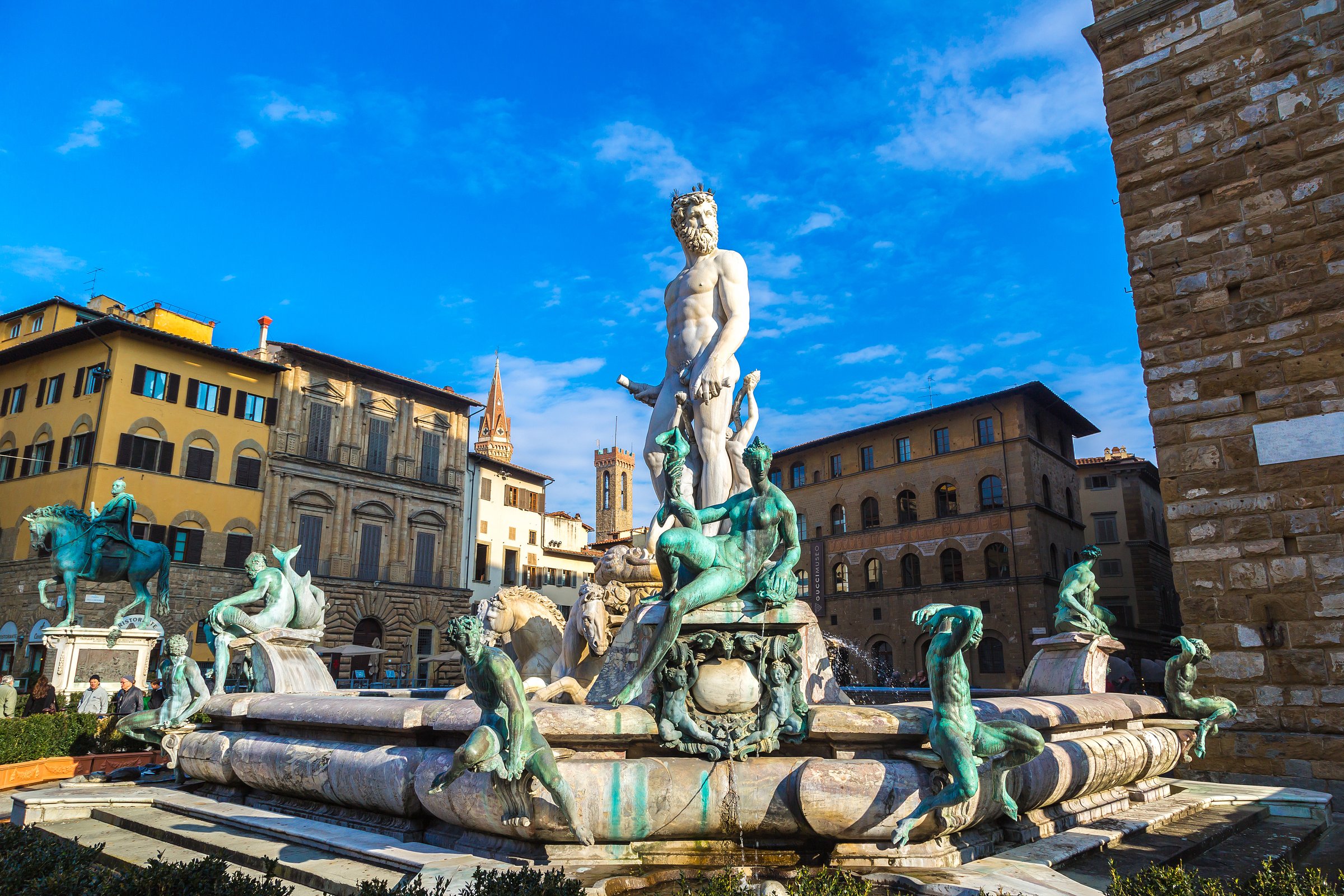
As your Florence walking tour continues, you'll explore deeper into the old heart of Florence through Piazza della Repubblica and toward Piazza della Signoria. Take in the cafés, musicians, courtyards as you discuss the legacy of the Medici. At Palazzo Vecchio, discover what Florence’s ruling families understood about art, architecture, and public space. How does the impact of the Medici family still shape the city today?
This is where the tour’s depth becomes flexible, not fixed. Your Context Expert can lean further into art, history, Dante, the Medicis, or the unique questions your group brings along. The route stays focused, but the conversation opens, turning familiar names and works into a timeline that makes the rest of Florence easier to explore on your own.
The tour ends at the foot of Ponte Vecchio, the oldest surviving bridge in Florence, where goldsmiths and traders have set up shop for centuries and Puccini found inspiration for one of his most famous arias. By then, the city’s landmarks should feel less like separate stops and more like connected chapters in one enduring Florentine story.
Meet the Experts






























Where You’ll Go
From iconic landmarks to tucked-away local favorites, these are the places you’ll explore and experience firsthand with your Expert.
-
Piazza della SignoriaRenaissance civic square beside Palazzo Vecchio
-
Florence DuomoCathedral with Brunelleschi’s dome, Gothic façade, and Renaissance architectural details.
-
Ponte VecchioBridge on the Arno river lined with shops and Florentine stories
-
Accademia Gallery FlorenceFlorence museum housing Michelangelo’s David, Renaissance paintings, and sculptures.
-
Michelangelo's David
What’s Included As Standard
Here’s a look at what your tour covers, plus anything you’ll want to consider arranging separately, so you can plan with confidence.
Included
-
English-speaking expert guideTours led in English, offering you unbroken understanding throughout.
-
Intentionally sized groupsA smaller group means more time for conversations and questions.
-
Tickets and entrance feesAll entry tickets included (unless clearly stated otherwise).
-
HeadsetsHeadsets are included on tours that need them, so every word can be heard.
Not Included
-
GratuitiesTips aren’t included, but we encourage tipping as a way to thank your guide after your experience.
-
Food and drinkUnless booking a Food & Drink tour or tasting experience, refreshments are not included.
-
Transportation to and from the meeting pointUnless noted, pre- and post-tour transport isn’t included - this service can be added by request.
-
Hotel pickup or drop-offUnless noted, travel to or from accommodation isn’t included - this service can be added by request.
Make the Most of Your Tour
Some helpful advice for getting the most from your experience, from practical prep to small on-the-day tips.
Dos:
- Wear comfortable footwear
- Check the weather and dress appropriately
- Bring a bottle of water (no glass)
- Feel free to ask your Expert anything
Don'ts:
- Bring firearms or weapons
- Bring sharp objects (e.g. knives, swiss army knives, switchblades, hiking sticks)
- Dress inappropriately to enter religious sites or sacred monuments
Any questions? You can always
contact us.
Frequently Asked Questions
This tour is the perfect itinerary of the highlights of Florence, giving you the tools to truly appreciate everything you’ll see throughout your visit. While museums and churches are incredible, this experience helps put everything into context, offering a deeper understanding of the city’s history, art, and culture. It’s an ideal way to start your visit and pairs beautifully with our Uffizi Crash Course tour later in the day or at any point during your stay.
We recommend bringing a bottle of water, sunscreen (especially in summer), a camera to capture the beauty of Florence, and comfortable shoes for walking on cobblestone streets. A small bag is best—large backpacks and sharp objects should be avoided for museum security checks.
Absolutely! This tour is designed to move at your pace and focus on what interests you most. Your guide is there just for you—nothing is scripted, and they are happy to adapt. If you’d like to slow down, take breaks, or spend more time on certain topics, just let them know.
Florence is a popular destination, and during peak travel seasons, places like the Accademia Gallery can get very crowded. Air conditioning is also limited, which can make summer visits feel warmer. Our experienced guides know the best ways to navigate the crowds, adjust the pace, and optimize your route to make the most of your visit. While some areas may be more congested, your guide will ensure you get the best possible experience. Patience is key, and we’ll make sure your time in the museum is well spent!
Florence can get quite warm in the summer, but don’t worry—our local experts have years of experience and know the best shady spots, cooler routes, and indoor alternatives to keep you comfortable. If the weather is particularly hot or rainy, they will adjust the itinerary to ensure you have the best experience possible.
Yes! You’ll see the Duomo up close and learn about its breathtaking exterior and historical significance. However, this tour does not include entry to the cathedral. If you’d like to explore the interior and dive deeper into its history, we recommend booking our Florence Cathedral Tour with Duomo Museum and Baptistry.
Yes! Your tour includes pre-purchased tickets, so you can skip the ticket office line at the museum. While this allows us to bypass the long general admission queue, there is still a separate line for reserved ticket holders. During peak season, this line can be busy, but it moves much faster. Your expert will handle the logistics and help make the process as smooth as possible.
While admission is free for visitors under 18, families without pre-purchased tickets must wait in a separate line to verify their child's age. To save time and ensure a smoother experience, we typically include tickets for all guests. This allows us to skip the verification line, which can be quite long, and head straight into the museum to enjoy more time with Michelangelo’s David.
Book with confidence — see Context's flexible cancellation policy here.
Yes, of course. To facilitate getting to Florence quickly and easily, we have a private car service available as optional from Siena. The private car will comfortably pick you up at your hotel in Siena and take you to Florence to meet your guide. You can also reserve a car service to take you back to Siena at the end of the tour. If interested, please book these services at check out and let us know your address in Siena so that we can get this reserved for you. Please consider the pick up time will be around 1.5 hours before the start time of the tour in Florence. If you are not staying in Siena but would like to add this service, please let us know at check out and our team will coordinate with you. There might be additional charges for pick ups different than Siena.
We understand that some of our valued guests may have mobility concerns, and we want to ensure you have a comfortable and enjoyable experience throughout your tour. If there are any accessibility concerns that your tour guide will need to be aware of, please let our team know at the time of booking.
Is this tour accessible?
Yes, but it includes a moderate amount of walking on uneven ground and sidewalks. The tour can be adjusted to accommodate accessibility needs. The Accademia Gallery is wheelchair accessible, with lifts and handicap-fitted bathrooms.
Can I bring a service dog?
Yes, service dogs are allowed with a medical certificate proving the need.
Don’t just take our word for it
Our tour guide Siro made the whole morning magical
Incredible tour. Learned things we never knew about Michelangelo and David as well as many recommendations about where to go and what to do in Florence.
Let Your Curiosity Shape Your Journey
Join passionate experts on intimate walking tours that reveal a city’s unique stories, spark conversations, and leave you seeing the world—and yourself—a little differently.
Structured, never scripted
Your interests guide your Expert, leading to stories and perspectives that matter to you.
Crafted for conversation
With 12 or fewer guests, ask questions, engage with your Expert, and fully immerse yourself.
Experts, not guides
Explore with 1,200+ Experts—from historians and architects to archaeologists and chefs.
Related experiences our customers also loved


Florence Highlights Tour with Michelangelo’s David
lorence rewards visitors who understand how its famous names connect. Michelangelo, Brunelleschi, Dante, and the Medici did not belong to separate chapters of the city’s history. They worked within the same dense network of churches, workshops, political institutions, public squares, patrons, and rivalries. This Florence highlights tour uses Michelangelo’s David as one of the clearest entry points into that world. At the Accademia Gallery, the sculpture can be considered not simply as a Renaissance masterpiece, but as an object created for Florence itself. From there, the wider city reveals how artistic innovation became bound up with civic identity, political power, religion, and competition. The result is a useful framework for a first visit: not a catalogue of landmarks, but an explanation of why Florence produced so many works and ideas that still shape how we understand the Renaissance.
Michelangelo began carving David in 1501 from a block of marble that other sculptors had already abandoned.
The sculpture had originally been intended for Florence Cathedral, high above the ground. As Michelangelo worked, however, its importance became increasingly clear.
Instead of placing it on the cathedral, Florentine officials installed David outside Palazzo Vecchio in Piazza della Signoria in 1504.
That change transformed its meaning.
The biblical David had defeated the giant Goliath despite being smaller and apparently weaker. For the Florentine Republic, surrounded by larger political powers and facing internal struggles of its own, that story offered an obvious civic metaphor.
Michelangelo also departed from earlier artistic tradition. Rather than showing David after his victory with Goliath defeated at his feet, he depicted the moment before the confrontation.
The result is tense rather than triumphant: David watches, calculates, and prepares.
That psychological choice helped turn a familiar biblical subject into something distinctly Florentine—a celebration of intellect, resolve, and independence.
For more details about the sculpture’s scale, difficult marble block, original placement, replicas, and later damage, see our guide to 10 Facts About Michelangelo’s David.
For nearly 370 years, Michelangelo’s original David stood outside Palazzo Vecchio.
That exposed it to weather, pollution, political unrest, and physical damage. During riots in 1527, for example, the statue’s left arm was broken when an object was thrown from a window.
Concern for its preservation eventually led officials to move the sculpture indoors to the Galleria dell’Accademia in 1873.
Its current setting provides a very different encounter from the busy civic square where Michelangelo intended Florentines to see it.
The Accademia allows you to study details that reproductions rarely communicate well: the monumental scale, unfinished-looking transitions in the marble, exaggerated hands and head, the shift of weight through the body, and the concentration in David’s expression.
The museum also places the sculpture within Michelangelo’s wider practice.
His unfinished Prisoners are particularly revealing because they expose traces of the carving process. Seen alongside David, they raise a different question from simply “How did Michelangelo make this?”: how did he think about the human body, marble, and the boundary between finished and unfinished form?
This tour works best as a broad introduction to Florence rather than a specialist Michelangelo study.
Choose it if you want to understand how the city’s major landmarks, artists, political institutions, and Renaissance history connect while also seeing David at the Accademia.
If Michelangelo himself is your primary interest, Context’s Michelangelo in Florence Tour goes considerably deeper into his career and artistic development, including additional works before concluding at the Accademia.
Travelers with a strong interest in Renaissance painting may also want to pair this experience with an Uffizi Gallery tour, where Botticelli, Leonardo, Raphael, and other artists extend the story introduced in Florence’s streets. The current Florence Highlights page specifically recommends that pairing.
The difference is useful:
- This tour asks how Florence became Florence.
- A Michelangelo-focused tour asks how one artist developed within that world.
- An Uffizi tour asks how Renaissance painting changed within it.
For many first-time visitors, beginning with the broader framework makes the more specialized experiences easier to appreciate later.
Does the Florence Highlights Tour include Michelangelo’s David?
Yes. The tour includes entry to the Galleria dell’Accademia, where you see Michelangelo’s original David.
Is this an Accademia tour?
The Accademia is an important part of the experience, but this is broader than a museum-only tour. It also introduces Florence’s historic center and connects David with landmarks including the Duomo, Piazza della Signoria, and Ponte Vecchio.
Why is Michelangelo’s David so famous?
The sculpture combines extraordinary technical skill with a distinctive interpretation of the biblical story. Michelangelo shows David before his fight with Goliath rather than after victory, emphasizing concentration and psychological tension. Its placement outside Palazzo Vecchio also made it a powerful symbol of the Florentine Republic.
How tall is Michelangelo’s David?
David stands approximately 17 feet tall and weighs roughly 12,500 pounds. Its unusual scale reflects its original commission for a high architectural location at Florence Cathedral.
Was David always displayed in the Accademia?
No. The sculpture originally stood outside Palazzo Vecchio in Piazza della Signoria from 1504 until it was moved to the Accademia in 1873 for preservation. A replica now occupies its former position.
What else will I see in Florence besides David?
The tour typically connects the Accademia with major landmarks in Florence’s historic center, including Piazza della Signoria, the Florence Duomo, and Ponte Vecchio.
Is this a good Florence tour for first-time visitors?
Yes. It is designed as a broad introduction to Florence’s history, art, and major landmarks, making it particularly useful early in a visit.
What is the difference between this tour and the Michelangelo in Florence Tour?
The Florence Highlights Tour provides a wider introduction to the city and includes David as one of its central works.
The Michelangelo in Florence Tour is designed for travelers who want to focus more deeply on Michelangelo’s life, artistic development, and works in Florence.
Should I also visit the Uffizi?
If you have a strong interest in Renaissance art, yes. The Accademia is particularly important for Michelangelo and sculpture, while the Uffizi offers a much broader view of Renaissance painting. The two experiences complement rather than duplicate one another.
Where can I learn more about Michelangelo’s David before visiting?
Context’s 10 Facts About Michelangelo’s David explores the sculpture’s original commission, unusual proportions, political symbolism, replicas, damage, and eventual move to the Accademia.