Wonderful! The insights she shared transformed the visit. No question that the enrichment provided by a subject matter expert is invaluable. Thank you!
Signature Rijksmuseum Tour: Dutch Masters
Connect the Night Watch to the society that made it matter
Let the Rijksmuseum feel less like a maze and more like a conversation with an art historian who knows where the real stories gather.
Tour Highlights
- Find the clearest route Cut through a vast collection with an art historian who knows exactly where to pause.
- Make your time count Spend less energy deciding what matters, and more time seeing why each work matters.
- See beyond the icons Meet Rembrandt and Vermeer, then follow your Expert into quieter, richer galleries.
- Stay engaged, never adrift Turn 2.5 hours into a focused conversation, not a maze of labels, crowds, or doubt.
- Learn like a museum insider Ask sharper questions as your Expert makes art history clear, layered, and alive.
- See Dutch life in paintings Connect trade, exploration, and daily rituals through the Dutch Golden Age.
Led by Experts, Shaped by You
Explore with an expert guide who responds to your questions, your interests, and your pace. Reveal layers of meaning most visitors miss—go from seeing to understanding.
The Finer Details
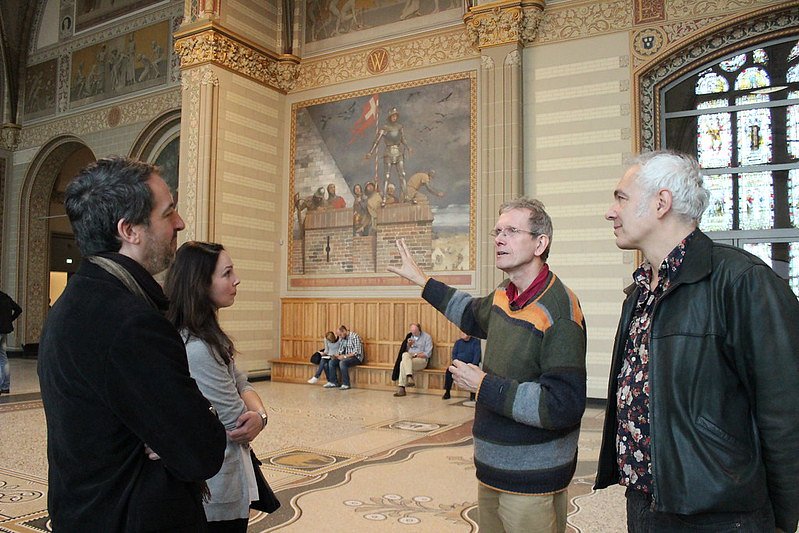
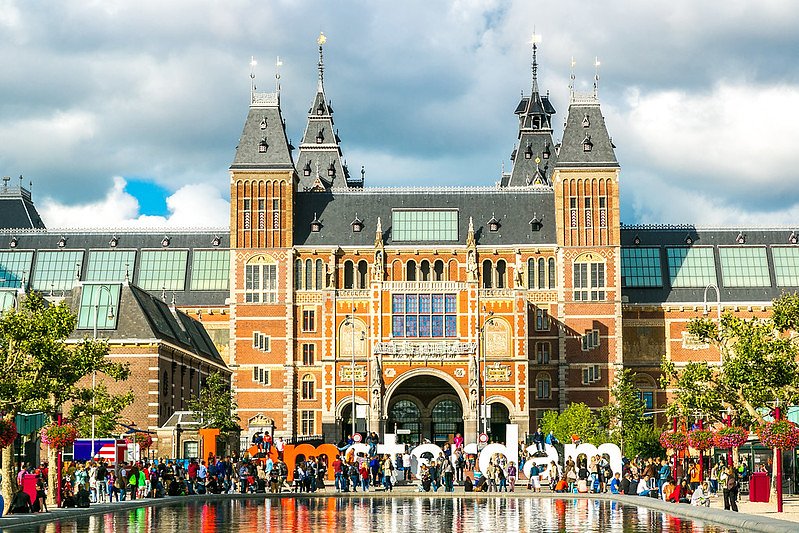
The Rijksmuseum can feel like a city under one roof: grand halls, quiet rooms, famous names, and far more to see in one visit than one has time for. This journey through Amsterdam’s most comprehensive museum gives that scale a clear path, led by an expert in art history who helps the collection open without flattening its complexity.
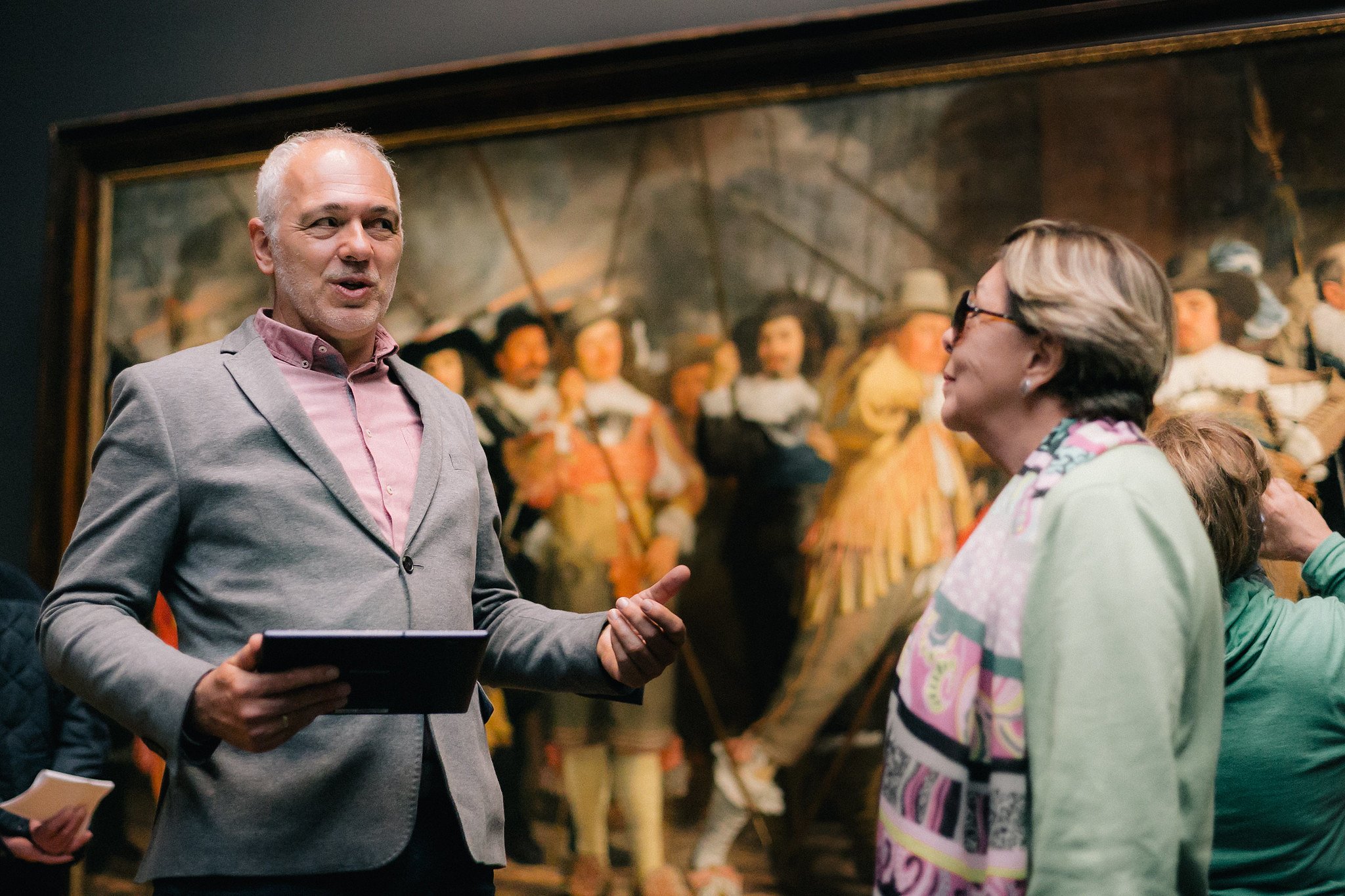
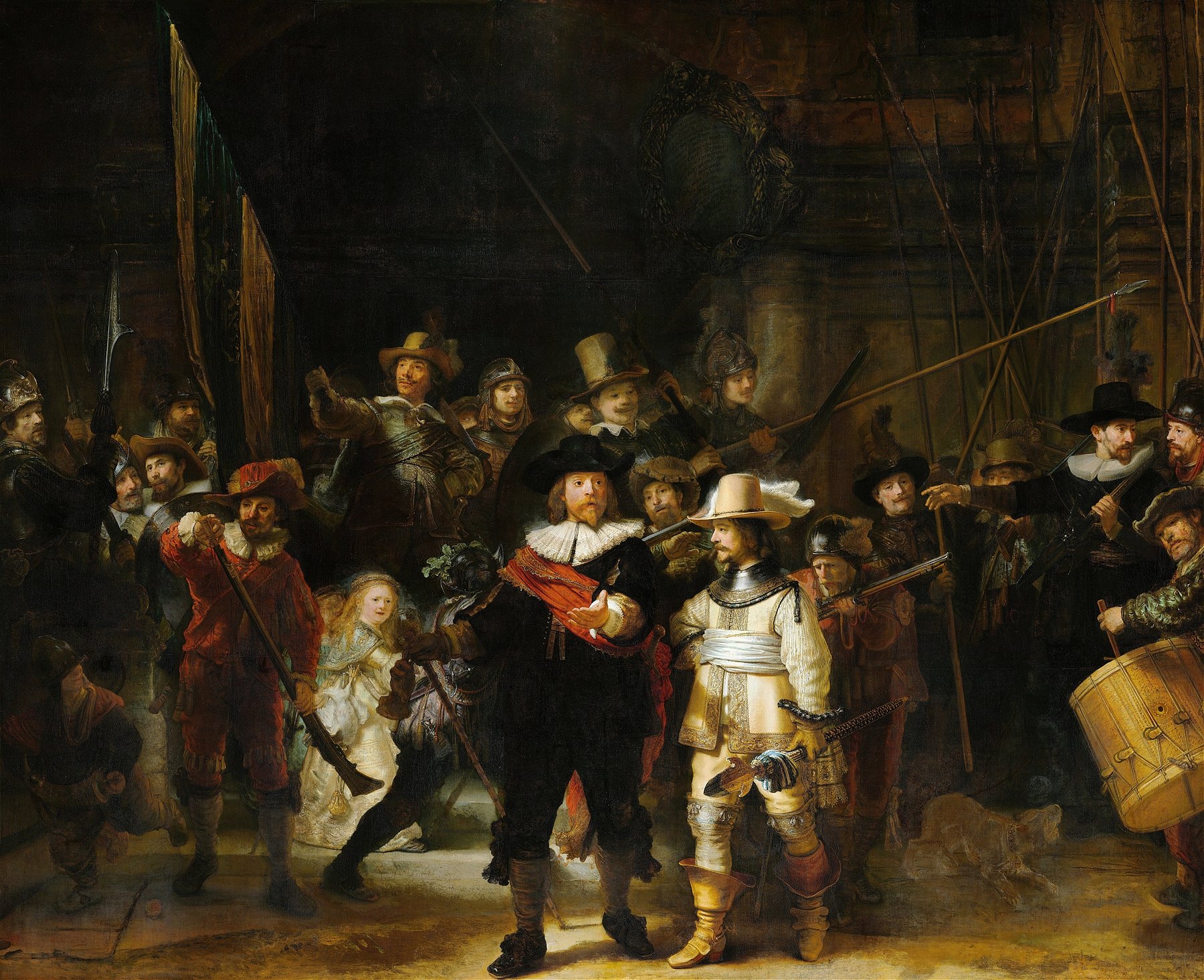
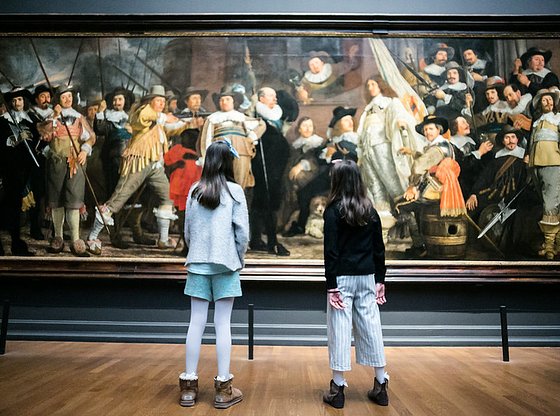
Begin by exploring how art became woven into Dutch culture as trade and exploration expanded and the Netherlands became a world power. In the bustling central room of the redesigned Rijksmuseum, Rembrandt’s “The Night Watch” draws the eye for good reason. Your Expert uses the painting as a doorway into 17th-century Amsterdam, where wealth, performance, and power all press into the frame. Why does one canvas still dominate the story of the Dutch Golden Age?
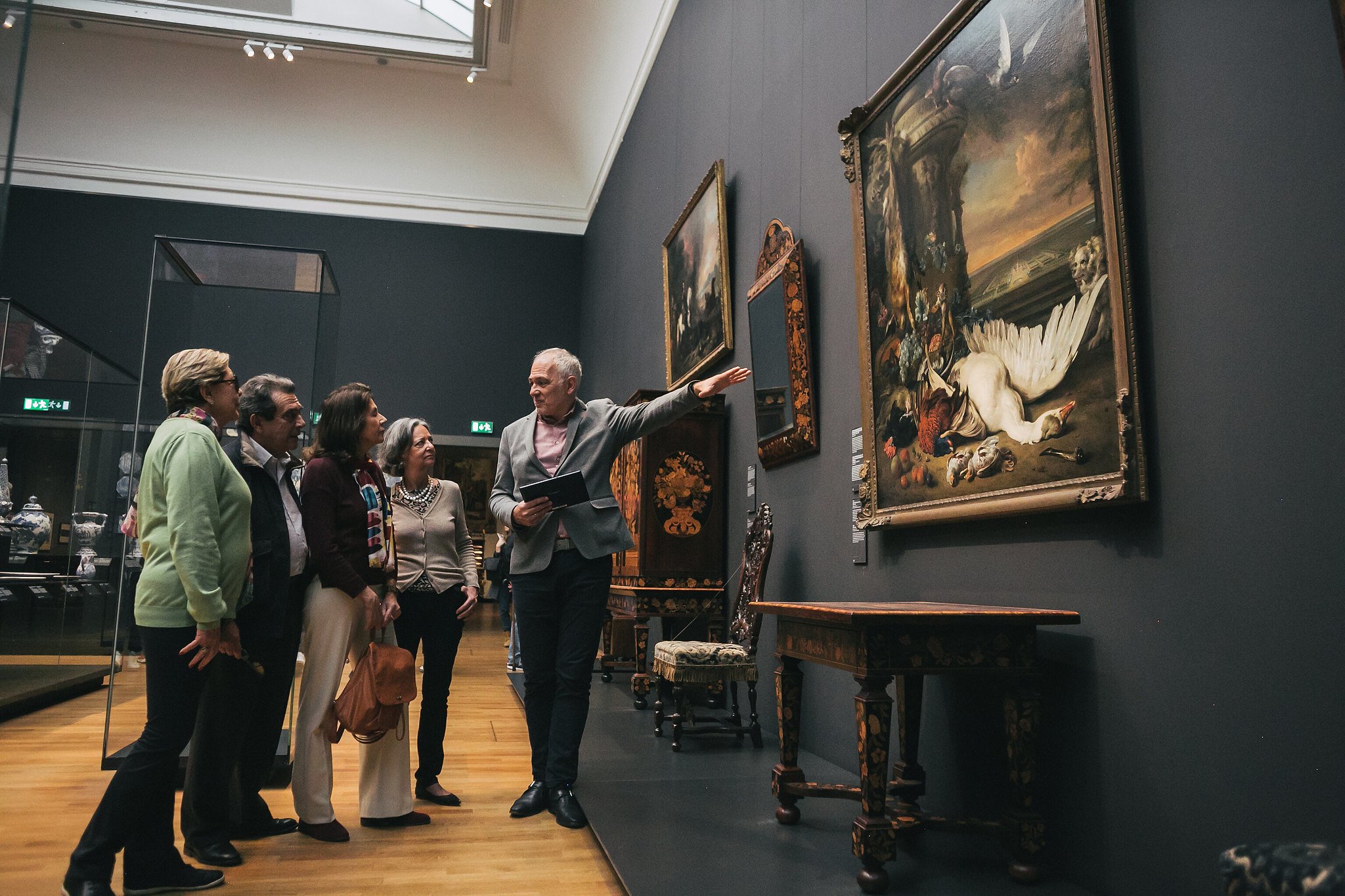
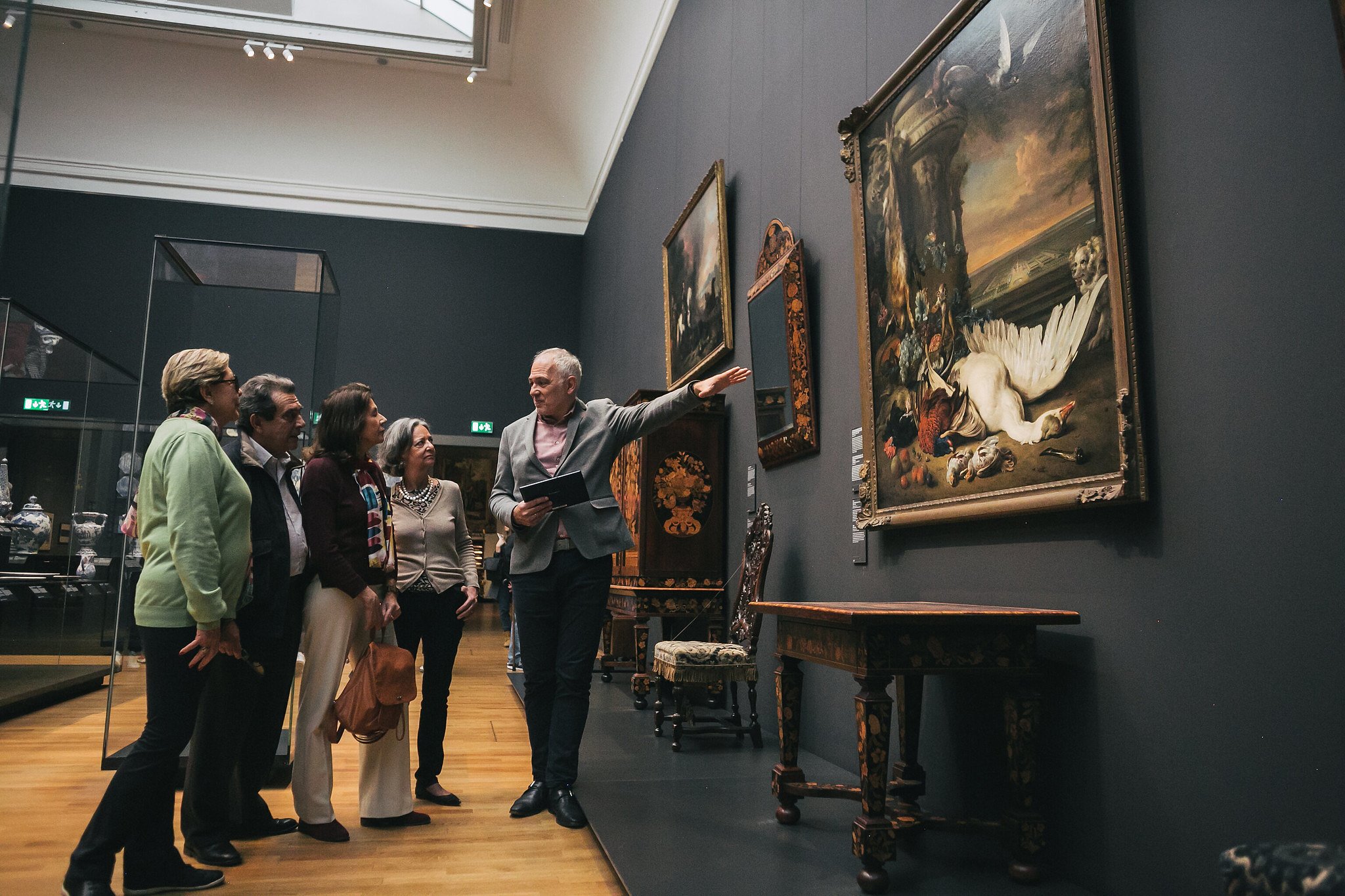
From there, the route can shift with your guide and interests, which keeps the experience focused rather than fixed. Study more works by Rembrandt, then look closely at Vermeer, Steen, and Ruisdael to see how 17th-century Dutch artists handled light, humor, landscape, and daily life. The familiar names matter, but the real pleasure comes from learning how to look.
This Rijksmuseum tour also steps away from the busiest galleries to examine less familiar artists and quieter rooms. This is where expert curation matters: instead of chasing a checklist, trace the larger shape of Dutch art across centuries. Works that many visitors pass by become keys to unlocking questions of taste and memory.
Furniture and other objects widen the story beyond paintings. A cabinet, chair, or decorative detail can reveal Dutch traditions and the wider European society that shaped them.
Wrapping up your time in the Rijksmuseum, the collections feel less like a maze and more like a set of connected rooms, each one carrying evidence about art, commerce, domestic life, and European society. In a few short hours, your Context Expert helps you use your attention well, ask better questions, and come away intellectually satisfied rather than simply museum-fatigued.
Meet the Experts

























Where You’ll Go
From iconic landmarks to tucked-away local favorites, these are the places you’ll explore and experience firsthand with your Expert.
-
Rijksmuseum
-
Rembrandt's The Nightwatch
What’s Included As Standard
Here’s a look at what your tour covers, plus anything you’ll want to consider arranging separately, so you can plan with confidence.
Included
-
English-speaking expert guideTours led in English, offering you unbroken understanding throughout.
-
Intentionally sized groupsA smaller group means more time for conversations and questions.
-
Tickets and entrance feesAll entry tickets included (unless clearly stated otherwise).
-
HeadsetsHeadsets are included on tours that need them, so every word can be heard.
Not Included
-
GratuitiesTips aren’t included, but we encourage tipping as a way to thank your guide after your experience.
-
Food and drinkUnless booking a Food & Drink tour or tasting experience, refreshments are not included.
-
Transportation to and from the meeting pointUnless noted, pre- and post-tour transport isn’t included - this service can be added by request.
-
Hotel pickup or drop-offUnless noted, travel to or from accommodation isn’t included - this service can be added by request.
Where You'll Explore
Make the Most of Your Tour
Some helpful advice for getting the most from your experience, from practical prep to small on-the-day tips.
Dos:
- Wear comfortable footwear
- Check the weather and dress appropriately
- Bring a bottle of water (no glass)
- Feel free to ask your Expert anything
Don'ts:
- Bring firearms or weapons
- Bring sharp objects (e.g. knives, swiss army knives, switchblades, hiking sticks)
- Dress inappropriately to enter religious sites or sacred monuments
Any questions? You can always
contact us.
Frequently Asked Questions
Book with confidence — see Context's flexible cancellation policy here.
The tour visits the Rijksmuseum's permanent collection. We do not currently offer the option to visit temporary exhibitions with our expert.
The museum is fully accessible. Wheelchair users can enter via the platform lift located next to the entrance stairs; once inside, all areas are accessible.
- Mobility scooters are welcome throughout the museum.
- There's a short walk from the meeting point to the museum entrance, and seating is available at several points along the tour.
- Wheelchairs and rollators can be borrowed from the museum.
See the Rijksmuseum with Context
Get to know one of the art historians leading this tour
Don’t just take our word for it
Sabry was a superb guide, so knowledgeable, insightful and charming. He gave us fascinating ways to "read" paintings, educating us on the historical context of each work of art.
The tour was incredible ! Sabry was so passionate and knowledgeable. We had a wonderful time
Let Your Curiosity Shape Your Journey
Join passionate experts on intimate walking tours that reveal a city’s unique stories, spark conversations, and leave you seeing the world—and yourself—a little differently.
Structured, never scripted
Your interests guide your Expert, leading to stories and perspectives that matter to you.
Crafted for conversation
With 12 or fewer guests, ask questions, engage with your Expert, and fully immerse yourself.
Experts, not guides
Explore with 1,200+ Experts—from historians and architects to archaeologists and chefs.
Related experiences our customers also loved

Rijksmuseum Tour
The Rijksmuseum contains much more than a greatest-hits collection of Rembrandt and Vermeer. Its roughly 8,000 displayed objects span around 800 years of Dutch art and history, from the Middle Ages into the twentieth century. That scale is precisely why a Rijksmuseum tour benefits from interpretation rather than a longer checklist. With an art historian, individual paintings become evidence about the society that produced them. Portraits reveal status and civic ambition. Domestic scenes open questions about family, labor, religion, and taste. Landscapes reflect ideas about land and national identity. Decorative objects widen the discussion beyond painting into trade, craftsmanship, and everyday life. Rembrandt and Vermeer remain important anchors, but the larger aim is to understand why seventeenth-century Dutch art looked the way it did—and what the familiar phrase “Dutch Golden Age” leaves unexplained.
The extraordinary concentration of Dutch painting in the seventeenth century was connected to a society undergoing rapid economic and political change.
The Dutch Republic became a major commercial power, with growing cities, expanding global trade, wealthy merchant communities, and a large market for art. Patronage was not limited to kings and churches. Civic organizations, merchants, professionals, and families commissioned and purchased paintings, helping create demand for portraits, landscapes, still lifes, domestic interiors, and scenes of everyday life.
That broader market helps explain why the Rijksmuseum contains such variety.
The same galleries that hold Rembrandt, Vermeer, Frans Hals, Jan Steen, and Jacob van Ruisdael also reveal a society thinking about wealth, work, religion, public reputation, domestic virtue, and the world beyond the Netherlands. The Rijksmuseum itself describes its seventeenth-century galleries in the context of the Dutch Republic’s leadership in trade, science, scholarship, warfare, and the arts.
That success also depended on overseas expansion and colonial systems. Understanding Dutch art therefore means looking at both cultural achievement and the economic structures that helped make it possible.
Rembrandt’s The Night Watch is famous partly because it refuses to behave like a conventional group portrait.
Instead of arranging members of an Amsterdam civic guard in a static line, Rembrandt constructed a scene full of movement, gesture, light, and unequal attention. Some figures dominate. Others disappear into shadow. The effect makes the group feel as if it is assembling in real time rather than posing for posterity.
That innovation is one reason the painting occupies such an extraordinary position inside the Rijksmuseum. The museum’s Gallery of Honour is physically directed toward the Night Watch Gallery, which was specifically designed around the work.
Its continuing conservation also makes it unusual to encounter today. Operation Night Watch, begun in 2019, is the largest research and restoration project ever undertaken on the painting and is being carried out in public view.
The more useful question, then, is not simply why The Night Watch is famous. It is what the painting can reveal about Amsterdam’s civic culture, Rembrandt’s ambitions, and the way museums themselves help determine which works become national icons.
The more useful question, then, is not simply why The Night Watch is famous. It is what the painting can reveal about Amsterdam’s civic culture, Rembrandt’s ambitions, and the way museums themselves help determine which works become national icons.
A guided tour is most valuable when it helps you see fewer works more carefully. The Rijksmuseum already provides excellent routes, an app, and multimedia options for independent visitors. An art historian offers something different.
Rather than telling you where the masterpieces are, they can respond to what you notice, compare works across rooms, and change the route according to your interests. A question about Vermeer’s light can lead into domestic culture. A Rembrandt portrait can become a discussion about wealth and identity. A piece of furniture can reveal global trade connections that a painting alone might not make obvious.
That flexibility is particularly useful in a museum where the permanent collection is much larger than anyone can absorb in one visit.
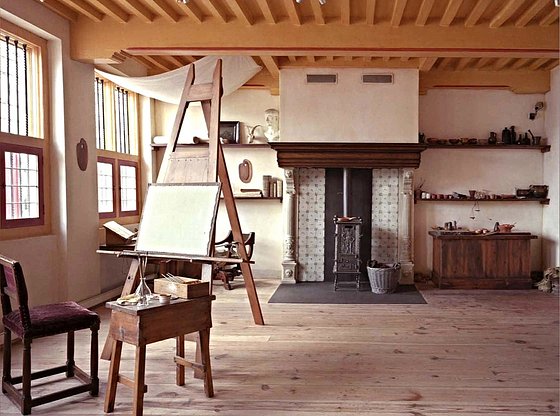
If you are traveling with children, Context’s Rijksmuseum Tour for Kids uses a family-specific approach built around participation and storytelling. If Rembrandt is your primary interest, the Amsterdam Rembrandt Tour connects his art with the city in which he lived and worked. Travelers focused specifically on Van Gogh should choose the dedicated Van Gogh Museum Tour instead.
How long is the Rijksmuseum tour?
The Context tour lasts approximately 2.5 hours.
Is 2.5 hours enough for the Rijksmuseum?
It is enough for a focused introduction, but not enough to see the entire collection. The Rijksmuseum displays roughly 8,000 objects covering about 800 years of Dutch art and history, so a strong first visit depends more on selection than completeness.
Is a guided Rijksmuseum tour worth it?
It can be particularly worthwhile for first-time visitors who want to understand how the major works connect rather than simply locate them. An art historian can help explain artistic choices, historical context, patronage, trade, daily life, and the relationships between works across the collection.
Does the tour include The Night Watch?
Yes. The Night Watch is one of the major works explored on the tour.
Will we see Rembrandt and Vermeer?
The permanent collection includes major works by Rembrandt and Vermeer, along with artists such as Jan Steen, Frans Hals, and Jacob van Ruisdael. Specific works can occasionally be unavailable because of conservation, loans, or gallery changes.
What is the Gallery of Honour?
The Gallery of Honour is the Rijksmuseum’s central showcase for major seventeenth-century Dutch paintings. Works are displayed in side alcoves along a corridor that leads directly toward the Night Watch Gallery.
Is The Night Watch being restored?
Yes. The Rijksmuseum’s ongoing Operation Night Watch is studying and conserving the painting in a specially designed glass chamber where visitors can observe the work.
Are Rijksmuseum tickets included?
Yes. Museum admission is included with the Context tour.
Is the Rijksmuseum wheelchair accessible?
Yes. The museum is fully accessible, with wheelchair access, lifts, seating at various points, and wheelchairs and rollators available to borrow.
Is this better than visiting with the Rijksmuseum app?
They serve different purposes. The museum’s app is a strong option for an independent visit and provides routes and background information.
A Context tour is better suited to travelers who want a live conversation with an art historian who can respond to questions and adjust the route around their interests.
Should I take this or the Van Gogh Museum Tour?
Choose the Rijksmuseum Tour for a broader exploration of Dutch art and history, particularly the seventeenth century and artists such as Rembrandt and Vermeer.
Choose the Van Gogh Museum Tour if Van Gogh’s life, technique, and artistic development are your primary interest.