Anthi was great and very knowledgeable.
Signature Acropolis Tour: Site and Museum
Go beyond the ruins to see why Greece’s defining landmark endures
Skip the lines, not the story. An expert-led look at this UNESCO World Heritage site balances ancient landmarks with the city that lives around them.
Tour Highlights
- The Acropolis in a new light An Expert reveals layered meaning behind the Acropolis, blending archaeology, politics, and history.
- Ancient and modern coexist Explore how classical ideals still shape daily life, identity, and debate in contemporary Athens.
- Maximize time A concise and focused yet rich introduction designed for arrival day or travelers with limited time.
- Move beyond the Parthenon Understand lesser-discussed structures and learn why they mattered, and still matter, today.
- Ask questions freely Engage in open dialogue with your Expert, tailoring depth and focus to your interests and knowledge.
- Insights beyond the guidebooks Uncover rich, fascinating details in every venue with experienced archeologists leading the way.
Led by Experts, Shaped by You
Explore with an expert guide who responds to your questions, your interests, and your pace. Reveal layers of meaning most visitors miss—go from seeing to understanding.
The Finer Details
The Acropolis reveals itself in layers, not timelines. This Acropolis tour frames the ancient citadel not as a relic, but as a living reference point that still echoes across the city of Athens and throughout modern Greece today.
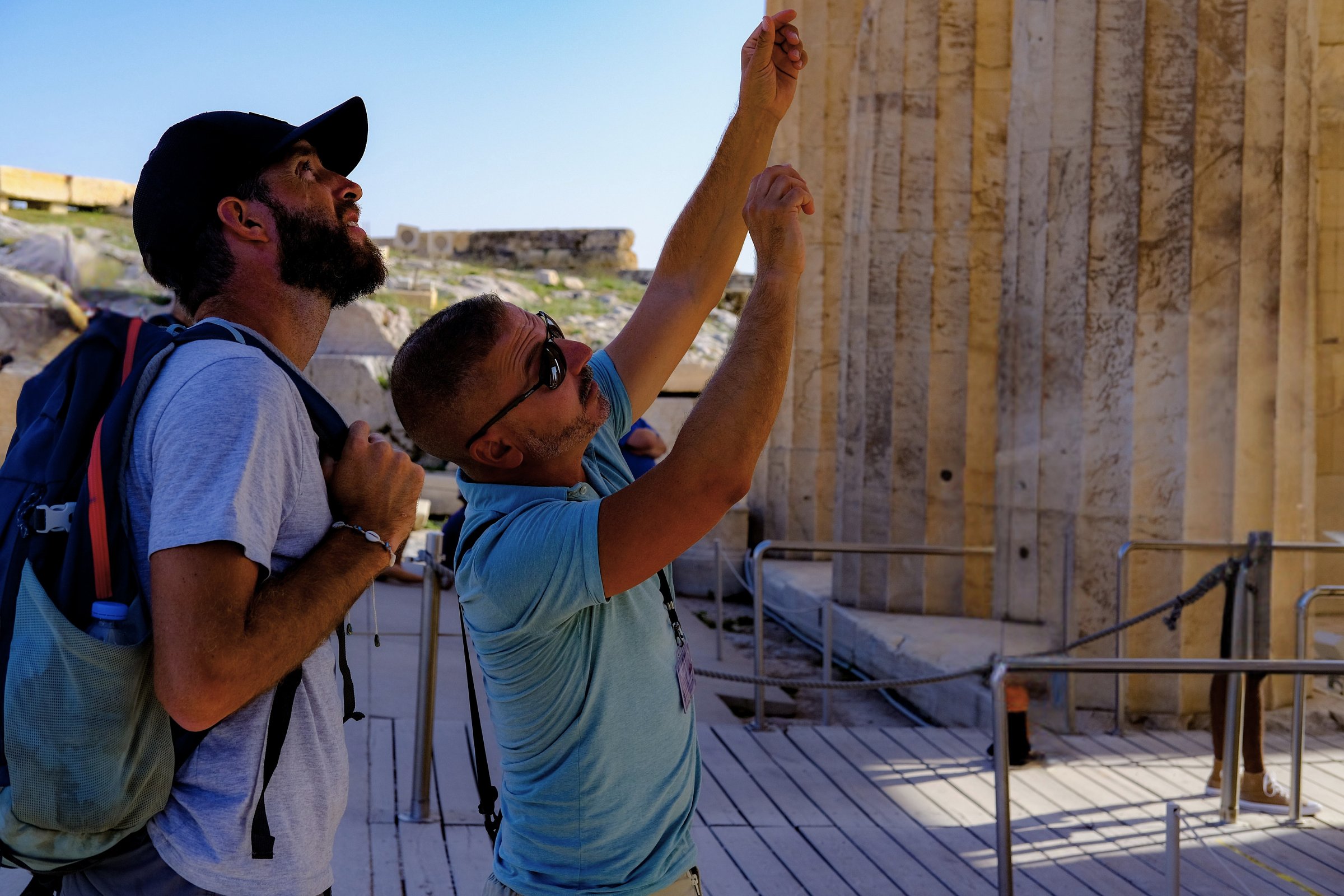
Walk with an archeologist or historian who has studied these monuments in depth and learn not only how they came to be, but what they have come to mean across centuries. The experience balances ancient history with the realities of modern Athens. Consider what it means to grow up in a city defined by its past, and how that legacy shapes cultural pride, debate, and creativity today.
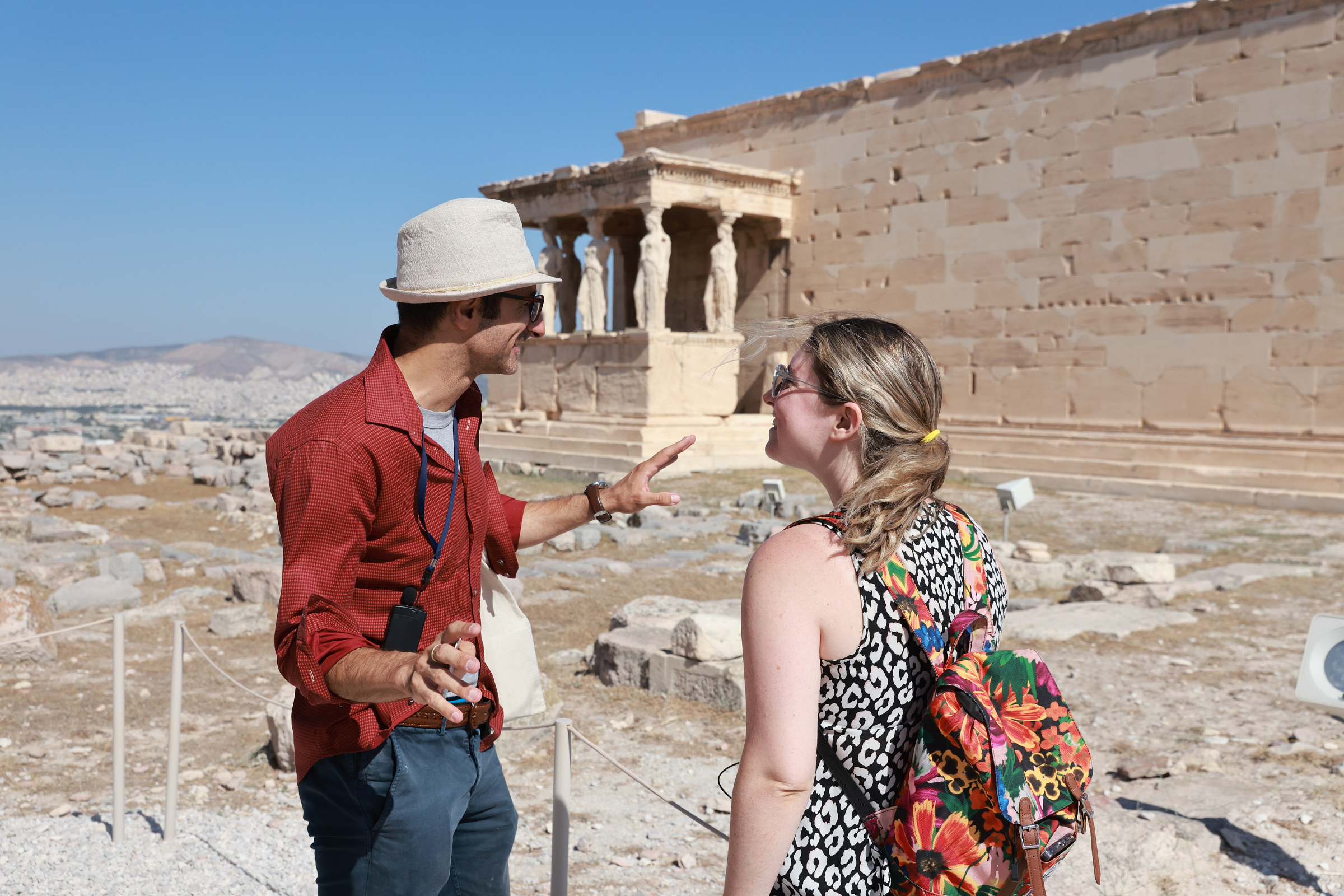
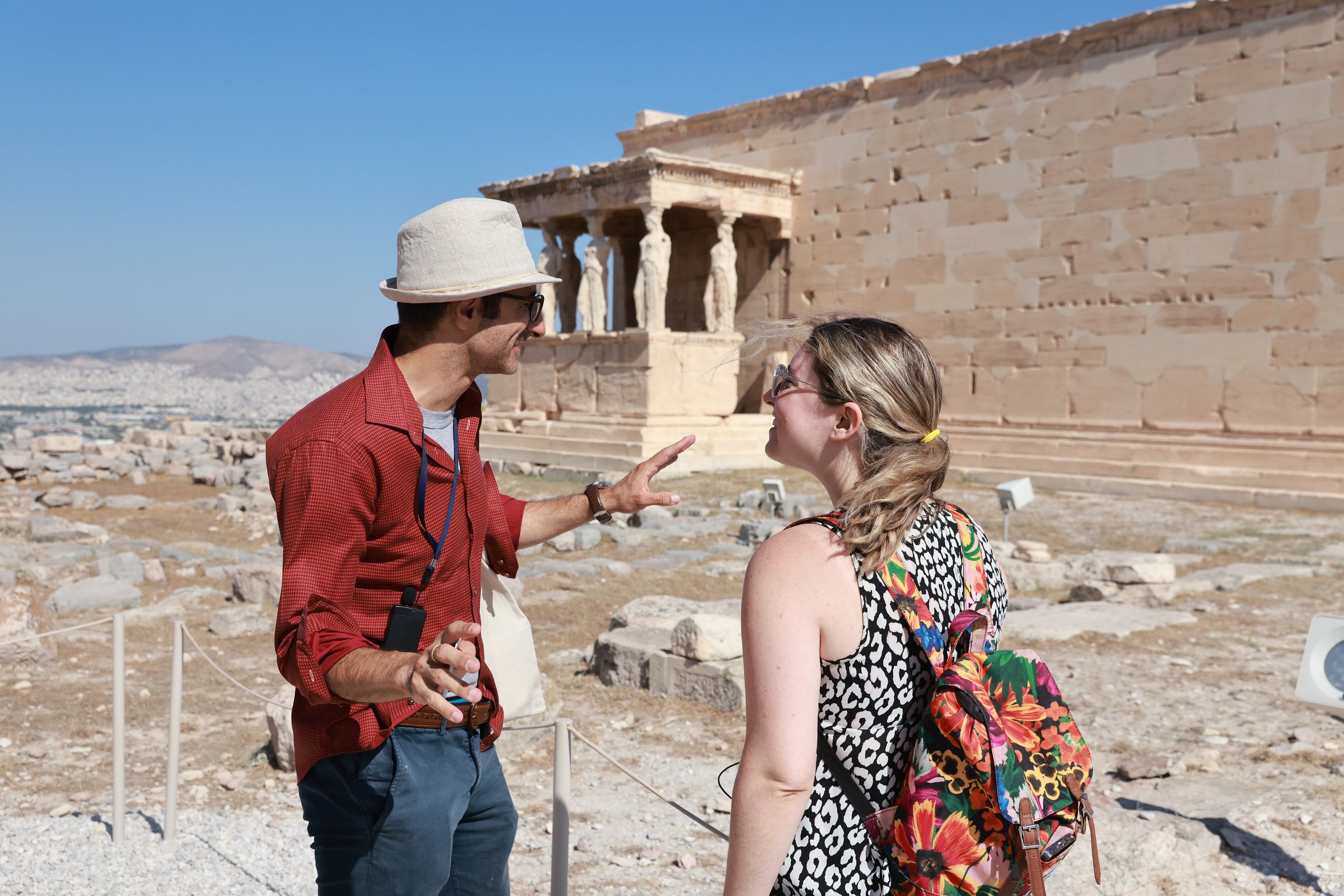
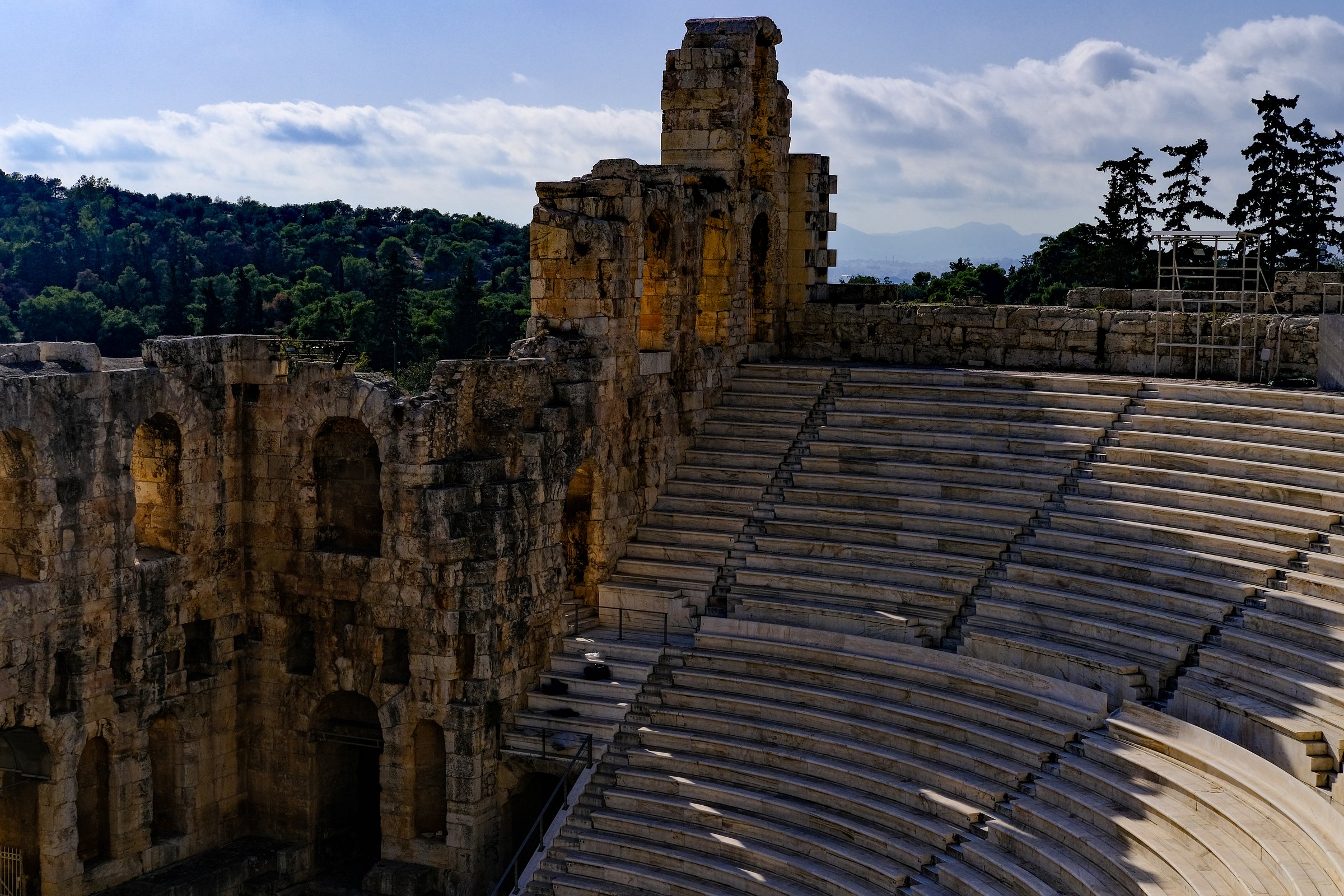
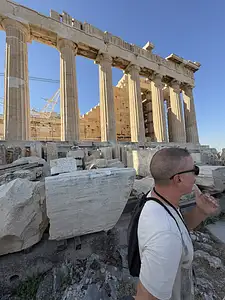
The Parthenon commands your attention, but this easily expands to the nearby temples, surrounding shrines, and unrivaled vistas of the city as your tour continues. Doric, Ionic, and Corinthian architecture form the foundation of your conversation as you pause to reflect at structures like the Temple of Athena Nike and the Erechtheion, where myth and history intertwine.
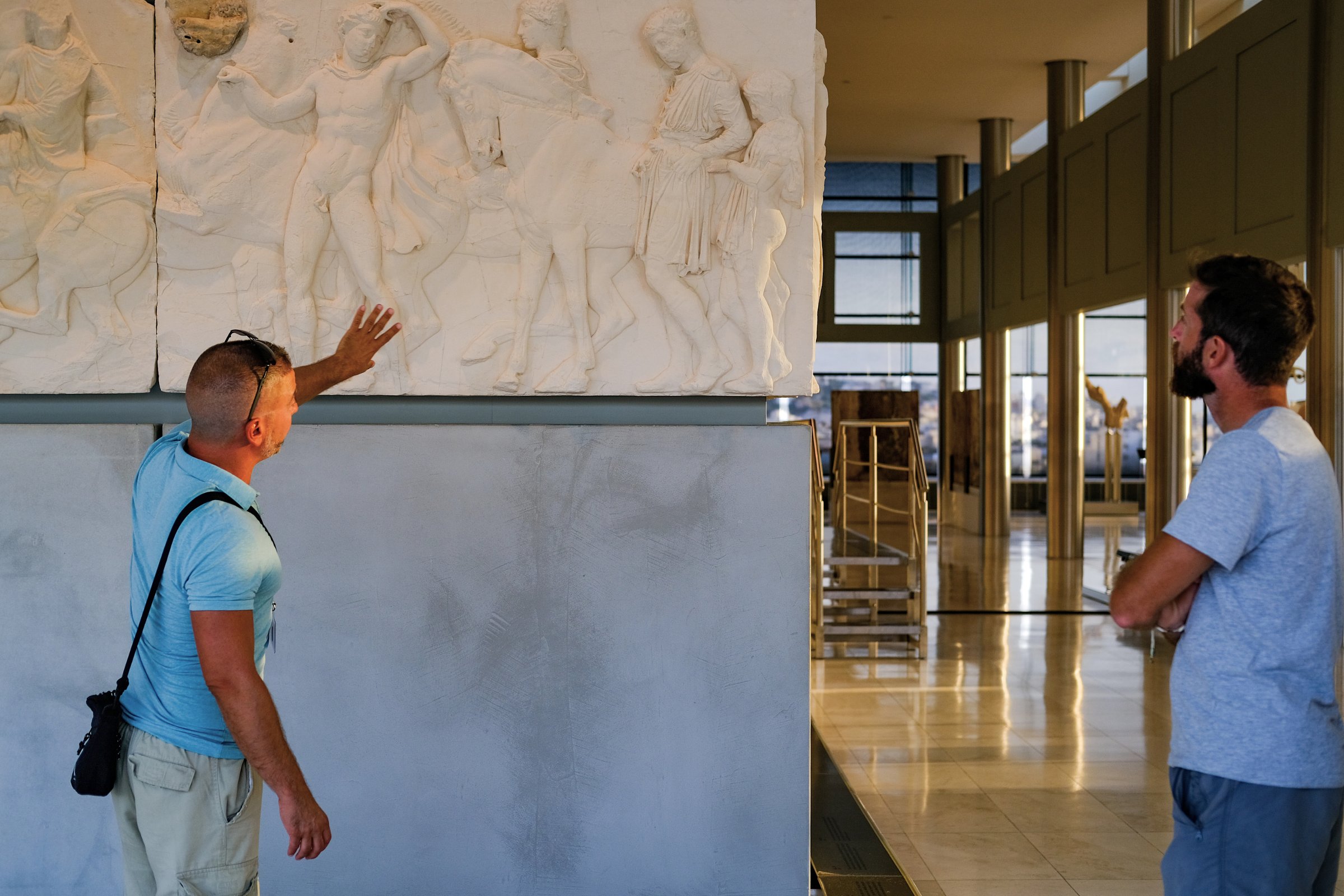
Beyond the ruins, your Acropolis guided tour continues in the Athens Acropolis Museum, designed by Bernard Tschumi and opened in 2009. Inside the museum, you will encounter original works up close - sculptures and Parthenon frieze fragments you can’t truly see on the hill.
Questions and discussions deepen your tour. Go beyond names and dates to explore why these places mattered to Athenians then, and how they are understood now. Conversation flows at your pace, guided by curiosity and your interests. Ask questions freely, whether you are encountering Greek history for the first time or returning with deeper knowledge.
By the end of your tour, the Acropolis sits in context, both intellectually and emotionally connected to Athens below. Leave with a grounded understanding of the iconic UNESCO World Heritage recognized monuments, and the curiosity and confidence in how and what to explore next.
Meet the Experts




























Where You’ll Go
From iconic landmarks to tucked-away local favorites, these are the places you’ll explore and experience firsthand with your Expert.
-
AcropolisAncient Athens citadel with temples including the Parthenon, symbol of classical Greece.
-
ParthenonAncient temple on Athens’ Acropolis dedicated to the goddess Athena and civic worship.
-
Acropolis MuseumAthens museum displaying artifacts from the Acropolis and classical Greece.
What’s Included As Standard
Here’s a look at what your tour covers, plus anything you’ll want to consider arranging separately, so you can plan with confidence.
Included
-
English-speaking expert guideTours led in English, offering you unbroken understanding throughout.
-
Intentionally sized groupsA smaller group means more time for conversations and questions.
-
Tickets and entrance feesAll entry tickets included (unless clearly stated otherwise).
-
HeadsetsHeadsets are included on tours that need them, so every word can be heard.
Not Included
-
GratuitiesTips aren’t included, but we encourage tipping as a way to thank your guide after your experience.
-
Food and drinkUnless booking a Food & Drink tour or tasting experience, refreshments are not included.
-
Transportation to and from the meeting pointUnless noted, pre- and post-tour transport isn’t included - this service can be added by request.
-
Hotel pickup or drop-offUnless noted, travel to or from accommodation isn’t included - this service can be added by request.
Where You'll Explore
Make the Most of Your Tour
Some helpful advice for getting the most from your experience, from practical prep to small on-the-day tips.
Dos:
- Wear comfortable footwear
- Check the weather and dress appropriately
- Bring a bottle of water (no glass)
- Feel free to ask your Expert anything
Don'ts:
- Bring firearms or weapons
- Bring sharp objects (e.g. knives, swiss army knives, switchblades, hiking sticks)
- Dress inappropriately to enter religious sites or sacred monuments
Any questions? You can always
contact us.
Frequently Asked Questions
Book with confidence — see Context's flexible cancellation policy here.
Please note that we require the age of each participant in order to purchase tickets. This is especially important for families with participants who are 17 or 18 years old, as free tickets are only valid for those who are 17 or younger on the day of the tour. Once a participant turns 18, a full-price ticket is required. To avoid any issues at the entrance, please double-check the ages provided before booking.
Our Acropolis tours are capped at 9 due to venue restrictions, which also helps your tour experience in order to best navigate the museum and crowds. Should you have a larger group, we suggest splitting into multiple groups.
While visiting the Acropolis in the morning is a popular choice amongst travelers, our experts recommend trying an early evening tour in the summer months. The afternoon heat has died down, the crowds are smaller and you will have a chance to experience the unique charm of sunset over Athens.
Itinerary
- This Acropolis walking tour covers a lot of ground and so best suited to those who are ready and able to do a lot of walking.
- The route can be adapted for clients who are less able to walk long distances, but this may involve missing some of the sites. We would advise booking a private tour if this applies to you.
Wheelchair accessibility
- The Acropolis has made certain efforts to allow access to clients of varying levels of mobility. Clients who think they will need elevator access to avoid the numerous stairs should come prepared with a justification of disability- anything from a disability card or placard to a signed doctor's note will suffice.
Don’t just take our word for it
Tailored our tour to our specific interests. Thoroughly knowledgeable.
Panos was an absolutely excellent tour guide. There is so much to take in and we appreciated the informative small group experience.
Let Your Curiosity Shape Your Journey
Join passionate experts on intimate walking tours that reveal a city’s unique stories, spark conversations, and leave you seeing the world—and yourself—a little differently.
Structured, never scripted
Your interests guide your Expert, leading to stories and perspectives that matter to you.
Crafted for conversation
With 12 or fewer guests, ask questions, engage with your Expert, and fully immerse yourself.
Experts, not guides
Explore with 1,200+ Experts—from historians and architects to archaeologists and chefs.
Related experiences our customers also loved

Acropolis Guided Tour
The Acropolis has been interpreted, rebuilt, celebrated, contested, and reimagined for nearly three thousand years. On this Acropolis guided tour, explore the archaeological site and Acropolis Museum with an archaeologist, historian, or specialist in ancient Greece. Rather than approaching the hill as a sequence of famous ruins, consider how religion, politics, architecture, mythology, and civic identity came together in one of the ancient world’s most influential landscapes. The Parthenon commands attention, but it was never meant to stand alone. The Propylaea, Temple of Athena Nike, Erechtheion, shrines, and sacred spaces formed part of a larger sanctuary dedicated principally to Athena and closely tied to the identity Athens constructed for itself. Your Expert helps reconstruct how Athenians experienced this place while also examining what the Acropolis has come to mean since antiquity. Its monuments have survived conquest, religious change, warfare, excavation, restoration, and intense modern debate. For contemporary Athenians and Greeks, the site remains part of a living conversation about history, cultural identity, preservation, and ownership. The experience then continues in the Acropolis Museum, where sculptures and architectural fragments removed from the hill can be examined at close range and reconnected with the buildings they once adorned. Together, the archaeological site and museum create a more complete way to understand both ancient Athens and the legacy it continues to carry.
The Acropolis reached its most celebrated form during the fifth century BCE, when Athens invested heavily in monumental building following the Persian Wars.
At its center stands the Parthenon, dedicated to Athena and closely associated with the political and cultural ambitions of Classical Athens.
Your Expert helps you look beyond its familiar silhouette. Architecture, sculpture, ritual, mythology, and civic ideology all contributed to what the building communicated. Its proportions and decoration reflected extraordinary technical skill, but the Parthenon was also created by a society thinking carefully about how it wanted to represent itself.
Nearby monuments expand that story.
The Temple of Athena Nike occupies a prominent position near the entrance to the sanctuary, linking worship with ideas of victory and protection. The Erechtheion, with its distinctive Caryatids and complex layout, brings together multiple myths, cults, and sacred traditions associated with the earliest history of Athens.
Moving between them reveals that the Acropolis was not a museum of architecture in antiquity. It was an active religious landscape where ritual, storytelling, political identity, and daily civic life intersected.
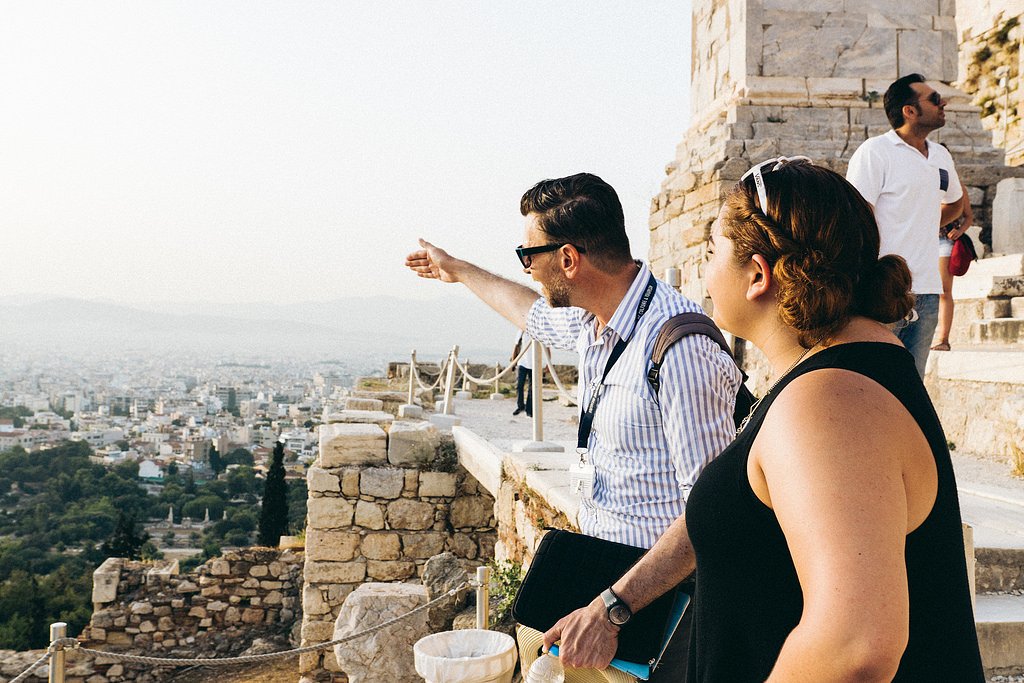
The views across Athens add another layer. From the hill, ancient theaters, civic spaces, neighborhoods, and surrounding landscape make it easier to understand how the sanctuary related physically to the city below.
The archaeological site shows you where the monuments stood. The Acropolis Museum helps you see what has been lost from them.
Designed by Bernard Tschumi and opened in 2009, the museum houses original sculptures, architectural decoration, archaeological finds, and objects recovered from the Acropolis and its slopes.
Here, details that are difficult or impossible to appreciate on the hill become visible at eye level.
The Caryatids, Archaic sculptures, surviving sections of the Parthenon frieze, and other architectural fragments help reconstruct how richly decorated the ancient sanctuary once was. Discussions may also explore ancient color, restoration, changing artistic styles, and what archaeology can reveal about the people who used the site.
The museum's Parthenon Gallery is particularly important because its orientation and arrangement reconnect surviving sculptural elements with the building above.
It also opens a larger contemporary conversation. Some Parthenon sculptures remain outside Greece, most famously at the British Museum, making the monument central to ongoing debates about cultural heritage, restitution, museum collections, and who should care for objects removed from their original setting.
Visiting both places means the Acropolis is not reduced to either ruins or museum objects. Landscape, architecture, and surviving material evidence can be understood together.
The Acropolis is one of the most familiar symbols of ancient Greece, but its meaning has never stopped changing.
For Classical Athenians, the sanctuary was tied to religion, mythology, civic identity, military victory, and the political ambitions of the city. Later generations reused its buildings, changed their functions, damaged them in warfare, excavated them, and eventually treated them as monuments of national and international importance.
Modern Athens grew beneath a site that was increasingly used to represent both ancient Greece and the modern Greek state.
That history raises questions that extend beyond the fifth century BCE. What does it mean to live beside monuments the rest of the world treats as universal heritage? How does a modern country relate to a past that visitors often arrive believing they already understand? And how should archaeological sites change as new evidence and conservation priorities emerge?
Your Expert can shape the conversation according to your interests, whether you are most curious about mythology, democracy, architecture, religion, archaeology, conservation, or modern Greek identity.
This is also why specialist interpretation can be particularly useful at the Acropolis. Many of the monuments survive only partially, their sculptures have been moved, and their functions changed repeatedly over time. Historical and archaeological context helps distinguish what can still be seen from what has to be reconstructed through evidence.
The tour is available privately and in small groups, allowing time for questions throughout. Timed-entry admission to both the archaeological site and museum is included, subject to current venue conditions.
By the end, the goal is not simply to recognize the Parthenon. It is to understand why the Acropolis mattered to ancient Athenians, why it became so influential, and why its meaning is still being negotiated today.
Does this Acropolis tour include the Acropolis Museum?
Yes. The tour includes guided visits to both the Acropolis Archaeological Site and the Acropolis Museum. Seeing them together allows you to connect the surviving monuments on the hill with original sculptures and architectural fragments preserved inside the museum.
How long is the Acropolis guided tour?
The experience lasts approximately three hours and includes both the archaeological site and the Acropolis Museum.
What will I see on the Acropolis?
The itinerary typically includes the Parthenon, Propylaea, Temple of Athena Nike, Erechtheion and Caryatids, along with other sacred spaces and views across Athens. Exact routing can vary because the Acropolis is an active archaeological site.
Why should I visit both the Acropolis and Acropolis Museum?
The archaeological site allows you to experience the monuments in their original landscape, while the museum preserves sculptures, architectural decoration, and archaeological finds that are difficult or impossible to appreciate on the hill.
Together, they provide a more complete picture of how the Acropolis originally looked and functioned.
Is this a private Acropolis tour?
The experience is available both privately and as a small-group tour with no more than six guests. A private tour allows the discussion to respond particularly closely to your group's interests and questions.
Who leads the Acropolis tour?
Tours are led by Context Experts with backgrounds that may include archaeology, ancient history, classics, art history, architecture, or related fields. Individual Expert assignments vary according to availability.
Is a guided Acropolis tour worth it?
The Acropolis can be visited independently, but many of its buildings survive only partially and much of their original sculpture has been moved to museums.
A specialist can help reconstruct how the sanctuary functioned, distinguish mythology from archaeological evidence, and explain how architecture, religion, politics, and civic identity connected across the site.
Is the Acropolis difficult to walk?
The route involves uphill walking, steps, uneven ancient surfaces, and areas of polished marble that can be slippery. Comfortable, supportive shoes are strongly recommended.
Are Acropolis tickets included?
Yes. Timed-entry tickets for both the Acropolis Archaeological Site and the Acropolis Museum are included. Visitors remain subject to current security procedures and venue operating conditions.
What is the best time of day to visit the Acropolis?
Conditions vary considerably by season. During warmer months, earlier and later departures can offer more comfortable temperatures than the middle of the day. Shade is limited on much of the archaeological site. Context strategically includes start times that can beat the crowds & the heat.
Does the tour discuss the Parthenon Marbles?
The surviving decoration of the Parthenon and its dispersal among collections in Athens and abroad may form part of the museum discussion. This provides context for the continuing international debate around preservation, cultural heritage, and the Parthenon sculptures.