This was an exceptional tour. Suleyman presented all facts clearly and in an interesting manner so that we came away with a clear understanding of the workings of the palace. Highly recommended for all visitors to Istanbul.
Topkapi Palace Tour: Ottoman Power
Step into the palace world of sultans, rivalry, and opulence
The Finer Details
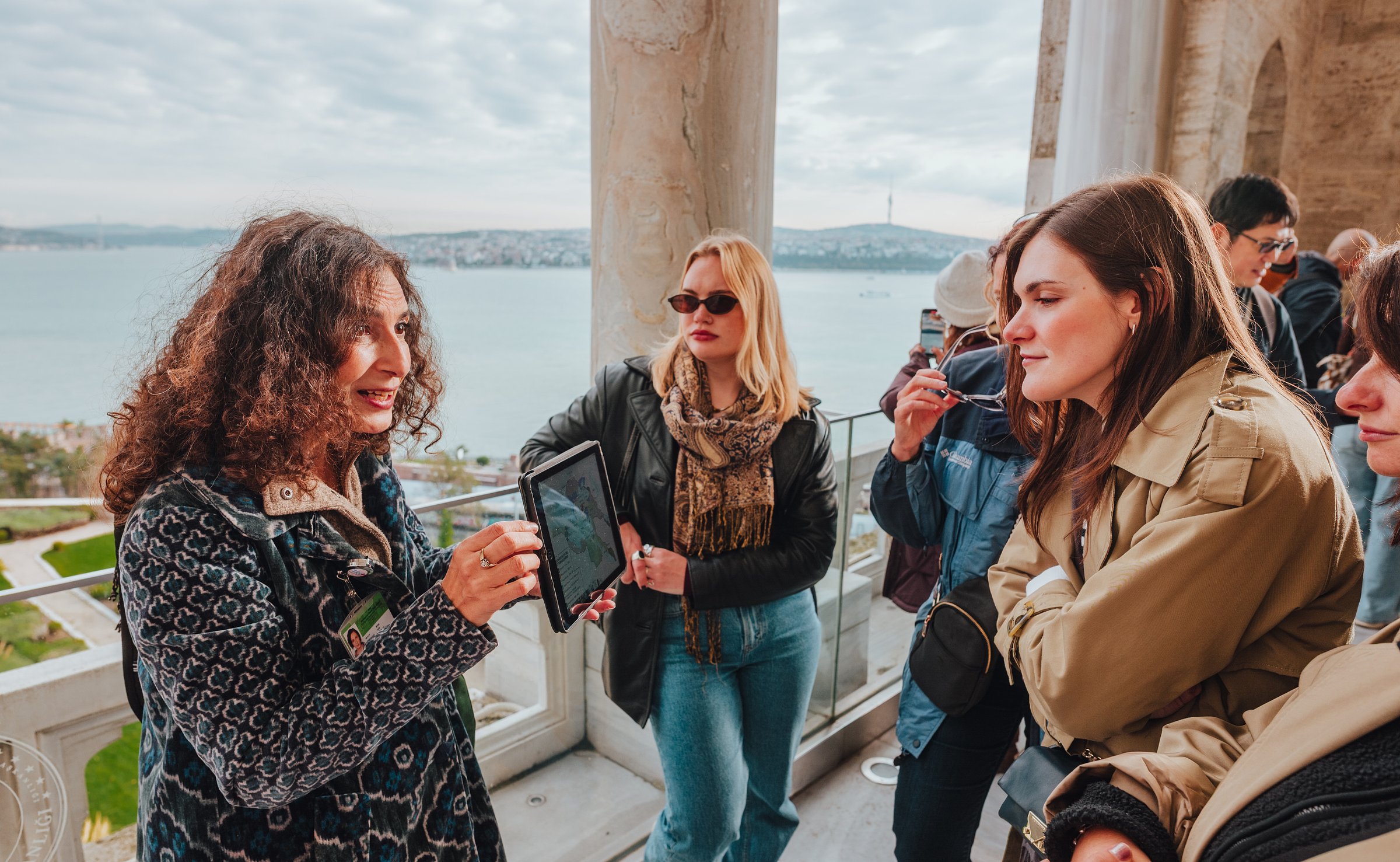
Topkapi Palace was the epicenter of royal intrigue, home to scheming concubines, all-powerful sultans, and occasional fratricide. Set strategically at the mouth of the Golden Horn, the imperial palace illustrates the inner workings of the Ottoman Empire. On this 3-hour Topkapi Palace Tour, we'll join a local historian for an in-depth exploration of the building's vast architectural and political history.
The Palace Of A Vast Empire
In its prime, the Ottoman Empire stretched from Yemen to Croatia to Iran. The conquest of Istanbul in the 15th century announced Ottoman dominance. This tour uncovers the links between the empire's history and Topkapi Palace, its beating heart. Exploring the intricate rooms of the palace, we will discover the machinations of court life and the broad power of the sultans. We will also visit the Harem, one of the palace's most celebrated sites, designed by renowned Ottoman architect Mimar Sinan.
Topkapi Palace Tour
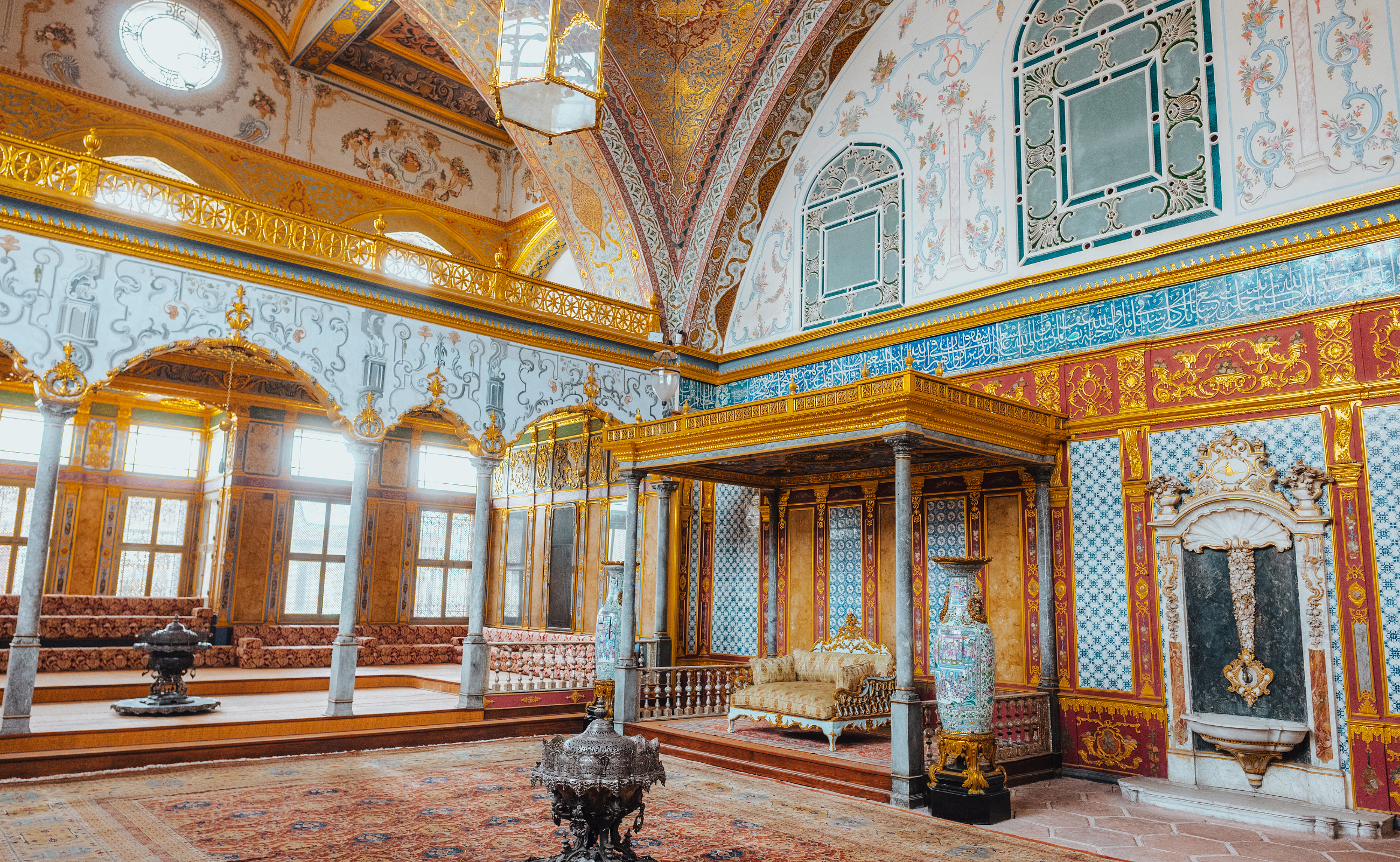
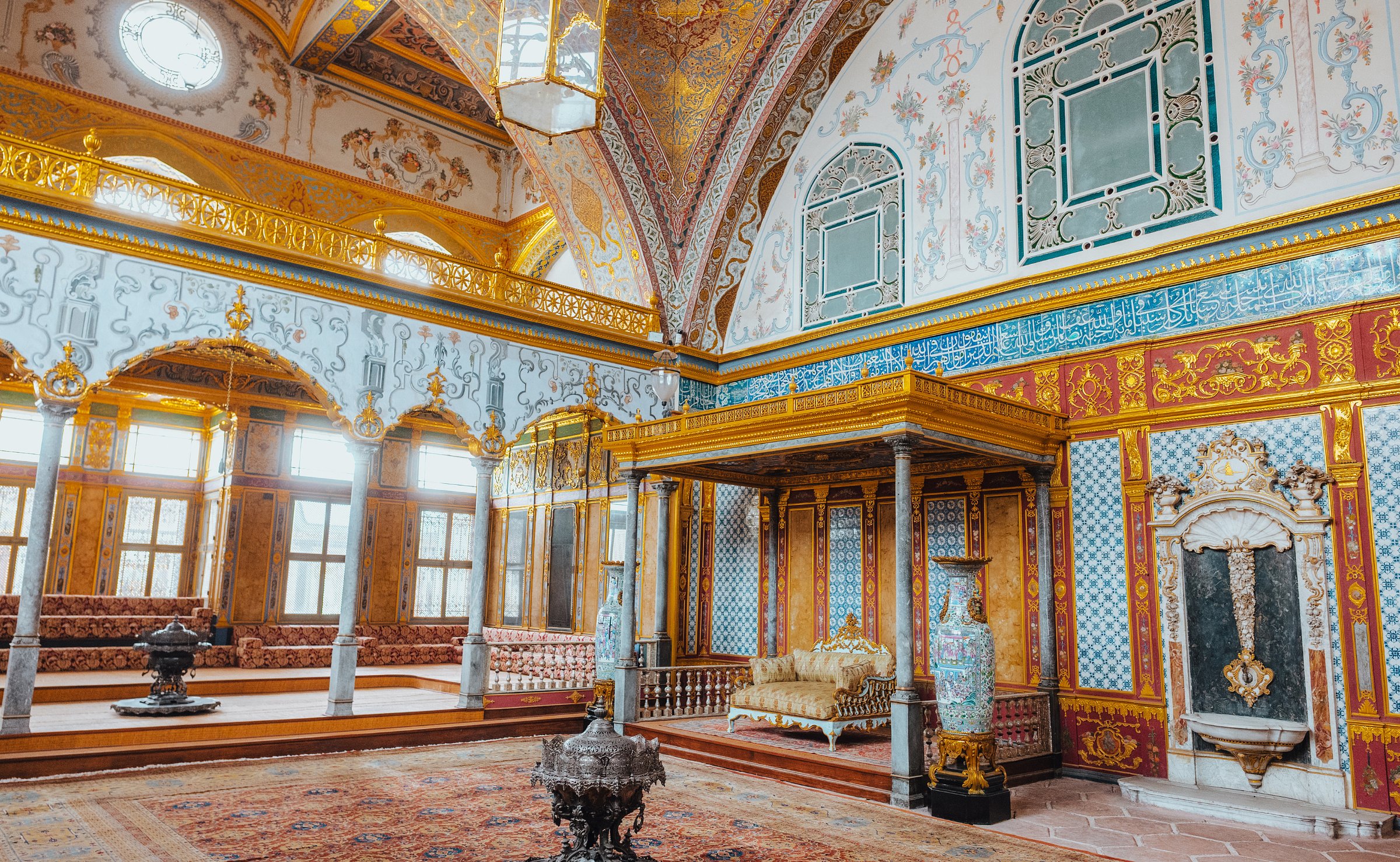
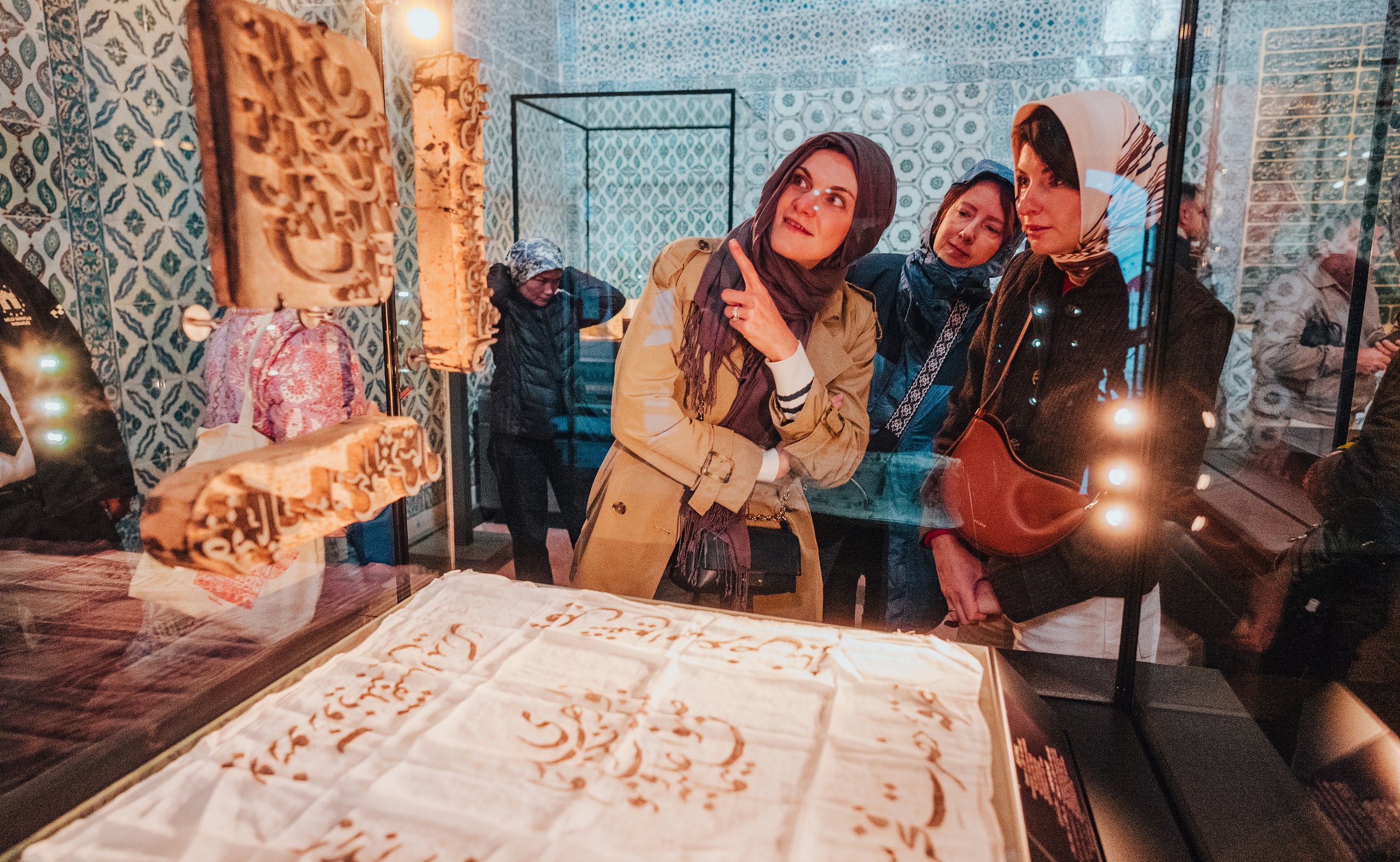
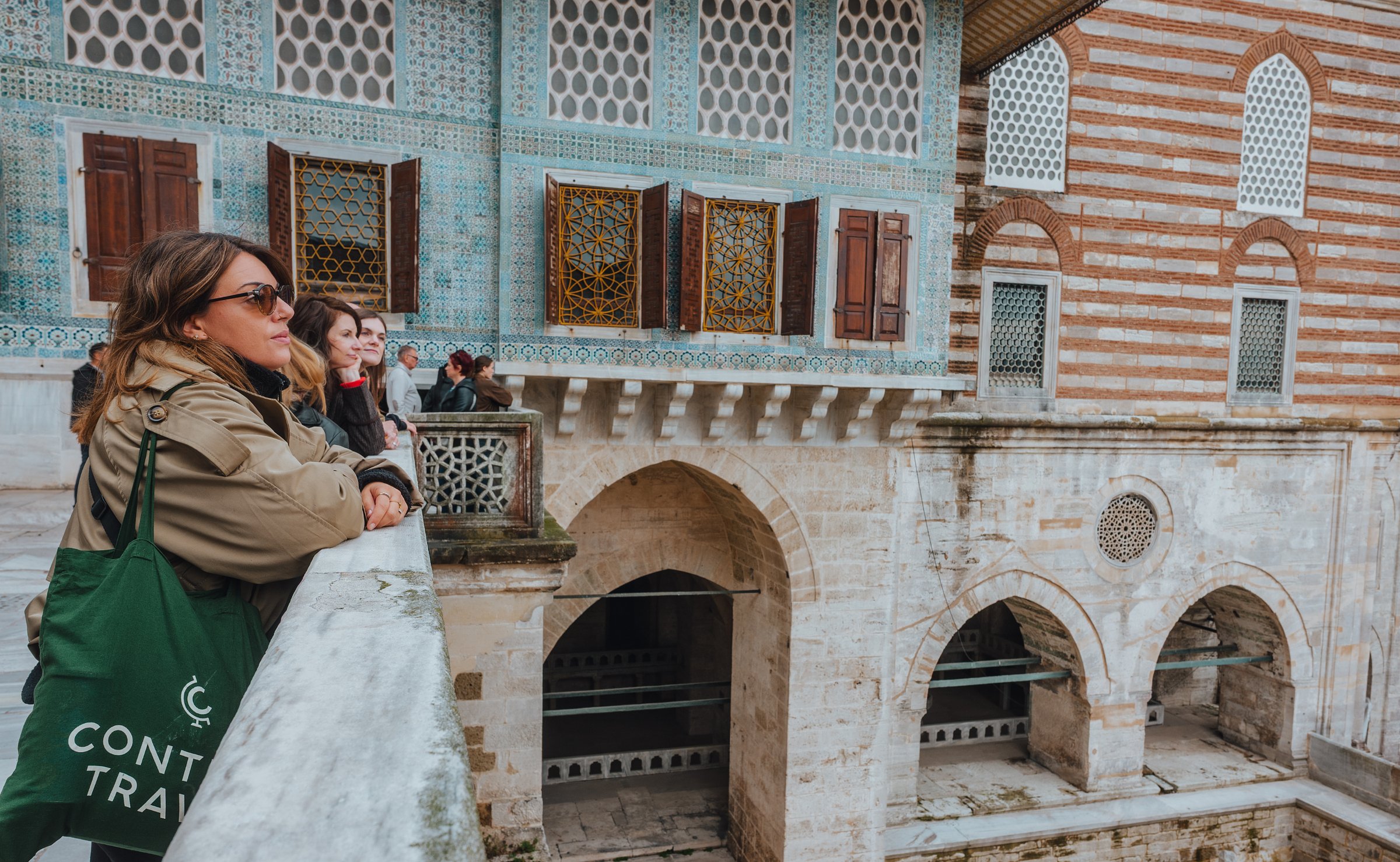
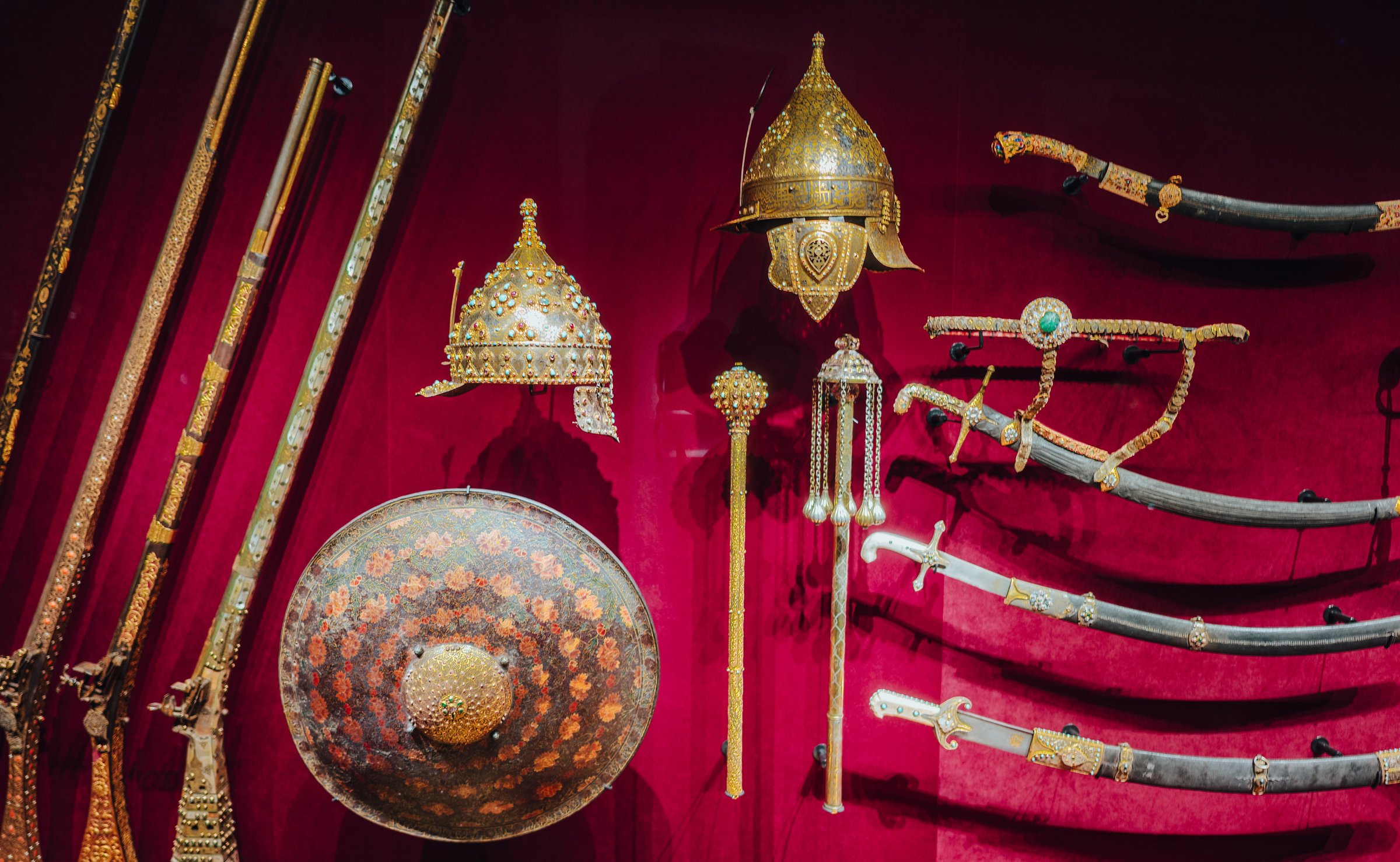
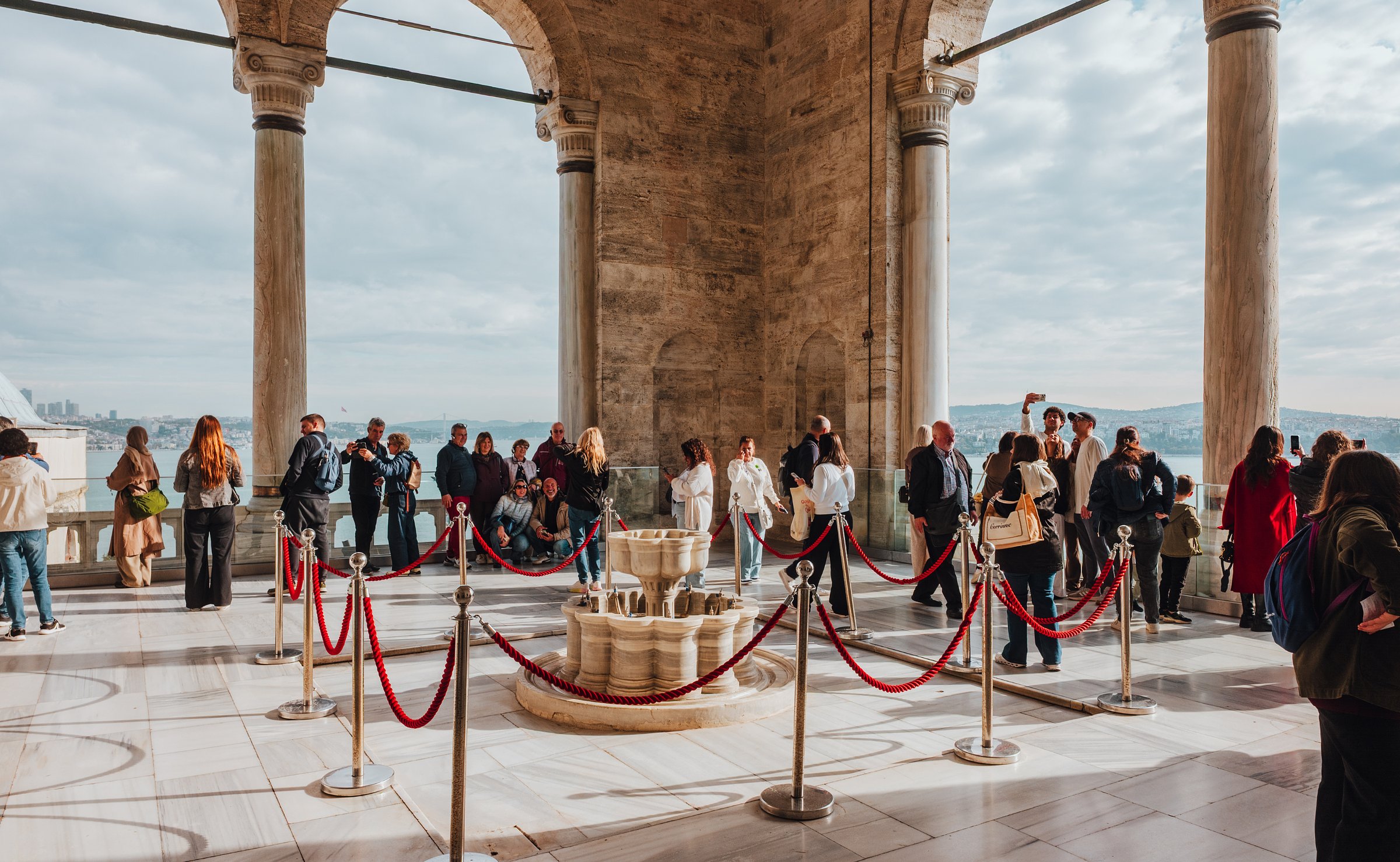
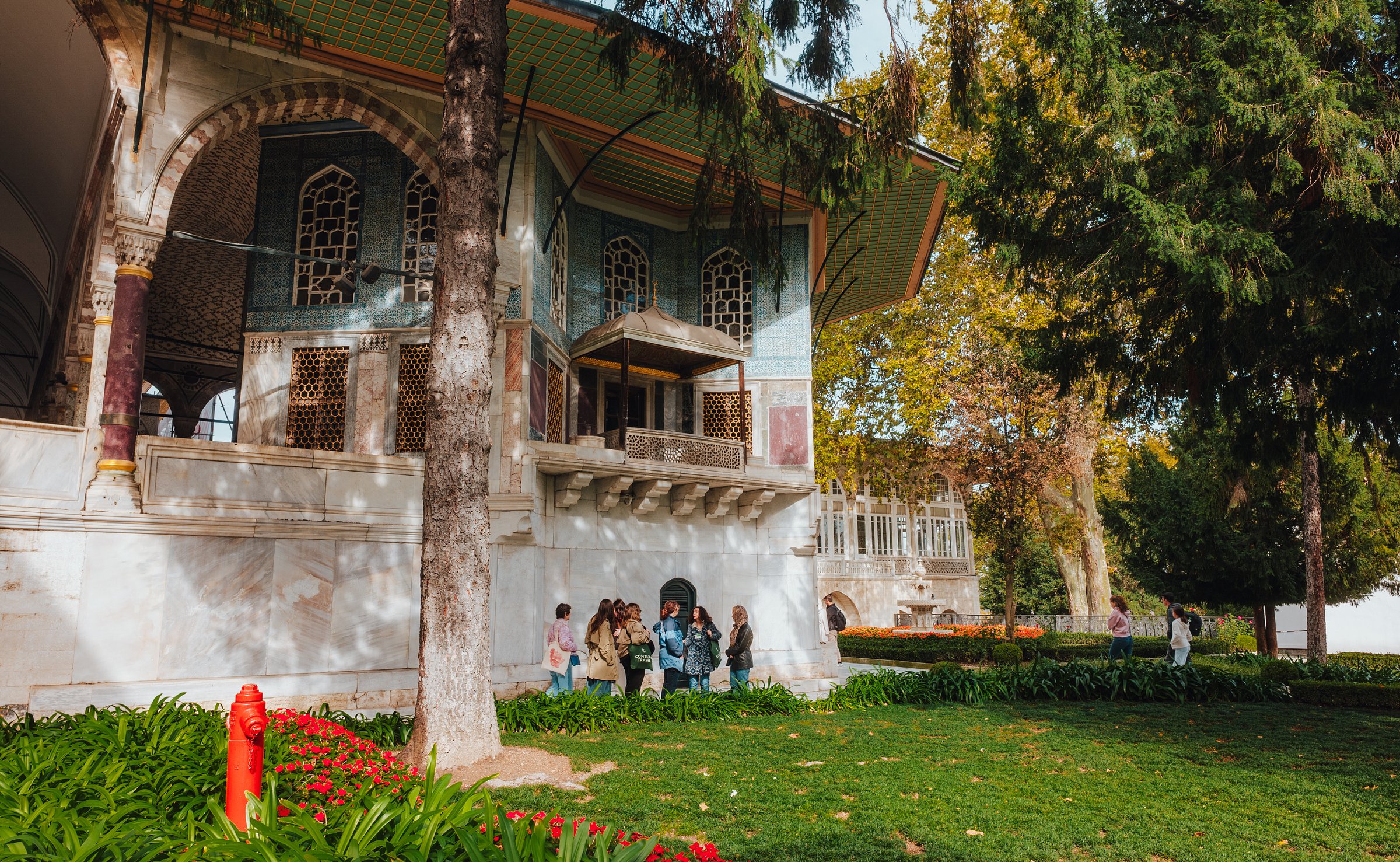
Topkapi Palace is unlike other European palaces—the design is pure Ottoman, with the vast open layout reflecting the needs of the Ottoman court. The opulent blue tiles of the Harem and inner rooms, the gilded details on walls, and the sweeping views of the Bosphorus and the Golden Horn emphasize the grandeur of the Empire, while hiding the many stories of intrigue and violence that happened here. From the Harem wives whose only path to power was to give birth to the future Sultan, to the eunuch guards imprisoned in the Harem, to the artisans and soldiers from all corners of the empire, many people inhabited many worlds within this one complex.
Discover Ottoman History
Depending on the expert’s area of expertise and the interests of the group, the focus of the walk could tend toward the architecture and symbolism of the complex, the political history of the Ottomans, or daily life in the court. Regardless of the chosen course—and, often, we pursue many—the palace itself serves as the anchor and text for this riveting exploration of Ottoman history.
FAQ
Is there a dress code for your tours in Istanbul?
The sites visited on this tour are considered holy places. Shoulders and knees must be covered. Dresses and shorts must be below knee level, and shoulders must be covered (zip-on jackets or scarves are acceptable). We recommend bringing along scarves or shawls to be able to cover those body parts.
Are tickets to the Topkapi Palace included in the tour price?
Yes, you are prepaid for the tour and the tickets. Your guide will purchase the correct ticket on-site for you.
We are traveling with our kids. Is this tour the right choice for us? Our experts can adapt the tour to be kids friendly.
Are tickets to the Topkapi Palace included in the tour price?
Yes, you are prepaid for the tour and the tickets. Your guide will purchase the correct ticket on-site for you.
We are traveling with our kids. Is this tour the right choice for us? Our experts can adapt the tour to be kids friendly.
Is this tour accessible for people in wheelchairs? Some areas of the palace are accessible with a wheelchair, and the palace has a toilet accessible for disabled visitors. The Portrait Chamber is not accessible by wheelchair, but the Harem is accessible. The palace does not have wheelchairs available to rent; you will have to bring your own.
Can we add a car service to drive us from our hotel to the start of the tour?
Yes, absolutely. You may add a car service directly at checkout, or simply send us an email, and we will be happy to arrange it for you. Please note that due to new regulations at the Port of Istanbul, we are unfortunately unable to offer pick-up services directly from the port. However, if your hotel is located within Istanbul, we will be very happy to accommodate your transfer needs and ensure a smooth start to your tour.
Cancellation Policy
Book with confidence — see Context's flexible cancellation policy here.
Meet the Experts








Where You’ll Go
From iconic landmarks to tucked-away local favorites, these are the places you’ll explore and experience firsthand with your Expert.
-
Topkapi PalaceOttoman imperial palace in Istanbul with courtyards, harem, and treasury collections.
What’s Included As Standard
Here’s a look at what your tour covers, plus anything you’ll want to consider arranging separately, so you can plan with confidence.
Included
-
English-speaking expert guideTours led in English, offering you unbroken understanding throughout.
-
Intentionally sized groupsA smaller group means more time for conversations and questions.
-
Tickets and entrance feesAll entry tickets included (unless clearly stated otherwise).
-
HeadsetsHeadsets are included on tours that need them, so every word can be heard.
Not Included
-
GratuitiesTips aren’t included, but we encourage tipping as a way to thank your guide after your experience.
-
Food and drinkUnless booking a Food & Drink tour or tasting experience, refreshments are not included.
-
Transportation to and from the meeting pointUnless noted, pre- and post-tour transport isn’t included - this service can be added by request.
-
Hotel pickup or drop-offUnless noted, travel to or from accommodation isn’t included - this service can be added by request.
Where You'll Explore
Make the Most of Your Tour
Some helpful advice for getting the most from your experience, from practical prep to small on-the-day tips.
Dos:
- Wear comfortable footwear
- Check the weather and dress appropriately
- Bring a bottle of water (no glass)
- Feel free to ask your Expert anything
Don'ts:
- Bring firearms or weapons
- Bring sharp objects (e.g. knives, swiss army knives, switchblades, hiking sticks)
- Dress inappropriately to enter religious sites or sacred monuments
Any questions? You can always
contact us.
Don’t just take our word for it
This was an amazing tour - Topkapi Palace is a must-see in Istanbul and Suleyman was an incredible guide. We learned so much about the Ottomans and how different their lives were from the Europeans during their very long reign.
Suleyman was knowledgeable and incredibly detailed in his explanations. He made the Topkapi Palace really come to life and made us understand exactly what it felt like to be there! He was so wonderful; we loved the tour
Let Your Curiosity Shape Your Journey
Join passionate experts on intimate walking tours that reveal a city’s unique stories, spark conversations, and leave you seeing the world—and yourself—a little differently.
Structured, never scripted
Your interests guide your Expert, leading to stories and perspectives that matter to you.
Crafted for conversation
With 12 or fewer guests, ask questions, engage with your Expert, and fully immerse yourself.
Experts, not guides
Explore with 1,200+ Experts—from historians and architects to archaeologists and chefs.
Related experiences our customers also loved


Topkapi Palace Tour
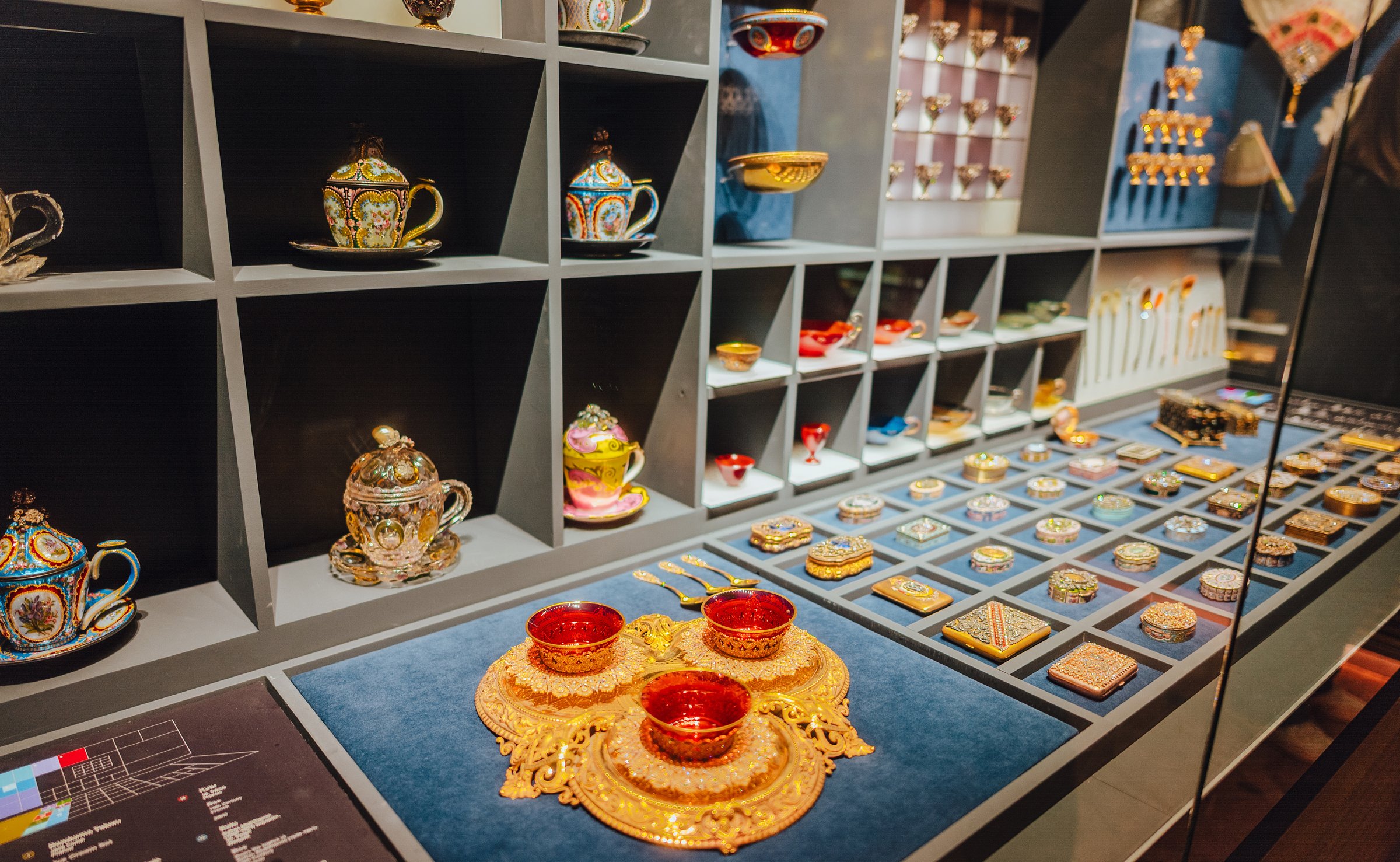
Topkapi Palace was not simply where Ottoman sultans lived. For nearly four centuries, it was also a center of government, education, ceremony, and court life—an imperial complex designed around different levels of access to the sultan and the institutions surrounding him. Built under Mehmed II after the Ottoman conquest of Constantinople, the palace grew over generations into a network of courtyards, council chambers, residential quarters, gardens, schools, kitchens, treasuries, and ceremonial spaces. Its layout offers a physical map of how Ottoman power worked. On this Topkapi Palace tour, a local historian helps decode that system through the palace itself. The Harem, Imperial Council, private quarters, architecture, and decorative arts become evidence for larger questions about dynasty, hierarchy, government, family, and daily life at the center of the Ottoman Empire. The goal is not simply to identify lavish rooms. It is to understand why they were arranged this way—and what that arrangement tells us about who could approach power, who remained behind it, and how an empire was governed from within a palace.
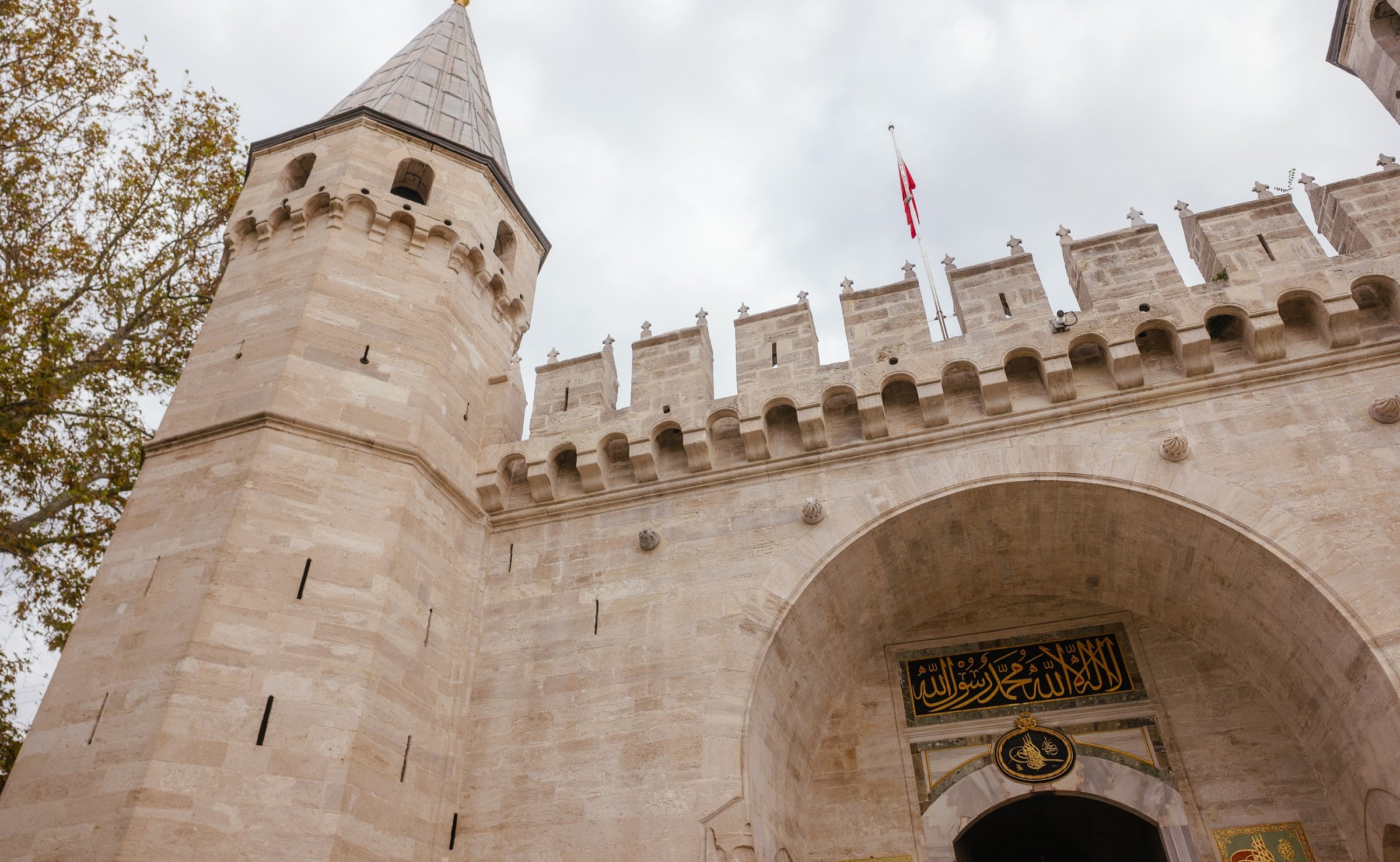
Topkapi looks very different from many later European royal palaces because it was not conceived as a single monumental building. Instead, the palace developed as a series of courtyards and specialized spaces, with movement becoming increasingly restricted the closer someone came to the sultan. The outer areas accommodated service, administration, guards, and people conducting business with the court. Further inside were institutions such as the Imperial Council and Palace School, followed by spaces associated with the ruler’s household and private life.
That progression was practical, but it was also political. Architecture controlled access. An official, ambassador, servant, student, member of the dynasty, or palace employee would experience Topkapi differently according to rank and role. Gates, thresholds, courtyards, and chambers reinforced those distinctions every day.
This is one reason Topkapi is especially useful for understanding the Ottoman Empire. The organization of the palace makes hierarchy visible. Power was not represented only through decoration or scale. It was built into the way people moved through space.
Popular culture often reduces the Ottoman Harem to a private world of sultans and concubines. In reality, it was a highly organized part of the imperial household.
The Harem housed the sultan's private living quarters and members of the dynasty, including women whose positions within the household could carry considerable political importance. It also housed women who served at court and officials responsible for guarding and administering the space.
At the top of its female hierarchy stood the Valide Sultan, the reigning sultan’s mother, who could command significant influence within the dynasty and court. This makes the Harem important for understanding Ottoman politics as well as private life.
Dynastic succession depended on the household. Relationships between mothers, sons, consorts, servants, eunuchs, and court officials could affect patronage, alliances, education, succession, and access to the ruler. Its architecture reflects that complexity.
Apartments, courtyards, baths, passages, ceremonial rooms, and service spaces reveal a community structured by rank and function rather than simply an isolated royal residence. Seen this way, visiting the Harem is not an optional glimpse into palace luxury. It is essential to understanding how the Ottoman dynasty operated behind the public face of imperial rule.
Topkapi is large enough that it is easy to admire individual rooms and objects without understanding how they fit together. A historian can help connect the palace’s architecture to the political system it supported: why the Imperial Council met where it did, why access became more restricted across successive courtyards, how the Harem related to dynastic politics, and why education, administration, ceremony, and domestic life all occupied the same complex.
This tour is the strongest fit if Topkapi and Ottoman court life are your primary interests.
Why is Topkapi Palace historically important?
Topkapi Palace served as a principal residence of the Ottoman sultans and a center of imperial government, education, and court life for nearly four centuries. Its architecture and collections therefore preserve evidence not only of royal life, but of how the Ottoman state itself was organized.
When was Topkapi Palace built?
Construction began under Sultan Mehmed II after the conquest of Constantinople in 1453, with the main early palace complex developed between 1460 and 1478. Later sultans continued adding buildings, pavilions, decorative programs, and residential spaces, so the palace visitors see today reflects several centuries of change.
Why did the Ottoman sultans leave Topkapi Palace?
By the nineteenth century, Topkapi no longer suited changing expectations around court ceremony, diplomacy, and royal life. Sultan Abdülmecid I moved the primary royal residence and administrative center to the newly built Dolmabahçe Palace in the mid-nineteenth century.
What is the difference between Topkapi Palace and Dolmabahçe Palace?
Topkapi represents an earlier Ottoman model of imperial life built around courtyards, pavilions, controlled access, and specialized administrative and residential zones. Dolmabahçe reflects the nineteenth-century Ottoman court, with a monumental European-influenced palace designed for changing diplomatic, ceremonial, and residential expectations.
Visiting both offers two very different views of how the Ottoman dynasty represented power.
Is the Harem an important part of a Topkapi Palace visit?
Yes. The Harem helps explain the private and dynastic structures behind Ottoman rule. It was home to members of the imperial household and a complex hierarchy of residents and officials, making it important for understanding succession, family politics, court organization, and everyday palace life.
Why does Topkapi Palace look so different from European royal palaces?
Topkapi developed as a collection of courtyards, pavilions, administrative spaces, gardens, residential areas, and service buildings rather than as one unified monumental structure. Its layout reflects Ottoman traditions of court organization and creates increasingly restricted zones as visitors move closer to the ruler and his private household.