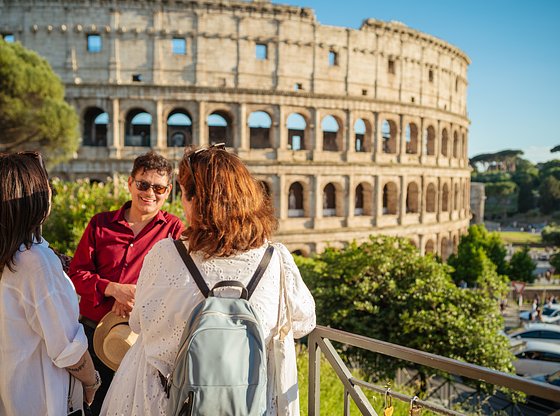
Our family, including two children (ages 9 and 12), loved our Colosseum tour with Kasia! She was incredibly kind and knowledgeable, and really helped us imagine what life and the area looked like so long ago. She did a great job of keeping our kids interested even in the heat, and we’ve been talking about the many things we learned from her for the last two days. We cannot recommend Kasia and our experience more highly! We’re very grateful to have had her

Colosseum and Roman Forum Tour for Kids
Connect ancient ruins to stories kids easily recognize
Ancient Rome comes alive through stories, games, and questions that help kids see ruins as reminders of real history, not just stones.
Tour Highlights
- A fun reading of ancient ruins Stories and prompts turn stone remains into scenes kids can remember long after the tour ends.
- Good for mixed ages Your Expert adapts pace, stories, and activities so kids, tweens, and adults all stay engaged.
- Roman history comes alive The gladiators, emperors, myths, and daily life connect school learning to real landmarks.
- Less prep, more meaning Skip the research and logistics; your Expert leads the learning and path through crowded sites.
- Fun that keeps kids focused Interactive storytelling helps children stay curious and calm, even in busy spaces and long lines.
- Memories to take back home Memorable moments of wonder give kids (and adults) stories to remember and share.
Led by Experts, Shaped by You
Explore with an expert guide who responds to your questions, your interests, and your pace. Reveal layers of meaning most visitors miss—go from seeing to understanding.

The Finer Details
Ancient Rome can feel overwhelming, especially for young travelers. This Colosseum tour for kids turns vast ruins into a clear story, helping families understand what they are seeing and why it mattered. Facts meet imagination and history becomes something to talk about, not just look at.
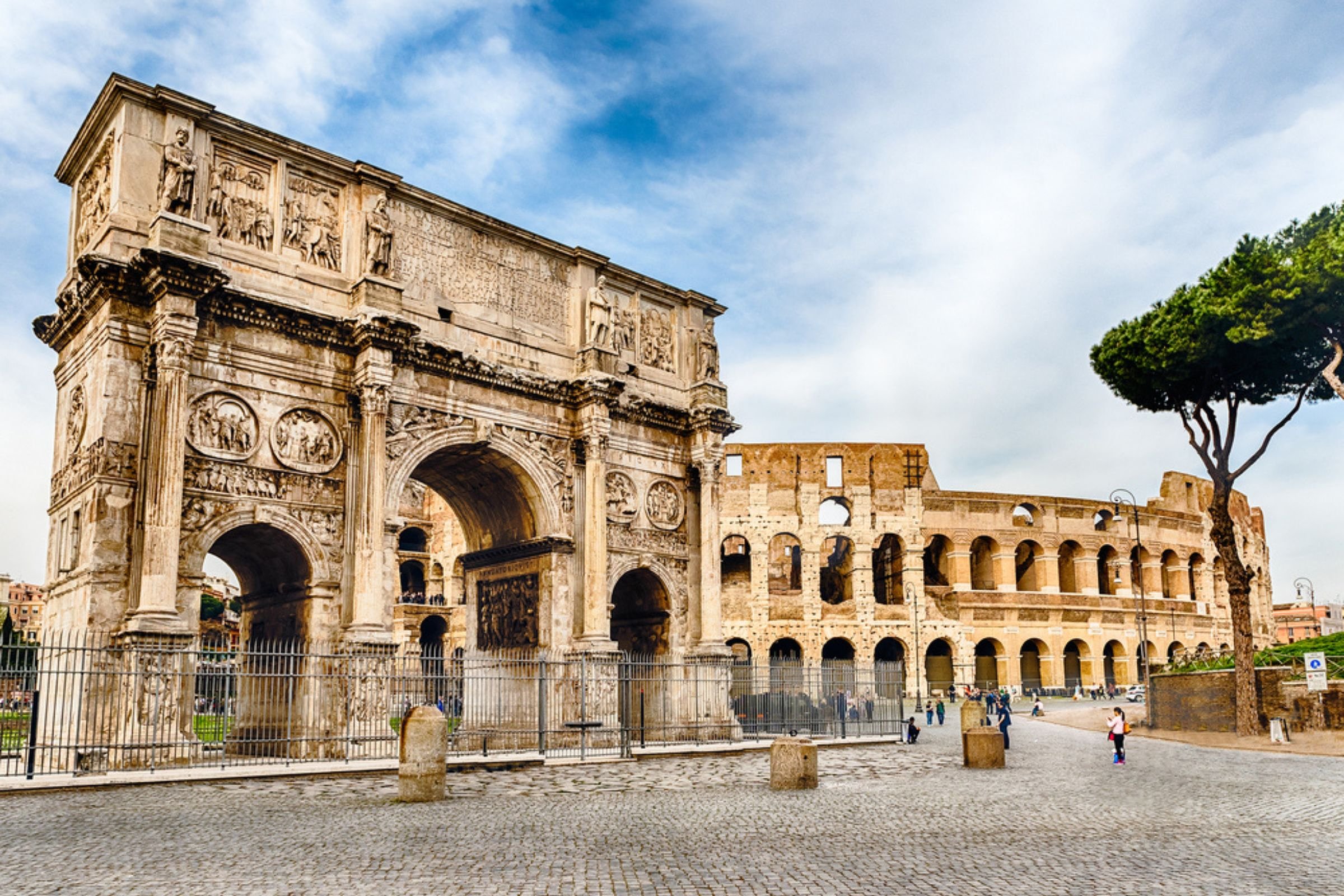
At the Colosseum, stories of gladiators, emperors, and spectators unfold through questions and games that invite participation. Rather than memorizing dates, kids explore how the arena worked and who filled its seats. What did it feel like to be there on a big event day?
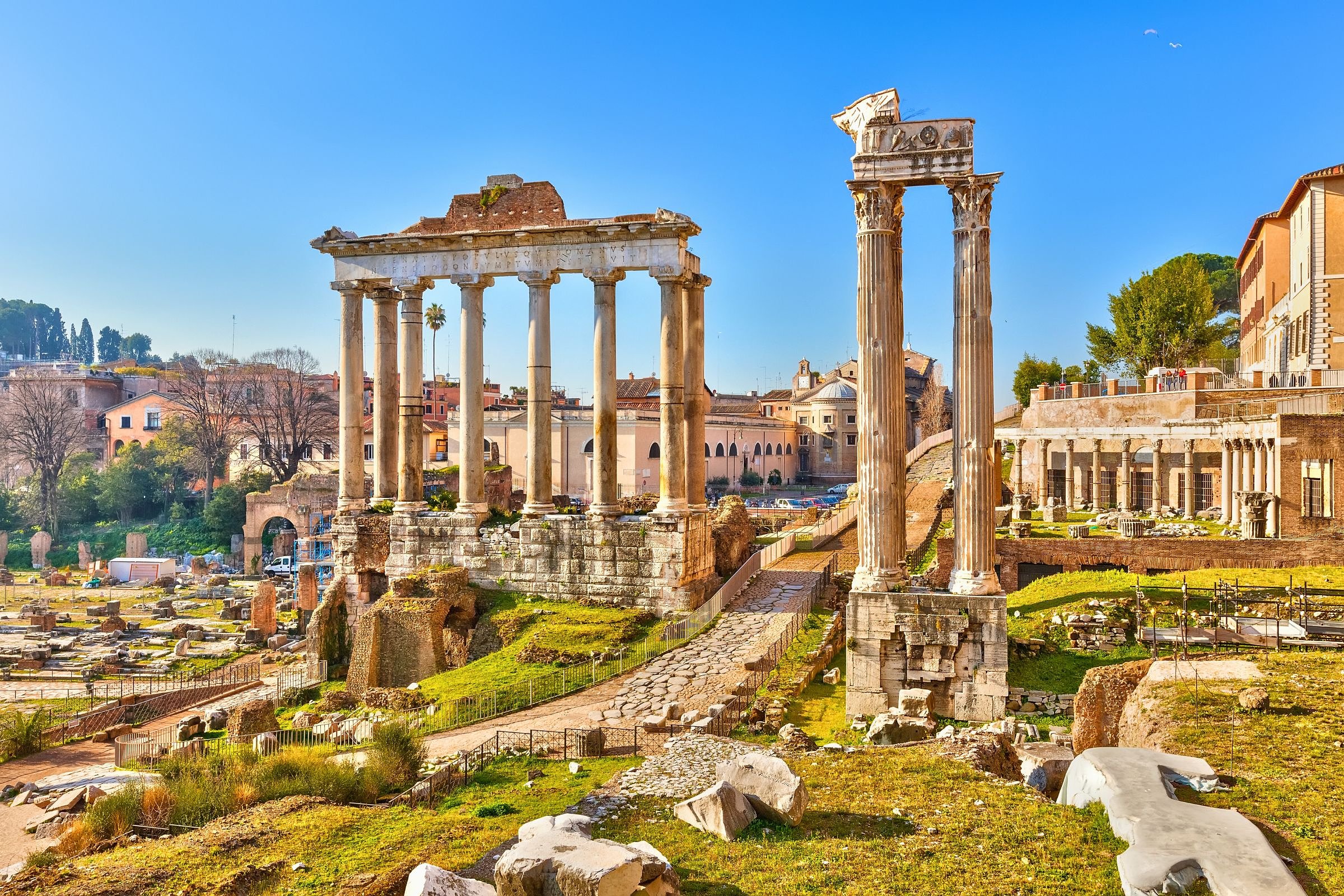
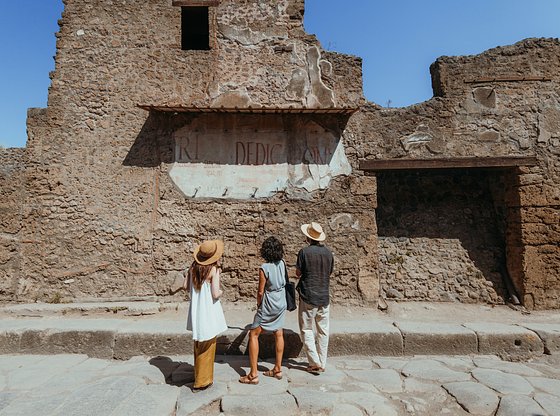
Moving into the Roman Forum, the focus shifts from spectacle to daily life. Temples, basilicas, and public spaces become clues to how Romans governed, traded, argued, and celebrated. Your Expert helps children spot what is essential, cutting through visual noise to build a narrative they can follow.
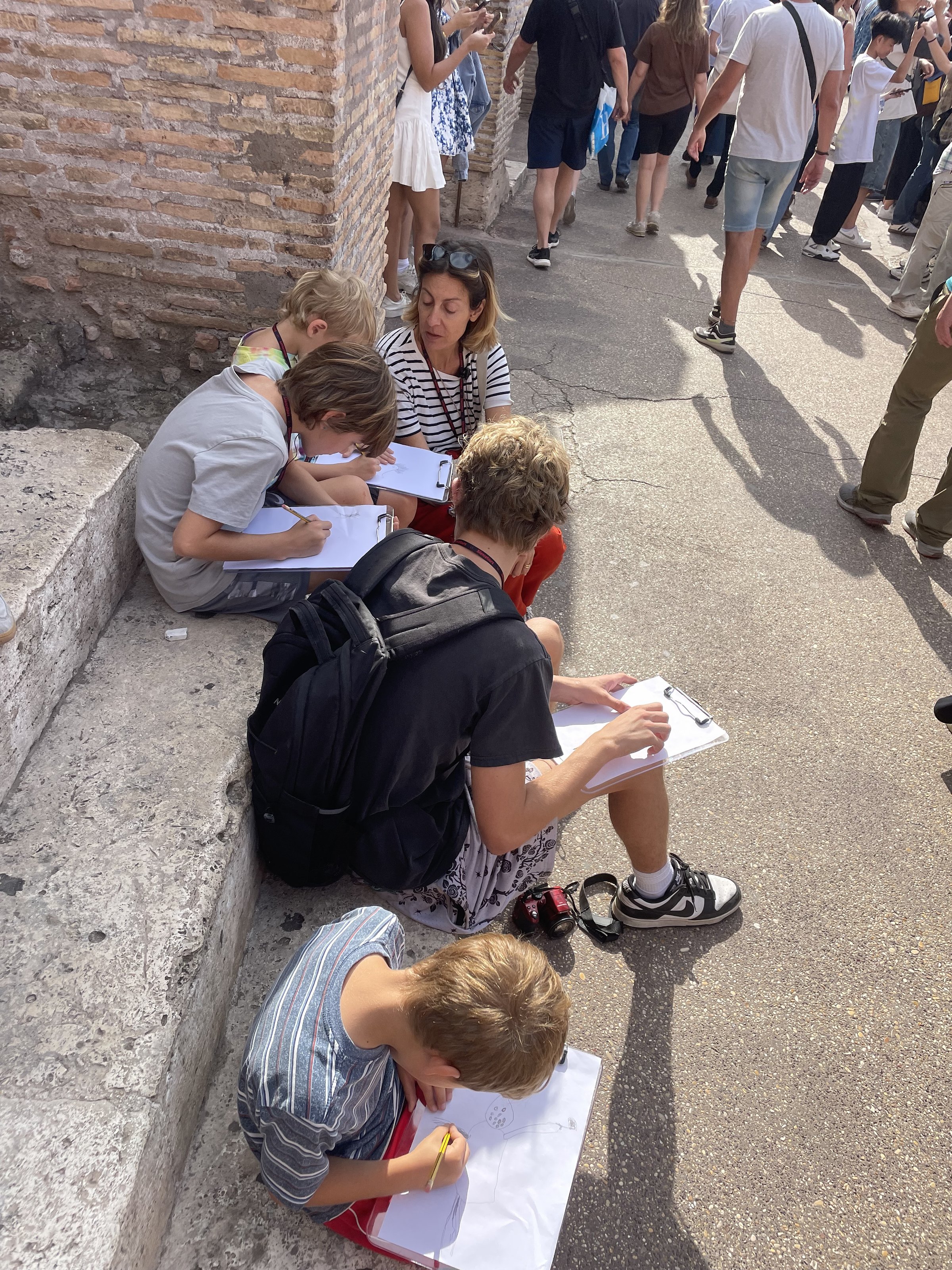
Throughout the tour, pacing adapts to energy levels and interests. Younger children stay engaged through storytelling, while older kids and adults dig deeper into meaning and context. The group learns together, without anyone feeling rushed or left behind.
Logistics fade into the background as your Expert handles how you move about the sites. Parents can relax and listen, knowing both logistics and learning are covered, and kids are educated and engaged by someone for the whole experience.
By the end, these iconic Roman landmarks feel familiar rather than intimidating. Kids leave with a clear picture of the past, stories they can share in their own words with their friends and family, and often a desire to carry on exploring. History sticks on this tour because it made sense, and because it was shared as a family.
We are proud to be an Accredited Tour Operator of the Parco Archeologico del Colosseo. Giving you official, seamless and guaranteed entry to Rome's greatest icon.
Traveler Testimonials
The Tour We Didn’t Know We Needed
Beyond expectations. Best tour guide in Rome. He understands how to avoid crowds and find the shady spots. His attention and communication to the children (ages 8,10, and 15) was both thoughtful and educational. We learned so much.
-Lauren C.
Like Hearing Ancient Secrets
Best tour ever! Guide was so knowledgeable and patient with us and gave us an archeologists perspective of this ancient civilization that made it feel like we were told secrets that other people didn’t get.
-Kimberly D.
Meet the Experts




































Where You’ll Go
From iconic landmarks to tucked-away local favorites, these are the places you’ll explore and experience firsthand with your Expert.
-
ColosseumAncient amphitheater in Rome, site of gladiatorial games, spectacles, and civic gatherings.
-
Roman ForumRuins of ancient Rome’s civic, religious, and commercial center with temples and arches.
What’s Included As Standard
Here’s a look at what your tour covers, plus anything you’ll want to consider arranging separately, so you can plan with confidence.
Included
-
English-speaking expert guideTours led in English, offering you unbroken understanding throughout.
-
Intentionally sized groupsA smaller group means more time for conversations and questions.
-
Tickets and entrance feesAll entry tickets included (unless clearly stated otherwise).
-
HeadsetsHeadsets are included on tours that need them, so every word can be heard.
Not Included
-
GratuitiesTips aren’t included, but we encourage tipping as a way to thank your guide after your experience.
-
Food and drinkUnless booking a Food & Drink tour or tasting experience, refreshments are not included.
-
Transportation to and from the meeting pointUnless noted, pre- and post-tour transport isn’t included - this service can be added by request.
-
Hotel pickup or drop-offUnless noted, travel to or from accommodation isn’t included - this service can be added by request.
Where You'll Explore
Make the Most of Your Tour
Some helpful advice for getting the most from your experience, from practical prep to small on-the-day tips.
Dos:
- Wear comfortable footwear
- Check the weather and dress appropriately
- Bring a bottle of water (no glass)
- Feel free to ask your Expert anything
Don'ts:
- Bring firearms or weapons
- Bring sharp objects (e.g. knives, swiss army knives, switchblades, hiking sticks)
- Dress inappropriately to enter religious sites or sacred monuments
Any questions? You can always
contact us.
Frequently Asked Questions
Book with confidence — see Context's flexible cancellation policy here.
Yes, original identification is required to be presented upon entry to the Colosseum for all visitors including children. These should be original documents, copies will not be accepted.
You cannot use the Roma Pass on your Context tours. Roma Pass holders have to wait in a long line for the non-reserved public entrance to the Colosseum. To save time and expedite the tour, we purchase regular tickets so you may enter as quickly as possible.
Yes! We are proud to be an accredited tour operator with the Colosseum. All our tours are professionally conducted and fully comply with all official regulations and guidelines set by the Parco Archeologico del Colosseo.
This tour can be adapted to kids (and their accompanying adults!) of all ages, but it is best suited to young people in the 3-12 range
Unfortunately not. All kids must be accompanied by an adult on our tours
Don’t just take our word for it
Kasia was awesome! It was in massive heat, but she came prepared with tools and locations to keep us comfortable while remaining upbeat and full of incredible information. We had a wonderful time, thank you so much Kasia!
Antonella was AMAZING!!! She was excellent with the kids and kept them engaged the entire time even in the heat! She was an absolute pleasure!
Let Your Curiosity Shape Your Journey
Join passionate experts on intimate walking tours that reveal a city’s unique stories, spark conversations, and leave you seeing the world—and yourself—a little differently.
Structured, never scripted
Your interests guide your Expert, leading to stories and perspectives that matter to you.
Crafted for conversation
With 12 or fewer guests, ask questions, engage with your Expert, and fully immerse yourself.
Experts, not guides
Explore with 1,200+ Experts—from historians and architects to archaeologists and chefs.
Related experiences our customers also loved

Colosseum Tour for Kids
Ancient Rome becomes much easier for children to understand when the ruins start answering questions. Why did tens of thousands of Romans gather at the Colosseum? Where did the emperor sit? What happened when the games ended and everyone returned to the city outside? And why do so many buildings in the Roman Forum now look like fragments? On this Colosseum tour for kids, an Expert uses stories, observation, questions, and age-appropriate activities to help families reconstruct what these places once meant. Children are not given a simplified version of Roman history while adults wait for the “real” explanation. Everyone explores the same places together, with the conversation adapting to different ages and levels of curiosity. That makes the ruins less abstract. A broken wall can become evidence. A seating arrangement can reveal Roman society. A temple can open a conversation about religion, politics, or daily life. The objective is not for children to memorize ancient Rome. It is for them to begin figuring it out.
Gladiators are an obvious way into the Colosseum, but they are only the beginning. The amphitheater can help children investigate how Roman society itself worked.
Where someone sat reflected status. Public spectacles involved emperors, politicians, performers, enslaved people, animals, and enormous crowds. Behind the drama was an extraordinary system for organizing people, managing entertainment, and displaying imperial power.
Instead of presenting that history as a sequence of dates, your Expert can begin with things children can see.
How could so many people enter and leave efficiently? Why are there so many arches? How would a spectator know where to sit? Why would an emperor spend so much money putting on games?
Those questions turn engineering, politics, and social hierarchy into something tangible.
They also give older children and teenagers room to go further. A conversation that starts with gladiators can become a discussion about citizenship, slavery, public entertainment, violence, or how Roman rulers used spectacle to maintain popularity.
The Colosseum explains what Romans watched. The Roman Forum helps explain how they lived together. Temples, basilicas, monuments, and public spaces once supported religion, government, law, business, celebrations, and political debate.
For children, the Forum can initially be harder to interpret because much less of it survives intact. That challenge is exactly what can make it interesting.
Columns, foundations, arches, and fragments become clues. Your Expert helps the family ask what a building might have been used for, who would have entered it, and why Romans chose to place particular monuments at the center of public life.
Moving from the Colosseum into the Forum also changes the picture of ancient Rome.
Romans did not spend their lives watching gladiators. They went to court, worshipped gods, bought and sold goods, argued about politics, celebrated victories, raised families, and navigated a crowded city.
Connecting those two sites gives children a much fuller idea of what “ancient Rome” actually means.
Choose this tour if you are visiting the Colosseum with children roughly ages 3–12 and want the experience intentionally shaped around how younger travelers engage with history. The tour can also adapt to tweens, teenagers, and mixed-age families.
The family format differs from Context’s standard Colosseum experiences primarily in how the history is explored, not because children see a completely different ancient Rome.
Stories, activities, visual prompts, and questions help younger travelers participate, while adults still explore subjects such as Roman politics, engineering, religion, social hierarchy, and imperial power.
Families traveling mostly with older teenagers who are already enthusiastic about Roman history may instead prefer the Signature Colosseum Tour, which takes a more conventional historian- or archaeologist-led approach to the Colosseum, Roman Forum, and Palatine Hill.
What age is the Colosseum Tour for Kids best for?
The tour can be adapted for children of different ages, but Context currently recommends it most strongly for ages 3–12.
Older children and teenagers can still enjoy the tour, particularly in mixed-age families, because the Expert can adjust the depth and style of the discussion.
Is the Colosseum good for kids?
Yes. The Colosseum is particularly accessible to children because its history involves architecture, engineering, gladiators, emperors, crowds, animals, and public spectacle—all subjects that can be explored through things they can still see around them.
A guided family visit can also help children make sense of ruins that might otherwise look like disconnected stones.
Does the tour visit both the Colosseum and Roman Forum?
Yes. The tour includes the Colosseum and Roman Forum, allowing families to compare the world of public spectacle with the civic, political, religious, and commercial center of ancient Rome.
How long is the Colosseum Tour for Kids?
The tour lasts approximately 2.5 hours.
Is the tour suitable for teenagers?
Yes. Teenagers can move beyond the stories that capture younger children’s attention into deeper questions about Roman politics, engineering, slavery, social hierarchy, religion, and why emperors invested so heavily in public spectacle.
Is the tour scary or violent for younger children?
The Colosseum has a violent history, but family Experts can adjust how gladiatorial games, punishment, and death are discussed according to the children in the group.
The emphasis is on helping children understand ancient Roman society rather than dwelling on graphic details.
Are Colosseum tickets included?
Yes. Admission tickets are included. Context is an accredited tour operator of the Parco Archeologico del Colosseo.
Do children need identification to enter the Colosseum?
Yes. Current Colosseum rules require original identification for all visitors, including children. Copies are not accepted.
Does the family tour include the Arena Floor?
No. This family itinerary uses the standard Colosseum route rather than the Arena Floor.
How is this different from a regular Colosseum tour?
The main difference is the method of interpretation.
A standard adult tour may begin with chronology, politics, archaeology, or architecture. On the family tour, the Expert more often begins with something children can observe, imagine, question, or solve and builds the historical explanation from there.
Adults remain part of the same discussion rather than receiving a separate experience.
Which Colosseum tour should families with older teenagers choose?
If your teenagers enjoy interactive learning or you have younger siblings traveling with them, the Colosseum Tour for Kids remains a strong fit.
Families traveling only with history-interested older teenagers may prefer the Signature Colosseum Tour, which offers a more conventional in-depth interpretation of the Colosseum, Roman Forum, and Palatine Hill.