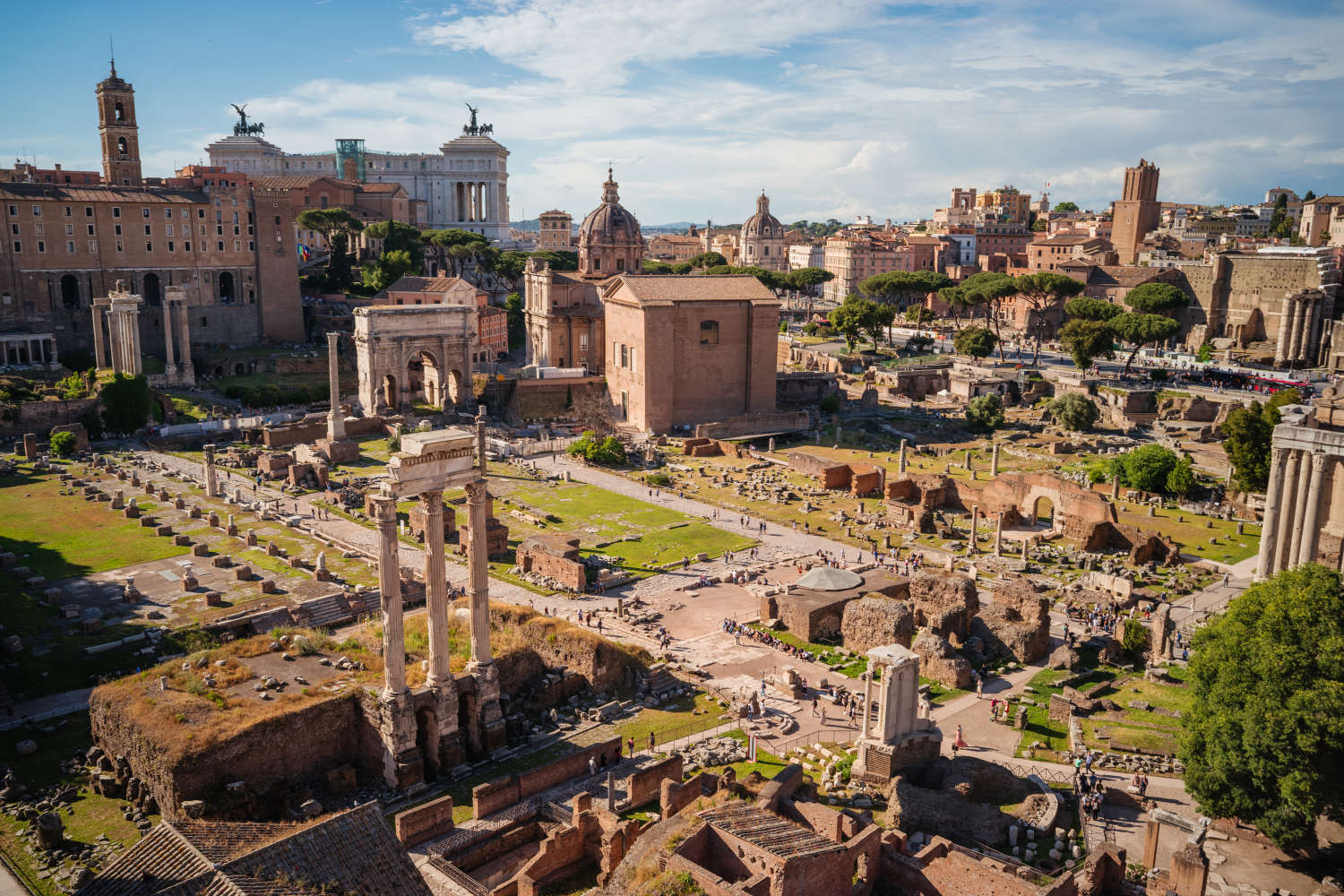
There's a version of the Roman Forum that most visitors never see. Beyond the Sacred Way, past the Temple of Saturn, behind the standard roped-off pathways, there are rooms covered in frescoes and almost entirely unknown to the millions of people who walk within meters of them every year.
The Parco Archeologico del Colosseo calls them the SUPER Sites: seven exceptional locations within the archaeological park that require a special ticket or a guided tour to access. The acronym stands for Seven Unique Places to Experience in Rome, which undersells them considerably.
What's inside: the private residence of Augustus, Rome's first emperor, its walls painted with some of the finest frescoes to survive from the ancient world; the Senate house where the Roman Republic met its end; a Byzantine church lost under rubble for more than a thousand years; and imperial palaces that defined what it meant to hold the most powerful office in the Western world.
Here's what each one is, and why they matter.
The Seven SUPER Sites
1. The House of Augustus
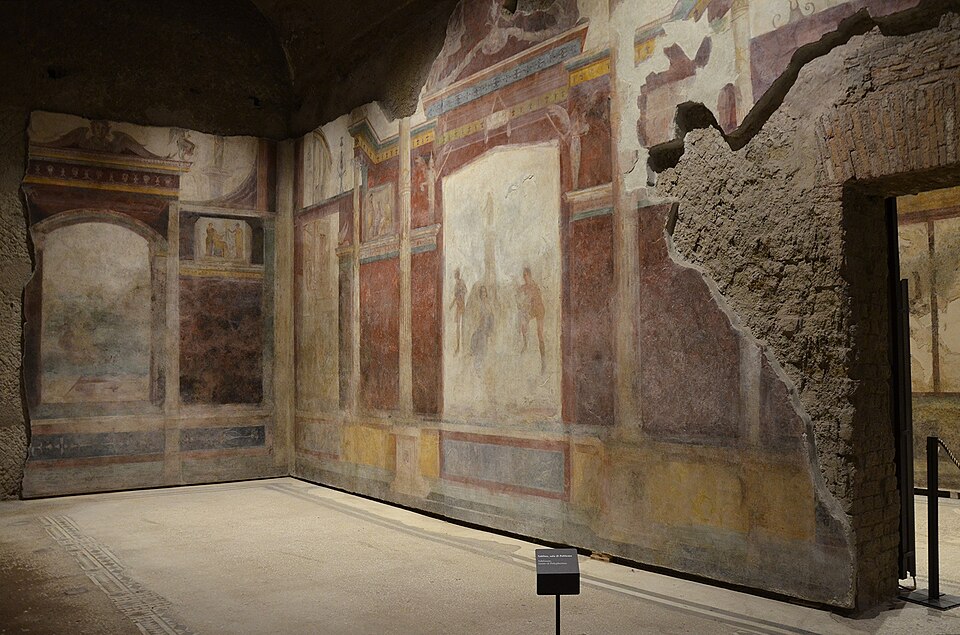
This was the most significant address in the Roman world for nearly half a century. Augustus, Rome's first emperor, chose to live on the Palatine Hill, establishing it as the seat of imperial power for centuries after him. His house was deliberately modest on the outside and extraordinary within. The frescoes that survive inside are among the finest examples of Roman wall painting anywhere. They contain vivid garden scenes, floral motifs, and mythological scenes that would have created a tranquil indoor environment—a Roman attempt to bring nature inside.
What makes the House of Augustus essential is what it tells you about Augustus himself. A man who consolidated more power than any Roman before him and who transformed a republic into an empire chose to live in a house that his neighbors could respect. The paintings inside tell a different story. They are the private face of a public performance that lasted 41 years.
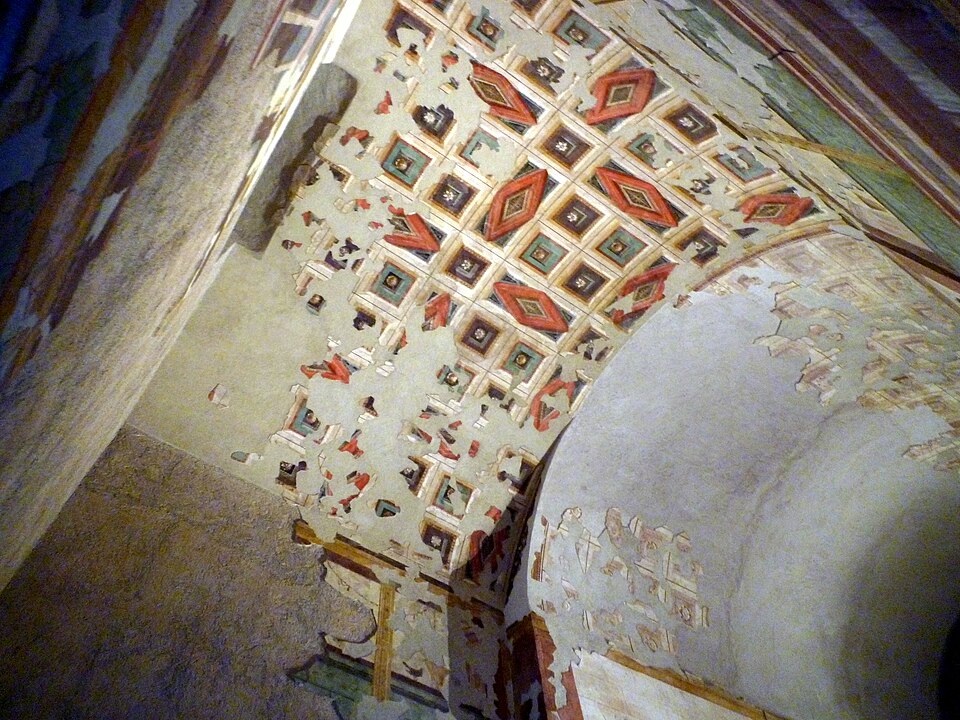
2. The House of Livia
Adjacent to the House of Augustus, and likely connected to it, the House of Livia was traditionally associated with Augustus's wife. She was one of the most politically astute women in Roman history, and one of the least legible to us now. The frescoes here are older than those in Augustus's house and arguably more beautiful. Inside you'll find mythological scenes, trompe l'oeil architectural perspectives, and garden paintings that anticipate the Villa of Livia's famous garden room at the Museo Nazionale Romano.
Whether Livia actually lived here or the attribution is a later convenience doesn't diminish what the paintings tell us: that the people who occupied this hill understood that a room could be an argument, that interior decoration was a form of power, and that the domestic and the political were never, in Rome, entirely separate.
3. The Domus Tiberiana
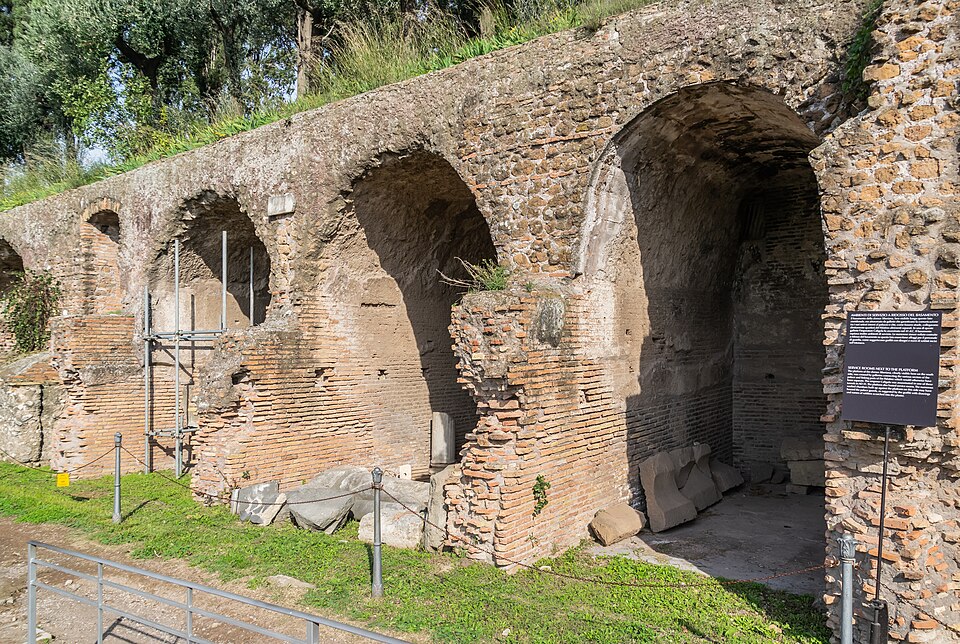
The Domus Tiberiana is the oldest of the imperial palaces on the Palatine Hill and one of the restricted spaces where ancient Rome still feels startlingly alive. Built by Tiberius (Augustus's successor) and substantially expanded by Nero and later emperors, it occupied the northwest corner of the hill above the Roman Forum. This was a deliberate position that made the emperor physically present above the civic life of the city below.
After centuries of burial under later Renaissance gardens, systematic excavation and restoration have returned substantial portions of it to public view. The scale is clarifying: this wasn't a house in any sense we would recognize, but an administrative and residential complex that announced, in every dimension, that the person who lived here was of a different order than everyone else.
4. The Aula Isiaca and Loggia Mattei
The Aula Isiaca is one of the more surprising discoveries on the Palatine Hill. This underground hall decorated with frescoes depicting Egyptian religious iconography includes figures from the cult of Isis that became fashionable in Rome during the late Republic and early Empire. The paintings are among the earliest examples of this Egyptian-influenced decorative style in Rome, and they raise questions that still don't have definitive answers: who commissioned this room, for what purpose, and what does its location—beneath a later imperial palace—tell us about how Roman religious life was layered across centuries?
The Loggia Mattei, found next door, preserves a Renaissance loggia built directly over ancient Roman structures. This venue serves as a physical record of the moment when the Palatine Hill shifted from imperial residence to aristocratic estate, and the ruins became a foundation rather than a destination.
5. Santa Maria Antiqua
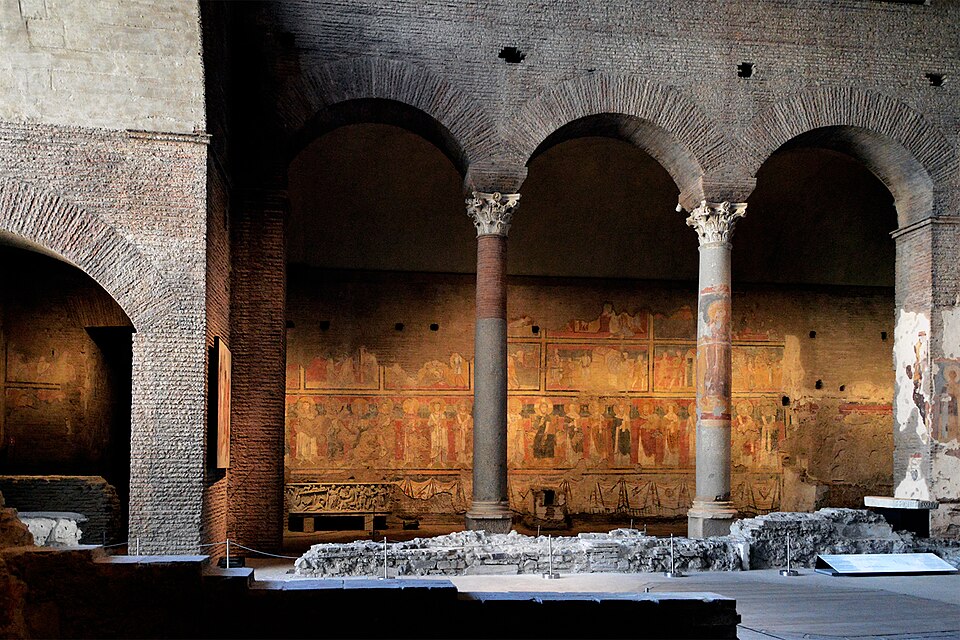
Welcome to the oldest Christian church in the Roman Forum. What makes Santa Maria Antiqua extraordinary isn't its age alone but its location: it was built into a monumental vestibule of the imperial palace complex, occupying a pagan imperial space and transforming it into a Christian one. The frescoes that survive inside span the 6th through 9th centuries and represent one of the most important collections of early medieval religious painting anywhere in the world.
The church was abandoned and buried by a landslide in 847 CE and only rediscovered in 1900. Walking into it now is genuinely disorienting: you are inside a building that was lost for more than a thousand years, looking at paintings that have survived under their protective covering of rubble since the Carolingian period. The many layers of history (Roman imperial, early Christian, Byzantine, medieval) are visible in the walls themselves.
6. The Curia Julia
Here is where Roman senators once debated the fate of the empire. The Curia Julia was begun by Julius Caesar and completed by Augustus to function as a deliberate piece of political messaging that connected the new imperial order to the authority of the old Republican Senate while simultaneously making clear who was in charge of both. The building that survives today is a later reconstruction by Diocletian, but it preserves the essential form and, critically, two large marble relief panels (the Anaglypha Traiani) depicting scenes of imperial beneficence that once stood in the Forum outside.
Standing inside the Curia in the actual room where the Senate met, where Cicero delivered his Philippics against Mark Antony, and where the fate of Julius Caesar was debated is one of those rare experiences in Rome where the historical weight of a place and its physical reality align rather than compete.
7. The Palatine Museum (lower floor)
The Palatine Museum holds the material evidence for everything the other SUPER Sites tell you in their stones and frescoes. Here, you'll find artifacts, sculptures, architectural fragments, and objects recovered from the excavations of the Palatine Hill and the Roman Forum over more than a century. The lower floor is only accessible with SUPER Sites access and includes finds from the earliest phases of Roman history, from the Bronze Age huts that preceded the Forum to the imperial period that replaced everything that came before.
It is the place where the archaeology of Rome becomes legible as a continuous story rather than a set of isolated monuments.
How to access the SUPER Sites
There are two ways in. If you want to visit only the Roman Forum, Palatine Hill, and the SUPER Sites without the Colosseum, the ticket to buy is the Forum Pass Super on the official website of the Archaeological Park of the Colosseum. If you want to visit the Colosseum as well, the ticket is the Full Experience, which also includes access to the Arena Floor.
The SUPER Sites ticket grants entry to the Roman Forum, Palatine Hill, and Temple of Romulus, plus access to all seven SUPER sites: the Palatine Museum lower floor, House of Augustus, House of Livia, Aula Isiaca and Loggia Mattei, Domus Tiberiana, Santa Maria Antiqua, and the Curia Julia.
A few practical notes worth knowing before you book:
- Availability is not guaranteed. Access can change due to conservation work, so access to specific sites is never guaranteed without booking in advance. Individual SUPER Sites may be closed on any given day for restoration or research. During your visit, you will typically access one or two sites depending on availability.
- The Full Experience ticket is the one to get if you're visiting the Colosseum. It gives access to the SUPER Sites in the Roman Forum as well as the Colosseum and its Arena Floor.
- Book early. Timed-entry tickets for the Colosseum sell out days—sometimes weeks—in advance during peak season. The SUPER Sites add an additional layer of limited access. Showing up without a reservation is a reliable way to miss both.
See the SUPER Sites with an archaeologist
The SUPER Sites are the kind of places that reward depth over breadth. You can walk through the House of Augustus in ten minutes and leave with the impression of beautiful paintings. You can also spend forty-five minutes there with an archaeologist who has studied these frescoes and leave understanding what Augustus was trying to say about himself, about Rome, and about the relationship between private life and public power in the imperial period.
Context Travel's Complete Colosseum Tour: SUPER Sites & Arena Floor is a four-hour private experience that combines Arena Floor access—usually seen only from above—with the Colosseum's interior levels, the Roman Forum, Palatine Hill, and access to one of the SUPER Sites that is selected based on availability and your Expert's judgment.
The tour is led by archaeologists and art historians who work in Rome; people like Laura, Paolo, and Francesca, who have spent careers with this material and can answer the question you'll inevitably have when you're standing in the Curia Julia wondering what a Roman senator actually did in this room all day. The discussion connects gladiatorial games to politics, religion, and daily Roman life, separates what the ancient sources claim from what archaeology supports, and adapts to what you're curious about.
It is, put simply, the difference between being in these places and understanding them.
Frequently asked questions
What are the SUPER Sites in Rome?
The SUPER Sites are seven exceptional restricted-access locations within the Colosseum Archaeological Park: the House of Augustus, the House of Livia, the Domus Tiberiana, the Aula Isiaca and Loggia Mattei, Santa Maria Antiqua, the Curia Julia, and the Palatine Museum lower floor. They are accessible only with a special ticket (the Forum Pass Super or the Full Experience ticket) or as part of a licensed guided tour.What does SUPER stand for in Rome?
SUPER is an acronym for Seven Unique Places to Experience in Rome—the official designation given by the Parco Archeologico del Colosseo to seven restricted-access sites within the Roman Forum and Palatine Hill.Are the SUPER Sites included in a standard Colosseum ticket?
No. A standard Colosseum ticket includes the Roman Forum, Palatine Hill, and the Palatine Museum, but not the seven SUPER Sites. Access to those requires either the Full Experience ticket (which also includes the Colosseum Arena Floor) or the Forum Pass Super (which covers the Forum and Palatine Hill with SUPER Sites, but not the Colosseum).Can you visit the SUPER Sites without a guide?
Yes, with the appropriate ticket, but availability is subject to change due to conservation work and specific sites may be closed on any given day without advance notice. A guided tour that includes SUPER Sites access handles ticketing, sequencing, and interpretation, which makes a significant difference in places like the House of Augustus, where the frescoes require explanation to be fully understood.Which SUPER Site is the most important to see?
The House of Augustus is the most historically significant. This is the private residence of Rome's first emperor, with some of the finest fresco painting surviving from the ancient world. The Curia Julia is the most viscerally affecting for anyone interested in Roman political history. Santa Maria Antiqua is the most unexpected: a Byzantine church buried for a thousand years, with early Christian paintings that survive in remarkable condition. If you can only access one, the choice depends on what draws you to Rome in the first place.How far in advance should you book Colosseum tickets?
At least two to three weeks in advance during peak season (April through October), and ideally more. Full Experience tickets with Arena Floor access sell out quickly, and the SUPER Sites add additional constraints. Context handles all ticketing as part of the tour booking.Do Context Tours include tickets?
Yes. Context Travel is an Official Parco Archeologico del Colosseo Operator, which means we are approved to lead guided tours of the Colosseum, Roman Forum, and Palatine Hill. This means guaranteed ticket access for your tour, so you don't have to worry about the logistics and can enjoy your time in these marvelous venues.