We had the most amazing morning with Barbara. She was very knowledgeable and she has a great sense of humor. She brought a lot of perspective and helped us get so much more out of our visit to the Colosseum.
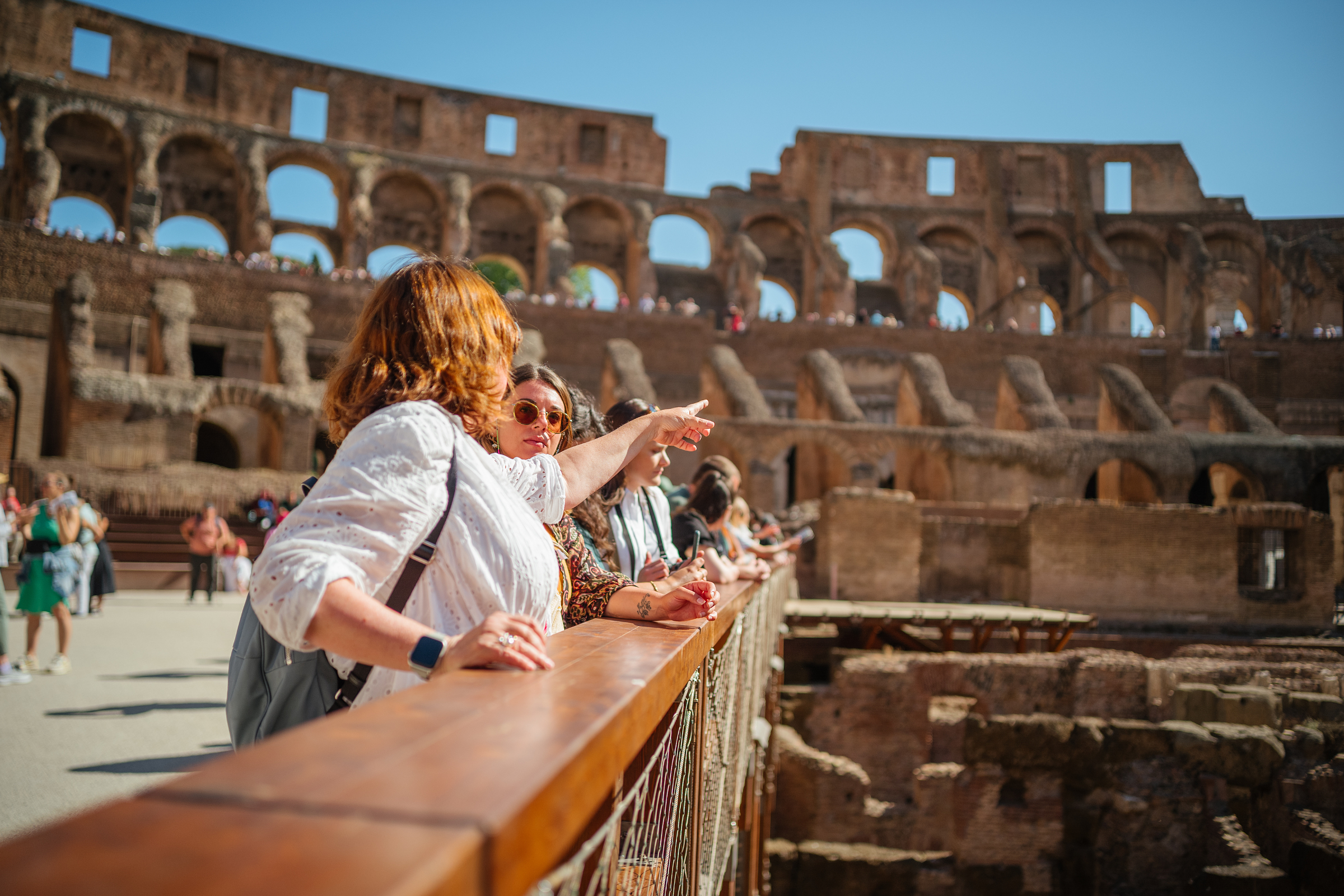
Complete Colosseum Tour: SUPER Sites & Arena Floor
Follow a deeper archaeological route through rare-access sites
Explore areas beyond the standard Colosseum, Forum and Palatine Hill visit, including the Arena floor and the quieter SUPER Sites.
Tour Highlights
- A more in-depth exploration An extended itinerary including the Colosseum, Forum, Palatine Hill, and exclusive SUPER Sites.
- Stand in gladiator footsteps Access the Arena floor and see how architecture, ritual, and violence shaped Roman spectacle.
- Explore SUPER Sites Walk through exclusive ancient villas, palaces, and temples, available only with special access.
- Connect empire and daily life See how entertainment reflected social hierarchy, citizenship, and imperial control.
- Peel back the spectacle Look past myth to evidence, debating what we know, what we infer, and why it matters.
Led by Experts, Shaped by You
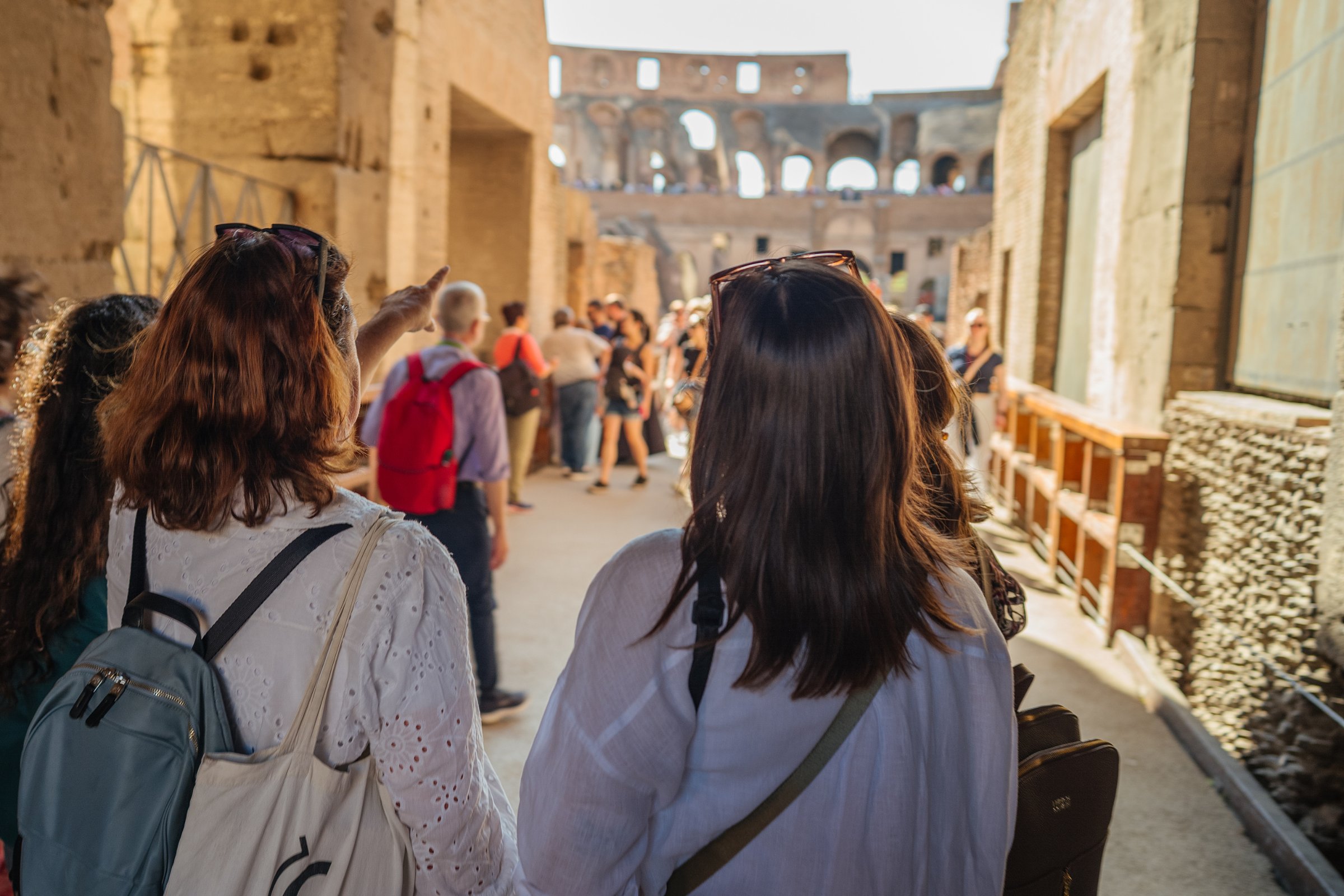
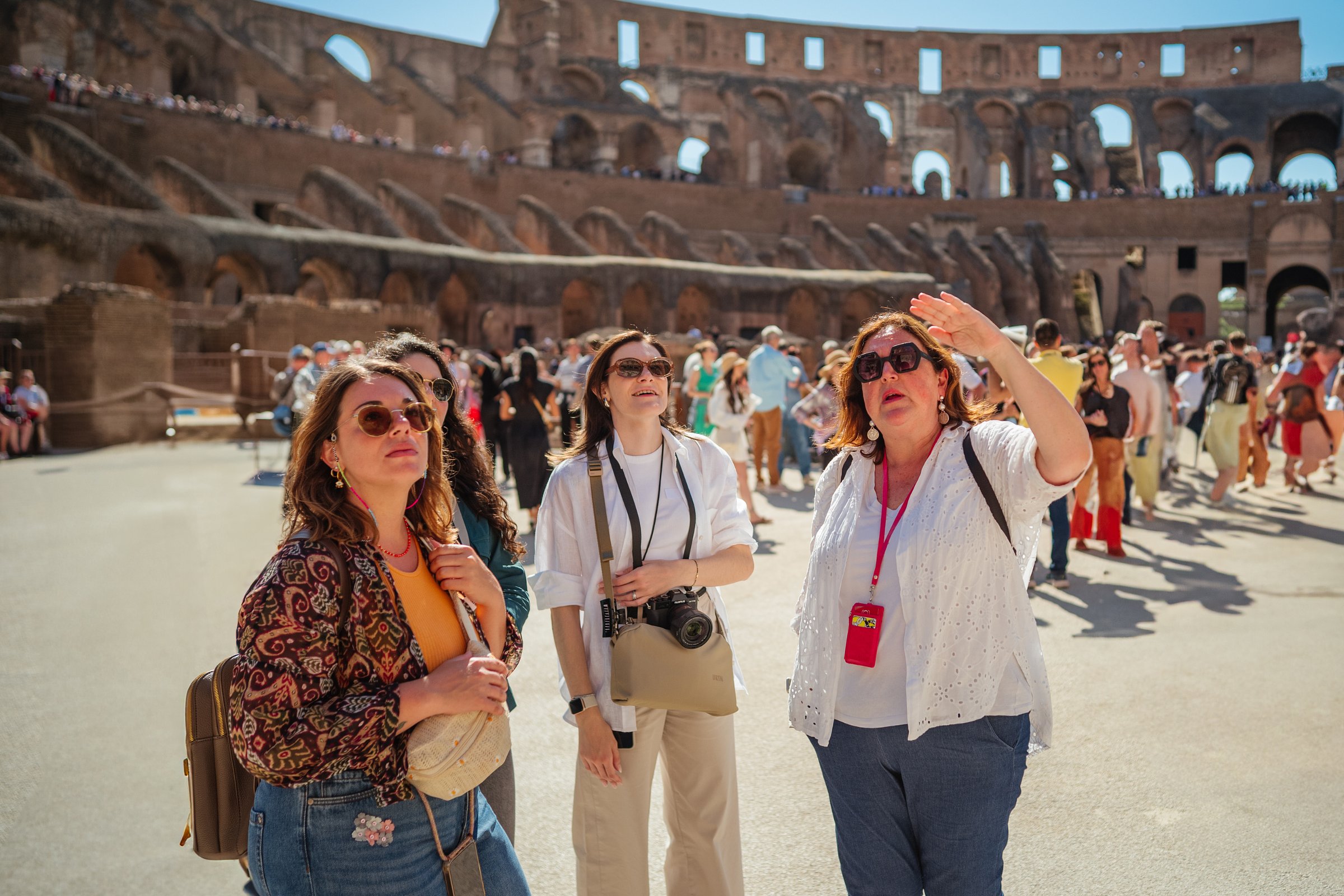
Explore with an expert guide who responds to your questions, your interests, and your pace. Reveal layers of meaning most visitors miss—go from seeing to understanding.
The Finer Details
The Colosseum was never just about combat. It was a carefully engineered expression of Roman power designed to deliver a message. Stone, movement, and sound all worked together to shape how citizens understood the empire.
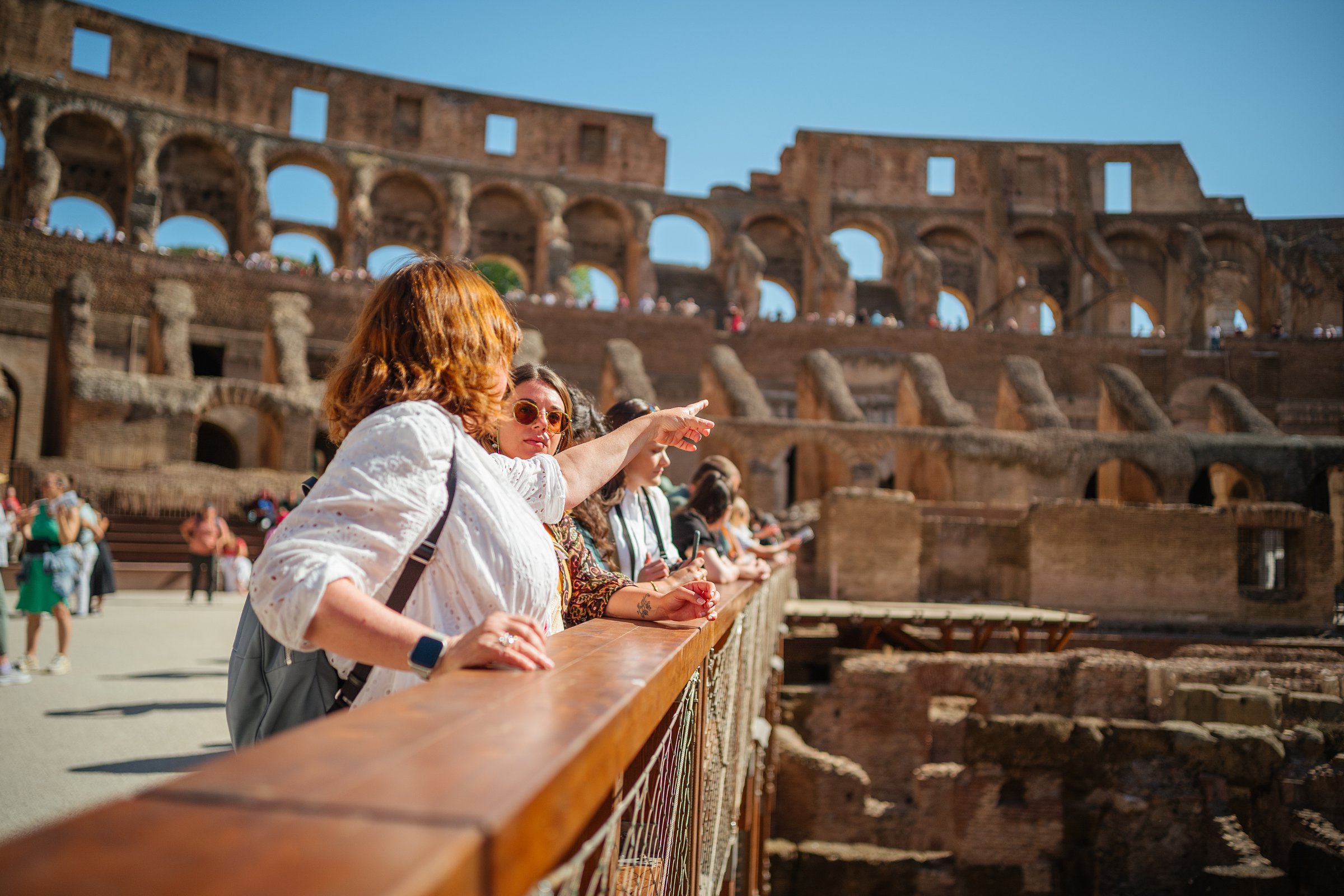
Begin your full experience Colosseum tour by stepping onto the Arena floor, a space usually seen only from above. Consider how proximity changes perception. From here, the scale feels different, more controlled, more intentional. What does it mean to stand where ritualized violence once unfolded?
Move through the interior levels while unpacking how architecture directed crowds and reinforced hierarchy. Seating was never neutral. Status, gender, and citizenship were all mapped into the stone.
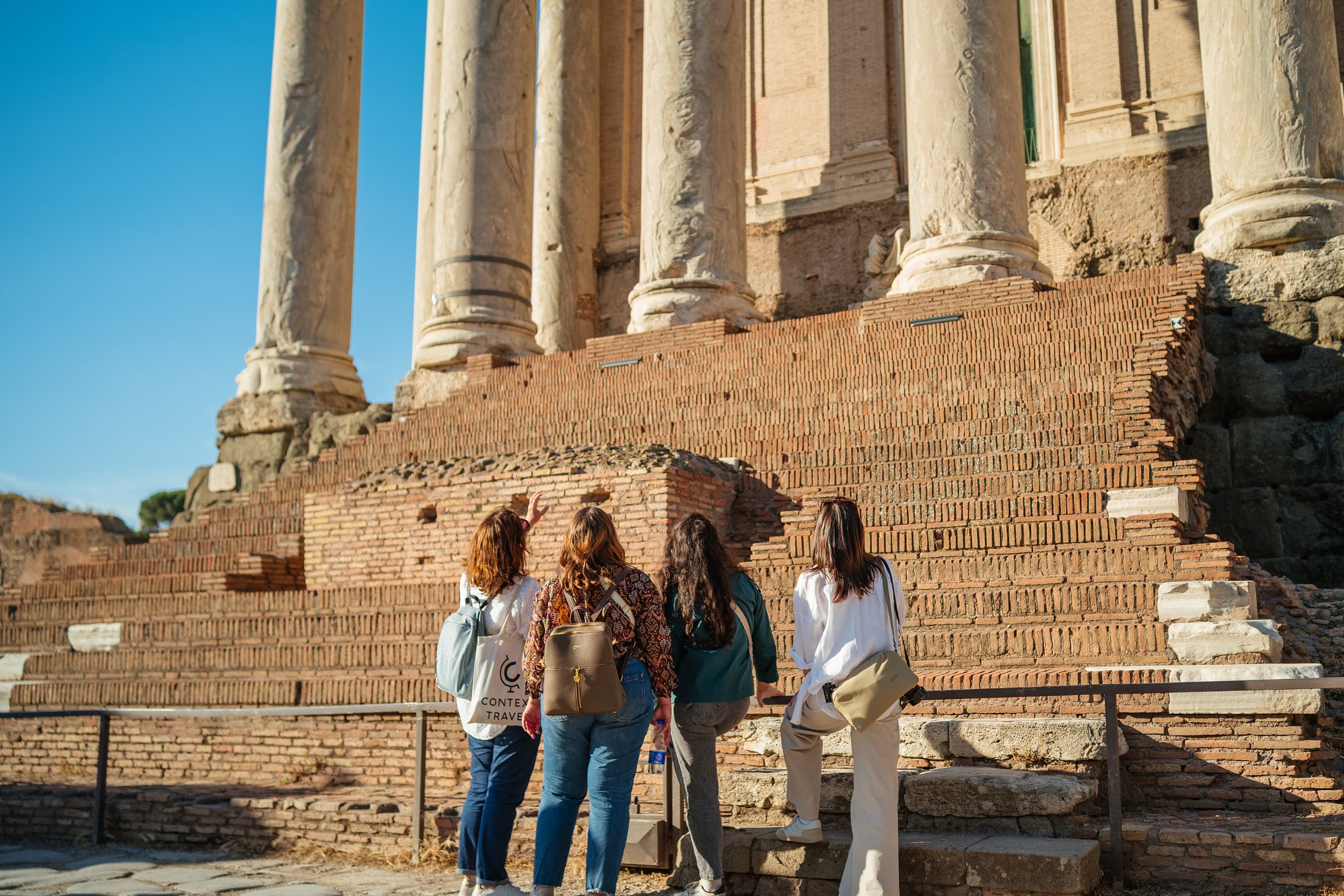
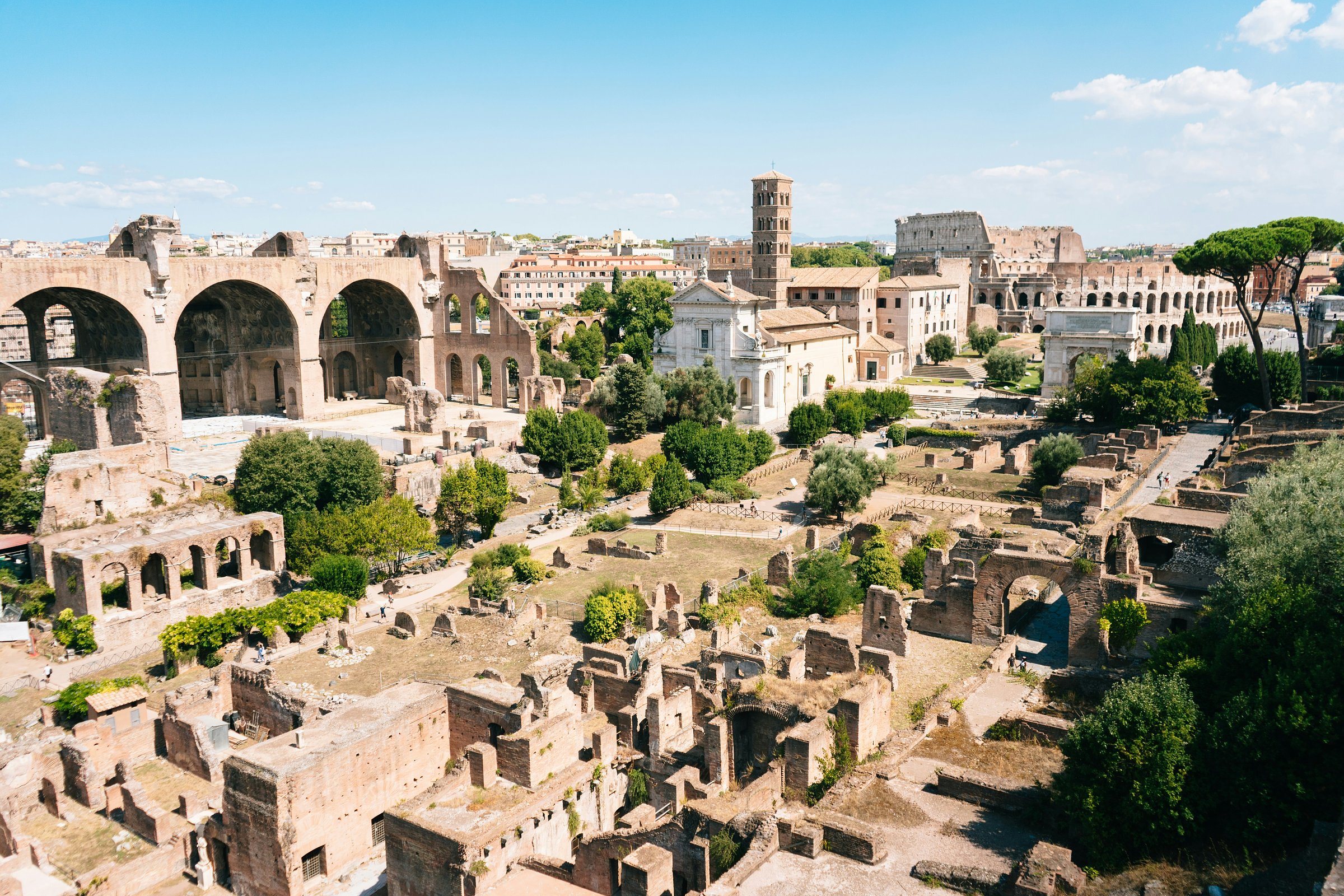
The experience broadens beyond the amphitheater to include the Forum and Palatine Hill, where access to restricted SUPER Sites reveals quieter, less-visited environments tied to imperial residence, worship, and identity. These limited-entry locations allow time and space for deeper interpretation that is unavailable on more standard itineraries.
Discussion links gladiatorial games to politics, religion, and daily Roman life. Evidence is weighed carefully, separating what ancient sources claim from what archaeology supports. Where do myth and memory still blur the story?
Your Expert invites your questions, adapting the conversation to your interests and knowledge; whether debating combat realities or imperial messaging, you shape the discussion.
By the end, the Colosseum reads less like a ruin and more like a complex historical monument that reveals how Rome presented authority, managed its people through power, and understood itself through spectacle.
We are proud to be an Accredited Tour Operator of the Parco Archeologico del Colosseo. Giving you official, seamless and guaranteed entry to Rome's greatest icon.
Meet the Experts




























































Where You’ll Go
From iconic landmarks to tucked-away local favorites, these are the places you’ll explore and experience firsthand with your Expert.
-
Colosseum's Arena FloorRecreated arena floor of the Colosseum, echoing with the drama of ancient Rome.
-
Roman ForumRuins of ancient Rome’s civic, religious, and commercial center with temples and arches.
-
SUPER SitesRestricted-access imperial palaces and frescoed rooms inside the archaeological park.
-
Palatine HillRome’s ancient hill with imperial palaces, ruins, and views over the Roman Forum.
-
ColosseumAncient amphitheater in Rome, site of gladiatorial games, spectacles, and civic gatherings.
What’s Included As Standard
Here’s a look at what your tour covers, plus anything you’ll want to consider arranging separately, so you can plan with confidence.
Included
-
English-speaking expert guideTours led in English, offering you unbroken understanding throughout.
-
Intentionally sized groupsA smaller group means more time for conversations and questions.
-
Tickets and entrance feesAll entry tickets included (unless clearly stated otherwise).
-
HeadsetsHeadsets are included on tours that need them, so every word can be heard.
Not Included
-
GratuitiesTips aren’t included, but we encourage tipping as a way to thank your guide after your experience.
-
Food and drinkUnless booking a Food & Drink tour or tasting experience, refreshments are not included.
-
Transportation to and from the meeting pointUnless noted, pre- and post-tour transport isn’t included - this service can be added by request.
-
Hotel pickup or drop-offUnless noted, travel to or from accommodation isn’t included - this service can be added by request.
Where You'll Explore
Make the Most of Your Tour
Some helpful advice for getting the most from your experience, from practical prep to small on-the-day tips.
Dos:
- Wear comfortable footwear
- Check the weather and dress appropriately
- Bring a bottle of water (no glass)
- Feel free to ask your Expert anything
Don'ts:
- Bring firearms or weapons
- Bring sharp objects (e.g. knives, swiss army knives, switchblades, hiking sticks)
- Dress inappropriately to enter religious sites or sacred monuments
Any questions? You can always
contact us.
Frequently Asked Questions
Tickets
Includes Full Experience Arena tickets to the Colosseum, Arena Floor, Roman Forum, and Palatine Hill.
Upon receiving your order, our team will secure a guide. Once the venue tickets are released, we will purchase them. Our team will be in touch with alternative options if we cannot secure tickets for the date and time you requested.
Please note that we require the full name (as it appears on the ID) and the age of each participant in order to purchase tickets. The venue conducts name and ID checks at the entrance, so it’s essential that the name on the ticket matches the identification document. This is especially important for families with participants who are 17 or 18 years old, as free tickets are only valid for those who are 17 or younger on the day of the tour. Once a participant turns 18, a full-price ticket is required. To avoid any issues at the entrance, please double-check the ages provided before booking.
Please note that we require the full name (as it appears on the ID) and the age of each participant in order to purchase tickets. The venue conducts name and ID checks at the entrance, so it’s essential that the name on the ticket matches the identification document. This is especially important for families with participants who are 17 or 18 years old, as free tickets are only valid for those who are 17 or younger on the day of the tour. Once a participant turns 18, a full-price ticket is required. To avoid any issues at the entrance, please double-check the ages provided before booking.
Headsets
Depending on your group size, we may be required by the venue to order headsets, in which case you’ll see a “Headset Fee” added to your order.
Book with confidence — see Context's flexible cancellation policy here.
We’ll be happy to inform your guide of your preferences, and they’ll do their best to accommodate them. However, the Super Sites are very special areas with limited access and may be subject to time restrictions or last-minute changes. During your tour, you’ll have the opportunity to visit one Super Site, which will be selected based on availability, opening days, and your guide’s discretion.
Yes, original identification is required to be presented upon entry to the Colosseum for all visitors including children. These should be original documents, copies will not be accepted.
For this tour, your tickets are pre-purchased, which allows you to go directly to the security line where you will have your pre-purchased ticket scanned.
You cannot use the Roma Pass on your Context tours. Roma Pass holders have to wait in a long line for the non-reserved public entrance to the Colosseum. In order to save time and expedite the tour, we purchase regular tickets so you may enter as quickly as possible.
Kids are welcome! But please keep in mind that this is our longest Colosseum tour, and it can be quite long and intense for younger learners. If your children are 13 or younger, our Colosseum for Kids tour may be a better fit.
Yes! We are proud to be an accredited tour operator with the Colosseum. All our tours are professionally conducted and fully comply with all official regulations and guidelines set by the Parco Archeologico del Colosseo.
Don’t just take our word for it
Jade was a great guide, true expert in Archaelogy. She was also patient and accommodating on a very hot day, and made the tour enjoyable.
Amazing! Paolo is an amazing historian!
Let Your Curiosity Shape Your Journey
Join passionate experts on intimate walking tours that reveal a city’s unique stories, spark conversations, and leave you seeing the world—and yourself—a little differently.
Structured, never scripted
Your interests guide your Expert, leading to stories and perspectives that matter to you.
Crafted for conversation
With 12 or fewer guests, ask questions, engage with your Expert, and fully immerse yourself.
Experts, not guides
Explore with 1,200+ Experts—from historians and architects to archaeologists and chefs.
Related experiences our customers also loved

Complete Colosseum Tour
Go beyond the standard Colosseum visit with Context’s most comprehensive exploration of ancient Rome. This four-hour Complete Colosseum Tour combines Arena Floor access with the Colosseum’s visitor levels, the Roman Forum, Palatine Hill, and entry to one or more of the archaeological park’s restricted SUPER Sites, depending on opening schedules and availability. Begin at the Colosseum by stepping onto the reconstructed Arena Floor, close to the level where gladiators, animals, and performers once appeared before the crowd. From here, the amphitheater feels different: the seating rises around you, the exposed hypogeum sits below, and the relationship between architecture, spectacle, and control becomes easier to grasp. Your Expert then expands the story across the Forum and Palatine Hill, where Rome’s civic, political, religious, and imperial worlds come into view. The experience goes further still through the SUPER Sites—quieter, limited-access spaces that may include imperial residences, frescoed rooms, museums, political chambers, or early Christian sites not covered by standard admission. Rather than simply covering more ground, the tour uses this broader access to ask a larger question: how did Rome construct power, display it publicly, and reinforce it through the spaces where emperors lived, governed, worshipped, and entertained?
The Arena Floor changes the scale of the Colosseum.
Instead of looking down from the surrounding visitor levels, you stand near the level where spectacles once took place. The seating rises around you while exposed sections of the underground complex reveal some of the machinery and service infrastructure that supported what happened above.
The Arena Floor visible today is a modern reconstruction rather than the original ancient surface. This tour does not enter the Colosseum Underground, but from the arena you can look into portions of the hypogeum while your Expert explains how entrances, lifts, sightlines, and crowd movement worked together to turn public entertainment into a highly controlled performance.
As you continue through the amphitheater, attention shifts from the performers to the spectators.
Roman seating was organized according to status, gender, citizenship, and proximity to power. The emperor occupied the most visible position, elites sat closest to the spectacle, and lower-status spectators were placed farther away.
That organization made the Colosseum itself a lesson in Roman hierarchy.
The games reinforced the same system. Gladiatorial combat, animal hunts, punishments, and public ceremonies could celebrate conquest, display imperial generosity, dramatize discipline, and communicate ideas about what it meant to belong to Rome.
Rather than repeating familiar gladiator mythology, your Expert weighs ancient written accounts against archaeological evidence, distinguishing what can be established from what remains uncertain or was embellished later.
Outside the Colosseum, the tour follows power into the spaces where Roman public and imperial life unfolded.
In the Roman Forum, temples, basilicas, arches, meeting halls, and ceremonial spaces reveal how politics, law, religion, commerce, and public reputation operated in the ancient city.
Above it, Palatine Hill offers a different perspective. The hill became the preferred residential landscape of Rome’s emperors, placing their homes physically above the Forum and within view of the city’s major public spaces.
The Complete tour adds another layer through access to selected SUPER Sites.
The Parco Archeologico del Colosseo uses the term SUPER for seven restricted-access places within the Forum and Palatine area. These include the House of Augustus, House of Livia, Domus Tiberiana, Aula Isiaca and Loggia Mattei, Santa Maria Antiqua, Curia Julia, and the lower floor of the Palatine Museum. They are not part of a standard Colosseum ticket and require the appropriate enhanced-access ticket.
Depending on opening schedules, timed availability, conservation work, and your interests, your Expert selects the strongest available option for your visit. No individual SUPER Site can be guaranteed.
Their value is not simply that fewer people can enter.
Inside the House of Augustus or House of Livia, surviving frescoes and domestic rooms show how imperial identity was constructed away from monumental public architecture. The Curia Julia gives physical form to Roman political life and the changing relationship between the Senate and imperial authority. Santa Maria Antiqua reveals how former imperial spaces acquired new meanings as Rome became increasingly Christian.
If you want a closer look at all seven restricted locations and what makes each distinct, see our guide to What Are the SUPER Sites in Rome?
Together, these spaces let you move between public spectacle, civic institutions, private imperial life, and religious change rather than encountering each as a separate chapter of Roman history.
At four hours, this is Context’s longest and most detailed Colosseum experience.
It is designed for travelers who want to spend more time inside Rome’s archaeological landscape and who value access to places beyond the standard route.
The Full Experience ticket used for this tour includes the Colosseum, Arena Floor, Roman Forum, Palatine Hill, and eligible SUPER Sites. It does not include the Colosseum Underground.
Your Context Expert may be an archaeologist, historian, art historian, architect, or specialist in a related field. The extended format gives the conversation room to move between material evidence, ancient texts, political history, architecture, religion, and daily life.
Because this is a private experience, the emphasis can also respond to your interests. A traveler particularly interested in imperial residences might prioritize domestic spaces on the Palatine, while someone more interested in political institutions or religious transformation may focus on the Curia or Santa Maria Antiqua when access permits.
The distinction between Context’s main Colosseum tours is straightforward:
- Complete Colosseum Tour: longest and deepest experience, with Arena Floor access and one or more restricted SUPER Sites when schedules permit
- Signature Colosseum Tour: comprehensive standard exploration of the Colosseum, Forum, and Palatine Hill
- Express Colosseum Tour: shorter 2.5-hour experience with Arena Floor access
- Colosseum Tour for Kids: interpretation designed specifically around younger travelers
For history enthusiasts, archaeology-minded travelers, or visitors who would rather understand fewer parts of Rome in greater depth, the Complete tour offers the fullest archaeological experience in Context’s Colosseum collection.
Context Travel is an Accredited Tour Operator of the Parco Archeologico del Colosseo, and this experience operates according to the archaeological park’s regulations.
What does the Colosseum Full Experience ticket include?
The Full Experience ticket used for this tour includes admission to the Colosseum, reconstructed Arena Floor, Roman Forum, Palatine Hill, and eligible SUPER Sites. It does not include the Colosseum Underground.
What are the SUPER Sites in Rome?
The SUPER Sites are seven restricted-access locations within the Roman Forum and Palatine Hill archaeological area: the House of Augustus, House of Livia, Domus Tiberiana, Aula Isiaca and Loggia Mattei, Santa Maria Antiqua, Curia Julia, and the lower floor of the Palatine Museum.
Which SUPER Sites will I visit?
The itinerary depends on opening days, timed availability, archaeological park operations, and your interests. The tour guarantees access to at least one SUPER Site, while the schedule may occasionally allow a second. A particular location cannot be guaranteed.
How is a Full Experience ticket different from a standard Colosseum ticket?
Standard admission generally includes the regular visitor areas of the Colosseum, Roman Forum, and Palatine Hill. The Full Experience ticket adds restricted access such as the Arena Floor and eligible SUPER Sites.
Does the tour include the Colosseum Underground?
No. This tour includes the Arena Floor and selected SUPER Sites but does not enter the Colosseum Underground or hypogeum.
Is the Colosseum Arena Floor original?
No. The visible Arena Floor is a modern reconstruction built at approximately the level of the ancient surface. It provides a useful perspective on where spectacles occurred and allows visitors to see portions of the exposed underground complex below.
How long is the Complete Colosseum Tour?
The tour lasts approximately four hours, making it Context’s longest Colosseum itinerary.
Is the Complete Colosseum Tour good for first-time visitors?
Yes, especially for first-time visitors with a strong interest in archaeology or Roman history who want a comprehensive experience. Travelers looking for a shorter or less intensive introduction may prefer the Signature or Express tours.
Is this tour suitable for children?
Children are welcome, but the four-hour itinerary is longer and more academically detailed than Context’s other Colosseum experiences. The dedicated Colosseum Tour for Kids is generally a better fit for younger children.
How much walking is involved?
Expect four hours across the Colosseum, Roman Forum, Palatine Hill, and restricted archaeological spaces, including stairs, slopes, cobblestones, and uneven terrain. Comfortable walking shoes and water are strongly recommended.
Are tickets included?
Yes. Colosseum Full Experience tickets, admission fees, your Expert, and headsets when required are included. Ticket availability remains subject to the venue’s official release process.
Does priority access mean there is no line?
No. Pre-purchased tickets allow the group to proceed to the required admission process, but all visitors remain subject to security screening, identification checks, and possible venue delays.