There are more than 1,200 UNESCO World Heritage Sites in the world. Chances are, you've visited several without knowing exactly what the designation means or why it was awarded.
But it's worth understanding! The story behind the inscription often turns out to be the most interesting thing about the place. A medieval city center isn't just old. A set of prehistoric cave paintings isn't just remarkable. A concentration camp memorial isn't just a site of horror. UNESCO designation is a statement about what humanity has decided is irreplaceable, and the criteria used to make that decision reveals something about what we collectively value.
This is a guide to what UNESCO World Heritage Sites are, how they're chosen, why their preservation matters, and how to visit them in a way that does them justice.
What is a UNESCO World Heritage Site?
UNESCO stands for the United Nations Educational, Scientific and Cultural Organization. The World Heritage Program, established by the 1972 World Heritage Convention, identifies and protects natural and cultural sites of what the Convention calls "outstanding universal value", meaning value that transcends national boundaries and belongs, in some meaningful sense, to all of humanity.
The List currently includes more than 1,200 properties in 168 countries. They range from natural landscapes (like the Great Barrier Reef, the Serengeti, and the Grand Canyon) to built environments like medieval city centers, ancient temples, industrial complexes, and cultural landscapes shaped by centuries of human activity. Some are single monuments; others are entire cities or regions. Some are so famous that millions of people visit them each year; others are almost entirely unknown outside of their home countries.
The designation doesn't mean a site is the most beautiful or the most visited place in the world. It means a committee of experts using a set of carefully defined criteria has determined that it represents something irreplaceable in the record of human civilization or the natural world, and that the international community has accepted a shared responsibility for its protection.
How does a site become a UNESCO World Heritage Site?
The process is more rigorous than most people realize.
Countries that have ratified the World Heritage Convention (196 states as of 2025) are invited to submit nominations from their own territory. Each nomination is assessed by independent advisory bodies, including ICOMOS (the International Council on Monuments and Sites) for cultural properties or IUCN (the International Union for Conservation of Nature) for natural ones, before being evaluated by the 21-member World Heritage Committee which meets annually to make final decisions.
To be inscribed, a site must meet at least one of ten criteria, organized into two groups:
Cultural criteria:
- A masterpiece of human creative genius
- An important interchange of human values across time or within a cultural area
- A unique or exceptional testimony to a cultural tradition or civilization that is living or has disappeared
- An outstanding example of a type of building, architectural or technological ensemble, or landscape that illustrates a significant stage in human history
- An outstanding example of a traditional human settlement, land-use, or sea-use that is representative of a culture
- Directly or tangibly associated with events, living traditions, ideas, or beliefs of outstanding universal significance
Natural criteria:
- Containing superlative natural phenomena or areas of exceptional natural beauty
- Outstanding examples representing major stages of earth's history
- Outstanding examples representing significant ongoing ecological and biological processes
- Containing the most important and significant natural habitats for conservation of biological diversity
A site must also meet conditions of integrity (it must be whole, not fragmented beyond recognition) and authenticity (for cultural sites — the original materials and characteristics must be substantially preserved), and the country nominating it must have an adequate protection and management plan in place.
This last requirement is where the designation does real work. Inscription isn't honorary; it comes with obligations to manage, protect, and report on the site's condition, and it creates accountability to the international community, not just to the country where the site is located.
Why does UNESCO designation matter?
It acknowledges shared ownership
It drives investment in preservation
It creates accountability for the "in danger" list
It raises the stakes of loss
Inscription changes how we think about what is being lost when a site is damaged or destroyed. For example: the destruction of the Bamiyan Buddhas in Afghanistan in 2001, the deliberate targeting of heritage sites in Palmyra and Mosul, and the looting of archaeological sites in conflict zones were condemned more forcefully since the international community had formally recognized their significance.
UNESCO designation doesn't prevent destruction, but it makes the argument for preservation harder to dismiss.
The threats facing World Heritage Sites today
The pressures on UNESCO sites are both chronic and urgent.
Climate change is the largest systemic threat. Coastal sites face sea-level rise and storm surge, mountain glaciers and permafrost that underpin landscapes and structures are retreating, and coral reefs across the Pacific and Indian Oceans are bleaching. The Great Barrier Reef has been under serious consideration for the In Danger list for years. The historic centers of Venice and Valletta are both threatened by flooding that is becoming more frequent and more severe. Many of the archaeological sites around the Mediterranean face soil erosion and extreme heat events that accelerate deterioration.
Overtourism is the more visible pressure at many of the world's most famous sites. The Historic Center of Prague, the medina of Fes, the old city of Dubrovnik, the Cinque Terre villages, and the temples of Kyoto all face the paradox that their designation and fame have attracted volumes of visitors that their physical fabric and local communities cannot absorb without damage. Managing this tension between access and protection is one of the defining challenges of heritage conservation in the 21st century.
Uncontrolled development has led to the delisting of several sites—a rare but significant event. The Elbe Valley in Dresden lost its inscription in 2009 after Germany built a bridge through the heart of the protected landscape despite UNESCO's objections. Liverpool's waterfront was removed from the list in 2021 following the approval of a development that the Committee determined had irreversibly damaged its outstanding universal value.
Conflict and political instability remain acute threats. The deliberate destruction of heritage sites has been recognized as a war crime by the International Criminal Court. Sites in Ukraine, Yemen, Libya, and Syria have suffered significant damage since their inscription.
Inadequate management and funding affect many sites in lower-income countries, where the gap between the obligations of inscription and the resources available to meet them is genuinely severe.
How you visit matters
Tourism is both the primary mechanism by which World Heritage Sites generate the economic value that motivates their protection, and one of the primary mechanisms by which they are damaged. This tension is not resolvable by simply staying home—the economic case for preservation depends on sites being visited, valued, and invested in. But it is manageable through how people travel.
Choosing smaller sites and off-peak times distributes visitor impact and economic benefit more evenly. The lesser-visited UNESCO sites, like Ravenna's early Christian mosaics, the Etruscan necropolises of Cerveteri, the Medici villas of Tuscany, the Val d'Orcia, or the Norman palaces of Palermo are just as significant as the most famous ones and receive a fraction of the visitors.
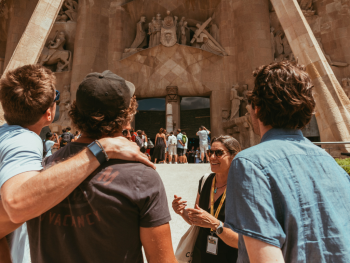
Going with someone who understands the site changes the nature of the visit. Walking into the Historic Center of Vienna with an architectural historian isn't the same experience as walking the same streets with a map. The same is true of visiting the Medina of Fes with a cultural historian or the Historic Center of Istanbul with an archaeologist who has worked on Byzantine and Ottoman sites. Understanding produces respect, and respect produces behavior that tends to preserve rather than damage.
Respect the site's terms of access. Don't enter restricted areas, don't touch surfaces that should not be touched, and refraining from contributing to the kind of photo-seeking behavior that has damaged frescoes, sculptures, and archaeological remains at sites across Europe and beyond is a genuine act of preservation, not just etiquette.
Supporting the local economy through the visit can be done by eating at local restaurants, using local guides, and buying from local artisans. This directs economic benefit to the communities whose engagement with and ownership of the site is fundamental to its long-term survival.
UNESCO World Heritage Sites across Context Travel's tour network
Context Travel operates in more than 80 cities worldwide. Across our full venue list, we have more than 700 venues that sit within or form part of 139 UNESCO World Heritage Properties, making UNESCO-inscribed sites a significant part of what our Experts work with every day.
The properties most represented across our tour network tell their own story about where humanity's most significant cultural heritage is concentrated and where travelers most want to go:
Historic Center of Rome is the most represented UNESCO property in our venue network. It's not surprising given that Rome's historic center is itself one of the most complex and layered archaeological and architectural landscapes in the world, encompassing everything from the Forum and the Colosseum to the Vatican, the Pantheon, and two millennia of continuous urban life. Context's Rome tours are guided by archaeologists, art historians, and historians who have spent careers with this material.
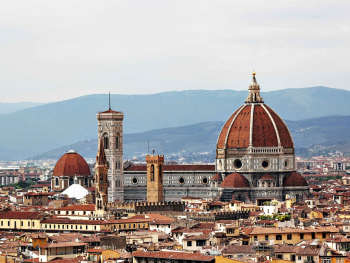
Historic Center of Florence contains some of the world's greatest concentrations of Renaissance art and architecture: the Uffizi, Brunelleschi's dome, Michelangelo's sculptures, the Palazzo Pitti, and the Bargello. Context's Florence tours are led by art historians who can connect a single painting to the political and commercial world that commissioned it.
Venice and its Lagoon are perhaps the most endangered of the world's great UNESCO cities. This living experiment in architecture and governance is simultaneously a UNESCO site, a functioning city, and one of the most visited tourist destinations on earth. Context's Venice tours are guided by architectural historians who understand the city's engineering as well as its art.
Historic Areas of Istanbul cover one of the most extraordinary accumulations of civilizational history anywhere: the Hagia Sophia, the Topkapi Palace, the Blue Mosque, the Hippodrome, and the Grand Bazaar are all within walking distance of each other, all representing different chapters of Byzantine and Ottoman history. Context's Istanbul tours are led by historians who understand the city's layered identities.
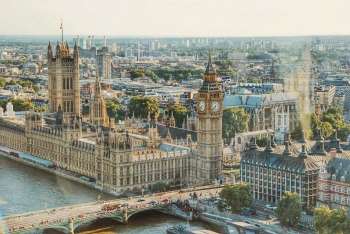
Paris, Banks of the Seine encompasses the city's most significant architectural ensemble, from the Eiffel Tower and Notre-Dame to the Louvre, the Tuileries, and the Pont Neuf. Context's Paris tours cover everything from the history of French art to the political geography of the city.
Historic Center of Prague, Historic Center of Vienna, Old and New Towns of Edinburgh, Budapest and the Banks of the Danube, Historic Center of Kyoto... Each can be found within a city where Context operates, and where our Experts work within UNESCO-inscribed landscapes every day.
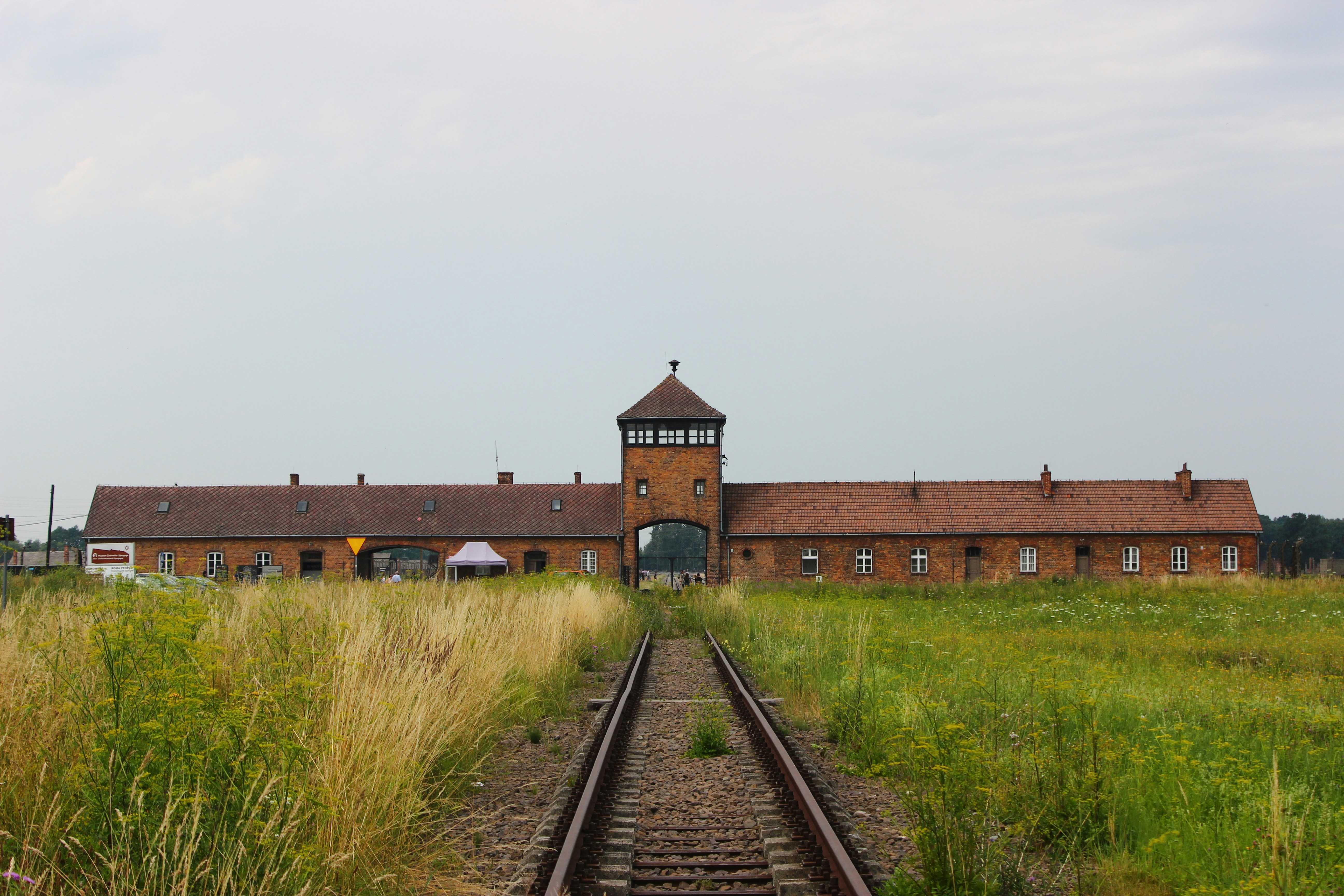
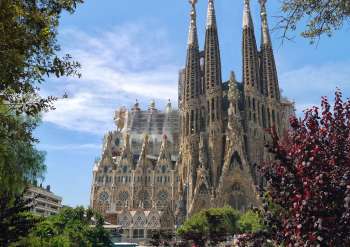
Beyond the city centers, our network includes venues within some of the world's most significant archaeological and cultural UNESCO properties: the Palace and Park of Versailles, the Archaeological Areas of Pompeii and Herculaneum, the Alhambra in Granada, the Works of Antoni Gaudí in Barcelona, the Medina of Fes, the Medina of Marrakesh, the Historic City of Toledo, Auschwitz-Birkenau, the Hiroshima Peace Memorial, the Colosseum (part of the Historic Center of Rome), and more than 130 others.
This list reflects the fact that the places Context Experts work in are, overwhelmingly, the places that humanity has determined are most worth understanding and preserving. Expert-led visits to these sites are among the most direct ways a traveler can engage with that inheritance seriously.
Browse Context Travel's UNESCO tours by destination to find expert-led experiences at UNESCO World Heritage Sites around the world.