Small Group Tours are now booking for summer and fall. Book yours today.
kyoto day tour

Kyoto In a Day Tour: Temples and Traditions

Connect Kyoto's history, culture, and daily life in one day

See Kyoto's sacred sites, sample market flavors, and get to know the city in one expertly planned day that turns limited time into lasting context.
Tour Highlights
  • Make one day count Cover Kyoto's defining themes through a route designed to use every hour wisely.
  • Understand spiritual Kyoto Connect Shinto, Buddhism, and Zen through temples, shrines, and expert insights.
  • Taste Kyoto’s flavors Explore Nishiki Market, local delicacies, and the customs that shape every meal.
  • Follow a smarter city route Move between districts by foot, taxi, or car without losing time to trip planning.
  • See icons in a clear story Link Gion, Kiyomizu-dera, and the Golden Pavilion through one coherent narrative.
  • Leave with stories to share Carry home vivid memories of Kyoto's spiritual life, food culture, and gardens, too!
Led by Experts, Shaped by You
Explore with an expert guide who responds to your questions, your interests, and your pace. Reveal layers of meaning most visitors miss—go from seeing to understanding.
The Finer Details
Kyoto can fill a week, but this itinerary turns one day into a coherent introduction. In eight hours, you’ll visit Shinto shrines and Buddhist temples, walk through Japanese gardens and UNESCO World Heritage sites, and sample local food and drink with your Context Expert. Rather than chasing landmarks, follow a route designed to reveal how spirituality and daily life shape the former imperial capital.

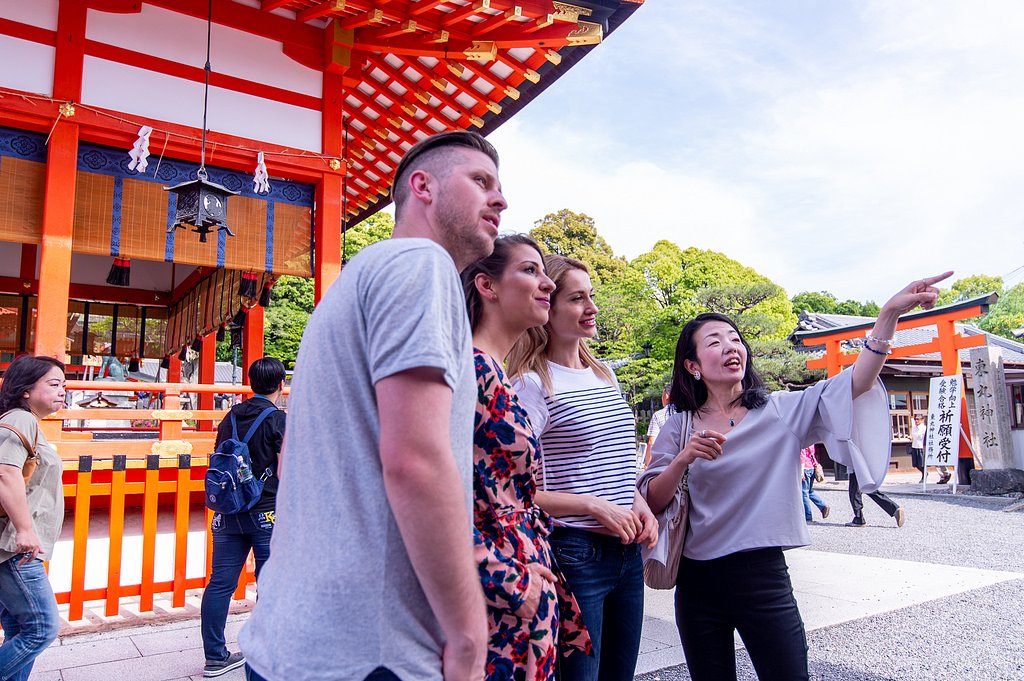
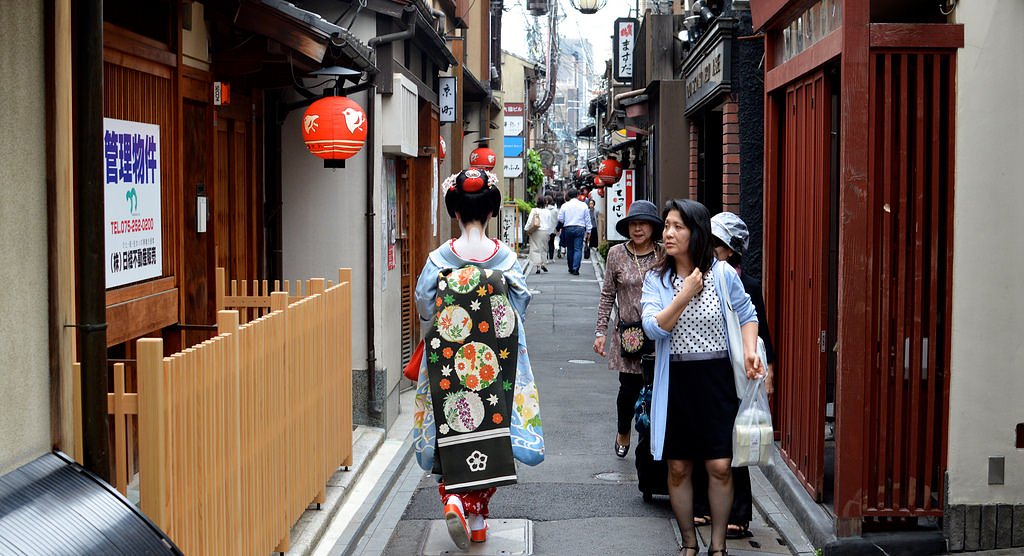
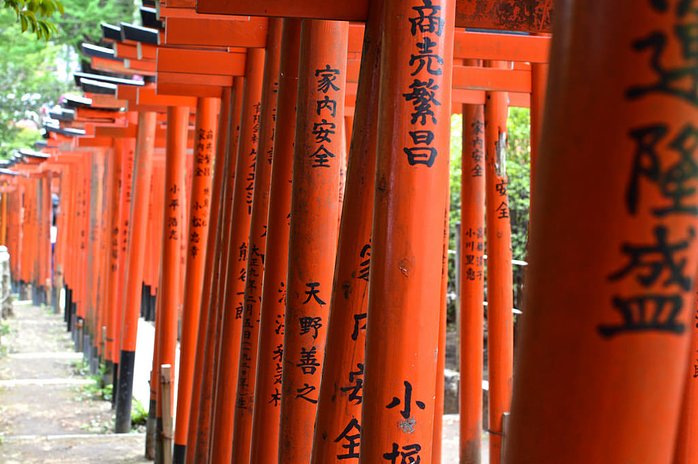
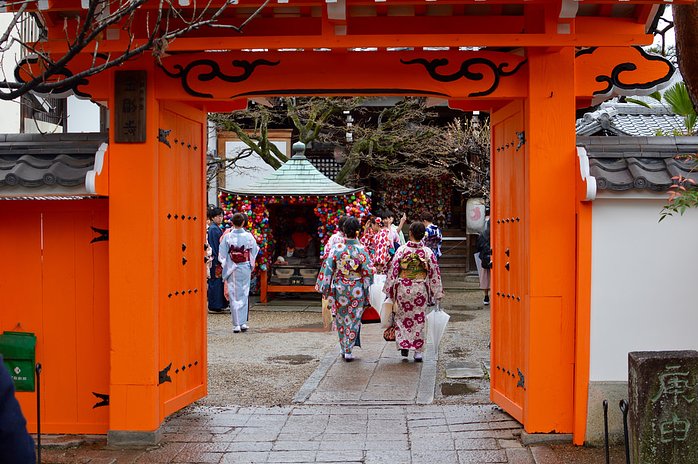
Meet your Context Expert at your hotel to travel together to Gion, Kyoto's historic geisha district, to begin unpacking the city's sacred traditions. At Yasaka Shrine, one of Kyoto's most important Shinto sites, your Expert introduces kami (purity rituals) and the shrine's deep civic role. Lantern-lined and as busy with locals as it is with visitors, the shrine makes clear that Shinto belief here isn't confined to quiet contemplation. It's woven into the rhythms of everyday life in Kyoto.

From Gion, the day continues to one of two temples, chosen based on your interests. Kiyomizu-dera, founded in 778 and perched high in the Kyoto hills, is built without a single nail and rests on 139 pillars, making it one of Kyoto's most iconic UNESCO sites. Kennin-ji offers a different lens; it’s Kyoto's oldest Zen temple, founded in 1202 by the monk Eisai who also introduced tea to Japan. Inside, a painted ceiling of twin dragons and replica Wind God and Thunder God screens, both National Treasures, await. Your Expert helps you choose, then uses the visit to explore how belief takes physical form.

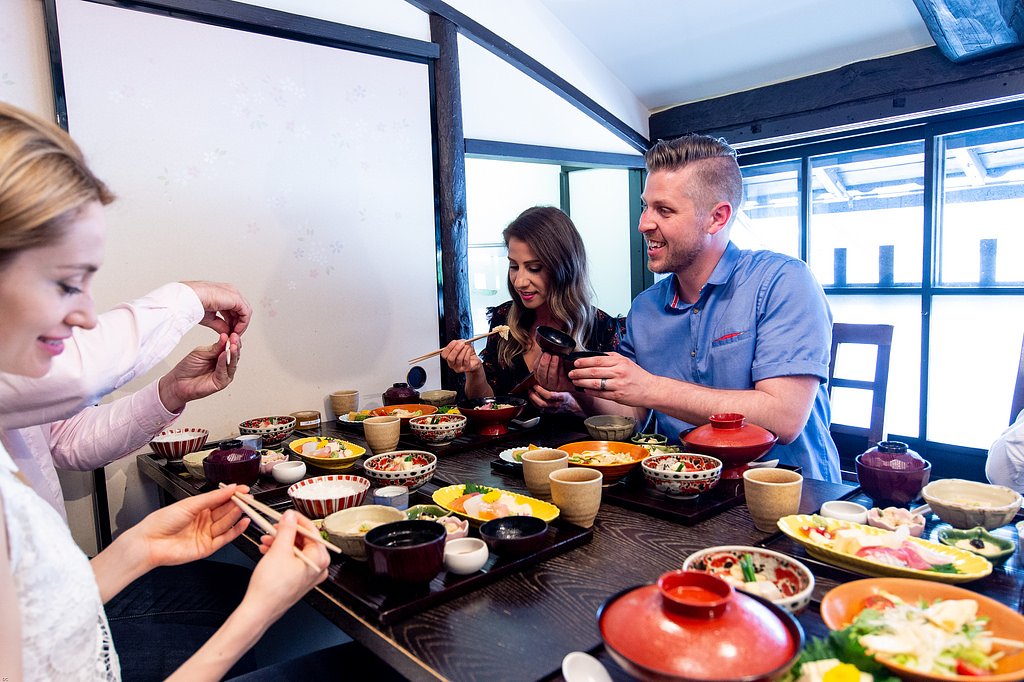
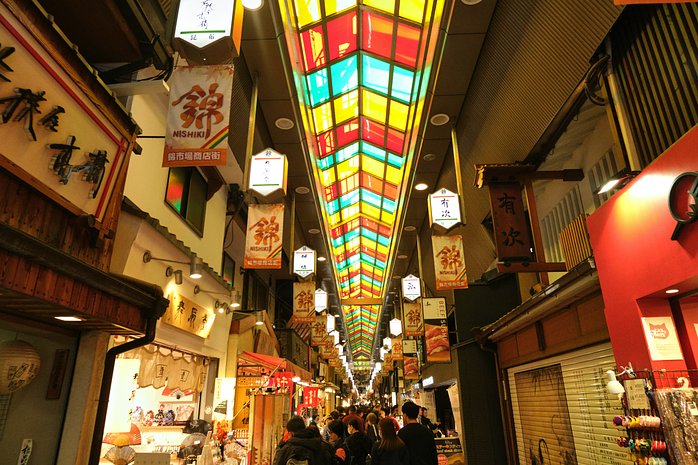
With Kyoto's spiritual foundations in view, head to Nishiki Market to taste Japanese delicacies and share a traditional Kyoto lunch. Move through the market’s narrow lanes while discussing dining practices, customs, and the intricacies of eating and gastronomy. Your Expert turns flavors into clues about Kyoto's daily life.

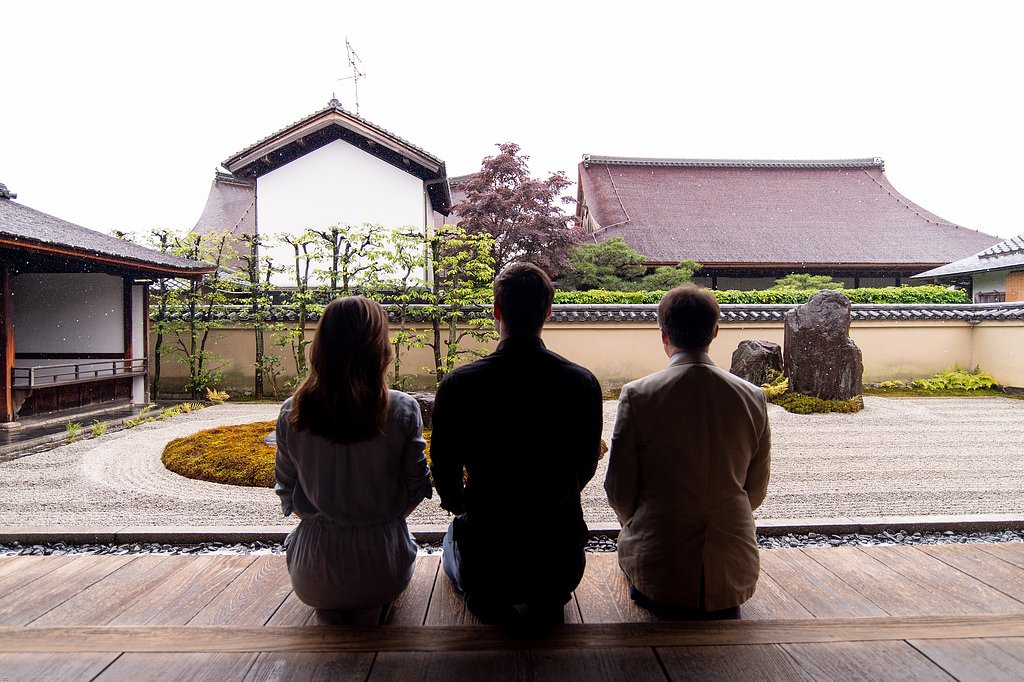
After lunch, shift the lens to Japanese gardens at the Golden Pavilion, a 14th-century estate first built as shogun Ashikaga Yoshimitsu's villa before its transformation into a Buddhist temple. Its gilded reflection over still water raises questions of Muromachi-era design and how power and beauty shared one landscape. A short ride away, Ryoan-ji takes the opposite approach: a karesansui garden of raked gravel and rock, where nothing grows and everything is deliberate. Comparing the two—one lush, one austere—offers two keys to the same idea: how Japanese gardens turn nature into a spiritual argument.

As the day closes, return toward central Kyoto, digesting what you've learned. By placing religion, food, gardens, and UNESCO heritage within one narrative, this Kyoto day tour offers more than a checklist. Leave with a deeper understanding of the strands that shape Japanese culture, tradition, and daily life. That context also prepares you for the rest of your travels in Japan, giving you patterns to recognize elsewhere.
Where You’ll Go

From iconic landmarks to tucked-away local favorites, these are the places you’ll explore and experience firsthand with your Expert.

  • Gion District
    Historic district for culture, religion, and spiritual life
  • Yasaka Shrine
    Shinto shrine offering insight into kami and sacred customs
  • Kiyomizu-dera Temple
    Hillside Buddhist temple with city views and many charms
  • Nishiki Market
    Celebrated alleyway market at the heart of Kyoto food culture
  • Golden Pavilion
    Former shogun's villa where gardens frame a Zen temple
  • Ryoan-ji Temple
    Zen temple known for its dry rock garden and quiet focus
What’s Included As Standard
Here’s a look at what your tour covers, plus anything you’ll want to consider arranging separately, so you can plan with confidence.
Included
  • English-speaking expert guide
    Tours led in English, offering you unbroken understanding throughout.
  • Intentionally sized groups
    A smaller group means more time for conversations and questions.
  • Tickets and entrance fees
    All entry tickets included (unless clearly stated otherwise).
  • Headsets
    Headsets are included on tours that need them, so every word can be heard.
Not Included
  • Gratuities
    Tips aren’t included, but we encourage tipping as a way to thank your guide after your experience.
  • Food and drink
    Unless booking a Food & Drink tour or tasting experience, refreshments are not included.
  • Transportation to and from the meeting point
    Unless noted, pre- and post-tour transport isn’t included - this service can be added by request.
  • Hotel pickup or drop-off
    Unless noted, travel to or from accommodation isn’t included - this service can be added by request.

Make the Most of Your Tour

Some helpful advice for getting the most from your experience, from practical prep to small on-the-day tips.

Dos:
  • Wear comfortable footwear
  • Check the weather and dress appropriately
  • Bring a bottle of water (no glass)
  • Feel free to ask your Expert anything
Don'ts:
  • Bring firearms or weapons
  • Bring sharp objects (e.g. knives, swiss army knives, switchblades, hiking sticks)
  • Dress inappropriately to enter religious sites or sacred monuments
Any questions? You can always contact us.

Frequently Asked Questions

Our tours happen rain or shine. Our guides are brilliant at adapting to changes in weather. Please bring an umbrella.
No - the temples will be closed in the afternoon if we start any later.
You are pre-paid for your tour and for the entrance fees to the venues visited. However, there may be other nominal costs on the tour, so it's a good idea to have some local currency on hand for these.

If your group needs a larger vehicle than what is displayed as options at checkout, please reach out to our team in order to verify availability and pricing with our car provider.
We do our best to accommodate everyone. If you have severe allergies to seafood or nuts, there will be items you can eat during the tasting, but cross-contamination may be a problem during lunch. The best thing to do is to let us know when you book if anyone in your party has allergies or dietary restrictions. We can check in on dishes, order ahead, and do everything possible to ensure you enjoy your meal.
Yes. Context clients generally tip anywhere from 10-25% of the purchase price of a personal service such as this, depending on the quality of the experience and their tipping habits.
Book with confidence — see Context's flexible cancellation policy here.
This tour covers a lot of ground, but much of it is by either taxi or private car service, so it should be fine for those who have trouble walking for long periods. However, many of the temples visited on this tour are not wheelchair accessible, and Nishiki Market is made up of very narrow lanes, making it difficult to maneuver in a wheelchair. Therefore, we wouldn't necessarily recommend this tour for those who rely on wheelchairs. Please get in touch if you would like to discuss any mobility concerns before booking this tour.

Don’t just take our word for it

193 Reviews

Very informative! Marc is an excellent guide.

An outstanding Kyoto tour, one of the best guided experiences we have ever had My son and I booked the Context Kyoto in a Day private tour, hoping to see Kyoto’s major historic sites while also fitting in a few manga-related stops, and Marc absolutely delivered. In fact, he went well beyond expectations. His knowledge of Kyoto and the surrounding area was extraordinary. He brought the city to life through its history, culture, architecture, religion, gardens, and daily life. We visited the older historic districts, including areas associated with geisha culture, and then moved smoothly through temples, gardens, and major landmarks. Lunch was a phenomenal traditional multi-course Japanese meal, genuinely one of the best meals of our trip. We also visited the Shogun’s palace, where Marc explained the history, design, gardens, and political context in remarkable detail. He made complex Japanese history understandable and fascinating, and he answered our many questions patiently and thoroughly throughout the day. What stood out most was that Marc is clearly an academic who knows his subject deeply. That is exactly why I booked with Context, and he represents the company at its very best. I have used private guides around the world for nearly 25 years, and this was honestly one of the finest tours I have ever taken. Marc’s knowledge, attention to detail, flexibility, and calm command of the day were exceptional. We had a wide range of interests, yet he managed to cover everything smoothly and still get us back to Kyoto Station in time for our train. Marc is one of the main reasons I will book with Context again. A truly outstanding guide and a superb day in Kyoto.

Gavin was awesome! He really listened to our preferences and my two college kids were happy with the level of fun and information discussions and sites. Highly recommend!

Photo Shared by Nicole with their review

Let Your Curiosity Shape Your Journey

Join passionate experts on intimate walking tours that reveal a city’s unique stories, spark conversations, and leave you seeing the world—and yourself—a little differently.

Structured, never scripted

Your interests guide your Expert, leading to stories and perspectives that matter to you.

Crafted for conversation

With 12 or fewer guests, ask questions, engage with your Expert, and fully immerse yourself.

Experts, not guides

Explore with 1,200+ Experts—from historians and architects to archaeologists and chefs.
See Kyoto’s Essential Stories in One Day

Kyoto rewards time, but a thoughtfully planned day can still reveal the ideas that define the former imperial capital.

This private Kyoto day tour connects Shinto shrines, Buddhist temples, historic neighborhoods, local food, and Japanese gardens through one coherent itinerary. Rather than moving through a checklist of landmarks, you explore how religion, aesthetics, and daily life have shaped Kyoto across centuries.

Your Context Expert manages the route and transportation between districts while explaining the connections among the places you visit. The result is a full introduction to Kyoto that makes limited time feel purposeful rather than rushed.

Make the Most of One Day in Kyoto

Kyoto’s leading sites are spread across several parts of the city. Visiting them independently in a single day requires careful decisions about transportation, opening hours, walking routes, and what to leave out.

This itinerary is designed to reduce that planning burden.

Your Expert meets you at your hotel and helps you move efficiently between eastern Kyoto, the city center, and the northwestern temple district. Depending on the route and local conditions, you may travel by taxi, private vehicle, public transportation, or on foot.

Every stop has a role in the day’s larger story, allowing you to experience variety without losing time to unnecessary transfers or disconnected sightseeing.

Begin in Historic Gion

The day begins in Gion, one of Kyoto’s best-known historic districts.

Although often associated with geiko and traditional entertainment, Gion is also an important religious and civic landscape. Its shrines, temple approaches, lanes, and historic buildings reveal how spiritual practice and urban life developed beside one another.

Your Expert introduces the district beyond its most familiar images, providing a foundation for understanding Kyoto’s relationship with ritual, community, and tradition.

Understand Shinto at Yasaka Shrine

At Yasaka Shrine, Shinto becomes part of everyday Kyoto rather than an abstract religious system.

Your Expert explains the role of kami, purification, offerings, and shrine customs while helping you recognize architectural and symbolic details. You may also discuss Yasaka’s relationship to the Gion Matsuri, one of Japan’s most important festivals, and its long-standing role in the life of the city.

Because Yasaka remains an active place of worship, the visit shows how centuries-old traditions continue within modern Kyoto.

Explore Kiyomizu-dera or Kennin-ji

The morning continues at a Buddhist temple chosen according to your interests and the day’s conditions.

At Kiyomizu-dera, you encounter one of Kyoto’s most recognizable hillside temples. Its elevated wooden stage, historic pilgrimage traditions, and views across the city open discussions about Buddhist devotion, sacred geography, and the development of eastern Kyoto.

At Kennin-ji, Kyoto’s oldest Zen temple, the focus shifts toward Zen Buddhism, artistic patronage, temple architecture, and the relationship between meditation and Japanese cultural traditions.

Your Expert helps you understand the chosen temple as a living religious institution rather than simply an architectural landmark.

Taste Kyoto at Nishiki Market

Nishiki Market offers a different way to understand the city.

Its narrow lanes contain ingredients, prepared foods, kitchen tools, and specialist shops connected to Kyoto’s culinary traditions. As you explore, your Expert explains how seasonality, preservation, regional products, and dining customs influence what people eat.

A traditional lunch and selected tastes provide a practical introduction to the city’s food culture. Instead of treating the market as a quick snack stop, the visit reveals how cuisine reflects geography, religion, craftsmanship, and daily routines.

See the Golden Pavilion in Context

Kinkaku-ji, commonly called the Golden Pavilion, is one of Kyoto’s most recognizable landmarks.

Its gilded exterior and reflection across the surrounding pond create an image of carefully controlled beauty. Yet the site also reveals the close relationship among political authority, religious patronage, architecture, and garden design during the Muromachi period.

Your Expert places the pavilion within the life of shogun Ashikaga Yoshimitsu and explains how the former villa became a Buddhist temple. The visit becomes more than a photograph: it offers a lens into the way power and beauty were expressed in medieval Kyoto.

Compare Two Visions of a Japanese Garden

The day concludes with a contrasting landscape at Ryoan-ji.

Where the Golden Pavilion’s garden is lush and reflective, Ryoan-ji’s famous dry garden is pared down to rock, gravel, space, and ambiguity. Its arrangement has inspired centuries of interpretation without yielding a single agreed-upon meaning.

Seeing these gardens together helps clarify that there is no single model of Japanese landscape design. Your Expert explains how each environment shapes attention differently and how gardens can express religious, aesthetic, and philosophical ideas without relying on words.

Connect Shinto, Buddhism, and Zen

Kyoto contains thousands of religious sites, but their distinctions can be difficult to understand during an independent visit.

Throughout this tour, your Expert clarifies the relationships among Shinto traditions, Buddhist schools, Zen practice, ritual, architecture, and daily life. Rather than presenting these as isolated definitions, the discussion develops through actual shrines, temples, gardens, and customs.

By the end of the day, you will be better equipped to interpret the religious sites you encounter during the rest of your time in Japan.

A Private Kyoto Day Tour Shaped Around You

This is a private experience rather than a fixed group itinerary.

Your Expert can adjust the discussion according to your interests, whether you are particularly curious about religion, architecture, food, gardens, Japanese history, or contemporary life. The exact pacing and transportation plan may also adapt to traffic, closures, weather, and local conditions.

That flexibility allows the day to remain ambitious without feeling mechanical.

Led by a Kyoto Expert

Your tour is led by a scholar or specialist with deep knowledge of Kyoto and Japanese culture.

Context Experts may have backgrounds in history, religion, architecture, art, cultural studies, or related fields. Their role is not simply to identify landmarks, but to help you understand how the city’s institutions, beliefs, and customs connect.

Questions are encouraged throughout the day, allowing the experience to become a sustained conversation rather than a memorized script.

Frequently Asked Questions

Can you see Kyoto in one day?
You cannot experience everything Kyoto offers in one day, but a carefully planned full-day tour can introduce its defining themes. This itinerary connects historic districts, Shinto and Buddhist sites, food culture, and Japanese gardens, providing a foundation for the rest of your visit.

What does this Kyoto day tour include?
The planned itinerary includes Gion, Yasaka Shrine, either Kiyomizu-dera or Kennin-ji, Nishiki Market, the Golden Pavilion, and Ryoan-ji. The precise route may adjust according to your interests, opening conditions, traffic, and other local factors.

Is this a private Kyoto day tour?
Yes. The experience is private and shaped around your party. Your Expert can adapt the depth of the discussion, pace, and emphasis according to your interests.

How long is the tour?
The tour lasts approximately eight hours. It is designed as a full-day introduction to Kyoto, with time for temples, shrines, a market visit, lunch, gardens, and transportation between districts.

Where does the tour begin?
Your Expert meets you at your centrally located Kyoto hotel. You then travel together to the first stop, reducing the need to navigate an unfamiliar city at the start of the day.

Is transportation included?
The tour uses a combination of walking, taxis, public transportation, or a private vehicle, depending on the booked arrangement and the day’s conditions. 

Is this a walking tour?
Walking is a substantial part of the experience, but the sites are spread across Kyoto. Transportation is used between districts so that more of the day can be spent exploring rather than crossing the city entirely on foot.

Do we visit Kiyomizu-dera?
The morning temple visit is generally either Kiyomizu-dera or Kennin-ji. Your Expert helps determine the stronger choice based on your interests, conditions, and the overall flow of the itinerary.

Does the tour include the Golden Pavilion?
Yes. Kinkaku-ji, or the Golden Pavilion, is one of the principal afternoon stops, paired with Ryoan-ji to compare two very different approaches to Japanese garden design.

Do we visit Nishiki Market?
Yes. The itinerary includes Nishiki Market, where you explore Kyoto’s culinary traditions and dining customs before or alongside lunch.

Is food included?
The planned itinerary includes selected tastes and a traditional Kyoto lunch. 

Can dietary restrictions be accommodated?
Some dietary needs may be accommodated, but Nishiki Market and traditional Kyoto cuisine can present limitations, particularly for severe allergies or highly restrictive diets. Guests should share all requirements before booking so the team can confirm what is possible.

Is this tour suitable for first-time visitors?
Yes. It is particularly well suited to first-time visitors who want to understand Kyoto’s major cultural themes while seeing several defining places in one day.

Is this the best tour for travelers with limited time?
It is designed specifically for travelers who want to make one full day count. The route removes much of the planning and navigation involved in visiting several districts while providing historical interpretation at every stop.

Is the itinerary rushed?
The day covers substantial ground, but the sites are connected around a few central themes rather than treated as unrelated photo stops. Transportation and pacing are planned to make efficient use of the available time. Travelers who prefer to explore one subject or district in greater depth may be better served by one of Context’s shorter thematic Kyoto tours.

Is this tour suitable for children?
Families can take the tour, though eight hours of temples, walking, and transportation may be demanding for younger children. The private format allows your Expert to adapt the discussion and pace, but families should consider their children’s stamina and interests before booking.

How much walking is involved?
Expect a full day of intermittent walking, standing, stairs, and uneven temple surfaces, combined with transportation between districts. Comfortable shoes are essential. Guests with mobility concerns should contact Context before booking so the route and transportation requirements can be assessed.

What makes this different from a standard Kyoto sightseeing tour?
A standard sightseeing tour may cover similar landmarks, but this itinerary is built around interpretation. Your Expert connects Shinto, Buddhism, food, gardens, political history, and daily life so the sites form a coherent introduction to Kyoto rather than a list of attractions.