Matt’s tour was excellent. He was enthusiastic, very knowledgeable, and flexible in his approach. Answered all questions. Truly loves history, art, cultures and people.
Signature British Museum Tour
Discover the objects that shaped 2,000,000 years of human history
Find your thread through the British Museum, where a collection of ancient objects reveals empire, obsession, and the questions no label can answer.
Tour Highlights
- A collection made clear An expert cuts through 8 million objects to find a route that makes sense for your interests.
- Not what the name suggests Discover why this is a museum of the world, not just of Britain.
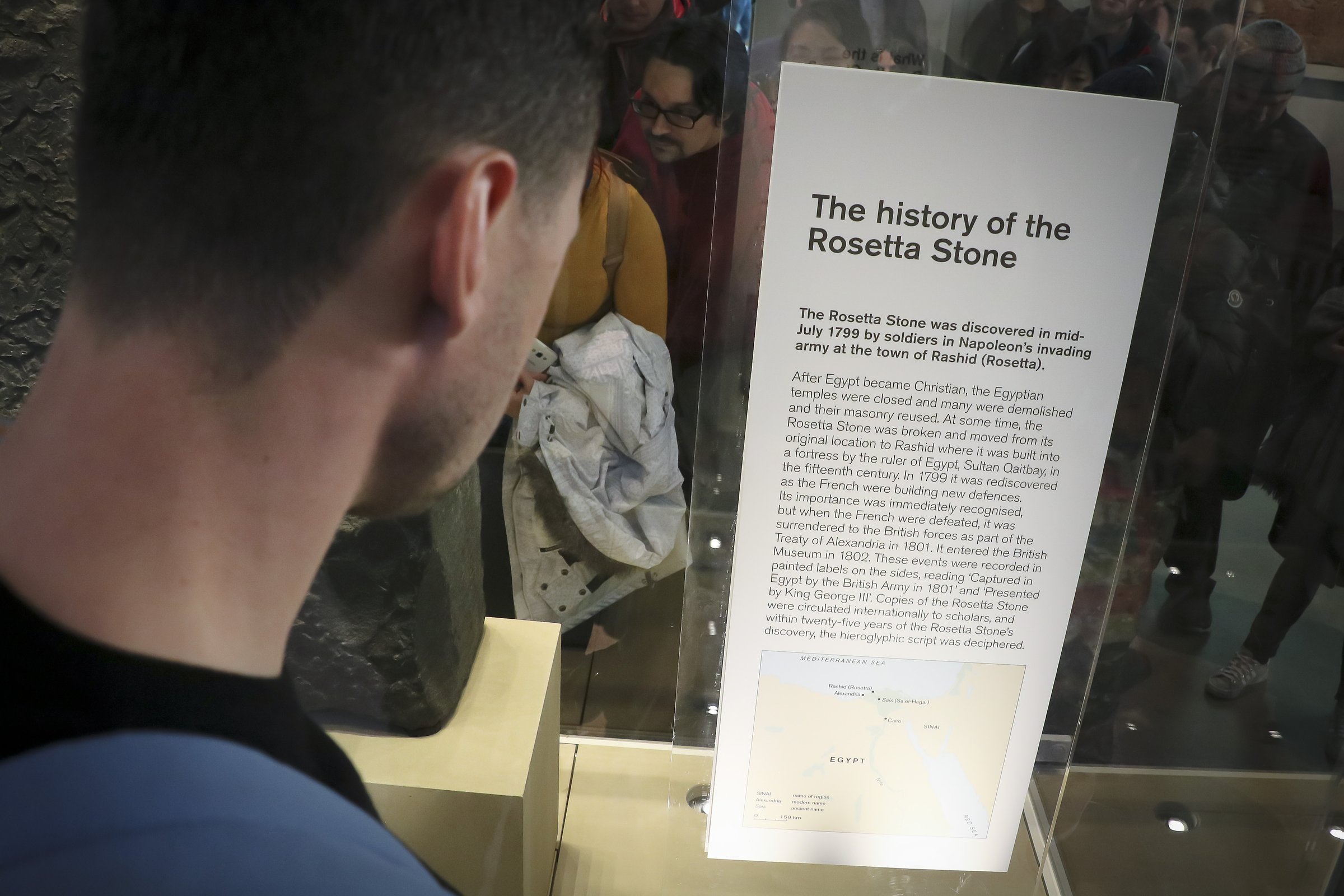
- Meet the essential objects Stand before icons like the Rosetta Stone and learn their significance and why they still matter.
- Trace empire's long reach See how collecting, conquest, and curiosity shaped the galleries you're walking through.
- Ask nuanced questions Discuss ownership and return with an expert who welcomes nuance, not a script.
- Go deeper than the plaque Connect ritual, power, and daily life across cultures without losing the thread.
Led by Experts, Shaped by You
Explore with an expert guide who responds to your questions, your interests, and your pace. Reveal layers of meaning most visitors miss—go from seeing to understanding.
The Finer Details
The name says “British”. The collection says otherwise. With more than 8 million objects and only one afternoon, the real question on your British Museum Tour isn't how to see it all, but matters most to you. Your Context Expert turns the museum’s scale into a connected narrative based on your interests, choosing objects that unlock the collection instead of simply checking the museum off a must-do list.
Despite its name, the British Museum is barely a museum of Britain at all: only 1% of its holdings originate there. A historian or archaeologist untangles why so many objects from Africa, the Middle East, Asia, and Europe ended up on this one London street. What does 19th-century collecting actually reveal about curiosity, ambition, empire, and the impulse to hold the whole world in a single building?
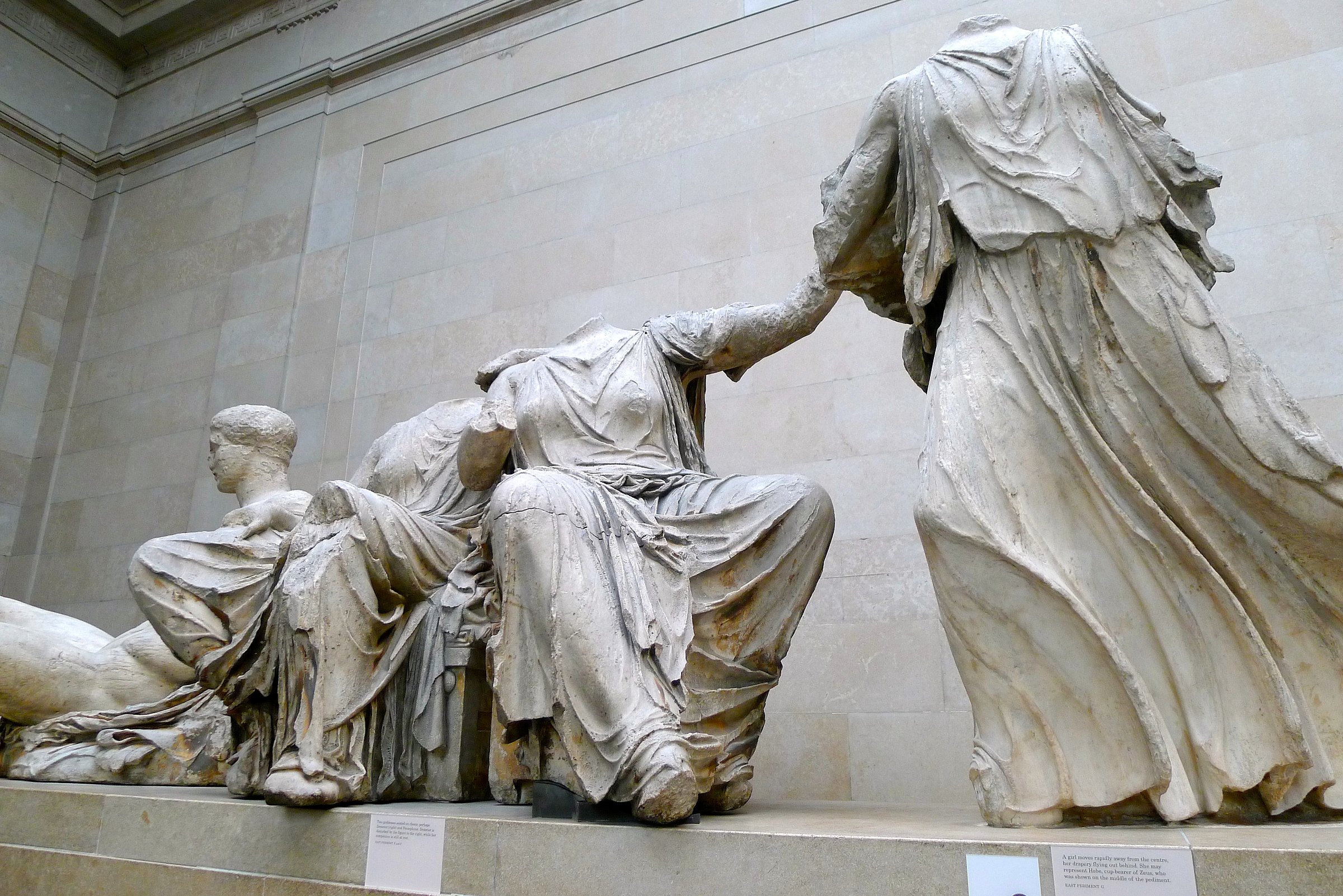
This British Museum private tour covers cultures across continents through objects that carry entire worlds inside stone, bronze, and clay. Artifacts like the Rosetta Stone, the bust of Ramesses the Great, and the Parthenon Sculptures become anchors for questions about belief, power, and the making of civilization itself (questions that are still being asked today!). Rather than drowning in facts, you trace a thread: one object leading logically and curiously to the next.
Explore Egyptian ritual, Greek philosophy, and Roman engineering before looking more closely at the people behind these civilizations. Monumental objects are impressive, but look closer to understand carved inscriptions, sacred relics, instruments of power, and the 2,000-year-old remains of an ancient Briton. Then, Sutton Hoo's helmet, coins, and weapons offer a surprising glimpse of true British treasure amid a collection so thoroughly global.
Your Expert doesn't shy from the harder questions, either. Why are the Parthenon Sculptures and Benin Bronzes here at all, and what can we learn when a museum tells that story honestly? These aren't footnotes. This is the lens through which every gallery, every label, and the very idea of ownership comes into focus.
The route holds space for both the celebrated and the overlooked. Learn how to decipher an inscription, puzzle over an enigmatic set of chess pieces, and notice how sacred objects and everyday tools tell the same story from opposite angles. Leave with a sharper understanding of the collection and the curiosity to keep discovering it long after the visit ends.
A visit tailored around your interests guided by our knowledge
"Sean successfully navigated us around and through other tour groups and discussed a good cross-section of the artifacts of the ancient world. We had been to some of the origins of the artifacts as had Sean, so we were able to have a deeper discussion of the context of items being in the museum vs. in their location of origin. Such discussions are common with Context docents.” Lawrence B.
A master class that connects the museum to the world
"Andrew's tour was a master class...we can't wait to return home and visit The Met with our newly found insights. His knowledge and enthusiasm was unmatched and much appreciated." Thomas H.
Meet the Experts









































Where You’ll Go
From iconic landmarks to tucked-away local favorites, these are the places you’ll explore and experience firsthand with your Expert.
-
British Museum
What’s Included As Standard
Here’s a look at what your tour covers, plus anything you’ll want to consider arranging separately, so you can plan with confidence.
Included
-
English-speaking expert guideTours led in English, offering you unbroken understanding throughout.
-
Intentionally sized groupsA smaller group means more time for conversations and questions.
-
Tickets and entrance feesAll entry tickets included.
Not Included
-
GratuitiesTips aren’t included, but we encourage tipping as a way to thank your guide after your experience.
-
Food and drinkFood and drink are not included, but your expert can provide recommendations for after the tour.
-
Transportation to and from the meeting pointTransportation is not included. Pre- and/or post-transit can be added to some tours by request.
-
Hotel pickup or drop-offTravel to or from accommodation isn’t included; however, this service can be added by request.
Where You'll Explore
Make the Most of Your Tour
Some helpful advice for getting the most from your experience, from practical prep to small on-the-day tips.
Dos:
- Wear comfortable footwear
- Check the weather and dress appropriately
- Bring a bottle of water (no glass)
- Feel free to ask your Expert anything
Don'ts:
- Bring firearms or weapons
- Bring sharp objects (e.g. knives, swiss army knives, switchblades, hiking sticks)
- Dress inappropriately to enter religious sites or sacred monuments
Any questions? You can always
contact us.
Frequently Asked Questions
Entry to the museum is complimentary, however, their team does appreciate your donation.
Regrettably, due to venue capacity constraints, we maintain a limit of 7 participants per group. For larger parties, we advise dividing into smaller subgroups for a better experience.
Book with confidence — see Context's flexible cancellation policy here.
We understand that some of our valued guests may have mobility concerns, and we want to ensure you have a comfortable and enjoyable experience throughout your tour. If there are any accessibility concerns that your tour guide will need to be aware of, please let our team know at the time of booking.
Is this tour wheelchair-friendly?
The Great Russell Street entrance has 12 steps with a handrail. There are self-operable lifts on both sides of the steps. There is level access at the Montague Place entrance. The majority of galleries and all special exhibitions are fully accessible.
Additional information about accessibility at the British Museum is available here.
See the British Museum with Context
Get to know one of the art historians leading this tour
Don’t just take our word for it
Loved the way Alan tailored the tour to our interests
Great tour with Alan! Highly recommend!
Let Your Curiosity Shape Your Journey
Join passionate experts on intimate walking tours that reveal a city’s unique stories, spark conversations, and leave you seeing the world—and yourself—a little differently.
Structured, never scripted
Your interests guide your Expert, leading to stories and perspectives that matter to you.
Crafted for conversation
With 12 or fewer guests, ask questions, engage with your Expert, and fully immerse yourself.
Experts, not guides
Explore with 1,200+ Experts—from historians and architects to archaeologists and chefs.
Related experiences our customers also loved



British Museum Private Tour
The British Museum is not difficult because there is too little to see. It is difficult because there is too much. Its collection contains millions of objects spanning human history across Africa, Asia, Europe, the Middle East, and the Americas. A successful visit therefore depends less on covering ground than on choosing objects that help explain how civilizations interacted, traded, competed, worshipped, governed, and remembered themselves. On this private British Museum tour, a historian or archaeologist builds a route around those connections rather than treating the galleries as a checklist. The Rosetta Stone, Parthenon Sculptures, Egyptian objects, Roman material, and Sutton Hoo finds become starting points for larger questions about language, belief, empire, power, and ownership. That is also what makes a private format useful here. The route can respond to what interests you most, whether that means ancient Egypt, Greece and Rome, archaeology, empire, collecting, or the modern debates surrounding objects in the museum.
Despite its name, the British Museum is not primarily a museum of British history.
Its galleries were built around an ambition to collect, classify, and study material from cultures across the world. That makes the museum itself part of the story.
Objects arrived in London through many different routes: excavation, purchase, donation, diplomacy, antiquarian collecting, colonial networks, military activity, and imperial expansion.
Those histories matter because they change how we interpret the collection.
The Rosetta Stone, for example, is important not only because it helped scholars decipher Egyptian hieroglyphs. Its presence in London also reflects the military and political competition between European powers in Egypt.
The Rosetta Stone, for example, is important not only because it helped scholars decipher Egyptian hieroglyphs. Its presence in London also reflects the military and political competition between European powers in Egypt.
The Parthenon Sculptures reveal ancient Athenian ideas about religion and civic identity, while simultaneously raising modern questions about removal, ownership, and restitution.
Seeing the British Museum this way turns the building itself into evidence.
The collection tells us about ancient societies, but it also tells us how later generations decided what was worth collecting, who had the power to move objects, and how museums constructed narratives about the past.
Trying to “see the British Museum” in a single visit is almost impossible. A more useful approach is to follow a small number of objects closely enough to understand what they can reveal.
The Rosetta Stone can open a discussion about language, administration, and the rediscovery of ancient Egypt. A relief or sculpture from Greece can lead into questions about public religion, citizenship, and political identity. An object from a Roman household may reveal more about ordinary life than a monumental statue ever could. The Sutton Hoo finds can complicate the idea of an isolated early medieval Britain by revealing long-distance trade, craftsmanship, status, and cultural exchange.
A historian or archaeologist can then connect those examples rather than presenting them as unrelated masterpieces.
That is the difference between recognizing famous objects and understanding why they matter.
For travelers who already know exactly which galleries they want to visit, exploring independently can work well.
A guided tour becomes more valuable when you want help answering a different set of questions:
- Why were these particular objects collected?
- What does an inscription tell us that a display label cannot?
- How do archaeologists distinguish evidence from interpretation?
- Why are certain objects politically contested today?
And how do Egyptian, Greek, Roman, Middle Eastern, and British objects relate to one another rather than existing as separate chapters?
This private tour is especially well suited to travelers who want those connections and want the freedom to ask follow-up questions as they arise. The live experience is explicitly designed around guest interests rather than a fixed script.
If your interest is primarily painting, the National Gallery Tour is the stronger fit. If you want decorative arts, design, fashion, and material culture, the Victoria and Albert Museum Tour offers a different way into London’s collections.
What are the must-see objects in the British Museum?
There is no single definitive list, but first-time visitors often prioritize objects such as the Rosetta Stone, Parthenon Sculptures, Egyptian material, Assyrian reliefs, and Sutton Hoo finds.
The more useful question is how those objects connect. A guided route can use a small number of major works to explain broader themes rather than moving rapidly between famous displays.
Why is the Rosetta Stone so important?
The Rosetta Stone contains versions of the same decree written in different scripts.
Its comparison gave scholars a crucial key to deciphering Egyptian hieroglyphs, transforming modern understanding of ancient Egyptian language, administration, religion, and history.
Why are the Parthenon Sculptures controversial?
The sculptures were removed from the Parthenon in Athens in the early nineteenth century and later entered the British Museum.
Their ownership remains contested, with ongoing debate about the circumstances of their removal, cultural patrimony, museum stewardship, and whether they should be returned to Greece.
Are the Benin Bronzes at the British Museum?
The British Museum holds objects from the historic Kingdom of Benin, including works associated with the 1897 British punitive expedition.
They are central to contemporary conversations about colonial collecting and restitution, making them useful for understanding how the history of a museum can become part of the interpretation of its collection.
Is a private British Museum tour better for repeat visitors?
It can be particularly useful for repeat visitors because the route does not need to focus only on the most famous objects.
A private format makes it easier to concentrate on a specific civilization, archaeological question, period, or theme and to spend more time in galleries you may have skipped before.
How long do you really need at the British Museum?
Three hours is enough for a focused thematic visit, but not enough to see the entire collection.
A productive first visit is usually better built around a coherent selection of objects than an attempt to cover every major gallery.