When you book a guided tour of London, the person leading it might be many things: knowledgeable, personable, entertaining, well-reviewed. But there's one credential that tells you something more specific—that the guide standing in front of you has passed one of the most demanding professional examinations in the guiding world, earned the right to work in venues that won't admit anyone else, and can be held to a formal standard of conduct and accuracy.
That credential is the Blue Badge.
Around 85% of Context Travel's London guides hold it. Here's what it actually means, what it takes to earn it, and why it changes what a guided tour in London can be.

What is a Blue Badge Guide?
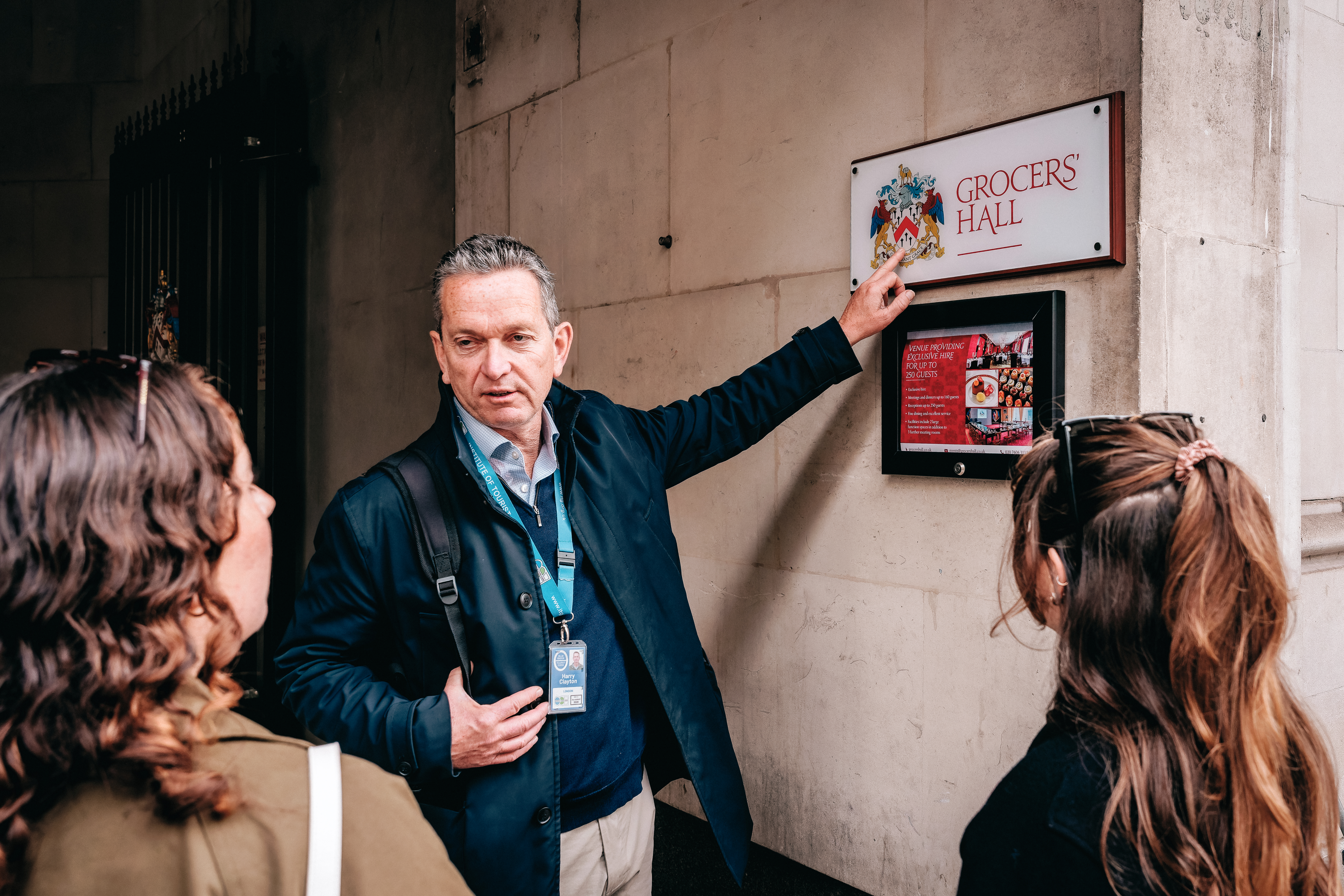
The Blue Badge tourist guide is a guide who has been certified as a qualified and accredited guide for tourists in the United Kingdom. The name comes from the physical badge guides wear, issued by the Institute of Tourist Guiding (ITG) upon passing the qualification. It's the recognized symbol of professional guiding in England.
Blue Badge and Green Badge Tourist Guides are trained under the auspices of the Institute of Tourist Guiding, which accredits training courses throughout England. These are the highest professional guiding courses and are recognized throughout the world as the gold standard in tourist guiding.
The qualification is not the same as being a knowledgeable local, a passionate history enthusiast, or someone who has worked in tourism for years. It is a formal professional credential, assessed through written exams, a substantial planning project, and multiple practical assessments in live guiding conditions. Passing it is evidence of verified competence, not just of interest or experience.
What does it take to earn a Blue Badge?
What access does it grant?
Blue Badge vs. Green Badge guides: what's the difference?
The Blue Badge qualification, in particular, offers significant flexibility in the type and mode of tours guides can provide. Guides offer tours across a whole spectrum of areas, from highlights tours of major sites, to themed tours (film, music, art, medical, legal, literary, LGBTQ+), to bespoke tours depending on the client's requirements.
But what about the difference between Blue Badge and a Green Badge? Green Badge courses are for those interested in working at sites of interest and guiding walking tours in a specific area (such as a town, city center, or specified countryside area). Blue Badge courses are for those interested in guiding visitors across an entire region or a major urban area.
In practice: a Green Badge guide may be excellent within their specific area of specialism. A Blue Badge guide has been assessed across a broader range of sites, venues, and guiding modes and holds the credential that grants access to the most significant restricted sites in London.
Beyond the badge itself, all Blue Badge Guides are first-aid trained and carry professional liability insurance. They operate under the standards and code of conduct of the ITG and, in London, the Association of Professional Tourist Guides (APTG). In other words, Blue Badge Guides didn't just pass an exam years ago, but have an ongoing obligation to travelers.
Why it matters when choosing a London tour
Blue Badge Guides at Context Travel
Context's London guides come from two backgrounds: approximately 85% hold the Blue Badge qualification, and the remainder are academics — historians, architects, and art historians whose depth of knowledge in their field is equivalent, simply arrived at differently. Every Context guide — Blue Badge or otherwise — goes through the same vetting process: demonstrated expertise, a trial tour, and ongoing feedback from guests. The credential tells you about the qualification. Context's selection process tells you about the guide.
What does this mean in practice? When you book a London tour with Context, you're almost certainly getting someone who has passed the most rigorous guiding qualification in the UK and maintains it through ongoing professional development. The London in a Day Tour—moving from the Tower of London to Westminster in one continuous narrative—is the kind of experience that depends on exactly this depth of access and knowledge. So is the London History Tour: Exploring the City, which traces 2,000 years of history across the Square Mile, and the Hidden London Tour, which takes you well beyond the landmarks to the layers most visitors never reach.
The Blue Badge isn't simply a marketing claim. It's a tested professional standard, one that's worth understanding before you decide who you want standing next to you in Westminster Abbey.
Ready to see London through expert eyes? Browse all London tours with Context Travel.