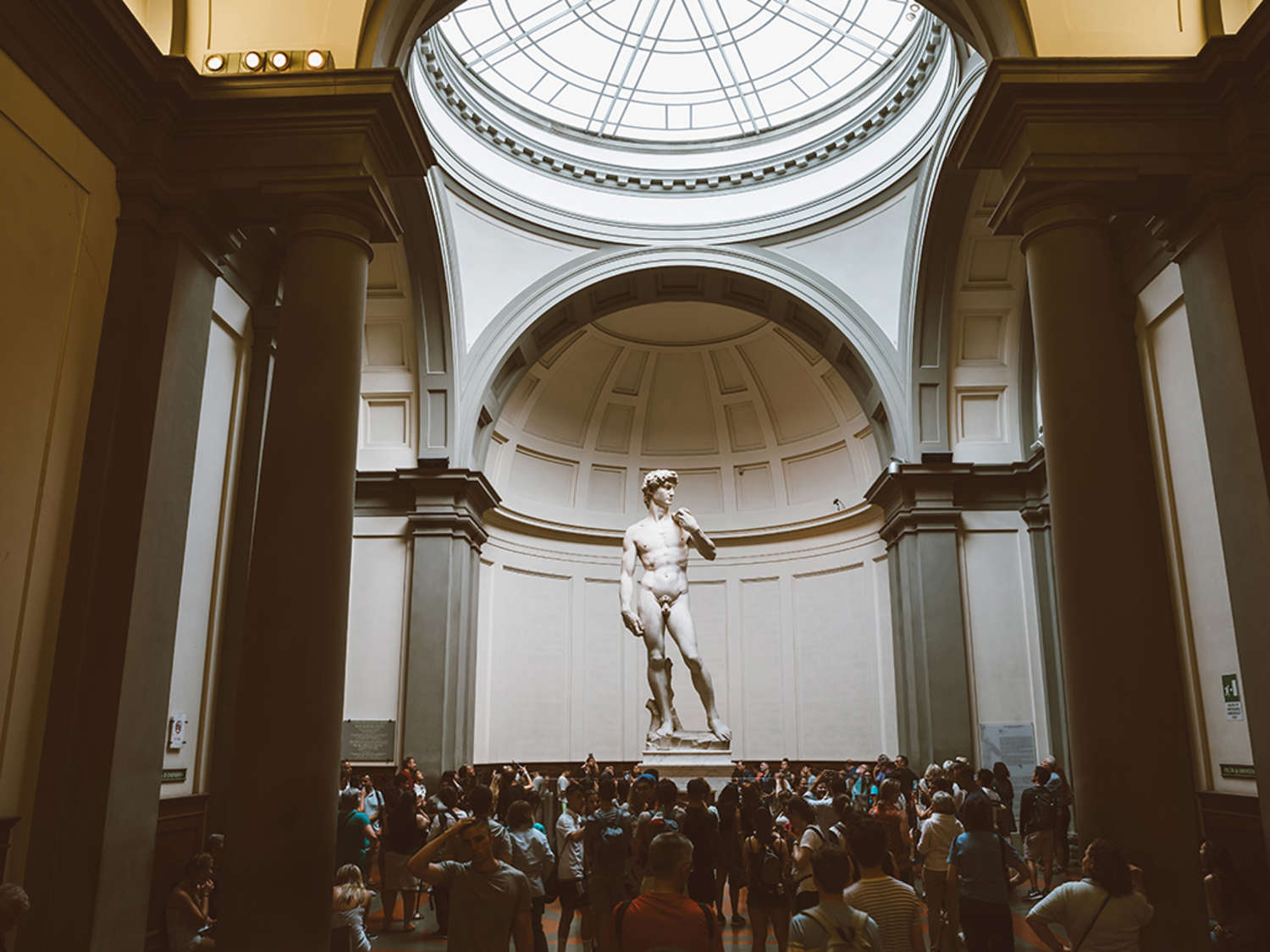
Valentino, Marcello, and, yes, Fabio—even in a land of uomini so famously handsome they go by first name only, not one has yet eclipsed the splendor of Michelangelo’s David. Oft-cited as the world’s most beautiful ,and chiseled—man (and undoubtedly one of its most recognizable sculptures), David was crafted from 1501-1504, when Michelangelo was just 26 years old.
We have been leading tours of Florence for almost 20 years (the Statue of David is a highlight of our Michelangelo in Florence tour), so we’ve amassed quite an array of, well, context, about this Michelangelo masterwork. Thanks to our Florentine art historians, these are a choice ten facts about the Statue of David that give you a peek behind its perfect veneer.
1. How Big Is the Statue of David?
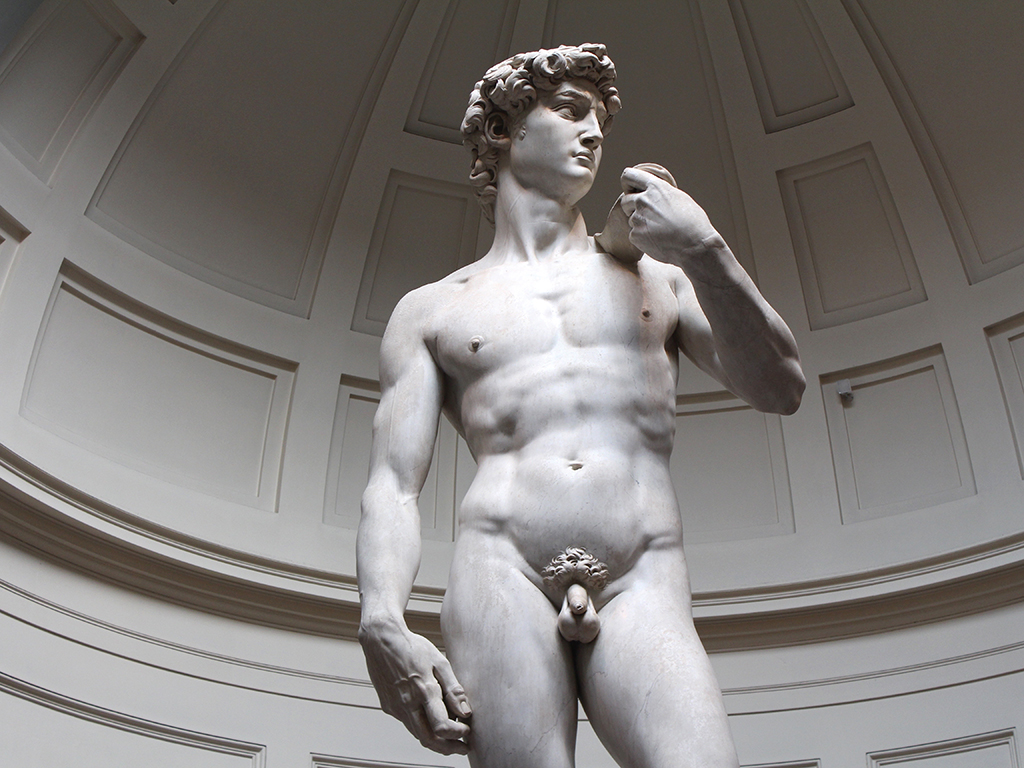
Michelangelo's David weighs nearly 12,500lbs and stands a staggering 17 feet high (for the visual learners out there, that's roughly the equivalent of a two story building, or an adult giraffe).
The statue’s size is the result not of an overblown artistic ego (though Michelangelo was notoriously temperamental), but of simple logistics: originally intended for placement in a ceiling niche of the Florence Cathedral, the sculpture had to be sizeable enough to be viewed from the pews below.
Michelangelo drew inspiration for this sculpture from the Biblical story of David, the tale of a young shepherd boy who saved the Israelites by slaying the warrior giant Goliath wielding only a sling and a handful of stones. This classic underdog tale stars a feeble boy, but Michelangelo's David is a pinnacle of male perfection.
2. How Many Life-Size Copies of Michelangelo's David Are There?
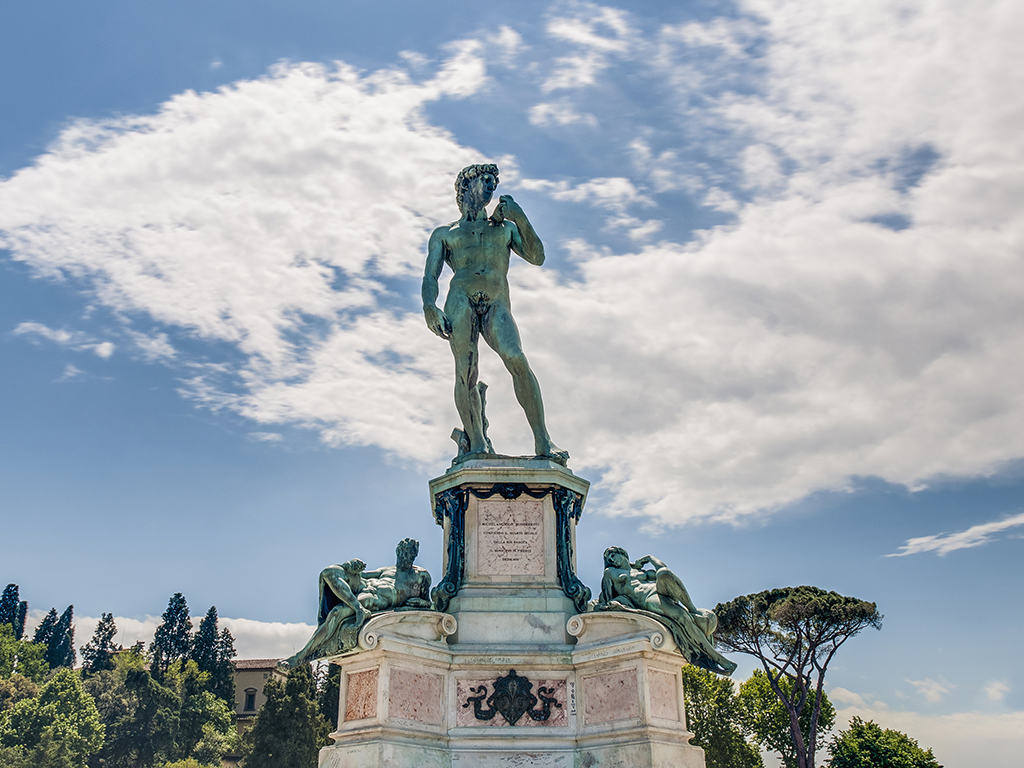
There are around 30 life-sized replicas of David around the world, with the most famous of them in Florence itself. The first is in the Piazza della Signoria in front of the Palazzo Vecchio, where the David statue was originally erected and the second stands in the Piazzale Michelangelo and is cast in bronze.
If imitation is the purest form of flattery, Michelangelo would be blushing, the Statue of David has been reproduced in countless ways, from pictures in coffee-table art books, to small replicas of every shape and color, to kitchen aprons (you know the ones)
3. Why David's Marble Sat Abandoned for 35 Years Before Michelangelo
The Statue of David was originally commissioned in 1464 by the Opera del Duomo, as part of a series of large statues for the Florence Cathedral. These were meant to be sculpted on the ground, then raised roughly 260 feet into niches of the cathedral’s tribunes.
The project was initially awarded to Agostino di Duccio, despite his lack of experience with large-scale sculpture. Duccio traveled to the nearby quarries of Carrara to select a marble block, but his inexperience led him astray, he hewed a tall but narrow block full imperfections, tiny holes, and visible veins.
4. Why do David's Head and Hands Look Oversized When You Stand Below Him?
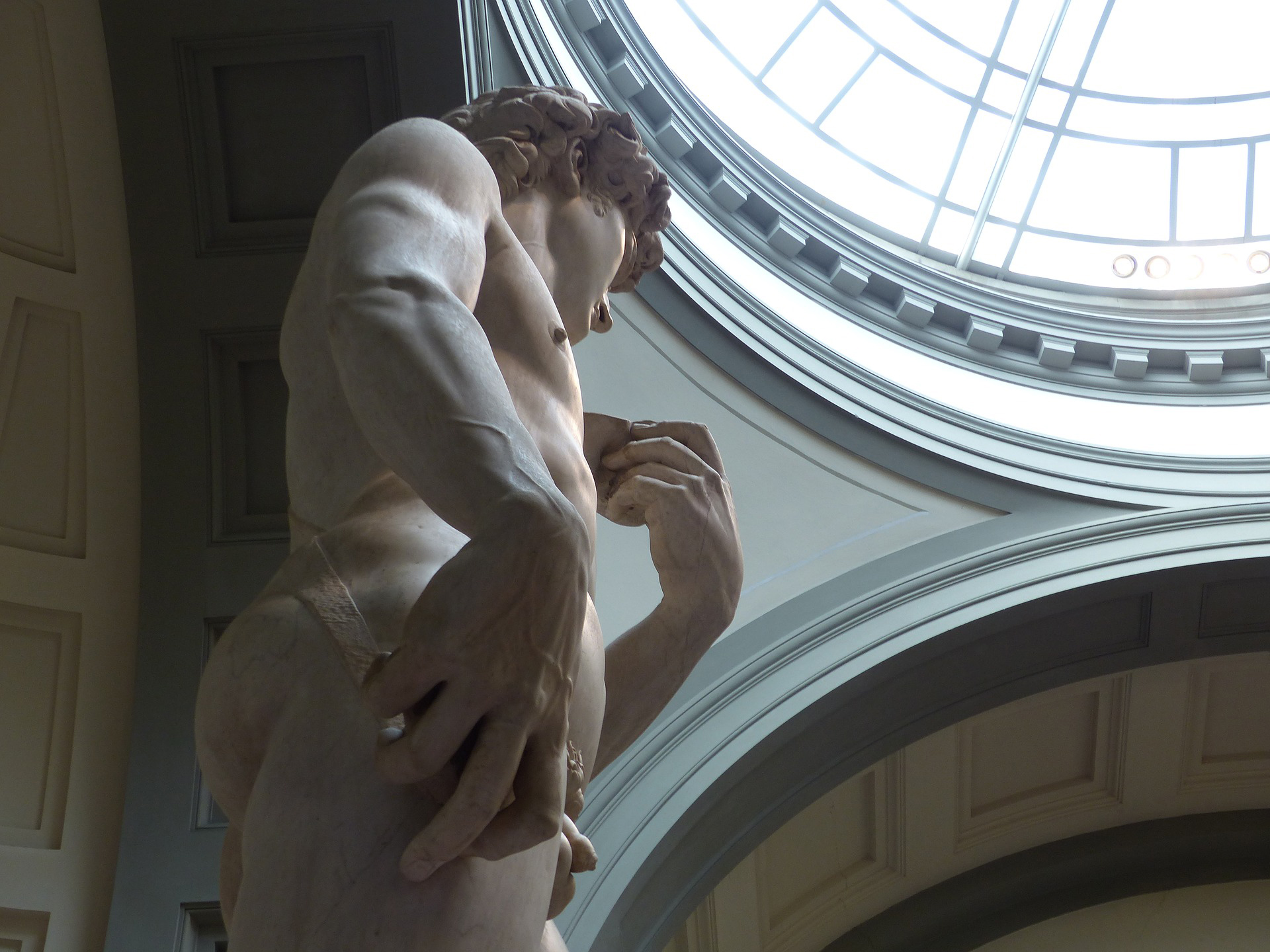
Michelangelo was a master of proportion, but when he accepted the commission to sculpt David in 1501, he inherited a block of marble two other sculptors had chipped, chiseled, and ultimately deemed unworkable.
Certain characteristics of the Statue of David, notably his slender, twisted figure, are likely due to the shape of the marble before Michelangelo began working.
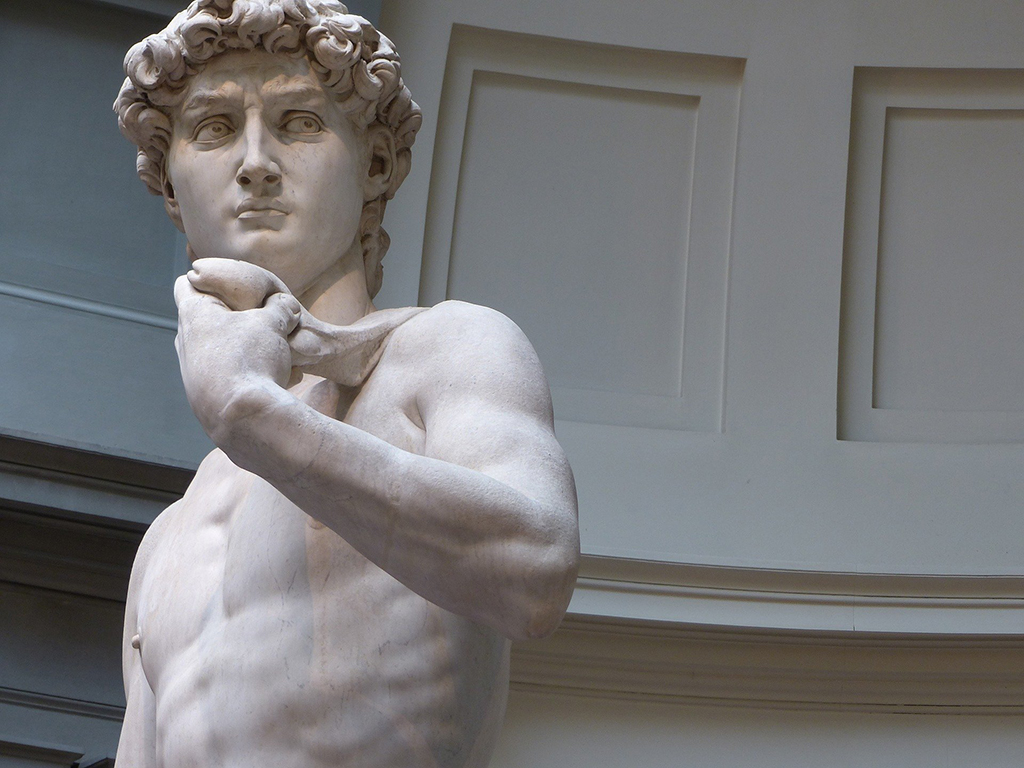
5. Why There's No Goliath: Michelangelo Shows the Moment Before the Fight
6. Is the Statue of David Cross-Eyed? What to Look for in His Gaze
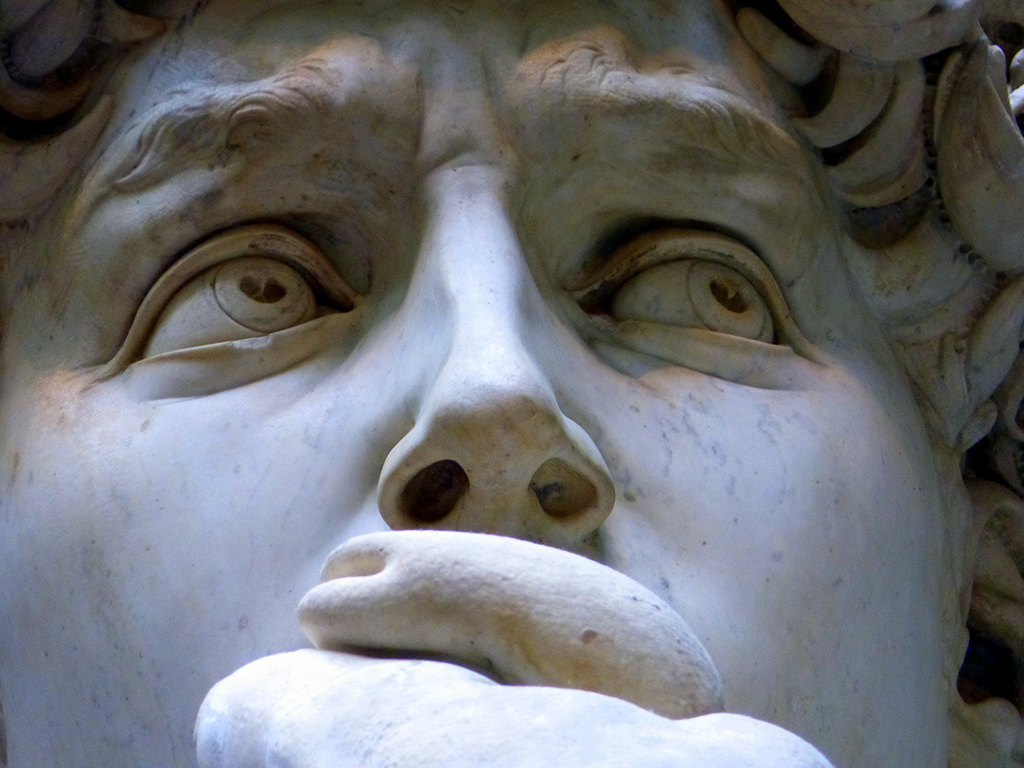
The Statue of David has been upheld as the symbol of perfection for hundreds of years, but Stanford’s Digital Michelangelo Project (one of our favorite recent efforts in art historical geekery) revealed that David is, in fact, slightly cross eyed.
7. How 40 Men Moved David to Piazza della Signoria in 4 Days
As the statue took form and an awe-inspiring David emerged from the marble, the committee decided this masterpiece was too beautiful, and too heavy to be placed atop the cathedral. They elected to place the sculpture in the Piazza della Signoria, replacing Donatello’s Judith and Holofernes at the entrance of the Palazzo Vecchio.
It took four days and forty men to move the Statue of David just half a mile from Michelangelo’s workshop to the Piazza. The statue was suspended by ropes on a wooden scaffold, swaying gently as it was pulled and pushed along a series of trunks laid down across the cobblestones.
8. Although Beloved by Florentines, the Statue of David has Been Damaged Several Times Outdoors
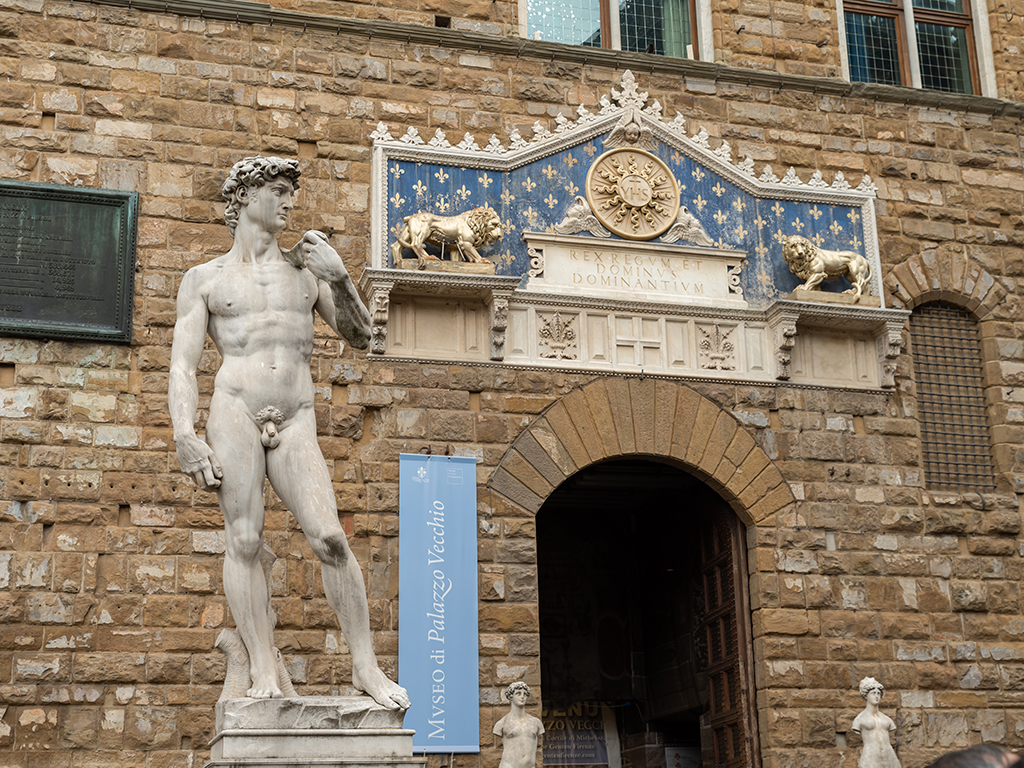
The Statue of David was immediately beloved by Florentines, but that didn’t save the sculpture from damage. During its first year in the Piazza, David was hit with stones. Not long afterwards, in 1527, violent protesters rioting the rule of the Medici family flooded the Piazza. In the scuffle that followed, a bench was thrown from a window, breaking David’s left arm into three pieces. In addition to his famous scuffle with Goliath, David has battled earthquakes, lightning strikes, and pigeons during his extended sojourn outside.
9. David Isn't Perfectly Protected Indoors Either - Ask His Left Foot

10. What the Statue of David Means to Florence
Michelangelo’s David took on new meaning shortly after its creation as both a symbol of the Renaissance and a representation of the city itself. The Florentine Republic faced Goliaths on all sides, both from the ruling Medici family, as well as the endless threats from powerful neighboring states.
The statue of David came to symbolize the independence and civil liberties of the Florence, and David’s eyes cast a threatening glare in the direction of Rome, serving as a warning to any who dared challenge the city. Michelangelo created a symbol of independence and strength, coalesced in the perfect image of youthful beauty.
Next time you’re in Florence, take our Introduction to Florence: with Accademia and Michelangelo's David tour to learn more about Michelangelo’s David in the company of a PhD or MA-level art historian. To understand Michelangelo’s legacy in Florence and around the world, accompany us on our Michelangelo in Florence tour. Or, you can learn with our scholars from the comfort of your own home with our virtual, live taught courses and seminars.
Check Availability Today
Avoid dissapointment and check availability of our Florence tours today
How to Visit the Statue of David at the Accademia
The Accademia Gallery is home to Michelangelo’s David, one of Florence’s most famous attractions. If you’re planning to visit, it’s worth booking your tickets in advance to avoid potentially long lines or missing out altogether.
Accademia Opening Hours
The Accademia is open Tuesday–Sunday from 8:15 AM–6:50 PM, with the last entrance 30 minutes before closing.
Like most museums in Florence, the Accademia is closed every Monday, as well as on January 1, May 1, and December 25.
How Much Does it Cost to See the Statue David?
- Adults: €16
- EU citizens aged 18–25: €2 with valid ID
- Under 18s: Free with proof of age
- Advance booking fee: €4 per ticket, regardless of ticket type
- First Sunday of the month: Free entry for everyone
Our recommendation: Book your Accademia tickets in advance, especially if you’re visiting Florence during the busy spring and summer months. The €4 booking fee is worth paying to secure your entry time and avoid the risk of arriving to find that tickets have sold out.
Context Tours You'll Want To Take:
- Michelangelo in Florence Tour
- Introduction to Florence: with Accademia and Michelangelo's David
- Uffizi Gallery Tour: Crash Course