Small Group Tours are now booking for summer and fall. Book yours today.

Marais Neighborhood Tour

Discover how one neighborhood held on through centuries of change

With an expert beside you, marshland, mansions, and medieval lanes stop being scenery and start being story.
Tour Highlights
  • Read beyond the façades See how private mansions turned architecture into a language of status, privacy, and taste.
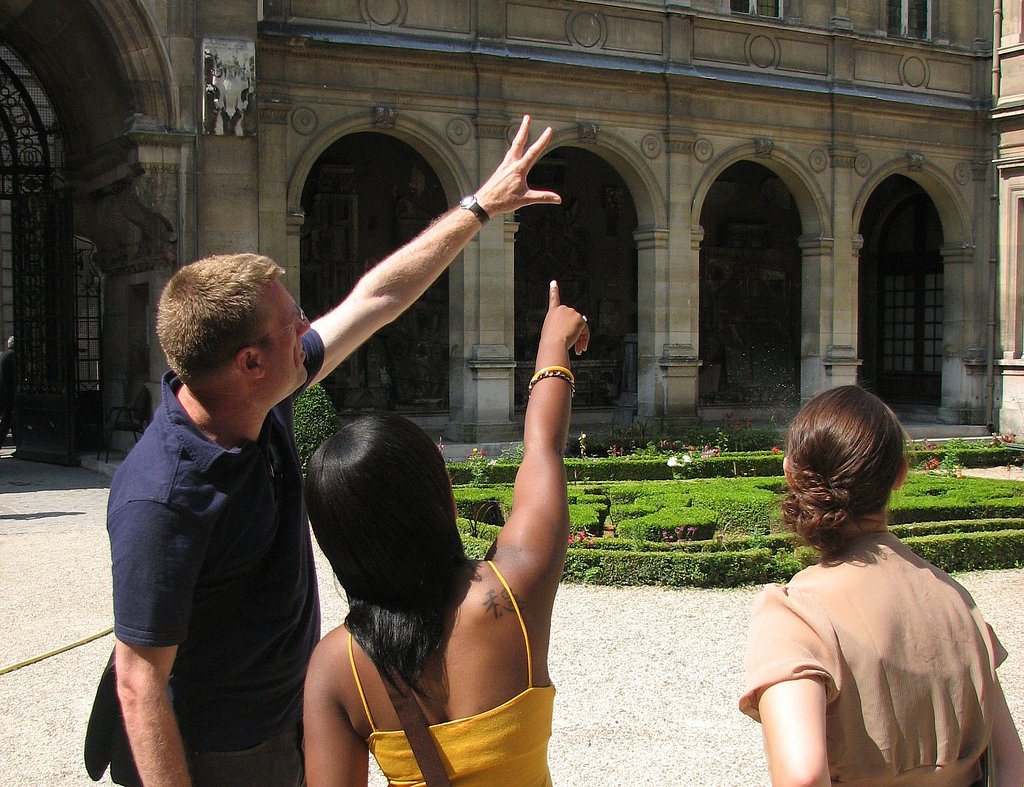
  • Walk with local fluency Notice the courtyards, doorways, and details most visitors walk straight past.
  • Make the centuries connect See how aristocratic grandeur gave way to workshops, decline, and careful preservation.
  • Shape the walk around you Go deeper into the architecture, Jewish history, or local stories that interest you most.
  • Understand the old village Trace how marshland and royal planning shaped this quarter.
  • See Paris before Haussmann Walk medieval streets largely spared from the boulevards that remade much of the capital.
Led by Experts, Shaped by You
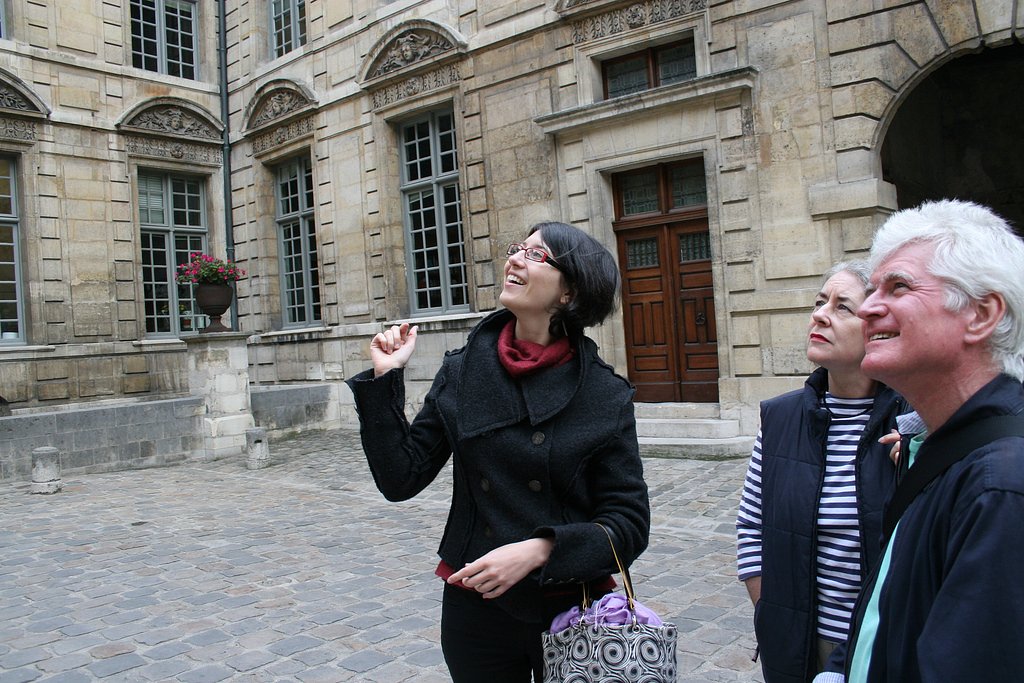
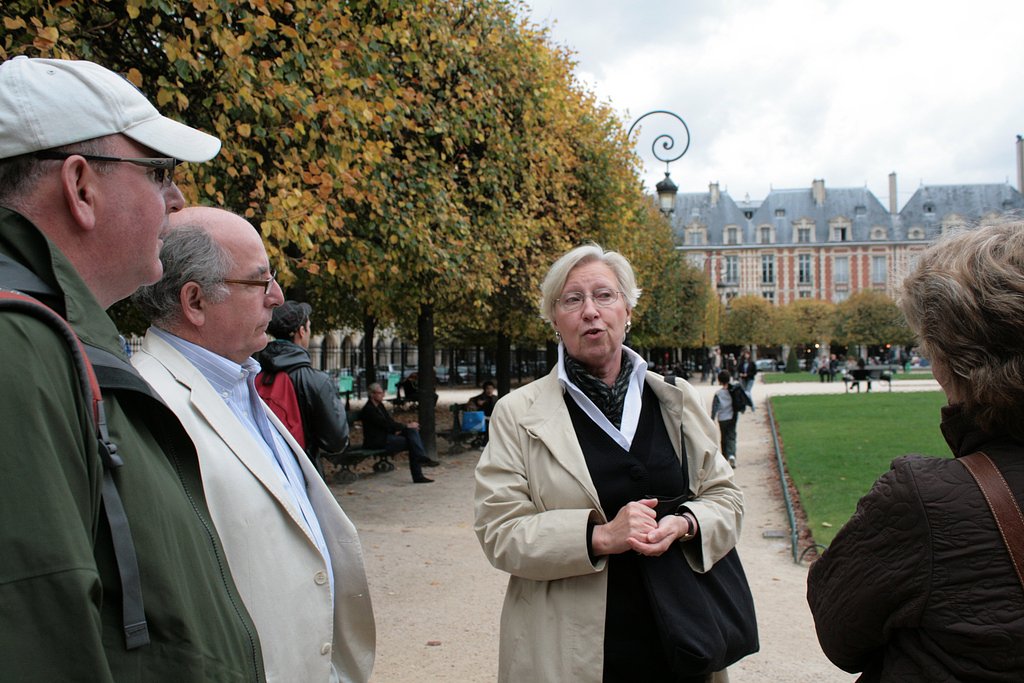
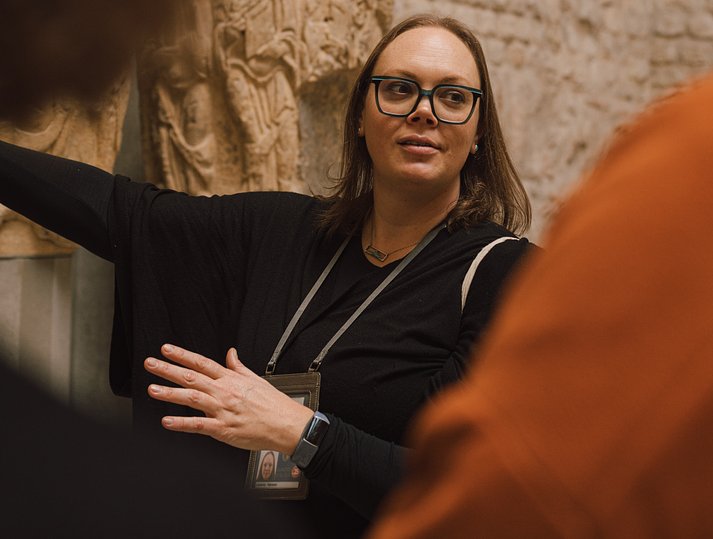
Explore with an expert guide who responds to your questions, your interests, and your pace. Reveal layers of meaning most visitors miss—go from seeing to understanding.
The Finer Details
A courtyard door swings open onto stone worn smooth by three centuries of footsteps, and suddenly Le Marais stops being a street plan and starts being a story. Once a magnet for Parisian aristocracy, this neighborhood now layers private mansions, independent shops, synagogues, museums, and contemporary galleries into charming medieval streets. Its name means marsh, a clue to the wetland drained and cultivated before royal ambition and aristocratic fashion transformed it. On this Le Marais walking tour, those layers start to feel less like scenery and more like a city speaking clearly.

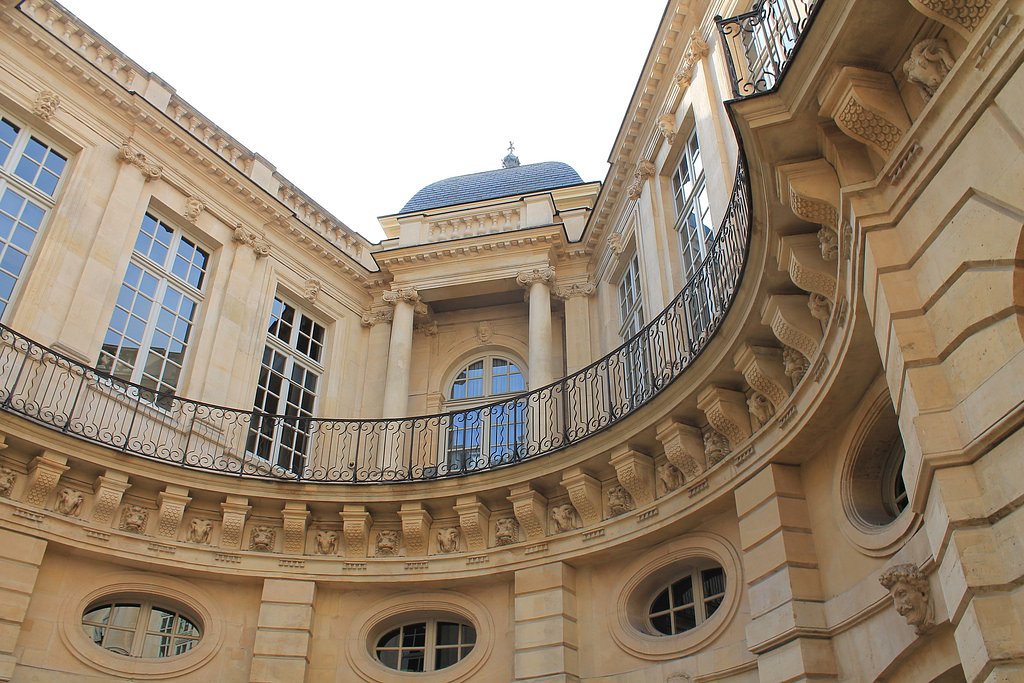
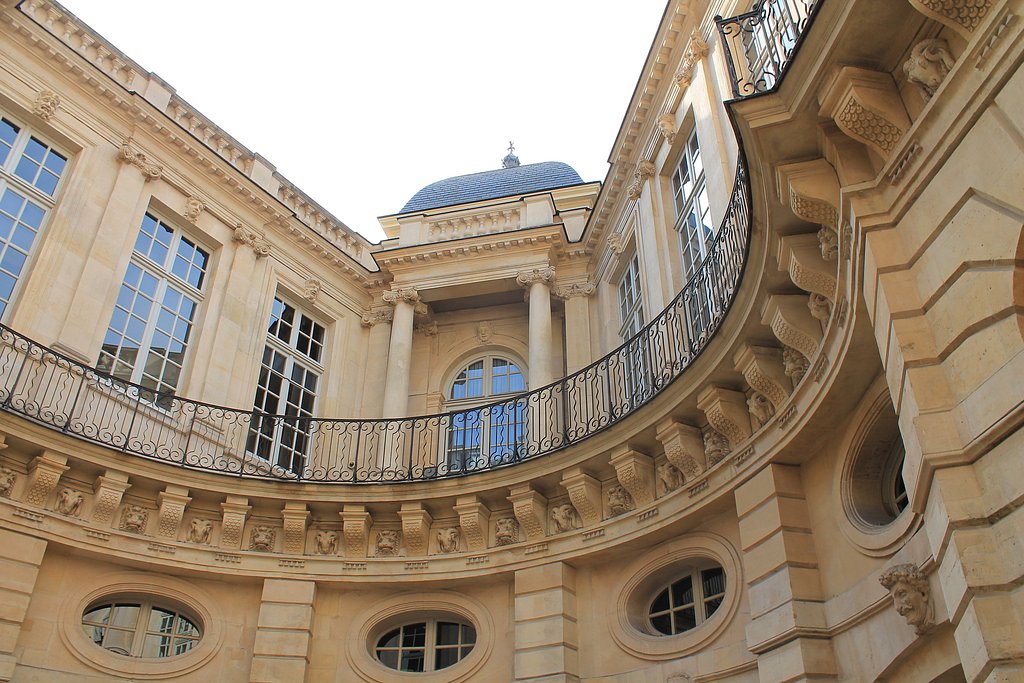
Pause in front of impressive façades with a historian who can share the stories of what went on behind them. Enter overlooked courtyards when access allows, and trace how hôtels particuliers reveal the social and artistic shifts of Paris between 1550 and 1720. Before the French Revolution changed the rules, status in the Marais often meant stone, symmetry, privacy, and a carefully staged entrance.

The Renaissance arrived in Paris in the mid-16th century, changing how the capital imagined space, proportion, and display. Viewing one of the many impressive hôtels particuliers in the neighborhood brings the period into focus. Place des Vosges adds another chapter; commissioned by Henri IV as Place Royale in 1605, it set 36 brick-and-stone houses around a square that still feels remarkably intact. Details like these help the Marais become readable, so a later wander feels richer instead of random.

As the route moves more or less chronologically, architecture becomes a way to understand power and taste. Mansions show how privileged Parisians in the 16th and 17th centuries arranged public display and private life. The story then turns in the 18th and 19th centuries, when aristocrats left, the Revolution finished the break, and grand houses were carved into tenements, workshops, and small factories. Ironically, that decline helped preserve the district, since Haussmann's 19th-century reforms largely spared its tangled streets.

Discuss how 20th-century redevelopment plans threatened aging historic buildings until culture minister André Malraux championed the Marais as an urban conservation area in 1962. Over the next 45 years, state and city authorities bought and restored properties, giving the neighborhood another identity without erasing the earlier ones. What should a city save when its most fragile places hold its deepest memory?

Because this is a neighborhood, not a single monument, the value lies in walking with someone who knows how to connect what a guidebook can only list. Your Context Expert follows your interests, from churches and courtyards to Jewish history, museums, artists, and the politics of preservation. Leave with a mental map that makes you feel genuinely fluent here, ready to return and understand the stories behind the façades.
Where You’ll Go

From iconic landmarks to tucked-away local favorites, these are the places you’ll explore and experience firsthand with your Expert.

  • Hôtel de Soubise
    Palatial mansion within the Archives Nationales
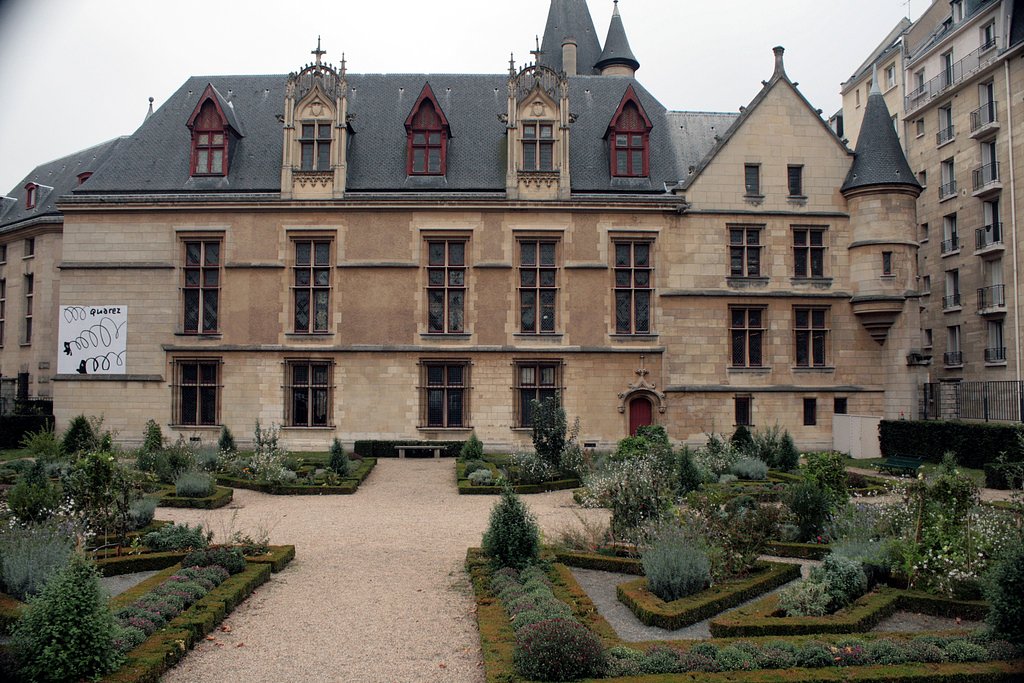
  • Hôtel de Sens
    Flamboyant Gothic mansion from medieval Paris
  • Marais
    Historic Paris district with medieval streets, museums, and cultural landmarks.
  • Place des Vosges
    Planned royal square with 36 unified façades
  • Hôtel Carnavalet
    Former mansion now home to its namesake museum
What’s Included As Standard
Here’s a look at what your tour covers, plus anything you’ll want to consider arranging separately, so you can plan with confidence.
Included
  • English-speaking expert guide
    Tours led in English, offering you unbroken understanding throughout.
  • Intentionally sized groups
    A smaller group means more time for conversations and questions.
  • Tickets and entrance fees
    All entry tickets included (unless clearly stated otherwise).
  • Headsets
    Headsets are included on tours that need them, so every word can be heard.
Not Included
  • Food and drink
    Unless booking a Food & Drink tour or tasting experience, refreshments are not included.
  • Transportation to and from the meeting point
    Unless noted, pre- and post-tour transport isn’t included - this service can be added by request.
  • Gratuities
    Tips aren’t included, but we encourage tipping as a way to thank your guide after your experience.
  • Hotel pickup or drop-off
    Unless noted, travel to or from accommodation isn’t included - this service can be added by request.
Where You'll Explore
Map of Marais Neighborhood Tour general meeting point area

Make the Most of Your Tour

Some helpful advice for getting the most from your experience, from practical prep to small on-the-day tips.

Dos:
  • Wear comfortable footwear
  • Check the weather and dress appropriately
  • Bring a bottle of water (no glass)
  • Feel free to ask your Expert anything
Don'ts:
  • Bring firearms or weapons
  • Bring sharp objects (e.g. knives, swiss army knives, switchblades, hiking sticks)
  • Dress inappropriately to enter religious sites or sacred monuments
Any questions? You can always contact us.

Frequently Asked Questions

The Marais district has many former private mansions built mainly from the middle of the 16th century to the end of the 17th century. Most of these are now museums. We may enter some of the structures; others we will view from the outside.
Each expert includes different sites, so it is possible you may enter a structure that requires an additional ticket. This would be purchased on-site and is not included in the cost of the walk.
Most of the mansions included in the walk are now museums or libraries so you will probably not be entering any currently private mansions.
Le Marais is known for its medieval street pattern, private aristocratic mansions, Jewish heritage, museums, galleries, independent shops, and well-preserved architecture.
Book with confidence — see Context's flexible cancellation policy here.
We understand that some of our valued guests may have mobility concerns, and we want to ensure you have a comfortable and enjoyable experience throughout your tour. If there are any accessibility concerns that your tour guide will need to be aware of, please let our team know at the time of booking.

Is this tour wheelchair-friendly?
Our Le Marais private tour is fairly walking-intensive and the route may include narrow sidewalks and cobblestoned streets. The route may include a visit to Musée Carnavalet or the Hôtel de Soubise, which are only partially accessible. Please contact us to discuss in more detail your mobility concerns so that we can best advise.

Don’t just take our word for it

167 Reviews

Pablo is an exceptional guide, and the two tours I've had with him have been wonderful, even during a heatwave. Highly, highly recommended.
Excellent guide

Asli is wonderful. She is so great at pointing out and explaining things I’ve looked at and never really understood before - a whole world of unknown history and architecture. Plus she is she is warm and friendly and very very kind. Thank you so much for the tour, Asli, and the chance to get to know you!

Book a Tour

Let Your Curiosity Shape Your Journey

Join passionate experts on intimate walking tours that reveal a city’s unique stories, spark conversations, and leave you seeing the world—and yourself—a little differently.

Structured, never scripted

Your interests guide your Expert, leading to stories and perspectives that matter to you.

Crafted for conversation

With 12 or fewer guests, ask questions, engage with your Expert, and fully immerse yourself.

Experts, not guides

Explore with 1,200+ Experts—from historians and architects to archaeologists and chefs.

Understand Le Marais Beyond Its Shops and Cafés

Le Marais is one of Paris’s most popular neighborhoods, but its appeal can obscure the history built into its streets.

This private Le Marais walking tour explores a district shaped by marshland, royal planning, aristocratic ambition, Jewish life, industry, decline, and preservation. Medieval lanes sit beside Renaissance mansions, synagogues, museums, galleries, and fashionable storefronts, but those layers are not always easy to distinguish without context.

Walking with a Context Expert, you’ll learn how to interpret the façades, courtyards, street patterns, and public spaces that reveal several centuries of Parisian life.

Rather than simply showing you where to go, the tour gives you a way to understand what you are seeing—and a mental map that makes later exploration more rewarding.

Why Take a Le Marais Walking Tour?

Le Marais is best understood on foot.

Unlike the broad boulevards associated with much of central Paris, its narrow streets preserve an older urban pattern. Mansions hide behind discreet entrances, courtyards sit beyond heavy doors, and architectural clues can be easy to miss when moving through the neighborhood independently.

A guided Le Marais walking tour connects those details into a clear historical sequence.

You’ll see how wet agricultural land became a fashionable aristocratic district, why noble families built elaborate private residences here, how Revolution and industrialization changed their use, and why twentieth-century conservation efforts prevented much of the neighborhood from disappearing.

The route also adapts to your interests, whether you want to focus more closely on architecture, Jewish history, preservation, or everyday neighborhood life.


What Will You See on This Le Marais Private Tour?

This Le Marais private tour moves through streets and squares that reveal how Paris developed before the large-scale transformations of the nineteenth century.

Exact stops may vary according to access, opening conditions, and the interests of your party.

Medieval Streets and the Origins of Le Marais
The name Marais means marsh, recalling the wet ground that once occupied this part of Paris.

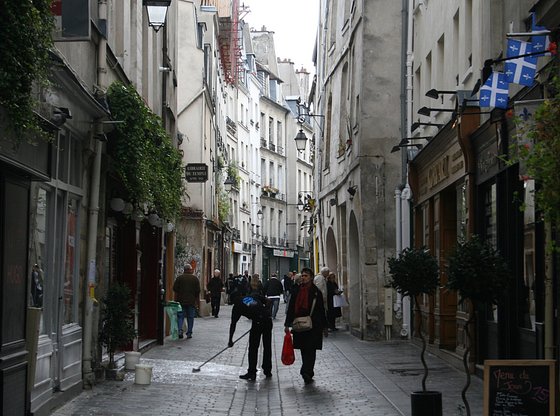
As the land was drained and cultivated, religious institutions, royal projects, and private development gradually transformed the area. Its irregular street plan preserves traces of this early growth, making Le Marais feel markedly different from the ordered avenues found elsewhere in the capital.

Your Expert helps you recognize how the neighborhood’s physical shape reflects its history rather than treating its winding streets as picturesque accident.

Hôtels Particuliers and Aristocratic Paris
Le Marais contains one of Paris’s greatest concentrations of hôtels particuliers—private urban mansions built for wealthy and influential families.

These were not hotels in the modern sense. They were carefully designed residences that balanced public display with privacy. Gates, courtyards, formal façades, gardens, and reception rooms communicated wealth, rank, and taste.

At buildings such as the Hôtel de Soubise, Hôtel de Sens, and Hôtel Carnavalet, your Expert explains how architecture became a language of social power between the sixteenth and eighteenth centuries.

Even when interiors are not accessible, the relationship between street, entrance, courtyard, and residence reveals how elite Parisian life was arranged.

Place des Vosges and Royal Urban Planning
Commissioned under Henri IV in the early seventeenth century, Place des Vosges was originally known as Place Royale.

Its unified brick-and-stone façades surround one of Paris’s earliest formally planned squares. The design introduced a different model of urban life, combining royal authority, aristocratic residence, commerce, and public space within one carefully ordered composition.

The square helps explain how Le Marais changed from a district of scattered estates into one of the most fashionable parts of Paris.

Le Marais After the Revolution
The French Revolution disrupted the aristocratic society that had shaped much of the neighborhood.

Many noble families left, and former mansions were divided into apartments, workshops, warehouses, and small factories. By the nineteenth century, parts of Le Marais had become densely populated and economically diminished.

That decline changed the district, but it also helped protect it. While other parts of Paris were cleared and widened during the transformations associated with Baron Haussmann, many of Le Marais’s narrow streets and older buildings remained.

Today’s architectural richness partly survives because the neighborhood fell out of fashion.

See Paris Before Haussmann

Much of the Paris visitors recognize today was reshaped during the nineteenth century through broad boulevards, uniform façades, new parks, and major infrastructure projects.

Le Marais offers a different view.

Its medieval streets, irregular plots, hidden courtyards, and buildings from several periods reveal a city that developed gradually rather than according to one master plan.

This makes a walking tour of Le Marais especially valuable for travelers interested in how Paris looked and functioned before its most famous urban transformation.

The neighborhood does not preserve one frozen historical moment. It preserves evidence of repeated adaptation. Want to dive deeper into the Paris Hausmann helped develop? Check out our Paris Architecture Tour: Haussmann's Vision.

Jewish History in Le Marais

Le Marais has long been associated with Jewish life in Paris, particularly around the area often called the Pletzl, or “little place.”

Jewish communities lived in and around the district during different periods, despite expulsions, restrictions, persecution, and displacement. In the nineteenth and early twentieth centuries, new arrivals from Eastern Europe established homes, workshops, bakeries, schools, synagogues, and businesses in the neighborhood.

That history remains visible, though it has also been affected by the Holocaust, postwar migration, tourism, and gentrification.

Depending on the route and your interests, your Expert can place this heritage within the broader development of Le Marais rather than presenting it as a separate or static chapter. If you're looking to dive deeper into the Marais' Jewish history, check out our Paris Jewish History Tour.

How Was Le Marais Preserved?

By the twentieth century, many historic buildings in Le Marais were deteriorating, and redevelopment plans threatened large parts of the district.

In 1962, French culture minister André Malraux supported legislation that created protected historic areas and encouraged urban restoration. Le Marais became one of the most important early examples of this approach.

Preservation, however, brought its own questions.

Restoring mansions and façades protected significant architecture, but it also altered who could afford to live and work in the neighborhood. The Le Marais seen today is therefore the result of both successful conservation and profound social change.

Your Expert can help unpack that tension: what is gained when a city preserves its historic fabric, and what may be lost when restoration changes the community around it?

Why Choose a Private Le Marais Tour?

Because this is a neighborhood rather than a single monument, different visitors naturally notice different things.

Some are most interested in architecture and urban planning. Others want to understand Jewish history, the French Revolution, museums, contemporary life, or the politics of preservation.

On a private Le Marais tour, the conversation can respond to those interests. Your Expert can pause longer at a particular building, explain an unfamiliar architectural term, or connect the route to other parts of your Paris itinerary.

The private format also makes it easier to move at a comfortable pace and enter courtyards or quieter spaces when access permits.

Is a Le Marais Walking Tour Worth It?

Le Marais is easy to visit independently but difficult to interpret well.

Without context, its mansions may look like attractive façades, Place des Vosges may feel like a pleasant square, and its narrow lanes may simply appear charming. A knowledgeable Expert reveals why those features exist and what they say about wealth, urban change, migration, preservation, and Parisian identity.

The tour is especially worthwhile for visitors who enjoy understanding how a neighborhood developed rather than simply collecting landmarks.

It also makes future wandering easier. Once you know how to read its doors, courtyards, street patterns, and architectural changes, Le Marais becomes much more legible.

Who Is This Tour Best For?

This experience is well suited to:
  •  first-time visitors who want to explore beyond central Paris landmarks; 
  •  travelers interested in architecture and urban history; 
  •  returning visitors looking for a deeper neighborhood experience; 
  •  guests curious about Jewish history in Paris; 
  •  visitors interested in preservation and changing city life; 
  •  couples, families, and private groups with varied interests. 
Because the experience is private, the route and discussion can be adjusted around your party within the practical limits of access and timing.

Frequently Asked Questions

Is this a private Le Marais walking tour?
Yes. The experience is reserved for your party, allowing your Expert to adapt the discussion and pace to your interests.

What is Le Marais known for?
Le Marais is known for its medieval street pattern, private aristocratic mansions, Jewish heritage, museums, galleries, independent shops, and well-preserved architecture.

What will we see during the tour?
The route may include Place des Vosges, Hôtel de Soubise, Hôtel de Sens, Hôtel Carnavalet, historic courtyards, churches, and streets connected to Jewish and aristocratic history.

Do we enter the mansions?
The tour primarily examines the neighborhood and its architecture from streets and courtyards. Access to particular courtyards or interiors depends on opening conditions and permission on the day.

Does the tour cover Jewish history?
Jewish history can form an important part of the tour, particularly when it matches your interests and the Expert’s route. It is discussed within the neighborhood’s wider social and historical development. Context Travel also has a Paris Jewish History Tour that dives deeper into the subject. 

Is Le Marais a good neighborhood for a walking tour?
Yes. Its compact streets, layered architecture, courtyards, squares, and visible historical changes make it particularly well suited to exploration on foot.

Is this a food or shopping tour?
No. Although Le Marais is known for shops, cafés, and food, this experience primarily focuses on history, architecture, Jewish heritage, and urban preservation. For those interested in food, check out our Paris Food Tour: Food Trends in the Marais.

How is this different from exploring Le Marais independently?
Independent exploration lets you experience the neighborhood’s atmosphere. A private tour adds historical interpretation, access to easily missed details, and a clearer understanding of how its buildings and communities changed over time.