


great great
Central Europe Tours
Explore the cities, ideas, and turning points that shaped the heart of Europe.
Let Your Curiosity Shape Your Journey
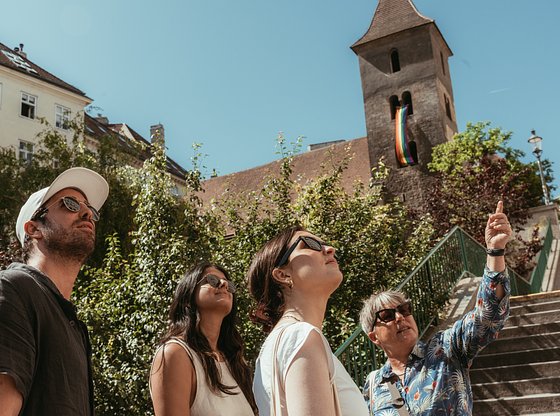
Join passionate experts on intimate walking tours that reveal a city's unique stories, spark conversations, and leave you seeing the world—and yourself—a little differently.
Experts, not guides
Explore with 1,200+ Experts, from historians and architects to chefs and archaeologists.
Crafted for conversation
With fewer than 12 guests, engage your Expert through questions and immerse fully.
Structured, never scripted
Your interests guide your Expert, leading to stories and perspectives that matter to you.
Curious or connoisseur
First-time visitor or seasoned explorer, our tours span city highlights to deep-dives.
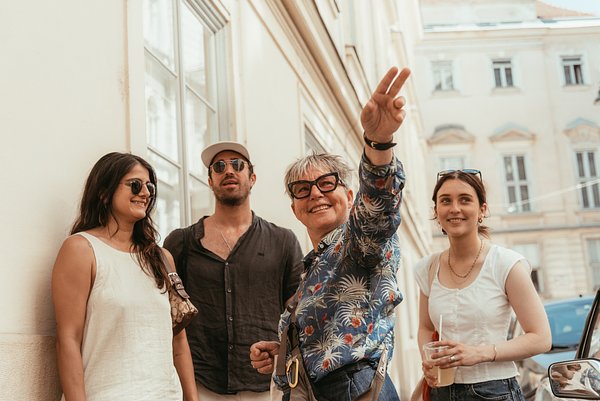
Understand Central Europe across borders.
Trace empires, revolutions, artistic movements, and everyday life from Berlin and Krakow to Vienna, Budapest, Prague, and the Alps. One region. Many histories.
The best Central Europe tours help travelers understand how these places connect. Rather than seeing each city as an isolated stop, you begin to recognize the shared histories of empire, religion, trade, migration, and political change that shaped the region over centuries.
Find your Central Europe tour
Explore expert-led tours across Germany, Poland, Czechia, Austria, Hungary, and Switzerland.
Hear from our customers
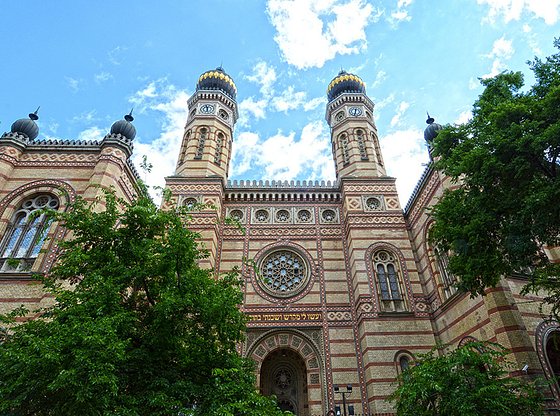
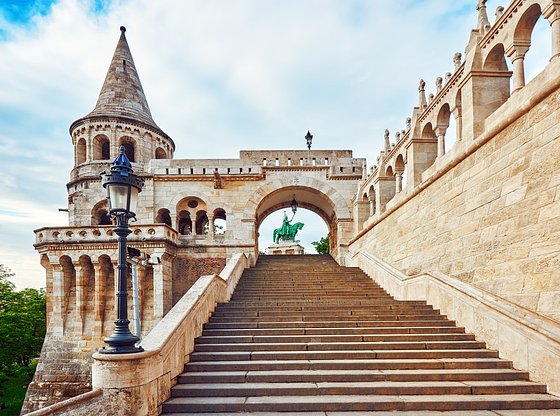
Anna was fantastic! She was very knowledgeable about both the architecture and history of Budapest. We really enjoyed her tour!
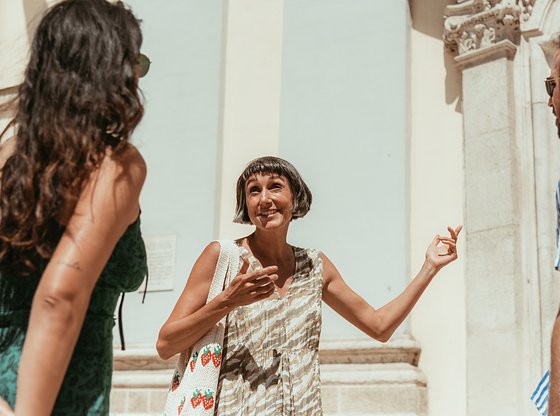
Renata is a superb guide for at least three reasons. First, she took some time to customize our guide based on our interests and experiences. Second, she is extremely knowledgeable about the history, culture and architecture of Krakow. As an artist she often shared a unique visual and cultural perspective. Finally, she is a warm and engaging person—someone you are happy to spend a few hours with. You will be very fortunate to have her conduct your tour.
Expert-Led Central Europe Tours
Central Europe is difficult to understand one country at a time. Borders have shifted, empires have risen and fallen, languages and religions have overlapped, and the same political movements have left radically different marks from one city to the next. A trip through Berlin, Munich, Warsaw, Krakow, Prague, Vienna, Salzburg, Budapest, Zurich, Lucerne, Bern, Basel, or Geneva creates opportunities to make those connections. Context's Central Europe tours range from city introductions and architecture walks to Jewish heritage, food, art, World War II, Cold War, and contemporary politics experiences. The current collection includes 64 experiences, with tours such as the Berlin Wall, Budapest's Jewish history, Prague's historic center, and Vienna's First District among the portfolio. Rather than treating Central Europe as a checklist of capitals, our Experts help you understand how each destination fits within the larger forces that shaped the region.
Start with the amount of time you have rather than the number of countries you want to visit.
With one week, two cities usually provide enough contrast without turning the trip into a series of train journeys. Vienna and Budapest or Prague and Berlin are natural combinations.
With 10 to 14 days, three or four destinations become realistic. Prague, Vienna, and Budapest form a classic route, while Berlin, Warsaw, and Krakow create a journey particularly rich in modern European history.
A longer itinerary can add Salzburg, Munich, or Switzerland, or allow more time in Poland rather than simply moving between capitals.
Rail connections make many Central European cities relatively easy to combine, but geography shouldn't be your only consideration. Think about the story you want the trip to tell: imperial Europe, Jewish history, twentieth-century politics, art and architecture, food culture, or simply how neighboring cities developed such distinct identities.
Central Europe is full of historical connections that aren't always visible from the street.
Context's tours are led by historians, architects, art historians, journalists, food specialists, and other Experts who help make those connections legible. In Budapest, a discussion of the Habsburg period might help explain architecture you later encounter in Vienna. Understanding Berlin's division can change how you approach the postwar histories of Prague or Warsaw.
Our tours are structured around conversation rather than a memorized script. Context currently works with more than 1,200 Experts globally, and its experiences are designed to leave room for travelers' questions and interests.
That approach is particularly suited to a region where the interesting questions rarely stop at the border.
What countries are considered Central Europe?
Definitions vary, but Austria, Czechia, Germany, Hungary, Poland, Slovakia, and Switzerland are commonly associated with Central Europe. Slovenia is also frequently included, and definitions can shift depending on whether the discussion is geographic, historical, political, or cultural.
For travel planning, it's more useful to think about connections between destinations than to worry too much about drawing an exact boundary around the region.
What are the best places to visit in Central Europe?
Prague, Vienna, Budapest, Berlin, and Krakow are excellent starting points for a first trip because each offers substantial history, architecture, museums, and cultural life.
Beyond the major capitals, Salzburg is rewarding for music and Alpine culture; Munich for Bavarian and twentieth-century history; Warsaw for Polish history and the experience of reconstruction; and Lucerne for combining a historic city with the Swiss landscape.
Cities such as Zurich, Basel, Bern, and Geneva are also worthwhile for travelers interested in art, architecture, the Reformation, political history, or diplomacy.
What is the best Central Europe itinerary for first-time visitors?
Prague, Vienna, and Budapest make one of the strongest first-time itineraries. They are geographically convenient to combine and share important historical connections, particularly through the Habsburg world, while remaining strikingly different destinations.
With more time, add Berlin or Krakow for another perspective on the region's twentieth-century history.
How many days do you need in Central Europe?
Allow at least 7 to 10 days for two or three destinations. Around two weeks gives you enough time to combine three or four cities without making transportation the dominant feature of the trip.
Travelers interested in museums, history, or architecture may want three or four full days in major cities such as Berlin, Vienna, or Budapest rather than moving on after a single night.
Is Central Europe easy to travel by train?
Yes. Rail is one of the most practical ways to travel between many major Central European cities, particularly routes connecting places such as Vienna, Budapest, Prague, Berlin, Munich, Salzburg, and Zurich.
Not every itinerary needs to be built around the train, however. Look at actual journey times before adding another destination; sometimes an extra night in the city you're already enjoying is more valuable than another pin on the map.
What is the best time of year to visit Central Europe?
Spring and early autumn are excellent for city-focused itineraries, with generally comfortable temperatures and plenty of cultural activity. Summer brings longer days but also larger crowds in major destinations. Late November and December are popular for Christmas markets, particularly in Austria, Germany, Czechia, Hungary, and Switzerland.
Winter can also be rewarding for travelers prioritizing museums, cafés, concerts, and architecture over long days outdoors.
Are guided tours worth it in Central Europe?
They can be especially worthwhile here because so much of the region's history overlaps. The Habsburg Empire, World Wars, Holocaust, Cold War, communism, Jewish history, nationalism, and changing borders affected neighboring cities in profoundly different ways.
A knowledgeable local historian or specialist can help connect a building or neighborhood to those larger histories without reducing an extraordinarily complicated region to a string of dates.
Is Central Europe good for history lovers?
Exceptionally so. Few relatively compact regions allow travelers to encounter medieval kingdoms, the Reformation, Habsburg rule, Jewish cultural history, nationalism, two World Wars, the Holocaust, communist governments, the Cold War, and contemporary European politics across such a manageable geographic area.
The real value comes from comparison: Berlin makes Budapest more interesting; Vienna changes how you see Prague; Krakow adds context you won't get from Warsaw alone.