Excellent
Tokyo Architecture Tour: Omotesando and Harajuku
Trace Tokyo’s modernity through shrine traditions and bold design
Shrine paths, subculture streets, and bold designs abound in Tokyo. Discover how tradition gave way to modernity through architectural development.
Tour Highlights
- See modern Tokyo take shape Trace how sacred tradition, postwar culture, and design shaped the city you see.
- Tradition in design At Meiji Jingu, see how older aesthetics became foundations for modern Japan.
- Harajuku's subcultures Connect postwar change, fashion, and identity in one of Tokyo's boldest districts.
- Cutting-edge modernity Read Omotesando's boutiques as statements about taste, status, and modern design.
- Compare three distinct Tokyos Move through shrine, street, and boulevard as your Expert connects each visual world.
- Travel with a sharper eye Gain an aesthetic lens that brings clearer meaning to the rest of your time in Japan.
Led by Experts, Shaped by You
Explore with an expert guide who responds to your questions, your interests, and your pace. Reveal layers of meaning most visitors miss—go from seeing to understanding.
The Finer Details
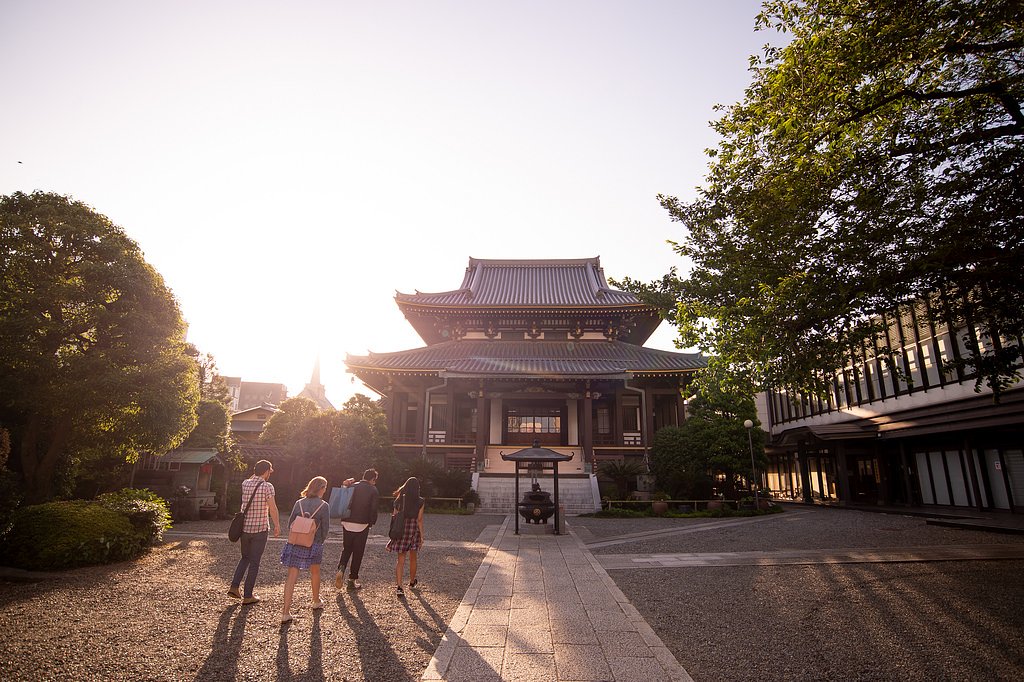
Tokyo's modernity is not summed up by one style, but is instead found in a conversation of belief, identity, and design. This three-hour Tokyo architecture tour offers first-time and returning travelers an aesthetic immersion into the capital. With your Context Expert, explore the principles beneath the buildings, streets, and visual choices around you. No architecture background is required, only curiosity about how a city expresses what it values.
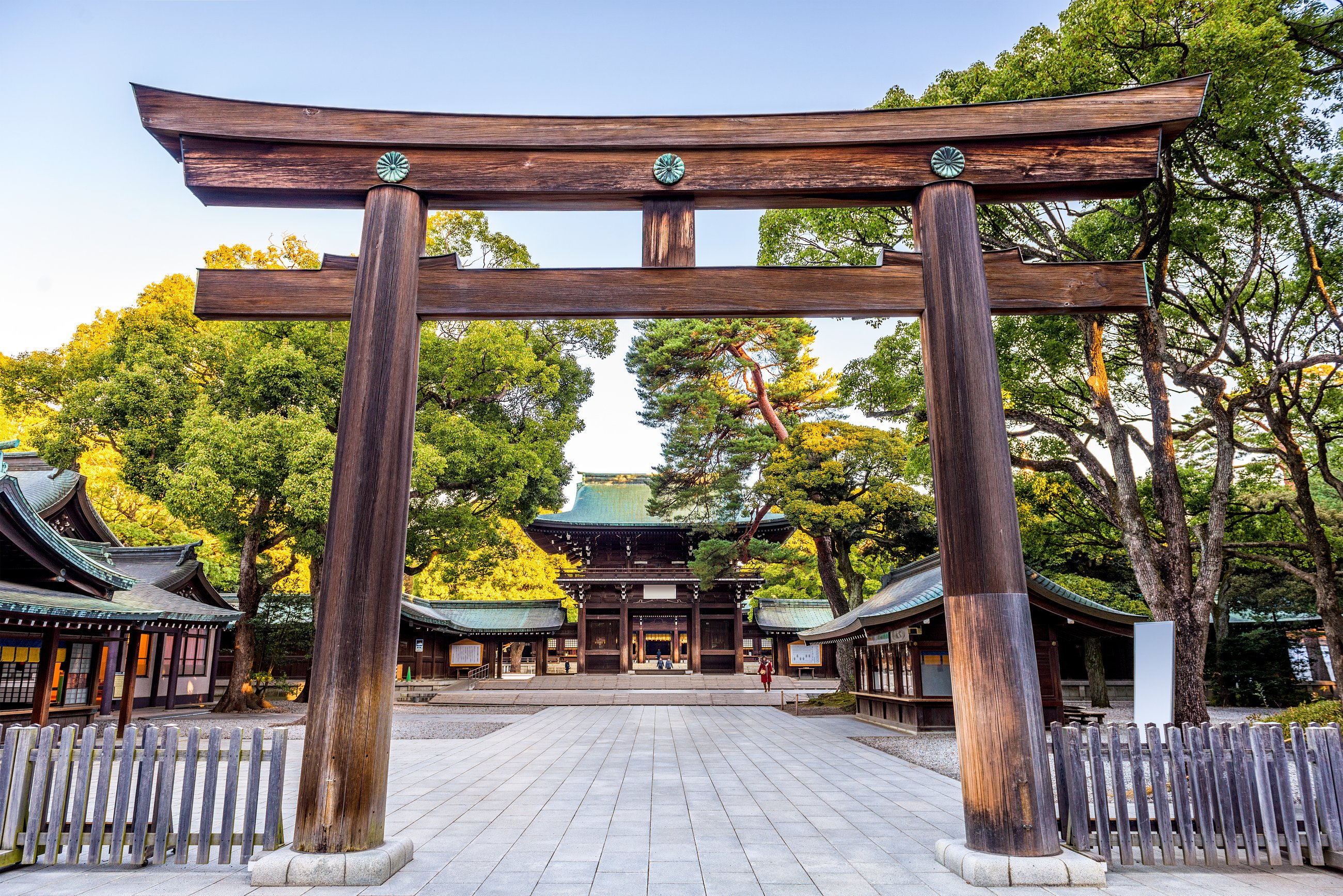
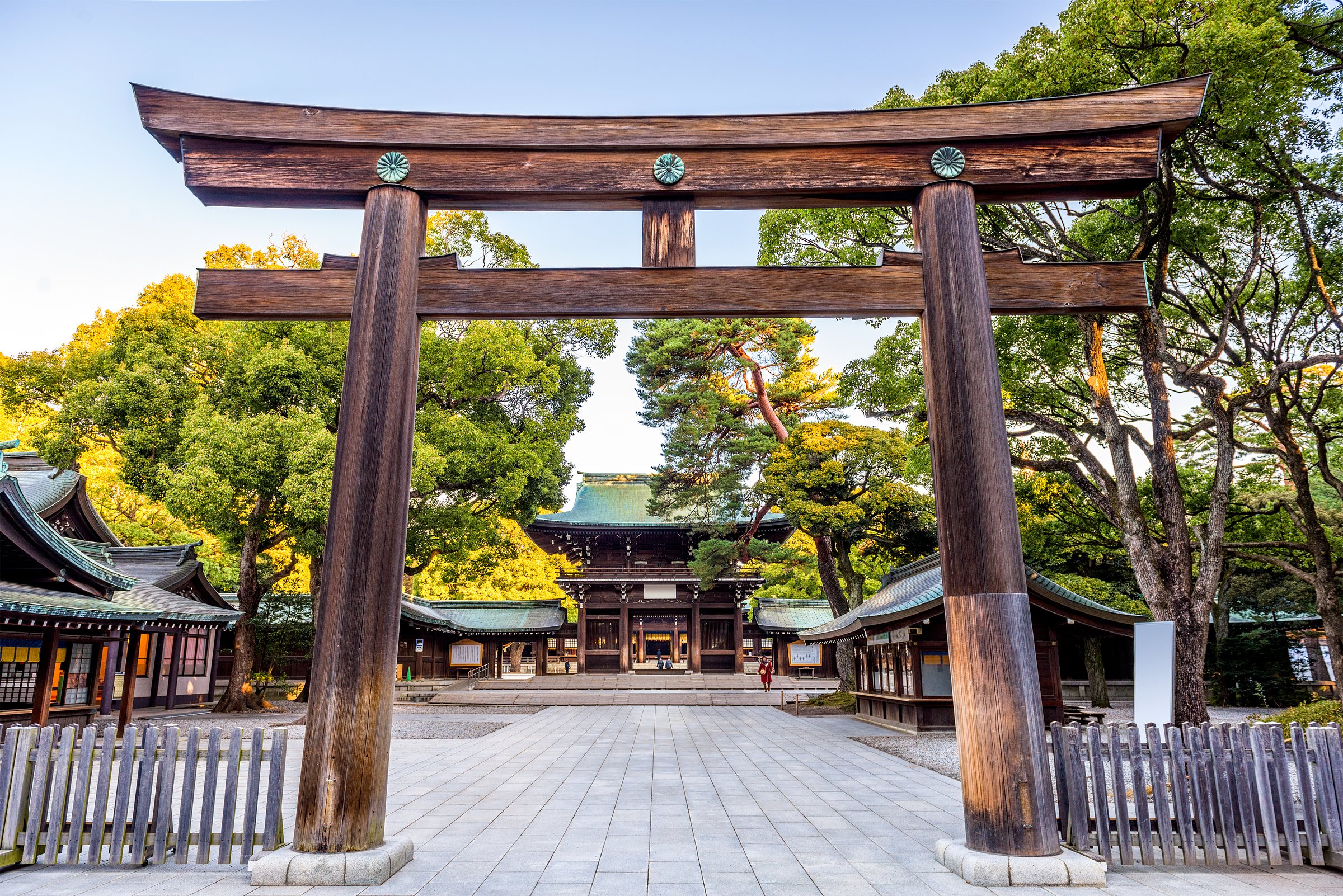
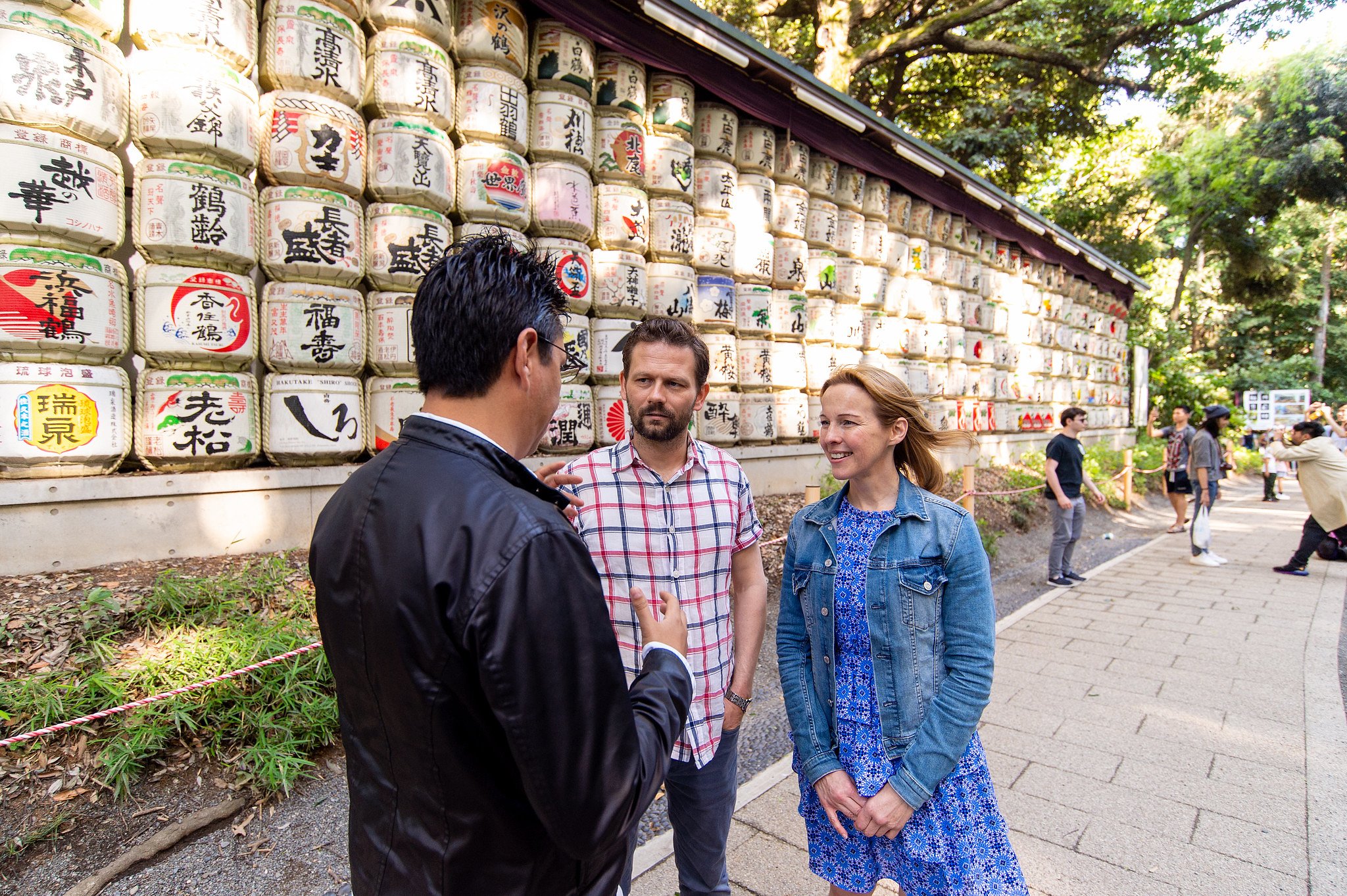
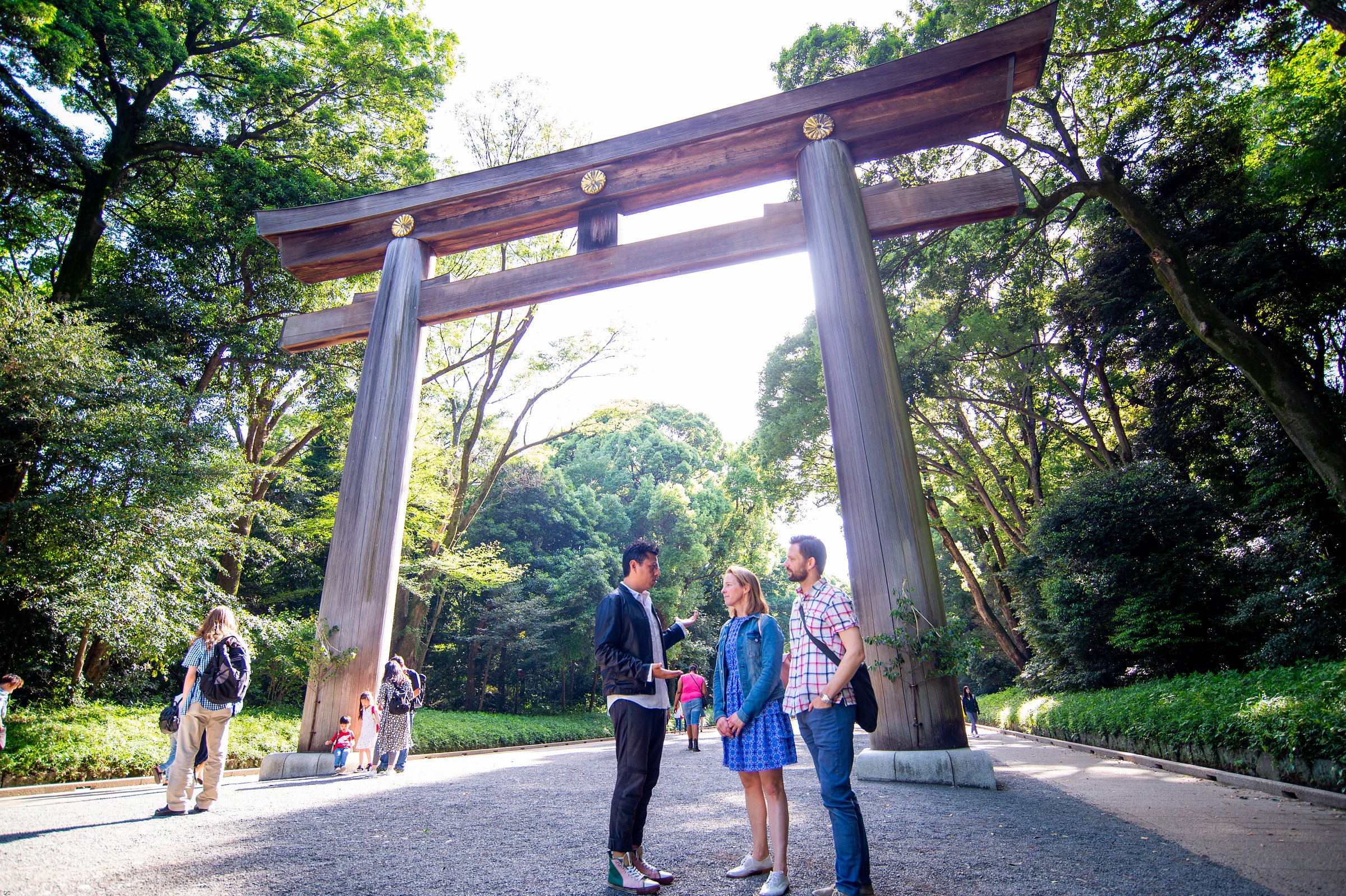
Start your tour at Meiji Jingu, a revealing place to begin, both for the era it represents and its use of traditional Japanese design. Dedicated to Emperor Meiji, the Shinto shrine opens a discussion of imperial identity, spiritual practice, and selective Western influence. How can a shrine created for a modern ruler appear timeless? Your Expert connects its restrained materials and spatial rhythm to the modern and contemporary aesthetics that followed.
From Meiji Jingu, Harajuku presents a very different expression of Japanese modernity. Discuss how the American presence after World War II reshaped the district, then trace the rise of its youth subcultures. Clothing, hobbies, values, and social roles meet on the street, where appearance becomes a visible language. The result is not simply colorful style, but a clearer view of how Tokyo turns identity into design.
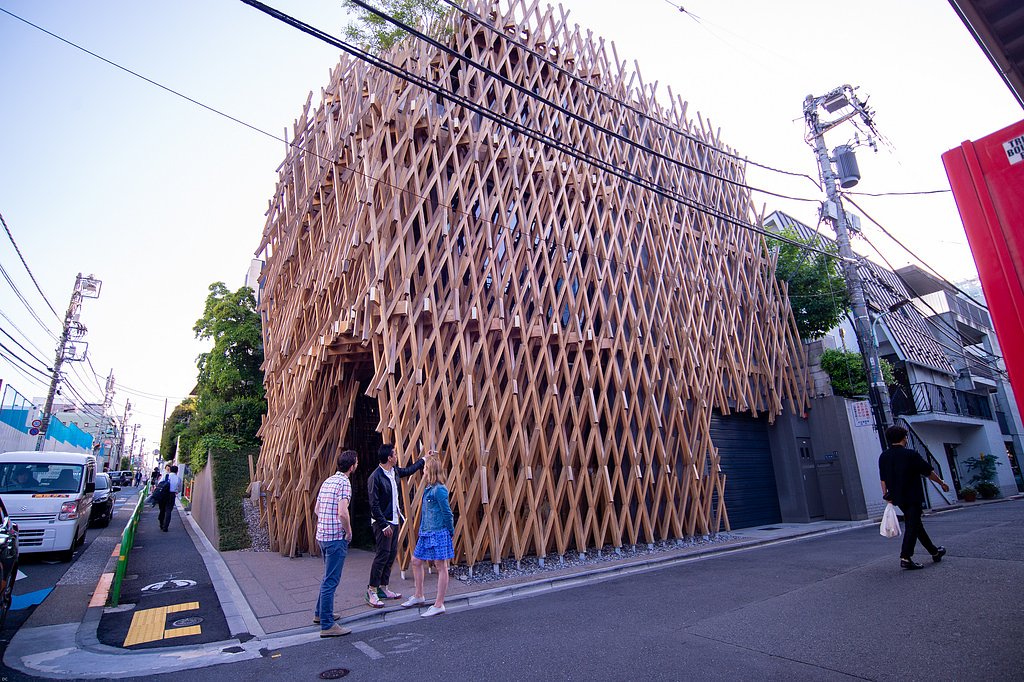
Nearby Omotesando shifts the scale from subculture to international fashion and architectural ambition. Major brands such as Prada and Dior use buildings as extensions of their aesthetic identities. What does a building communicate before you even enter? Your Expert helps you read material, form, and storefront as cultural choices, not just visual spectacle.
Depending on time and your interests, the walk may finish at Kengo Kuma's Nezu Museum, 21_21 Design Sight, Nogizaka's National Art Center of Tokyo, or Roppongi Hills. Each option extends your discovery through a different relationship between architecture, landscape, culture, and urban development. A museum garden might soften modernism, while an integrated development reveals how Tokyo plans whole environments. The flexible close keeps the discussion responsive without losing the route's clear intellectual thread.
Across Meiji Jingu, Harajuku, and Omotesando, three distinct visual worlds build one account of Tokyo. Sacred restraint, postwar self-expression, and branded architecture reveal how Japan negotiates continuity and change. Leave with an aesthetic lens that sharpens the rest of your trip, plus specific stories that make the city easier to understand and worth discussing. Tokyo will still feel complex, but no longer unreadable.
Meet the Experts























Where You’ll Go
From iconic landmarks to tucked-away local favorites, these are the places you’ll explore and experience firsthand with your Expert.
-
Meiji Jingu ShrineShinto sanctuary linking tradition, design, and modern Japan
-
HarajukuPostwar district where youth culture turns identity into style
-
OmotesandoBoulevard of landmark boutiques and contemporary architecture
What’s Included As Standard
Here’s a look at what your tour covers, plus anything you’ll want to consider arranging separately, so you can plan with confidence.
Included
-
English-speaking expert guideTours led in English, offering you unbroken understanding throughout.
-
Intentionally sized groupsA smaller group means more time for conversations and questions.
Not Included
-
GratuitiesTips aren’t included, but we encourage tipping as a way to thank your guide after your experience.
-
Food and drinkFood and drink are not included, but your expert can provide recommendations for after the tour.
-
Transportation to and from the meeting pointTransportation is not included. Pre- and/or post-transit can be added to some tours by request.
-
Hotel pickup or drop-offTravel to or from accommodation isn’t included; however, this service can be added by request.
Where You'll Explore
Make the Most of Your Tour
Some helpful advice for getting the most from your experience, from practical prep to small on-the-day tips.
Dos:
- Wear comfortable footwear
- Check the weather and dress appropriately
- Bring a bottle of water (no glass)
- Feel free to ask your Expert anything
Don'ts:
- Bring firearms or weapons
- Bring sharp objects (e.g. knives, swiss army knives, switchblades, hiking sticks)
- Dress inappropriately to enter religious sites or sacred monuments
Any questions? You can always
contact us.
Frequently Asked Questions
Our private tours are limited exclusively to travelers in your party. They are designed to provide a learning experience that is completely tailored to you and your traveling companions. Private tours give you more flexibility with scheduling (you decide when the walk best fits in your trip), the ability to tailor your itinerary (we'll work to match the itinerary to the interests and dynamics of your group), and more personalized time with your guide.
Generally speaking, the walk begins in the Harajuku neighborhood. Your confirmation email will have the exact meeting point details along with a map. The walk might end at 21_21 Design Museum, or if the group covers a fast pace, Roppongi Hills.
Tours operate rain or shine, but in the case of inclement weather, your guide will modify the tour so more time is spent indoors. It never hurts to have an umbrella on hand.
This walk covers about 2.5 miles overall at a moderate pace. There are occasional opportunities to sit, use the bathroom, and get something to drink if needed.
Context clients generally tip anywhere from 10-25% of the purchase price of a personal service such as this, depending on the quality of the experience and their tipping habits.
Book with confidence — see Context's flexible cancellation policy here.
Don’t just take our word for it
Nadia was knowledgeable, funny and warm. It is great to let someone like her guide you in Tokyo so you can just enjoy from the Meiji Jingū to the modern buildings of Tadao Ando and Kengo Kuma.
Excellent tour. Jeff was knowledgeable and presented the information in a friendly yet professional manner. Would recommend him to future guests.
Let Your Curiosity Shape Your Journey
Join passionate experts on intimate walking tours that reveal a city’s unique stories, spark conversations, and leave you seeing the world—and yourself—a little differently.
Structured, never scripted
Your interests guide your Expert, leading to stories and perspectives that matter to you.
Crafted for conversation
With 12 or fewer guests, ask questions, engage with your Expert, and fully immerse yourself.
Experts, not guides
Explore with 1,200+ Experts—from historians and architects to archaeologists and chefs.
Related experiences our customers also loved



Tokyo Architecture Tour
Tokyo’s architecture is rarely about a single style. It is a city where Shinto restraint, postwar reconstruction, youth culture, luxury retail, and experimental design sit within a few blocks of one another. This Tokyo architecture tour is designed to help you see those contrasts as part of the same story. With an architect, historian, or other Context Expert, consider how modern Tokyo developed visually and why the city often feels both deeply traditional and radically contemporary at once. The route through Meiji Jingu, Harajuku, and Omotesando provides the physical evidence, but the larger question is how Japan has repeatedly adapted outside influences without losing its own design vocabulary. That makes this tour useful even for travelers without an architecture background. The aim is not to memorize architects or building dates, but to understand what materials, scale, space, branding, ritual, and urban form can tell you about modern Japan.
Tokyo became one of the world’s most influential architectural laboratories because it has had to reinvent itself repeatedly.
Earthquakes, war, rapid economic growth, changing land values, and constant redevelopment have produced a city where buildings often have shorter lives than their counterparts in Europe. That instability can encourage experimentation.
At the same time, Japanese architects have drawn on much older ideas about space, materials, light, gardens, thresholds, and the relationship between inside and outside. The result is not a simple progression from “traditional” to “modern.” Architects working in Tokyo have repeatedly reinterpreted older principles within new materials and urban conditions. Contemporary concrete, steel, glass, and engineered timber can still reflect concepts that appear in shrines, gardens, and historic domestic architecture.
This tension between continuity and reinvention is one of the most useful lenses for understanding Tokyo’s built environment.
For architecture and design enthusiasts, Omotesando offers an unusually concentrated view of contemporary Tokyo.
International fashion houses have commissioned distinctive buildings here from major architects, turning stores into architectural statements rather than neutral containers for merchandise. Buildings associated with architects such as Herzog & de Meuron, Tadao Ando, Toyo Ito, SANAA, and Kengo Kuma have helped make the wider Omotesando and Aoyama area an important destination for contemporary architecture.
But the value of the district is not simply the list of famous names. Luxury boutiques reveal how architecture can communicate brand identity before a customer enters. Facades, transparency, materials, circulation, and scale become part of the commercial message.
Seen alongside nearby Harajuku, that polished architectural language also creates a useful contrast with forms of identity that develop more informally through fashion, street culture, and subculture.
One of the most persistent misconceptions about Japanese architecture is that “traditional” and “modern” design belong to separate worlds.
Tokyo makes that distinction difficult to maintain. Places such as Meiji Jingu use restrained materials, controlled approaches, framed views, and changes in scale to shape how a visitor moves through space. Those principles can help make later modern and contemporary design easier to interpret.
Japanese architects have often been interested in relationships rather than isolated objects: building and landscape, public and private space, permanence and impermanence, transparency and enclosure. That does not mean every contemporary Tokyo building can be traced directly back to a shrine or tea house. It does mean that modern Japanese architecture developed within a much longer conversation about space and aesthetics.
This is one reason Tokyo rewards close observation. Once you begin noticing thresholds, materials, proportions, and the way buildings relate to the street, architecture becomes a useful tool for understanding the city beyond its skyline.
Is Tokyo good for architecture lovers?
Yes. Tokyo contains work by many of Japan’s most influential modern and contemporary architects, alongside international commissions, historic religious architecture, postwar urbanism, and constantly changing commercial design.
What area of Tokyo is best for modern architecture?
Omotesando and nearby Aoyama are among the strongest areas for contemporary architecture because major fashion brands, museums, and cultural institutions have commissioned buildings from internationally significant architects.
What architects can I see in Tokyo?
Tokyo includes buildings by architects such as Tadao Ando, Kengo Kuma, Toyo Ito, SANAA, Kenzo Tange, Fumihiko Maki, and many others, as well as international architects working in Japan.
The exact buildings encountered on this tour depend on the route, pace, and your interests.
Do I need to know anything about architecture before taking the tour?
No. The experience is designed for both architecture enthusiasts and curious travelers without specialist knowledge. Your Expert can adjust the level of architectural terminology and discussion according to your interests.
Is this a private Tokyo architecture tour?
The tour is available as a private experience, allowing the conversation to focus more deeply on subjects such as Japanese aesthetics, contemporary architecture, urbanism, fashion, or particular architects.
Does the tour focus only on contemporary architecture?
No. Contemporary architecture is a major part of the experience, particularly around Omotesando, but the tour also examines how older Japanese design traditions, postwar history, youth culture, and urban change influenced the modern city.
Why is Omotesando famous for architecture?
Omotesando became a showcase for high-profile commercial architecture as luxury and fashion brands commissioned distinctive flagship buildings. This concentration of experimental design makes it a useful place to compare different approaches to materials, facades, branding, and urban space.
What makes Japanese architecture different?
There is no single Japanese architectural style. Across different periods, however, architects have repeatedly explored ideas such as flexible space, material restraint, relationships with landscape, thresholds between interior and exterior, and sensitivity to changing light and seasons.
Is this an architecture walking tour?
Yes. The experience is primarily explored on foot through Meiji Jingu, Harajuku, Omotesando, and surrounding districts, with the exact endpoint varying according to pace and interests.