Rosh Hashanah and Yom Kippur fall in September or early October each year, and in many years they overlap with European Heritage Days—the annual weekend in mid-to-late September when hundreds of normally closed sites across Europe open to the public, including synagogues, former Jewish quarters, and cultural institutions that rarely see visitors. For Jewish travelers, heritage groups, fraternal organizations, and anyone drawn to Jewish history in Europe, this convergence makes autumn one of the most meaningful windows of the year to be on the ground.
This guide covers what Jewish heritage travel in Europe actually looks like. Visit the cities, understand the history, and enjoy the experiences that go beyond the standard itinerary. Here's how to plan a visit that does justice to what you're there to understand.
Why Jewish history in Europe?
Jewish history in Europe is not a single story. It is dozens of stories unfolding across different cities and centuries that are shaped by different dynasties and different degrees of tolerance and persecution, resilience and loss. To visit the old Jewish Quarter in Prague is to stand in a place where a community survived the medieval period, was nearly destroyed in the 20th century, and whose synagogues are now among the best-preserved in Central Europe. To walk Rome's Ghetto is to encounter more than 2,000 years of continuous Jewish presence; it's the oldest Jewish community in the Diaspora. To trace the streets of Amsterdam's Jodenbuurt is to walk through the world of Spinoza, of the Sephardic merchants who helped build one of Europe's great trading empires, and of Anne Frank.
These histories share patterns of flourishing, expulsion, scholarship, adaptation, and renewal, but each city adds something the others don't. Understanding them in sequence, or understanding any one of them in depth, requires more than walking past a synagogue. It requires someone who can open the building and the period at the same time.
Visiting in September: Jewish High Holidays and European Heritage Days
Rosh Hashanah (the Jewish New Year), and Yom Kippur (a 25-hour period of fasting and intensive prayer) are the holiest days of the Jewish calendar. Together they form the High Holidays, also called the Days of Awe: ten days of reflection, repentance, and renewal that open the Jewish year. For Jewish travelers, the High Holidays can be a profound time to be near the communities and sites that shaped Jewish civilization, observing where Jewish life once flourished and encountering the communities where it continues.
European Heritage Days takes place on the third weekend of September each year, opening thousands of sites across Europe that are normally restricted or closed to the public. In cities with significant Jewish history, this includes synagogues, former community buildings, restored archives, and sites of memory that are not ordinarily accessible. In Paris, Prague, Budapest, Amsterdam, and Vienna, the weekend offers access to layers of the city that most visits don't reach.
For groups planning a heritage journey, autumn combines the spiritual resonance of the High Holidays with a logistical window that opens doors, sometimes literally, that are otherwise closed.
City by city: Jewish history in Europe & beyond
Rome: more than 2,000 years of continuous presence
Rome's Jewish community is the oldest in the Diaspora, predating the destruction of the Second Temple in 70 CE. Jewish merchants and diplomats were present in Rome during the Republican period; the Arch of Titus, which still stands in the Roman Forum, depicts the spoils of the Temple being carried through the city in 71 CE. The community that followed that destruction never left.
Context's Rome Jewish History Tour moves through 2,000 years of this history. Walk through the Ghetto, established by papal decree in 1555, the Great Synagogue, and the Portico d'Ottavia while hearing the stories of a community that survived the Roman Empire, the medieval papacy, and the 20th century. The audio guide version, the Rome Jewish Ghetto History Audio Guide, allows independent exploration at your own pace.
Prague: the best-preserved Jewish Quarter in Central Europe
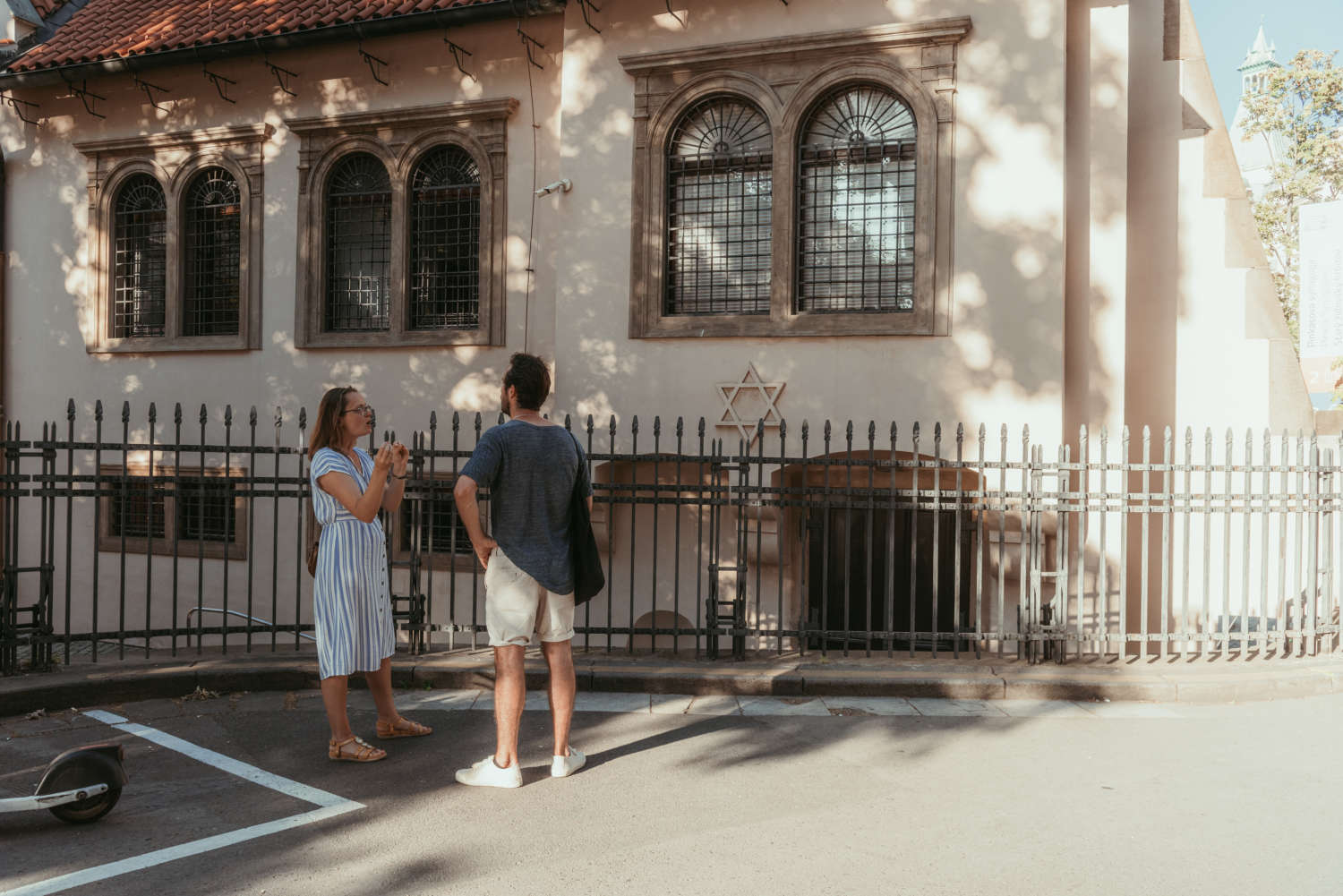
Prague's Josefov contains six functioning synagogues, the Old Jewish Cemetery (one of the oldest and most densely layered Jewish burial grounds in Europe) and the Jewish Museum, which holds one of the most significant collections of Judaica in the world. The cemetery alone, with its estimated 100,000 graves stacked in layers over four centuries, stops most visitors in ways that no monument does.
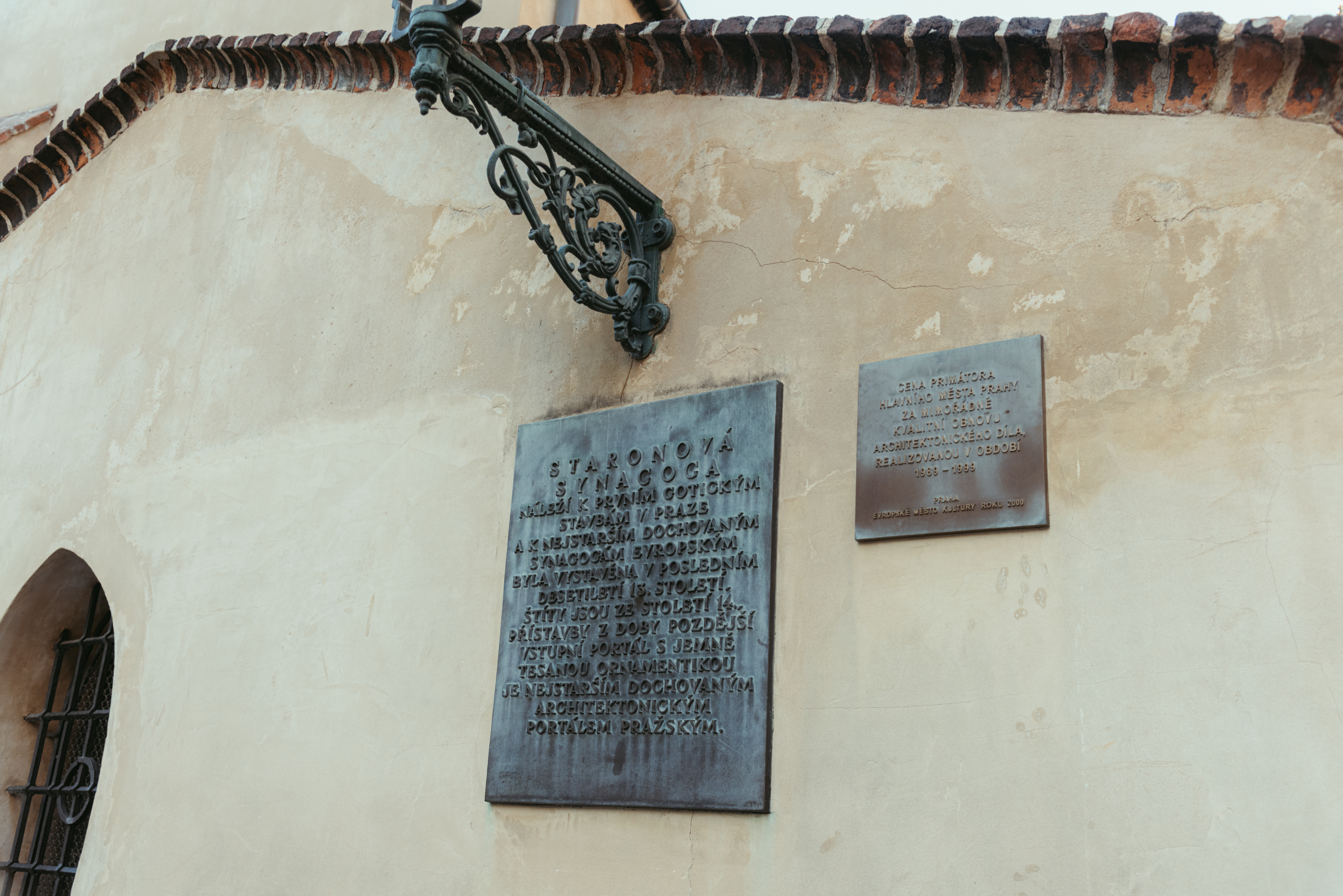
Context's Prague Jewish History Tour traces this history from the Old-New Synagogue (built in 1270, it's the oldest functioning synagogue in Europe) through the Golem legends, the devastating losses of the 20th century, and the community's contemporary life. During European Heritage Days, several Josefov sites offer special access that's worth planning around.
Budapest: one of Europe's largest surviving Jewish communities
Budapest's Jewish population before the Second World War was the third-largest in Europe. The Dohány Street Synagogue, completed in 1859, is the largest synagogue in Europe and one of the largest in the world. The VII district surrounding it remains a living center of Jewish cultural life, with restaurants, bookshops, cultural institutions, and a community that has rebuilt with remarkable energy since 1989.
Context's Budapest Jewish History Tour moves through the synagogue, the Emanuel Tree memorial in its garden (a weeping willow whose leaves bear the names of the murdered), the Jewish museum, and the streets of the former ghetto, connecting the architecture of the 19th-century community with the devastation of 1944–45 and the recovery that followed.
Amsterdam: Sephardic merchants, philosophy, and the Golden Age
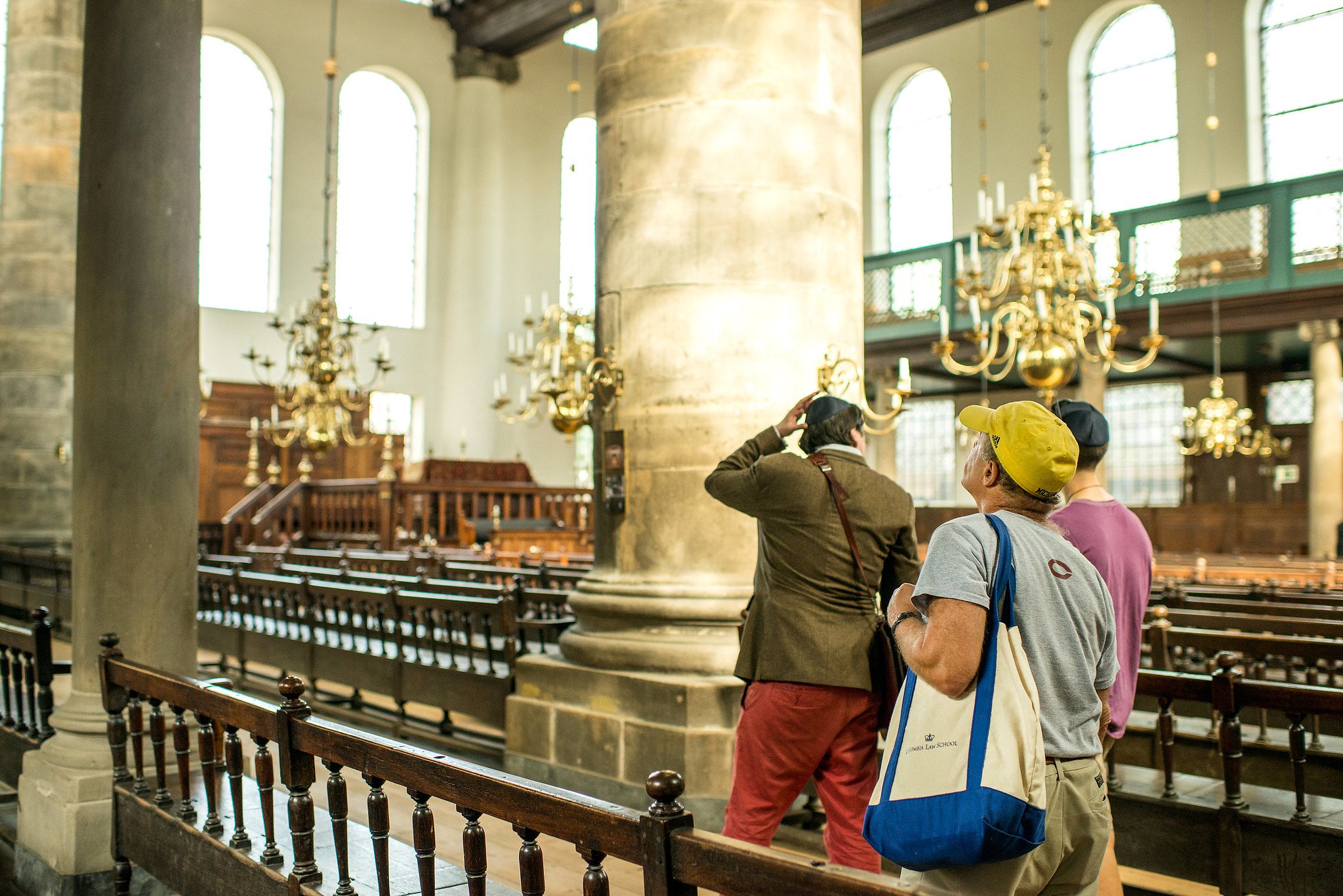
Amsterdam's Jewish history begins with the Sephardic refugees who arrived after the expulsions from Spain and Portugal, bringing with them commercial networks and intellectual traditions. The Portuguese Synagogue was then completed in 1675 and is still in use today, lit by candlelight as it has been for 350 years. Baruch Spinoza was born in this community, excommunicated from it, and went on to produce philosophy that shaped the Enlightenment.
The Ashkenazi community that arrived later added a different dimension, and the Anne Frank House adds a 20th-century layer that gives the entire history a modern tangibility. Context's Jewish Amsterdam History Tour traces all of it, from the Golden Age merchants, to the philosophers, to the resistance and remembrance.
Berlin: destruction, memorial, and renewal
Berlin is a different kind of city to visit for Jewish history; the weight of the 20th century sits closer to the surface here than anywhere else in Europe. The Memorial to the Murdered Jews of Europe, the Jewish Museum designed by Daniel Libeskind, the Neue Synagoge on Oranienburger Strasse, and the traces of a community that was one of the most culturally productive in modern Europe before its destruction in the 1930s and 40s—these are the anchors.
Context's Berlin Jewish History Tour covers 800 years of history, from the medieval period through the 19th-century community that produced Moses Mendelssohn, Einstein, and much of Weimar-era cultural life, to the years of the Third Reich and the contemporary renewal of Jewish Berlin. It is one of the more demanding days you can spend in Europe (and one of the most necessary).
Vienna: the intellectual capital of Ashkenazi life
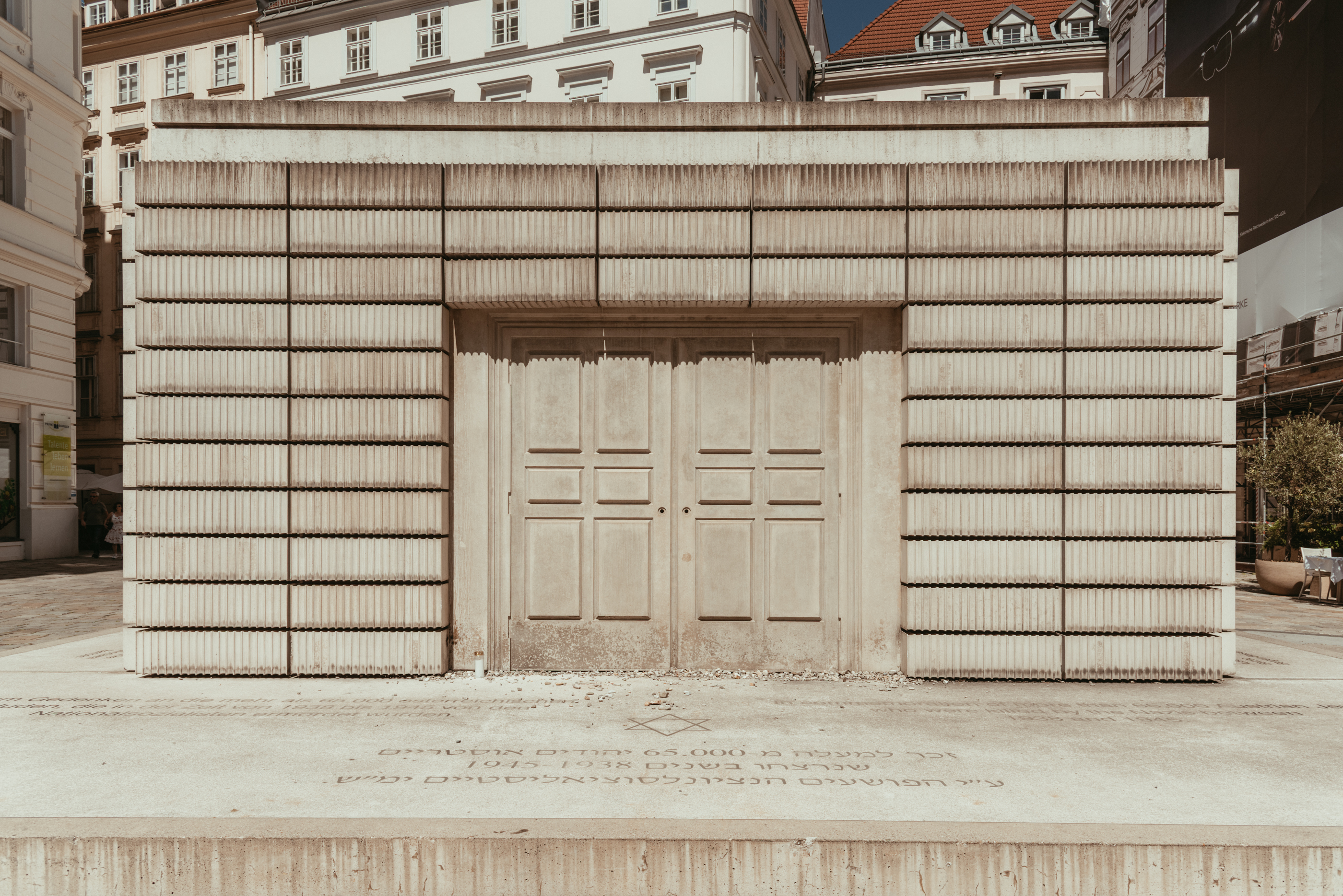
Vienna's Jewish community produced, in the century between emancipation and catastrophe, a density of intellectual achievement that is genuinely difficult to comprehend: Sigmund Freud, Gustav Mahler, Arthur Schnitzler, Stefan Zweig, Ludwig Wittgenstein, Karl Kraus. The First District contains the ruins of the medieval synagogue, the Judenplatz memorial designed by Rachel Whiteread (an inverted library, its books turned inward, unreadable), and the streets where that extraordinary world existed before it was destroyed.
Context's Vienna Jewish History Tour examines a community's legacy across these streets, exploring the emancipation, the intellectual flowering, and what was lost.
Paris: the Marais and the layers of Jewish life
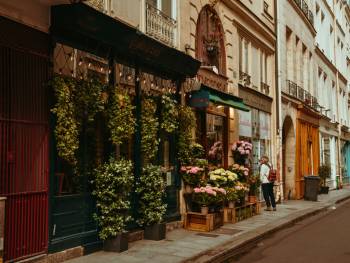
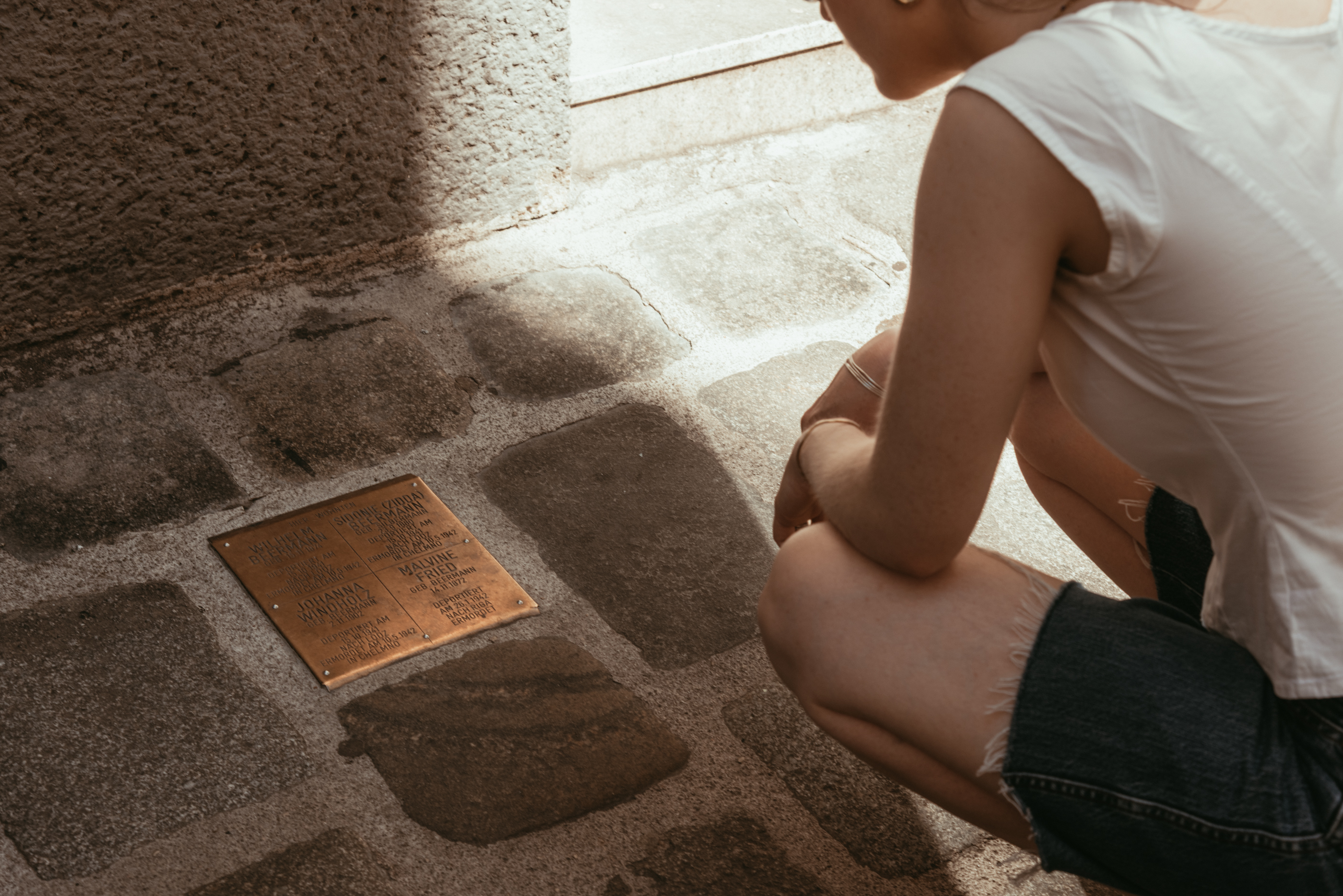
Paris's Jewish history runs from the medieval period through the large Ashkenazi immigration of the late 19th and early 20th centuries, concentrated in the Marais. This neighborhood still has Jewish bookshops, bakeries, and delicatessens alongside the fashion boutiques that arrived later. The Mémorial de la Shoah, opened in 2005, is one of the most significant Holocaust memorial institutions in Europe.
Context's Paris Jewish History Tour traces centuries of Jewish life through these streets, covering the medieval period, the Dreyfus Affair, the immigration waves that made the Marais what it became, and the devastating losses of the Occupation.
Warsaw and Kraków: understanding Poland's Jewish history
Poland was, before 1939, home to the largest Jewish population in the world. At approximately three million people, it represented one of the most significant concentrations of Jewish cultural, religious, and intellectual life anywhere. Warsaw's POLIN Museum of the History of Polish Jews, opened in 2013, is among the finest museum experiences in Europe and an essential visit for understanding the scope of that world before its destruction.
Kraków's Kazimierz district, which was the center of Jewish life for 500 years, has seen a significant cultural revival since 1989. Restaurants, bookshops, galleries, and the annual Jewish Culture Festival draw visitors and local communities alike.
Context's Warsaw Jewish History Tour and Kraków Jewish History Tour both approach these cities as places of presence as much as loss, a distinction that matters.
London: from the Middle Ages to modern communities
London's Jewish history begins with the Norman Conquest and runs through the expulsion of 1290, the readmission under Cromwell in 1656, and the successive waves of immigration that built the communities of the East End. Brick Lane and Whitechapel were the heart of Ashkenazi immigrant life in the late 19th and early 20th centuries; the Bevis Marks Synagogue, built in 1701, is the oldest synagogue in continuous use in Britain.
Context's London Jewish History Tour traces Jewish communities from the Middle Ages to modern London, overing the Sephardic merchants, the East End tailors and market traders, and the communities that shaped British cultural and political life.
Venice: the original Ghetto
Venice gave the word "ghetto" to the world. The Ghetto Nuovo, established in 1516, was the first enforced Jewish enclosure in Europe. It was built on a foundry island (geto in Venetian dialect) and locked at night. The community that lived inside it produced extraordinary scholarship, trade networks, and a distinctive architecture of tall, narrow buildings crammed upward because the island couldn't expand outward. The five synagogues—each representing a different Jewish community—still stand, and the neighborhood retains a quiet, layered quality unlike anywhere else in Venice.
Context's Venice Jewish History Tour traces how Jewish Venice endured, adapted, and continues to live.
Buenos Aires: the Diaspora across the Atlantic
Jewish heritage travel isn't only a European story. Buenos Aires is home to the largest Jewish community in Latin America and one of the largest in the world, built primarily by Ashkenazi immigrants from Eastern Europe who were fleeing the pogroms between 1880 and 1930. The community shaped Argentine culture, commerce, and intellectual life in ways that are still visible in neighborhoods like Once and Villa Crespo.
Context's Buenos Aires Jewish History Tour covers the synagogues, neighborhoods, and stories, including the Jewish gauchos and agricultural colonies that most visitors to the city have never heard of.
Toledo and Seville: the Diaspora across the Atlantic
Lisbon and Porto: conversos, the Inquisition, and a modern reckoning
Istanbul: a Sephardic refuge and a living community
When Ferdinand and Isabella expelled the Jews of Spain in 1492, the Ottoman Sultan Bayezid II famously remarked that Ferdinand had "impoverished his kingdom and enriched mine." Istanbul received a large wave of Sephardic refugees who became integral to Ottoman commercial and intellectual life, bringing the printing press to the empire, building financial networks, and establishing communities whose descendants still live in the city.
The Balat neighborhood, historically the Jewish Quarter of Istanbul, retains traces of this history in its synagogues (including the Ahrida Synagogue, the oldest in the city that dates to before the Ottoman conquest) and layered architecture of a community that lived alongside Greek, Armenian, and Turkish neighbors for centuries.
Context's Istanbul tours are led by historians who understand the city's multicultural history deeply and can incorporate the Sephardic and broader Jewish history of Istanbul into any visit alongside the Byzantine, Ottoman, and modern Turkish layers. Tours are fully customizable based on your group's interests.
Marrakech and Fes: the mellah and the Sephardic thread in North Africa
Morocco's Jewish communities were present for centuries before the Sephardic expulsion and were substantially expanded by it. These communities shaped the country's commercial, intellectual, and cultural life in ways that are still traceable in the medinas of Fes and Marrakech. The mellah (Jewish quarter) of Fes is one of the oldest in North Africa, and Marrakech's mellah, adjacent to the Bahia Palace, has its own distinctive architecture and history of coexistence and departure.
Morocco is also notable for the continuity of its Jewish community into the modern era. The community shrank dramatically through emigration to Israel in the mid-20th century, but its legacy is visible in synagogues, cemeteries, and the Alliance Israélite Universelle schools that shaped North African Jewish education.
Context's Marrakech and Fes tours can be personalized to explore the mellah, Jewish heritage sites, and the Sephardic thread that connects North Africa to the wider Diaspora story.
Planning Jewish heritage travel for groups
Jewish heritage travel is particularly well-suited to group experiences: synagogue trips, Hillel chapters, fraternal organizations, Jewish community centers, alumni groups, and families tracing their European roots. The depth of the material, the conversation it generates, and the shared nature of the history make these tours more meaningful in the company of others who bring their own questions and connections.
Context Travel's Expert-led tours accommodate private groups and can be fully personalized around your specific interests. Whether your group is focused on the Sephardic expulsion and its aftermath across Spain, Portugal, Istanbul, and Morocco, looking for a trip built around Poland's prewar Jewish world and the Auschwitz memorial, or seeking a family journey connecting the cities where your ancestry is rooted, you're sure to find a tour that helps you gain a deeper understanding of Jewish history and legacy. All tours are led by historians and local specialists who know the material as scholars and will shape the experience around what your group brings to it— your questions, your family history, your depth of knowledge, and your particular interests. No two Jewish heritage tours with Context are the same.
For Jewish fraternal organizations considering European heritage travel, Context's group experiences offer a substantive alternative to standard heritage tour packages. Enjoy genuine academic depth, small group sizes, and Experts who treat Jewish history as an integral part of European history rather than a separate chapter. We welcome inquiries from organizations including Alpha Epsilon Pi and similar groups interested in building meaningful heritage programming for their members. Contact Context Travel to discuss a group booking.
What are the Jewish High Holidays?
For travelers planning a September heritage journey, understanding the High Holidays is useful context.
The High Holidays consist of Rosh Hashanah and Yom Kippur—the Jewish New Year and the Day of Atonement. They begin with Rosh Hashanah, a two-day celebration that marks the start of the Jewish year and opens a ten-day period of reflection and repentance. Yom Kippur, the Day of Atonement, is the holiest day of the Jewish calendar that is spent in fasting and intensive prayer. The High Holidays fall in September or early October each year, their precise dates shifting annually with the Jewish lunar calendar.
For travelers visiting European cities with living Jewish communities during this period, it is worth knowing that synagogues will be fuller, community life more visible, and some Jewish-owned businesses and institutions may be closed on Yom Kippur. Many of Context's Expert guides can speak to contemporary Jewish practice and community life in their cities, not only to the historical layers.
Frequently asked questions
What is Jewish heritage travel?
Jewish heritage travel encompasses visits to sites of historical and cultural significance to Jewish communities—synagogues, former ghettos and Jewish quarters, cemeteries, museums, memorials, and neighborhoods where Jewish life has been present across centuries. It can include ancestral research, study of Jewish history and culture, and engagement with living Jewish communities in the cities visited.
Which cities are best for Jewish heritage travel?
Rome, Prague, Budapest, Amsterdam, Berlin, Vienna, Paris, Venice, Warsaw, Kraków, and London each offer distinctive chapters of Jewish history in Europe. Beyond Europe, Buenos Aires has the largest Jewish community in Latin America. Spain, particularly Toledo and Seville, is essential for understanding the Sephardic world before the 1492 expulsion, while Portugal (Lisbon and Porto) traces the converso communities and crypto-Jewish traditions. Istanbul received Sephardic refugees and retains a living community, and Morocco's mellahs in Fes and Marrakech reveal the North African thread of the Diaspora. Each city rewards a dedicated visit, and tours can be personalized around your specific interests, from Sephardic history and Ashkenazi traditions, to Holocaust rememberance and living communities today.
What are European Heritage Days?
European Heritage Days is an annual event held on the third weekend of September across Europe, during which thousands of historical sites, monuments, and cultural institutions open to the public, many of which are not normally accessible. In cities with significant Jewish history, this can include synagogues, community archives, and sites of memory that are otherwise restricted.
Are Jewish heritage tours only for Jewish travelers?
Not at all. Jewish history is European history. It's shaped the cities, scholarship, commerce, and culture of the continent across two millennia. These tours are designed for anyone with an interest in history, architecture, philosophy, migration, or the story of how Europe became what it is. Many guests join out of general historical curiosity, while others are exploring family roots or seeking a deeper understanding of the 20th century.
Can Context Travel accommodate large groups for Jewish heritage tours?
Context's tours typically accommodate up to 12 travelers depending on the tour. This is small enough to allow genuine conversation with your Expert and flexibility around your group's specific interests. For larger travel groups, we can arrange multiple simultaneous tours running in parallel so everyone travels together without sacrificing the intimacy that makes these experiences meaningful. Multi-city itineraries are also possible for groups traveling across several destinations. Contact Context Travel directly to discuss your group's size, itinerary, and logistics.
Browse all Jewish Heritage Tours with Context Travel.